Side-by-Side Cognitive Profiles
At The Cosmic Pet Pet IQ Lab, we evaluate canine cognitive abilities across five key dimensions. For both the Komondor and the Harrier, each dimension registers a '3 out of 5,' yet the manifestation of these scores is profoundly influenced by their breed group and historical purpose. Understanding these nuances is key to appreciating their distinct forms of mental engagement.
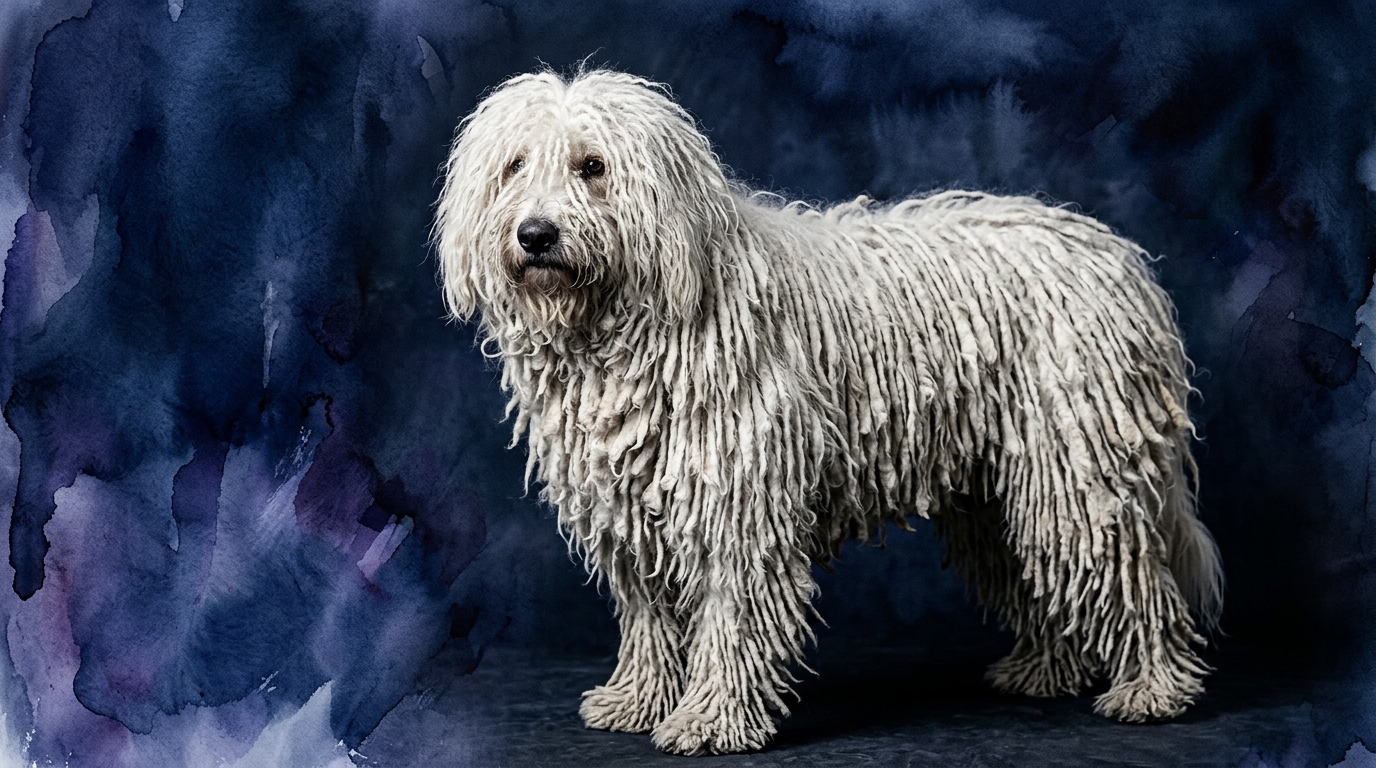
The Komondor, a majestic member of the Working Group, developed its mental faculties as a livestock guardian in Hungary. Its '3/5 Problem Solving' ability is less about rote obedience and more about independent strategic thinking: assessing threats, making autonomous decisions to protect its flock without human command, and discerning true danger from benign environmental changes. Its '3/5 Training Speed' reflects a capacity to learn, but often with a strong independent streak; commands are processed through the lens of their perceived utility in a guardian role. '3/5 Social Intelligence' means deep, discerning bonds with its family unit, coupled with a reserved, cautious approach to strangers, reading subtle cues for potential threats. The Komondor’s '3/5 Instinctive Drive' is overwhelmingly geared towards protection and territoriality, a powerful, inherent need to safeguard. Finally, its '3/5 Memory' is robust for remembering safe zones, learned routines for patrol, and individuals deemed friend or foe, crucial for its protective duties.
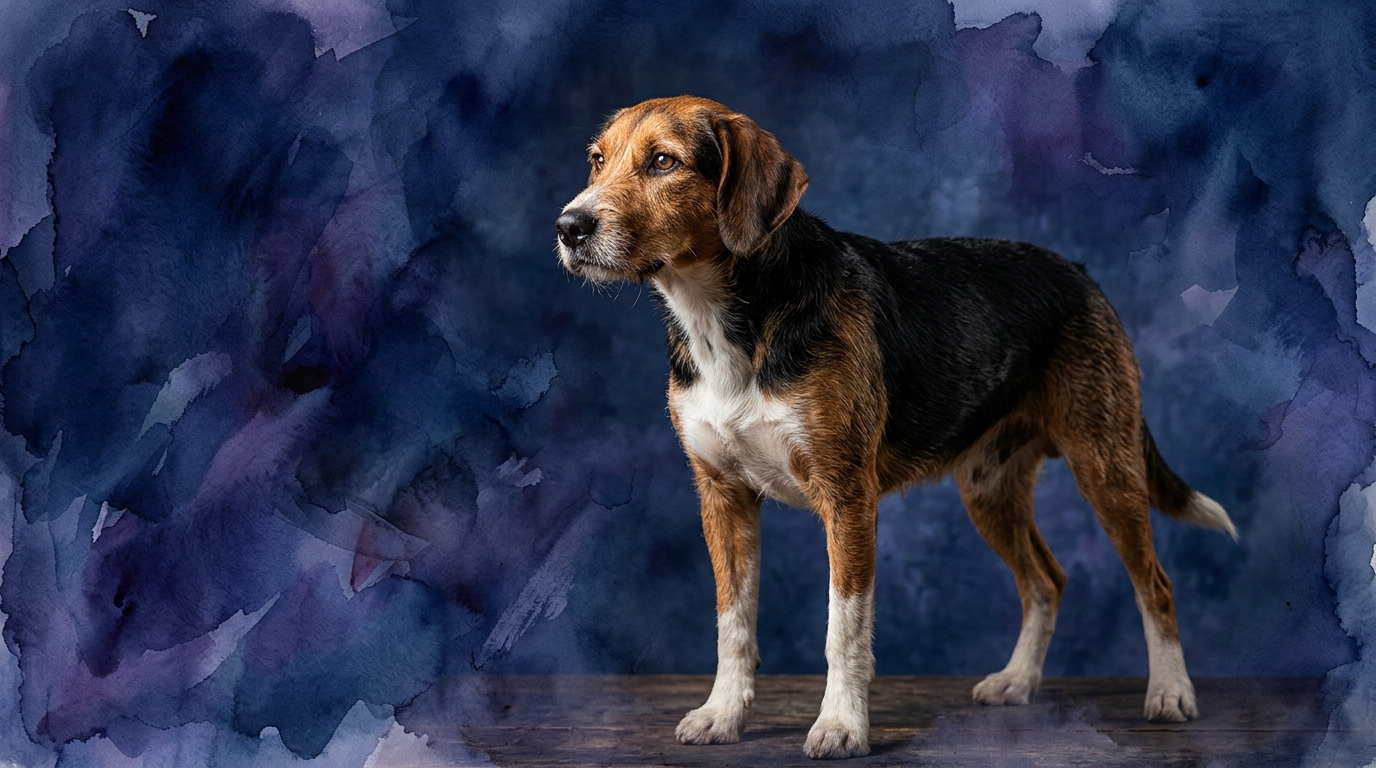
The Harrier, originating from England and belonging to the Hound Group, developed its cognitive strengths for cooperative hunting. Its '3/5 Problem Solving' centers on navigating complex scent trails, overcoming environmental obstacles during a chase, and working effectively within a pack structure. This is a practical, persistent form of problem-solving. '3/5 Training Speed' indicates a dog capable of learning quickly, particularly when motivated by scent work or the thrill of the chase, though their focus can be easily diverted by compelling odors. '3/5 Social Intelligence' in the Harrier is expressed through strong pack dynamics, an ability to read other dogs, and a cooperative relationship with human handlers during a hunt. Their '3/5 Instinctive Drive' is profoundly shaped by a high prey drive, an exceptional sense of smell, and the stamina required for sustained pursuit. The Harrier’s '3/5 Memory' is adept at recalling scent paths, specific hunting commands, and the intricate social hierarchy of its pack.
Where the Komondor Excels Cognitively
The Komondor's cognitive strengths lie in its autonomous decision-making and discerning judgment, particularly concerning protection. Its '3/5 Problem Solving' manifests as a sophisticated ability to assess situations independently, strategizing the defense of its territory or flock without direct human instruction. This breed demonstrates a unique capacity for self-reliance, making crucial choices in dynamic environments, a trait honed over centuries of solitary guardianship. For instance, a Komondor might independently decide the best vantage point for observation or determine the appropriate level of intervention when a perceived threat approaches. Their social intelligence, while selective, allows them to accurately distinguish between family members and potential intruders, prioritizing the safety of their inner circle with unwavering commitment.
Where the Harrier Excels Cognitively
Conversely, the Harrier's cognitive prowess shines in its persistent sensory interpretation and cooperative engagement. Its '3/5 Problem Solving' is deeply intertwined with its extraordinary olfactory capabilities, allowing it to meticulously follow intricate scent trails over varied and challenging terrain, often for extended periods. This requires sustained mental focus and the ability to filter out numerous environmental distractions, a critical skill for a scent hound. Furthermore, the Harrier’s social intelligence fosters seamless cooperation within a pack, reading the cues of fellow dogs and human hunters to achieve a common goal. Their mental agility allows them to adapt quickly to changing hunt conditions, demonstrating a tenacity and purpose-driven focus that is a hallmark of their breed.
Ease of Training: Komondor vs. Harrier
When considering ease of training, both breeds present unique challenges, despite their identical '3/5 Training Speed' score. The Komondor's training journey is often characterized by its independent nature and strong will. This breed learns, but it frequently questions the relevance of commands that don't align with its inherent guardian role. For instance, a Komondor might readily learn commands pertaining to territorial boundaries but resist repetitive exercises that seem arbitrary to its protective instincts. Successful training requires a handler who can establish clear, consistent leadership and demonstrate the practical application of commands, making the training process a partnership rather than strict obedience. Their historical role demanded self-sufficiency, not blind compliance.
The Harrier, while generally eager to please its pack, presents training challenges rooted in its potent prey drive and scent-driven focus. A '3/5 Training Speed' for a Harrier means they can grasp concepts quickly, but their attention can be profoundly diverted by compelling odors or the sight of small animals. Teaching reliable recall, for example, is paramount but can be difficult when a captivating scent takes precedence over verbal commands. Training must be highly engaging, often incorporating scent work or chase games to maintain their interest, and requires immense patience and positive reinforcement to overcome their innate distractions. Their desire to follow a trail is often more compelling than human instruction.
Suited for Active vs. Relaxed Owners
The Komondor is generally better suited for owners who understand and respect its need for mental engagement related to its guardian instincts, rather than constant high-intensity physical activity. While they require regular exercise to maintain health, their 'activity' often involves patrolling their territory and observing their surroundings. A Komondor thrives with consistent socialization and a clear understanding of its role within the family, but it's not a breed that demands daily marathon runs. Owners who appreciate a dog with a thoughtful, independent disposition and are prepared to manage its protective urges will find a rewarding companion. Relaxed owners, however, might struggle with their strong-willed nature and the responsibilities inherent in managing a guardian breed.
In stark contrast, the Harrier is unequivocally a breed for active owners. Their '3/5 Instinctive Drive' translates into boundless stamina and an innate need for sustained, vigorous physical exertion. This breed is not content with short walks around the block; they thrive on long runs, challenging hikes, or engaging in scent-driven activities that satisfy their profound prey drive. A Harrier needs a consistent outlet for its energy, ideally with opportunities to explore and follow scents in a safe, controlled environment. Relaxed owners who cannot commit to substantial daily exercise will find a Harrier prone to boredom, which can manifest in undesirable behaviors. They are truly partners for outdoor enthusiasts seeking an energetic, driven companion.
The Verdict
Choose the Komondor if you seek an independent, discerning protector for your home or livestock, value a dog that makes its own decisions in a guardian role, and are prepared for a strong-willed companion.
Opt for the Harrier if you desire an energetic, cooperative partner for extensive outdoor adventures, enjoy engaging with a dog driven by scent and pack dynamics, and can provide ample physical and mental stimulation.
🧠 Find Your Pet's IQ Score
Our Pet IQ Lab assessment covers 25+ tests across 5 cognitive dimensions — personalized to your breed.
Take the Full IQ Test →Frequently Asked Questions
Do Komondors get along with other pets?
Komondors can coexist with other pets, especially if raised with them from a young age, viewing them as part of their 'flock.' However, their strong protective instincts mean new introductions must be carefully managed, and they may not tolerate strange animals on their perceived territory, requiring vigilant supervision.
How much exercise does a Harrier need daily?
Harriers require a significant amount of daily exercise, typically an hour or more of vigorous activity that can include long runs, challenging hikes, or engaging scent-based games. Their stamina and drive mean they thrive when given a consistent outlet for their energy and innate hunting instincts.
Are Komondors good with children?
Komondors can be excellent family dogs, often forming deep, protective bonds with children they consider part of their flock. However, their protective nature means they may not tolerate rough play from strange children or perceive innocent interactions as threats, necessitating careful supervision and early, consistent socialization.