
Side-by-Side IQ Profile
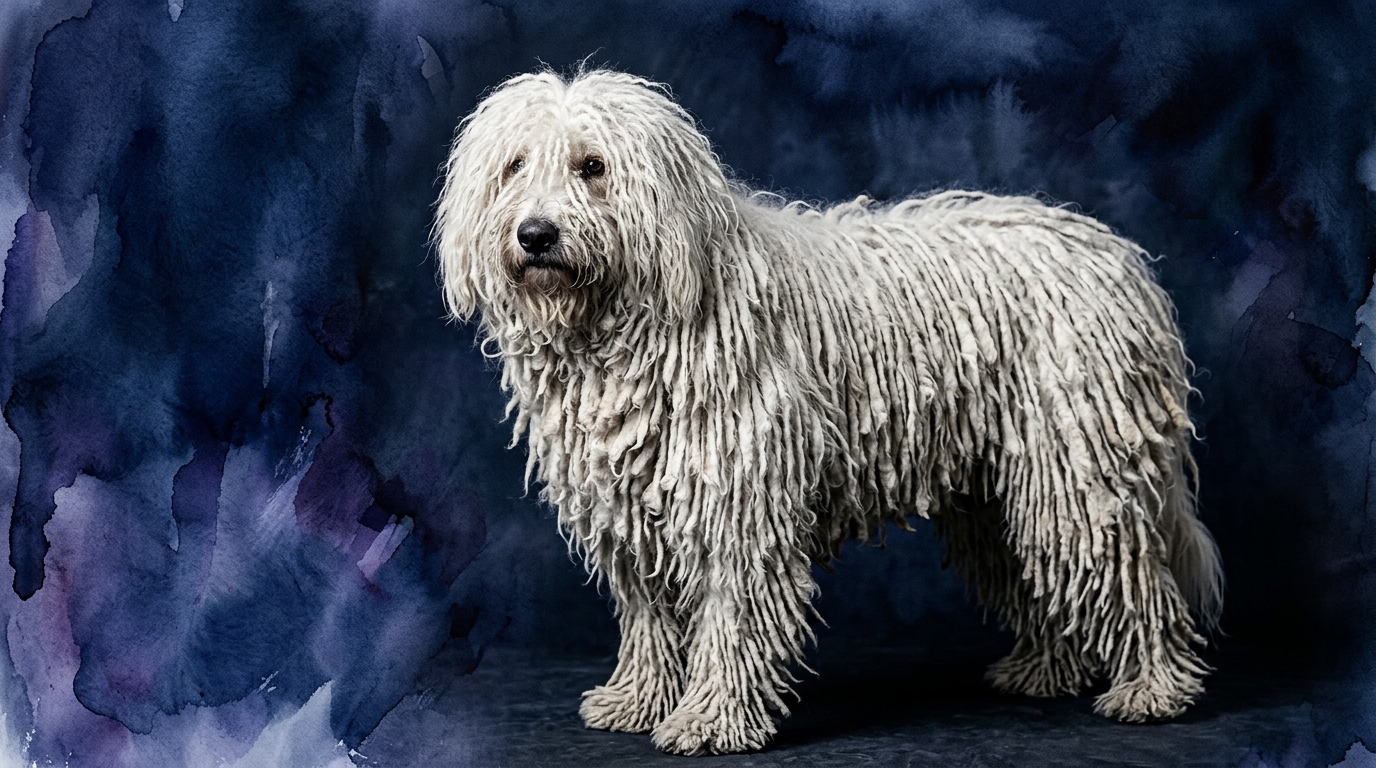
**Komondor (Working, Coren rank #67)**
**Problem Solving (3/5):** The Komondor's problem-solving centers on autonomous threat assessment for its flock, demonstrating independent judgment in evaluating dangers and effective protective actions. They excel at strategic vigilance without constant human direction.
**Training Speed (3/5):** Their training speed reflects learning guardian duties and routines with a deliberate, independent streak. A Komondor processes commands but may weigh instructions against its own assessment, requiring patience.
**Social Intelligence (3/5):** The Komondor forms deep, protective bonds with its family or flock, yet is reserved towards strangers. Its social cognition involves discerning friend from foe and maintaining a watchful, protective presence.
**Instinctive Drive (3/5):** Their drive is overwhelmingly centered on guardianship and territorial protection. This includes an innate understanding of boundaries, responsibility for charges, and readiness to deter threats, shaping much of their cognitive output.
**Memory (3/5):** A Komondor's memory is robust, particularly for territory patterns, individuals in their care, and past threats. They remember routes and safe zones, crucial for long-term guardian effectiveness.
**Parson Russell Terrier (Terrier, Not Coren-ranked)**
**Problem Solving (3/5):** The Parson Russell Terrier's problem-solving shines in navigating complex, subterranean environments. This involves quick, on-the-spot decisions to outmaneuver quarry and overcome obstacles, demonstrating agile, adaptable thinking under pressure.
**Training Speed (3/5):** Their training speed is characterized by a quick grasp of new commands when motivated, but often tempered by a strong, independent will and high prey drive, meaning they may prioritize scents over commands.
**Social Intelligence (3/5):** Parson Russell Terriers display a lively, often boisterous social intelligence, typically outgoing and engaged with human companions. Their social cognition involves reading human cues and expressing enthusiasm.
**Instinctive Drive (3/5):** Their instinctive drive is powerfully geared towards hunting small prey, manifesting as intense prey drive, persistent digging, and insatiable curiosity. This fundamental drive provides relentless energy and focus.
**Memory (3/5):** The Parson Russell Terrier possesses a sharp memory, particularly for interesting scents, successful hunting spots, and family routines. They remember where they buried a toy, aiding their persistent exploration.
Where Komondor Wins Cognitively
The Komondor's cognitive profile provides a distinct advantage in scenarios demanding autonomous, unwavering vigilance and strategic defense. Its problem-solving, tailored for independent threat assessment, excels where human intervention is impractical. This breed's memory is adept at recalling long-term patterns of territory and flock behavior, allowing consistent, proactive guardianship. Its social intelligence prioritizes the safety of its inner circle, offering a unique protective strength.
Where Parson Russell Terrier Wins Cognitively
The Parson Russell Terrier distinguishes itself in contexts requiring quick, dynamic adaptability and persistent engagement. Its problem-solving is optimized for rapid, tactical decision-making in challenging, confined spaces, a clear win for agility. The Parson Russell's training speed manifests as a sharp ability to pick up new tasks quickly when motivated. Its instinctive drive for pursuit and exploration provides a cognitive engine for relentless curiosity and engagement.
Which Is Easier to Train and Why
Neither breed is "easy" to train, but for distinct reasons. The Komondor, with its inherent independence, approaches training thoughtfully. Its problem-solving encourages it to assess commands against its own perceived necessity. It learns but might only perform if it aligns with protective instincts or purpose, demanding patient, respect-based training. Conversely, the Parson Russell Terrier learns rapidly but its powerful instinctive drive for hunting and exploration makes it easily distracted. Its difficulty stems from boundless energy and focus on its own agenda, requiring highly engaging, varied training to maintain attention. The Komondor challenges with independence, the Parson Russell with intensity.
Which Suits Active Owners vs. Relaxed Owners
This choice hinges on an owner's lifestyle. The Komondor, surprisingly, suits a more "relaxed" owner in terms of high-octane daily activity, provided its guardian role is understood. It requires ample space, secure boundaries, and consistent mental engagement related to protection. Its energy is sustained vigilance, not frantic play. It thrives with owners who appreciate independence and provide a calm environment, managing its territorial instincts. For the "active" owner, the Parson Russell Terrier is ideal. Its intense instinctive drive and agile problem-solving demand continuous mental and physical stimulation. They excel in activities like agility or long, varied hikes. Owners who love outdoors and structured games will find them an enthusiastic partner.
The Verdict
When seeking a steadfast, independent protector with a profound sense of responsibility for its domain, choose the Komondor.
For those who desire an energetic, tenacious companion always ready for adventure and mental challenges, the Parson Russell Terrier is the clear choice.
🧠 Find Your Pet's IQ Score
Our Pet IQ Lab assessment covers 25+ tests across 5 cognitive dimensions — personalized to your breed.
Take the Full IQ Test →Frequently Asked Questions
Can a Komondor live in an apartment given its size?
While physically possible, a Komondor's cognitive profile, particularly its strong instinctive drive for guarding and patrolling, makes apartment living generally unsuitable. They thrive with ample outdoor space to observe and protect, which is fundamental to their mental well-being and sense of purpose.
Are Parson Russell Terriers good with other pets?
Parson Russell Terriers can coexist with other pets, especially if raised together from a young age, but their strong instinctive drive (3/5) and prey drive mean careful supervision is always necessary, particularly with smaller, non-canine animals. Their social intelligence is geared towards interaction, but their hunting instincts are powerful.
Do these breeds require professional training due to their independence/drive?
Both breeds benefit significantly from early, consistent, and well-informed training, and professional guidance can be invaluable due to their distinct cognitive challenges. A Komondor's independence requires a trainer who understands guardian breeds, while a Parson Russell Terrier's intensity and drive need a trainer skilled in channeling terrier energy positively.