Side-by-Side Cognitive Profiles
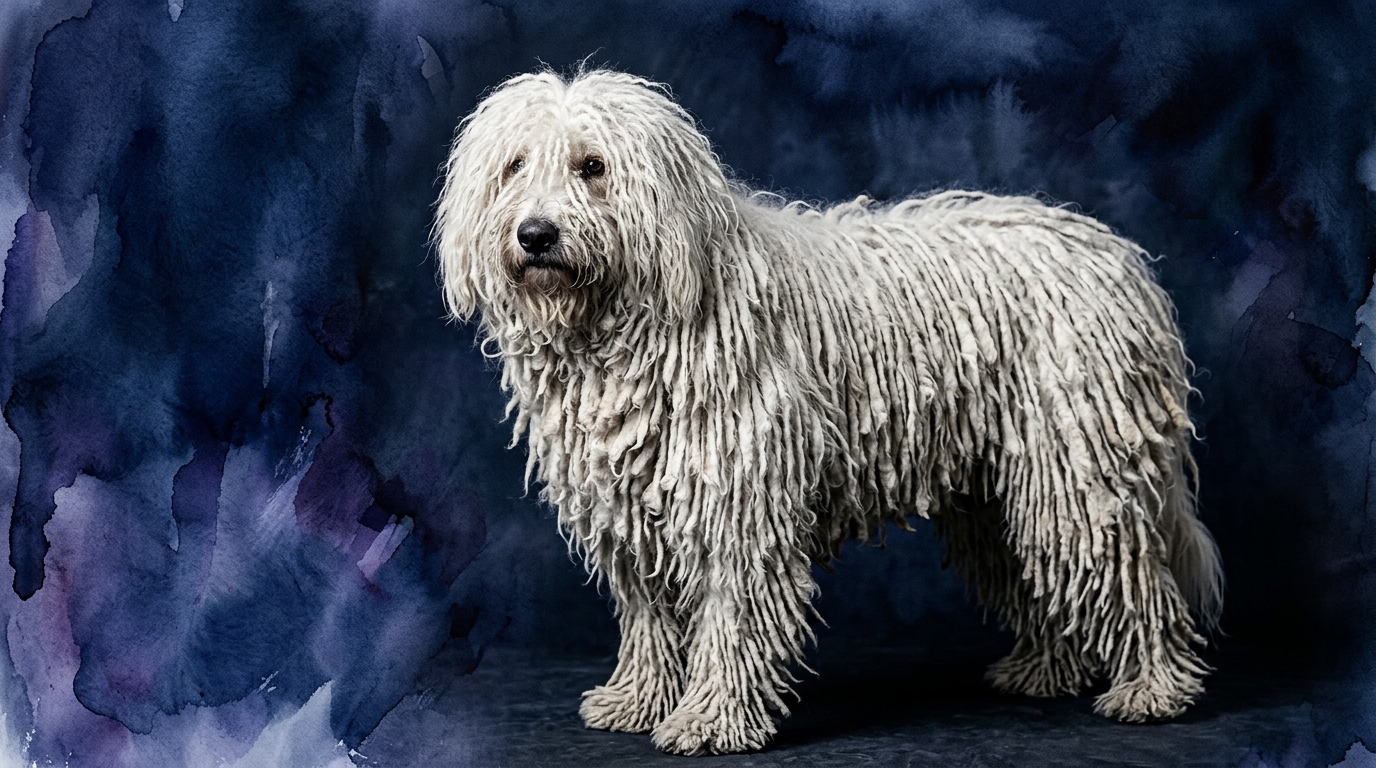
The Komondor, a majestic livestock guardian, registers a Coren rank of #67, reflecting a respectable capacity for understanding new commands. Its Pet IQ Lab scores are uniform: Problem Solving 3/5, Training Speed 3/5, Social Intelligence 3/5, Instinctive Drive 3/5, and Memory 3/5. For the Komondor, a 3/5 in Problem Solving often manifests as independent decision-making when assessing threats to its flock, rather than solving complex puzzles on command. Its Training Speed at 3/5 implies a dog capable of learning, but one that may prioritize its innate guarding duties over immediate human directives. Social Intelligence at 3/5 means a deep, protective bond with its family and charges, coupled with a reserved, watchful demeanor towards strangers, processing social cues through the lens of protection. The 3/5 Instinctive Drive is overwhelmingly oriented towards guardianship, while Memory at 3/5 allows it to retain knowledge of its territory, routines, and perceived threats over time.
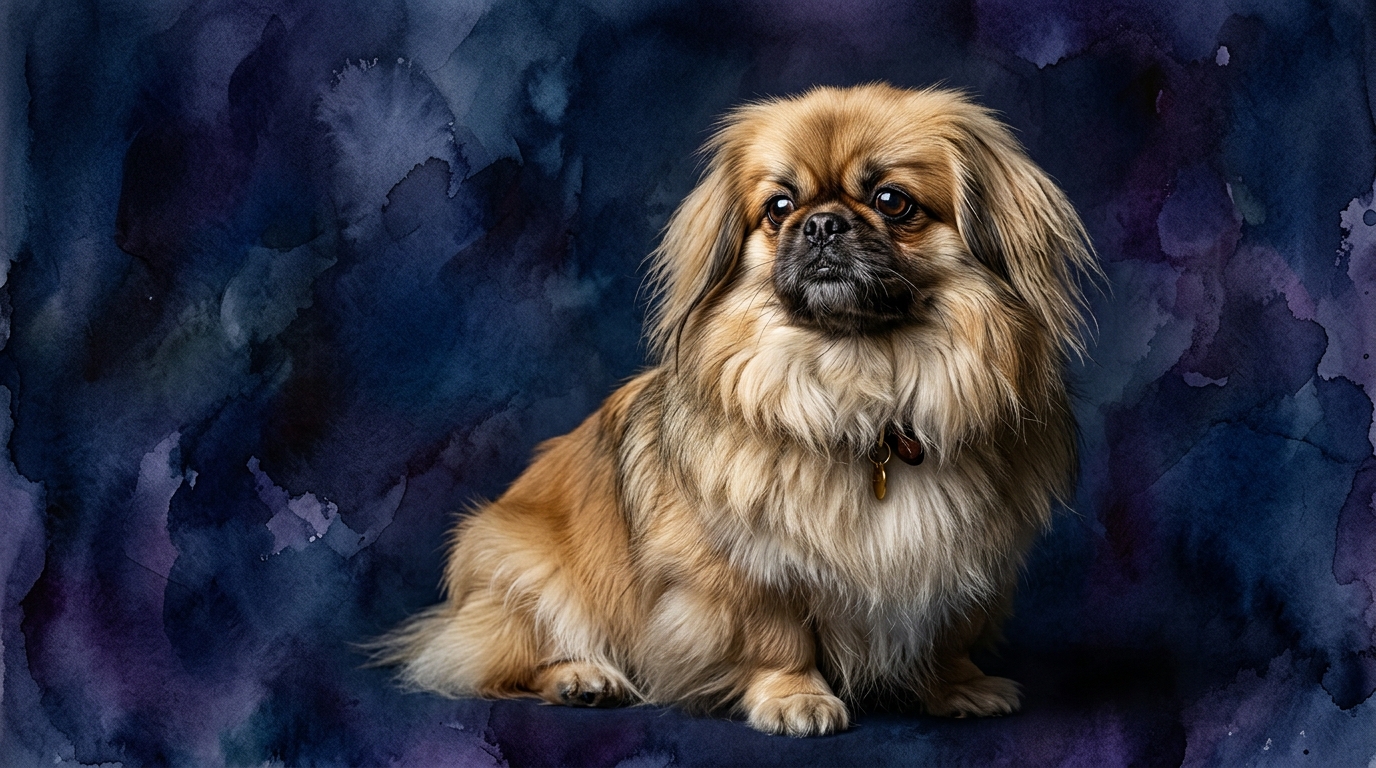
Conversely, the Pekingese, a dignified companion breed, holds a Coren rank of #77, suggesting a slightly lower, though still capable, capacity for command comprehension compared to the Komondor. Its Pet IQ Lab scores mirror the Komondor’s across the board: Problem Solving 3/5, Training Speed 3/5, Social Intelligence 3/5, Instinctive Drive 3/5, and Memory 3/5. For the Pekingese, a 3/5 in Problem Solving typically involves navigating household dynamics to secure comfort or attention, such as finding the sunniest spot or subtly coaxing treats. Its Training Speed at 3/5 indicates an ability to learn, but often at its own pace and only when sufficiently motivated, reflecting a certain regal independence. Social Intelligence at 3/5 translates to a profound bond with its chosen human companions, often displaying a discerning and sometimes aloof attitude towards others, discerning social nuances within its intimate circle. The 3/5 Instinctive Drive is primarily expressed through its companion nature, a desire for closeness and perhaps a territorial protectiveness over its home. Memory at 3/5 ensures it remembers preferred sleeping spots, feeding times, and the people it cherishes most.
Where the Komondor Excels Cognitively
The Komondor’s cognitive strengths lie in its capacity for independent, sustained vigilance and complex environmental assessment. Its 3/5 Problem Solving, paired with its robust Instinctive Drive, allows it to make autonomous decisions in dynamic situations, such as identifying a predator's approach or responding to subtle shifts in its flock's behavior without direct human intervention. This cognitive ability is crucial for a breed designed to operate largely unsupervised in vast, open spaces. Furthermore, its Memory at 3/5 is particularly adept at recalling intricate territorial boundaries and the specific characteristics of individuals within its care, enabling it to distinguish between familiar sheep and an unfamiliar threat with precision. This type of nuanced, situation-dependent judgment is a hallmark of its working intelligence.
Another area where the Komondor's cognition shines is in its capacity for long-term strategic planning related to protection. While not planning in the human sense, its ability to learn and adapt its guarding strategies over time, based on past encounters and observations, points to a sophisticated understanding of cause and effect within its environment. For example, a Komondor might learn specific routes a coyote takes and adjust its patrol patterns accordingly, demonstrating a practical application of its 3/5 Problem Solving and Memory in a real-world context. Its Coren rank of #67 also suggests a greater aptitude for understanding and executing a broader range of complex commands compared to the Pekingese, particularly those related to its protective duties.
Where the Pekingese Demonstrates Unique Cognitive Strengths
The Pekingese, with its 3/5 Social Intelligence and 3/5 Problem Solving, showcases a distinct set of cognitive advantages suited for its role as a dedicated companion. Its strength lies in its acute ability to interpret and respond to human emotional states and subtle cues within a domestic setting. A Pekingese might not guard livestock, but it excels at understanding when its owner needs comfort or when a specific behavior will elicit a desired response, such as a belly rub or a treat. This finely tuned social cognition allows them to integrate seamlessly into human family structures, often becoming highly attuned to the rhythms and moods of their household.
Furthermore, the Pekingese's 3/5 Problem Solving frequently manifests as clever strategies for maximizing personal comfort and attention. This might involve strategically placing themselves in the path of sunlight, or using vocalizations and body language to communicate specific desires to their owners. Their Memory at 3/5 is particularly strong for recalling preferred routines and the specific behaviors of their human companions, allowing them to anticipate events like meal times or walks. While their Coren rank is #77, indicating fewer understood commands, their cognitive prowess is not diminished but rather channeled into mastering the social complexities of human-canine cohabitation, a skill often underestimated in traditional intelligence assessments.
Training: A Study in Motivation and Independence
Despite both breeds having a 3/5 Training Speed score, their trainability differs significantly due to their inherent temperaments and historical roles. The Komondor, with its Coren rank of #67, possesses the cognitive capacity to learn a substantial number of commands, but its independent nature as a livestock guardian means it often evaluates commands against its own perceived duty. Training a Komondor requires immense patience, consistency, and a deep understanding of its protective instincts. It will learn, but compliance may not be immediate if it perceives a command as conflicting with its primary role or if it believes it knows a better way to handle a situation. Their strong Instinctive Drive means they are often self-motivated by their guardian role, which can either aid or hinder training depending on the context.
The Pekingese, with its Coren rank of #77, generally understands fewer commands than the Komondor, and its training is often influenced by its strong-willed and comfort-loving personality. While capable of learning household rules and basic commands, their 3/5 Training Speed is often mediated by their motivation; if a task doesn't immediately benefit them or provide comfort, they may be less inclined to cooperate. Their specific behavioral differences include a tendency towards selective hearing when not sufficiently enticed, and a preference for making their own decisions about when and where they wish to engage. Effective Pekingese training relies on positive reinforcement, making it a game, and understanding their desire for a comfortable, stable routine, rather than expecting immediate, unwavering obedience.
Matching Breeds to Lifestyles: Active vs. Relaxed Owners
The Komondor is best suited for owners who appreciate an independent, watchful companion and can provide ample space and mental stimulation that taps into its guardian instincts. While not requiring constant intense physical activity like some herding breeds, they need a secure, expansive environment to patrol and a dedicated owner capable of managing a powerful dog with strong protective drives. Their cognitive abilities thrive when given a 'job,' even if that job is simply overseeing their family and property. Owners must be prepared for a dog that thinks for itself and is not inherently driven to please in the same way some other breeds are; they are partners, not subordinates.
The Pekingese, conversely, is an ideal match for more relaxed owners seeking a devoted, low-maintenance companion. They thrive in comfortable indoor environments, including apartments, and require minimal physical exertion, preferring short walks and indoor play. Their cognitive strengths are best appreciated by owners who enjoy a dog with a distinct personality, one that offers companionship without demanding extensive outdoor adventures or rigorous training regimens. Owners who understand and respect the Pekingese's regal independence and appreciate its nuanced social interactions will find a deeply rewarding bond, as this breed excels at the art of being a cherished family member.
The Verdict
Choose a Komondor if you seek an independent, protective partner for a spacious property, valuing a dog that makes its own decisions within a guardian role. You must be prepared for consistent, patient training and respect its inherent autonomy.
Opt for a Pekingese if you desire a devoted, less physically demanding companion for a relaxed household, appreciating a dog with a strong personality and deep social bonds within its intimate circle.
🧠 Find Your Pet's IQ Score
Our Pet IQ Lab assessment covers 25+ tests across 5 cognitive dimensions — personalized to your breed.
Take the Full IQ Test →Frequently Asked Questions
Do Komondors and Pekingese have the same intelligence?
While both breeds share identical 3/5 scores across the Pet IQ Lab's five cognitive dimensions, their intelligence manifests differently due to their distinct historical roles. The Komondor's cognition focuses on independent guardianship, while the Pekingese's centers on nuanced companionship and comfort.
Which breed is easier to train, considering their similar IQ scores?
Despite similar Training Speed scores, the Komondor, with its higher Coren rank (#67) and independent nature, requires consistent, patient training that respects its guardian instincts. The Pekingese (#77 Coren rank) can be more challenging due to its strong will and selective motivation, often responding best to positive reinforcement and comfort-driven incentives.
How does 'Problem Solving' differ between these two breeds?
For the Komondor, 3/5 Problem Solving involves autonomous decision-making in protecting its flock or territory, assessing threats independently. For the Pekingese, 3/5 Problem Solving often translates to clever strategies for navigating domestic environments, securing comfort, or subtly influencing its human companions for attention and treats.