Side-by-Side IQ Profile
The Cosmic Pet Pet IQ Lab employs five key dimensions to map a breed's cognitive architecture, moving beyond generalized notions of "smartness" to reveal specific intellectual aptitudes. For the Kooikerhondje and Norwegian Elkhound, these scores paint a detailed picture of their inherent capabilities, reflecting centuries of selective breeding for distinct working roles.
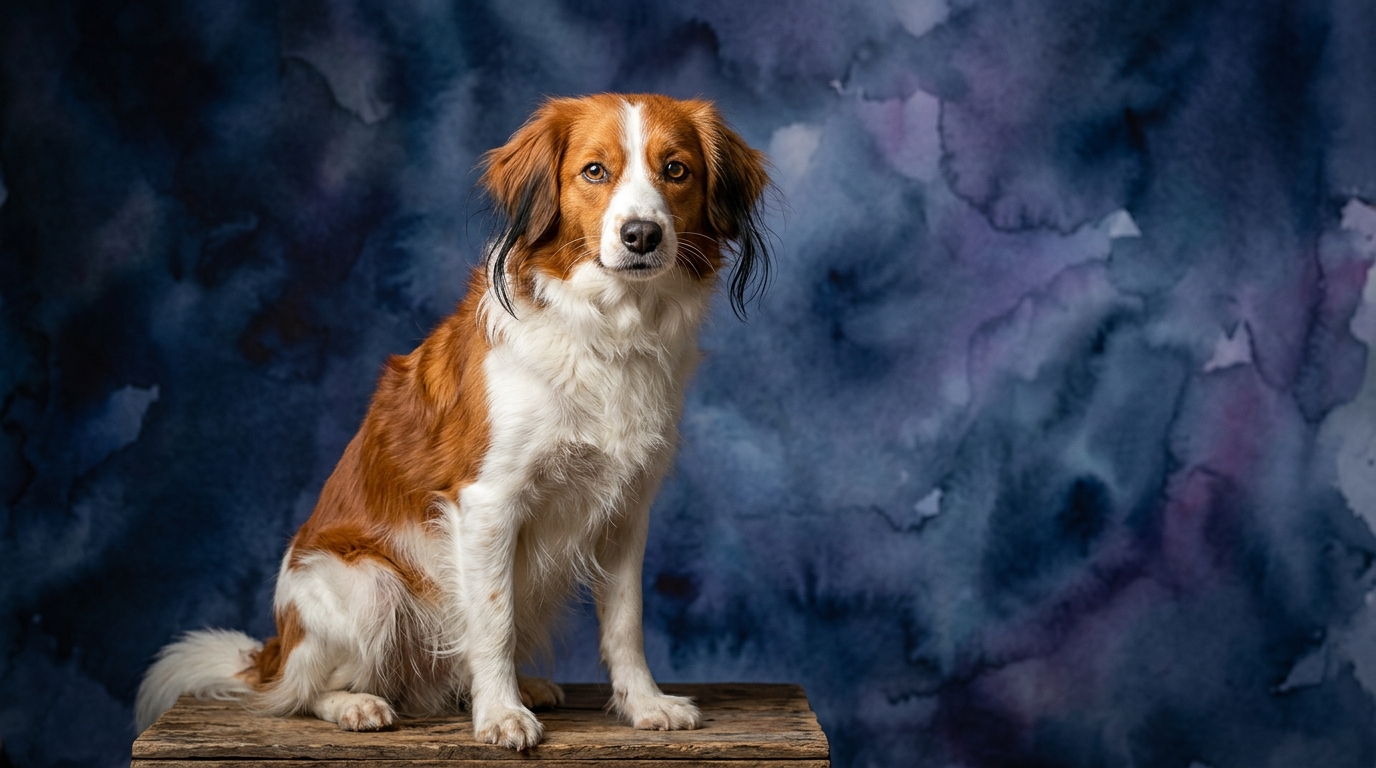
The Kooikerhondje, a charming Dutch sporting dog, presents a remarkably balanced cognitive profile, scoring 3/5 across all five dimensions: problem solving, training speed, social intelligence, instinctive drive, and memory. This consistent scoring suggests a well-rounded and adaptable intellect, capable of moderate complexity without extreme specialization in any single area. Their problem-solving typically involves methodical approaches, often in cooperation with a handler, rather than independent, creative solutions.
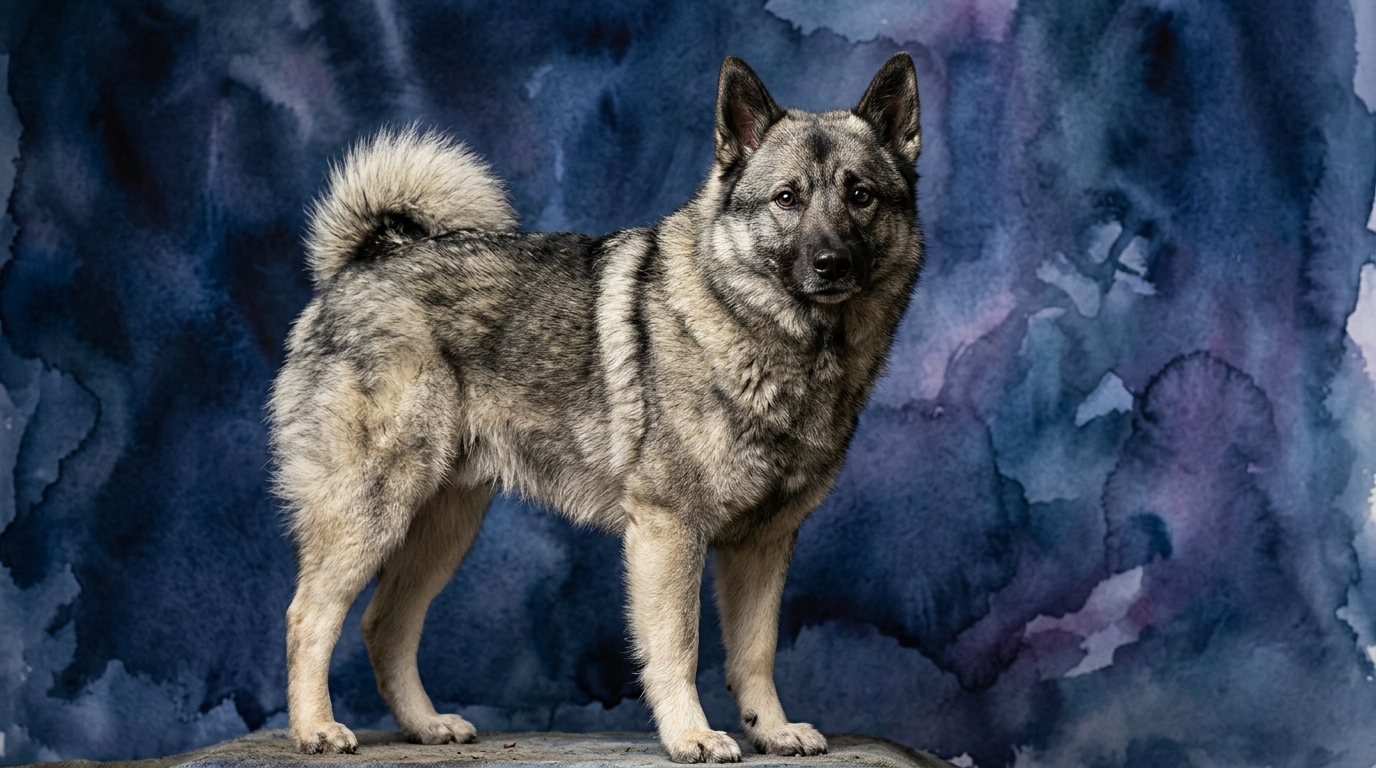
In contrast, the Norwegian Elkhound, an ancient Nordic hound, exhibits a more specialized cognitive strength, particularly in areas crucial for its demanding work as a big-game hunter. This breed achieves a 4/5 in problem solving, training speed, and memory, while scoring 3/5 in social intelligence and instinctive drive. The higher scores point to a dog capable of more complex, independent thought processes, quicker acquisition of new commands, and superior retention of learned behaviors and spatial information.
While both breeds possess a solid foundation of social intelligence and instinctive drive (3/5), the Elkhound's advantage in problem-solving, training speed, and memory (4/5 versus Kooiker's 3/5 in these areas) suggests a breed with a higher capacity for independent learning and complex task execution. The Kooiker's consistent 3/5 profile highlights a versatile, cooperative intelligence, ideal for a partner in specific tasks, whereas the Elkhound's higher marks indicate a more self-reliant and quicker-witted companion.
Where Kooikerhondje Wins Cognitively
While the Norwegian Elkhound often outpaces the Kooikerhondje in raw scores, the Kooiker's balanced cognitive profile offers distinct advantages, particularly for certain lifestyles and training philosophies. Their consistent 3/5 across all dimensions means they are less likely to overthink or independently "solve" problems in ways that might be inconvenient for their human companions. This moderate problem-solving aptitude often translates into a dog that is less prone to devising intricate escape routes or finding novel ways to access forbidden items, making them generally more predictable within a home environment.
The Kooiker's 3/5 in instinctive drive, while still significant for a sporting breed, is often more directed and manageable than the intense, independent hunting drive seen in many hound breeds. This means their natural impulses, such as retrieving or scent work, can be channeled into cooperative games and training exercises without constant vigilance against strong prey drives. Their social intelligence, also at 3/5, combined with their balanced nature, can foster a deeply empathetic and attuned family companion, one who understands subtle cues and thrives on reciprocal interaction rather than challenging boundaries with independent thought.
Furthermore, the Kooiker's cognitive balance makes them highly adaptable to a variety of consistent routines and environments. While they may not pick up new tricks at lightning speed, their steady training speed and memory at 3/5 ensure that once a behavior is learned through positive reinforcement and repetition, it is reliably retained. This reliability, stemming from their lack of extreme specialization, can be a significant cognitive "win" for owners seeking a consistent, cooperative, and less independently-minded canine partner.
Where Norwegian Elkhound Wins Cognitively
The Norwegian Elkhound's cognitive strengths are clearly reflected in its higher scores, particularly its 4/5 in problem solving, training speed, and memory. These attributes are not merely statistics; they are direct indicators of a mind built for challenging, independent work. Their superior problem-solving ability means Elkhounds are adept at navigating complex situations, making decisions on their own when faced with obstacles, and thinking creatively to achieve a goal, such as tracking a difficult scent trail or finding a way around an obstruction in the wilderness.
This breed's faster training speed (4/5) and excellent memory (4/5) are invaluable assets for owners interested in advanced obedience, dog sports like agility, or specialized working roles. Elkhounds can grasp new commands and sequences of behaviors more quickly than many other breeds, and once learned, these skills are retained with remarkable tenacity. This capacity allows for a broader and deeper curriculum of learning, enabling them to master a wider array of tasks and respond reliably to intricate cues.
The Elkhound's strong instinctive drive (3/5), combined with its superior problem-solving, means it possesses a powerful intrinsic motivation to engage with its environment and pursue its natural inclinations. While this requires careful management, it also fuels a dog that is eager to work, explore, and utilize its sharp senses. For owners who can channel this drive into constructive activities like scent work, tracking, or even competitive obedience, the Elkhound's cognitive makeup offers a highly capable and engaged partner, excelling in tasks that demand both intellect and endurance.
Which Is Easier to Train and Why
When considering ease of training, the Norwegian Elkhound, with its 4/5 in training speed and memory, generally presents a quicker learning curve for new commands and behaviors compared to the Kooikerhondje's 3/5 in both categories. Elkhounds often pick up on cues and concepts with fewer repetitions, and their strong memory ensures that once a lesson is solidified, it is remembered for the long term. This makes them excellent candidates for owners who enjoy progressing through advanced training levels or participating in dog sports where rapid learning and retention are key.
However, "easier" is a nuanced term, and the Elkhound's independence, stemming from its problem-solving abilities and hunting heritage, can introduce its own set of challenges. While they learn quickly, Elkhounds can also be strong-willed and possess a mind of their own, sometimes choosing to follow an interesting scent or pursue an independent agenda over a handler's command if not consistently motivated and led. Their capacity for independent thought requires an owner who is consistent, clear, and engaging, transforming training into a partnership rather than a strict command-and-obey dynamic.
The Kooikerhondje, despite its slightly slower training speed and memory (3/5), often compensates with a more cooperative and eager-to-please temperament. While they might require more repetitions to fully grasp a new concept, once they understand what is expected, they are generally reliable in their execution. Their balanced instinctive drive is typically more manageable, meaning they are less likely to become distracted by overwhelming external stimuli compared to a breed with a powerful, independent hunting drive. For owners seeking a dog that is generally biddable and thrives on positive, consistent reinforcement within a family setting, the Kooiker's training journey, while potentially slower, can feel more straightforward and less confrontational.
Which Suits Active Owners vs Relaxed Owners
Both the Kooikerhondje and the Norwegian Elkhound are breeds that thrive with active engagement, making neither an ideal choice for a truly "relaxed" owner seeking a sedentary companion. However, the type of activity and mental stimulation they require differs significantly, aligning them with distinct profiles of active ownership.
The Norwegian Elkhound, with its 4/5 in problem-solving and memory, demands substantial mental and physical outlets to prevent boredom and destructive behaviors. Active owners who enjoy challenging their dogs with complex tasks like advanced obedience, agility, tracking, or long, exploratory hikes in varied terrain will find an Elkhound a highly capable and enthusiastic partner. Their need for independent thought and problem-solving means they relish opportunities to use their nose and intellect, often requiring structured activities that mimic their ancestral hunting roles. A relaxed owner would quickly find an Elkhound inventing its own "problems" to solve, often to the detriment of household peace.
The Kooikerhondje, while also active and needing regular exercise, benefits from a different kind of engagement. Their balanced 3/5 cognitive profile suggests they thrive on consistent, cooperative activities rather than highly independent problem-solving challenges. Owners who enjoy teaching new tricks, engaging in moderate dog sports like rally obedience or scent work, participating in regular retrieving games, and providing consistent, structured routines will find a Kooiker a joyful and willing participant. While they require daily physical exercise, their mental stimulation often revolves around interactive play and cooperative learning within the family unit, making them suitable for active owners who prefer a more integrated, less independently driven partnership. A relaxed owner would still struggle with a Kooiker's energy, but perhaps less with their cognitive demands compared to an Elkhound.
Choosing between a Kooikerhondje and a Norwegian Elkhound hinges on a prospective owner's lifestyle, training philosophy, and their capacity to meet specific cognitive and physical demands. Both breeds are loyal and engaging, but their intellectual strengths cater to different partnerships.
If you are an owner who values a consistently cooperative companion, one that thrives on methodical training and integrated family activities, and prefers a dog less inclined towards independent problem-solving mischief, the Kooikerhondje is likely your ideal match. They offer a balanced, adaptable intelligence that flourishes with positive reinforcement and a structured, loving environment, making them a delightful partner for those seeking a dog that is present and engaged without being overwhelmingly headstrong.
Conversely, if you are an active, experienced owner eager for a canine partner capable of advanced learning, independent problem-solving, and robust physical challenges, the Norwegian Elkhound stands out. This breed excels in environments where its keen intellect and strong memory can be channeled into complex tasks, outdoor adventures, and structured dog sports. They demand an owner who can provide consistent leadership, ample mental stimulation, and appreciate a dog with a strong, independent spirit, rewarding them with a remarkably capable and devoted companion.
The Verdict
Choose the Kooikerhondje if you seek a consistently cooperative, balanced companion thriving on methodical training and integrated family activities, less prone to independent problem-solving.
Opt for the Norwegian Elkhound if you are an active, experienced owner desiring a partner capable of advanced learning, independent problem-solving, and robust physical challenges.
🧠 Find Your Pet's IQ Score
Our Pet IQ Lab assessment covers 25+ tests across 5 cognitive dimensions — personalized to your breed.
Take the Full IQ Test →Frequently Asked Questions
Do Norwegian Elkhounds require a lot of mental stimulation?
Absolutely. With a 4/5 in problem-solving and memory, Elkhounds thrive on complex tasks, scent work, and varied training. Without sufficient mental engagement, they may invent their own activities, which can include destructive behaviors.
Are Kooikerhondjes suitable for first-time dog owners?
A Kooikerhondje can be a good fit for dedicated first-time owners who are committed to consistent, positive training and providing ample physical and interactive mental stimulation. Their balanced temperament and cooperative nature make them receptive learners.
How do their instinctive drives manifest in daily life?
The Kooikerhondje's 3/5 instinctive drive often surfaces as a desire to retrieve or engage in scent games, making them playful and easy to redirect. The Elkhound's 3/5 drive is more about tracking and independent exploration, requiring secure environments and engaging outlets for their strong natural instincts.