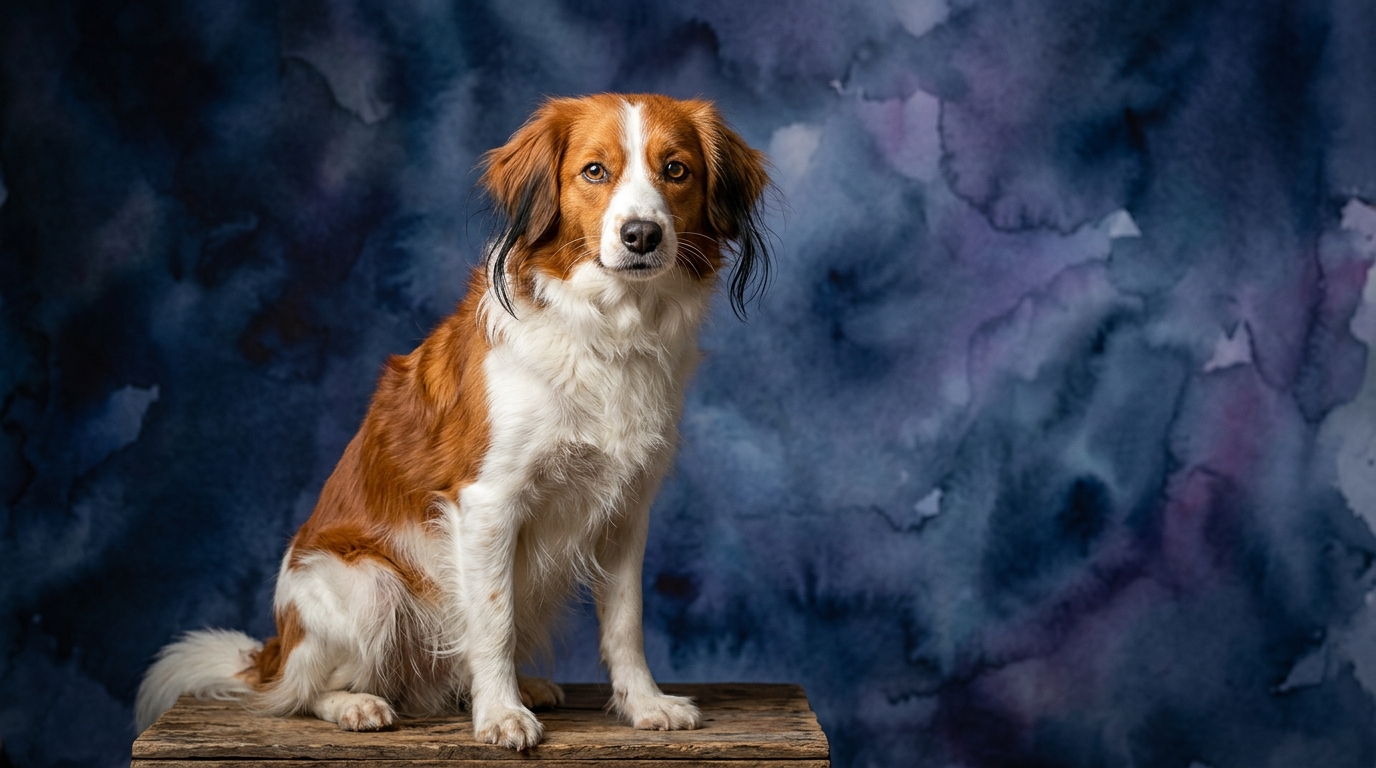
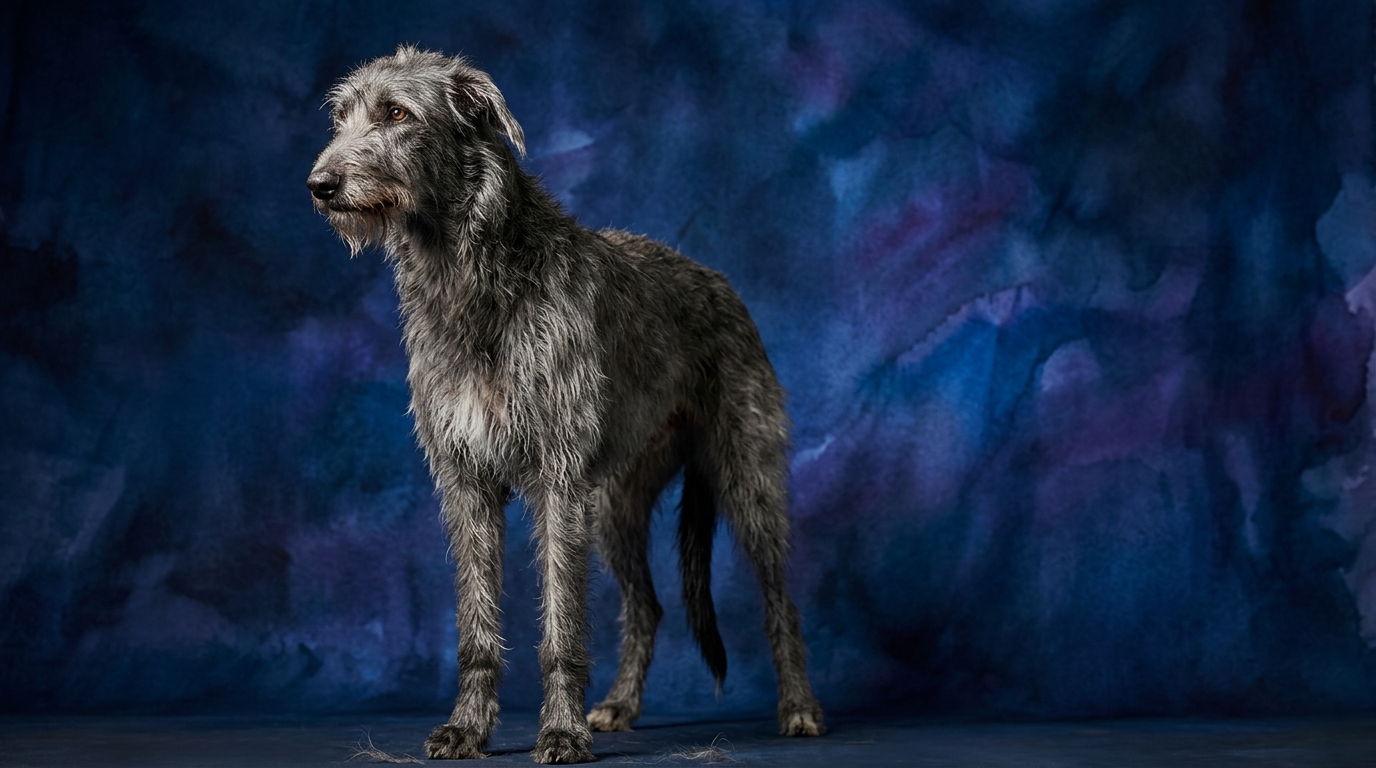
Side-by-Side IQ Profile: Unpacking Identical Scores with Distinct Flavors
Both the Kooikerhondje and Scottish Deerhound share a 'moderate' rating across the board in our Pet IQ Lab assessment, which initially suggests a cognitive parity. However, their breed histories—the Kooikerhondje as a Dutch duck decoy dog and the Scottish Deerhound as a coursing sighthound for large game—imply that these moderate abilities are deployed and expressed in vastly different ways. This section explores how a 3/5 might feel distinct in each breed's practical application.
For Problem Solving (3/5), the Kooikerhondje's moderate ability might manifest as cleverness in navigating complex retrieving scenarios, figuring out how to manipulate objects, or adapting to new training challenges with a methodical approach. The Scottish Deerhound's 3/5 in problem-solving often translates to independent decision-making in the field, such as assessing the best pursuit route or overcoming obstacles during a chase, without constant human direction.
A 3/5 Training Speed for the Kooikerhondje typically means they are receptive to learning new commands at a steady pace, benefiting from consistent, positive reinforcement due to their biddable nature. The Scottish Deerhound's 3/5 training speed, conversely, might require more patience and understanding of their sighthound independence; while they learn quickly, their motivation might stem from intrinsic drives rather than a consistent desire to please, making traditional obedience feel slower to some handlers.
The Kooikerhondje's moderate Social Intelligence (3/5) generally means they are attuned to family dynamics, capable of reading human emotions and adapting to household routines, making them engaging companions. For the Scottish Deerhound, a 3/5 in social intelligence often manifests as a dignified, gentle connection with their family, understanding cues but perhaps less overtly expressive or concerned with intricate social nuances, preferring a calm, observant presence.
Instinctive Drive (3/5) is where the identical score truly diverges in practical application. For the Kooikerhondje, this moderate drive is channeled into strong retrieving instincts, a natural affinity for water work, and the specific 'decoying' behavior of luring ducks. The Scottish Deerhound's 3/5 instinctive drive is powerfully focused on prey drive, specifically the visual tracking and pursuit of large game, a deep-seated impulse that defines much of their behavior outdoors.
A 3/5 Memory for the Kooikerhondje likely means they reliably recall learned commands, routines, and specific locations of retrieved items, aiding in their working roles and daily life. The Scottish Deerhound's moderate memory might excel in remembering vast landscapes, optimal running paths, or the patterns of game they've encountered, crucial for their hunting heritage, rather than a long list of obedience commands.
Where the Kooikerhondje Excels Cognitively
While both breeds share similar cognitive ratings, the Kooikerhondje's specific historical role as a duck decoy dog imbues their moderate problem-solving and instinctive drives with a unique cooperative edge. Their 3/5 problem-solving often manifests as an astute ability to strategize in a human-centric working context, such as figuring out the most efficient way to complete a multi-step retrieve or understanding complex sequences of handler cues within a game or training scenario.
This breed's 3/5 training speed, coupled with their inherent biddability from the Sporting Group, means they often appear to grasp new concepts with a certain eagerness and precision. They are typically motivated by interaction and praise, making their learning process feel more fluid and responsive in structured environments, reflecting their history of working closely alongside human partners. Their moderate social intelligence is also finely tuned to anticipate handler intentions, enhancing their performance in tasks requiring teamwork.
Where the Scottish Deerhound Excels Cognitively
The Scottish Deerhound, a magnificent sighthound, demonstrates its moderate cognitive abilities in ways that prioritize independence, keen observation, and an unwavering focus on its primary drive. Their 3/5 problem-solving shines brightest when they are given the autonomy to make swift, critical decisions in open spaces, such as calculating the quickest route to intercept a perceived 'prey' or navigating challenging terrain with grace and efficiency during a chase.
The Deerhound's 3/5 instinctive drive is the cornerstone of their cognitive strength, manifested as an intense visual acuity and an almost primal urge to pursue. This drive, while rated moderately, is incredibly refined and central to their identity, allowing them to process visual stimuli at high speeds and respond with incredible agility. Their 3/5 memory is particularly impressive for spatial recall and patterns within their environment, critical for successful coursing and navigating large territories.
Training Dynamics: Cooperative Learner vs. Independent Spirit
Despite both breeds registering a 3/5 in training speed, the practical experience of training a Kooikerhondje versus a Scottish Deerhound can be remarkably different. The Kooikerhondje, hailing from the Sporting Group, typically brings a cooperative attitude to training sessions. Their moderate training speed is often amplified by a natural desire to engage with their handler and a readiness to perform tasks for praise or rewards, making them generally perceived as more straightforward to teach traditional obedience and dog sports. They thrive on consistency and positive reinforcement, often showing a keen interest in learning new skills that involve teamwork.
The Scottish Deerhound, as a sighthound, presents a unique training dynamic due to their inherent independence and strong prey drive, even with a 3/5 training speed. While capable of learning quickly, their motivation is often internal, driven by instinct rather than a consistent desire to please. Training a Deerhound requires immense patience, understanding of their natural inclinations, and often gamification to make learning engaging. They might learn a command swiftly but choose to execute it only if it aligns with their immediate interest, particularly if a squirrel or distant movement captures their attention, highlighting their independent problem-solving and instinctive drive in real-time.
Lifestyle Compatibility: Engaging Partner vs. Serene Companion
For owners seeking an engaging, moderately active partner for various pursuits, the Kooikerhondje is often an excellent fit. Their balanced 3/5 scores across all cognitive dimensions mean they appreciate consistent mental stimulation through training, puzzle toys, and interactive games, alongside regular physical exercise like walks, hikes, and dog sports. They thrive in environments where they are integrated into family activities and given opportunities to use their retrieving and problem-solving skills, making them suitable for active families who enjoy a dog with a clear purpose and connection.
The Scottish Deerhound, while requiring bursts of intense physical activity, particularly free running in a secure area, tends to be a remarkably relaxed and serene companion indoors. Owners who appreciate a dignified, calm presence in the home but can provide ample space and opportunity for their dog to gallop and express their strong instinctive drive outdoors will find a deep connection. Their independence and focus on environmental stimuli mean they are content with less constant 'work' or engagement compared to a Kooikerhondje, making them suitable for owners who value a more independent companion but are committed to meeting their specific, albeit episodic, exercise needs.
The Verdict
Opt for the Kooikerhondje if you seek a biddable, interactive companion for varied activities, valuing a dog that learns cooperatively and actively engages in family life and structured training.
Choose the Scottish Deerhound if you appreciate a noble, calm indoor presence, can provide ample space for their exhilarating bursts of speed, and respect the independent spirit of a sighthound.
🧠 Find Your Pet's IQ Score
Our Pet IQ Lab assessment covers 25+ tests across 5 cognitive dimensions — personalized to your breed.
Take the Full IQ Test →Frequently Asked Questions
Do Kooikerhondjes or Scottish Deerhounds make better family pets?
Both breeds can be wonderful family pets, but their suitability depends on the family's lifestyle. Kooikerhondjes are generally more interactive and biddable, often fitting seamlessly into active family routines. Scottish Deerhounds are calm and gentle indoors, making them great with respectful children, but require specific exercise outlets and may be less overtly playful.
Which breed is more prone to separation anxiety?
While individual temperament varies, Kooikerhondjes, being more people-oriented and biddable, might be slightly more prone to separation anxiety if not properly conditioned, as they thrive on interaction. Scottish Deerhounds, with their independent nature, are generally less prone to intense separation anxiety, often content to relax quietly when their owners are away, provided their exercise needs are met.
How do their grooming needs compare?
The Kooikerhondje has a medium-length coat that requires regular brushing (2-3 times a week) to prevent mats, especially their feathering, and moderate shedding. The Scottish Deerhound has a wiry, harsh coat that requires less frequent brushing (weekly) but does need occasional hand-stripping to maintain its texture and minimize shedding.