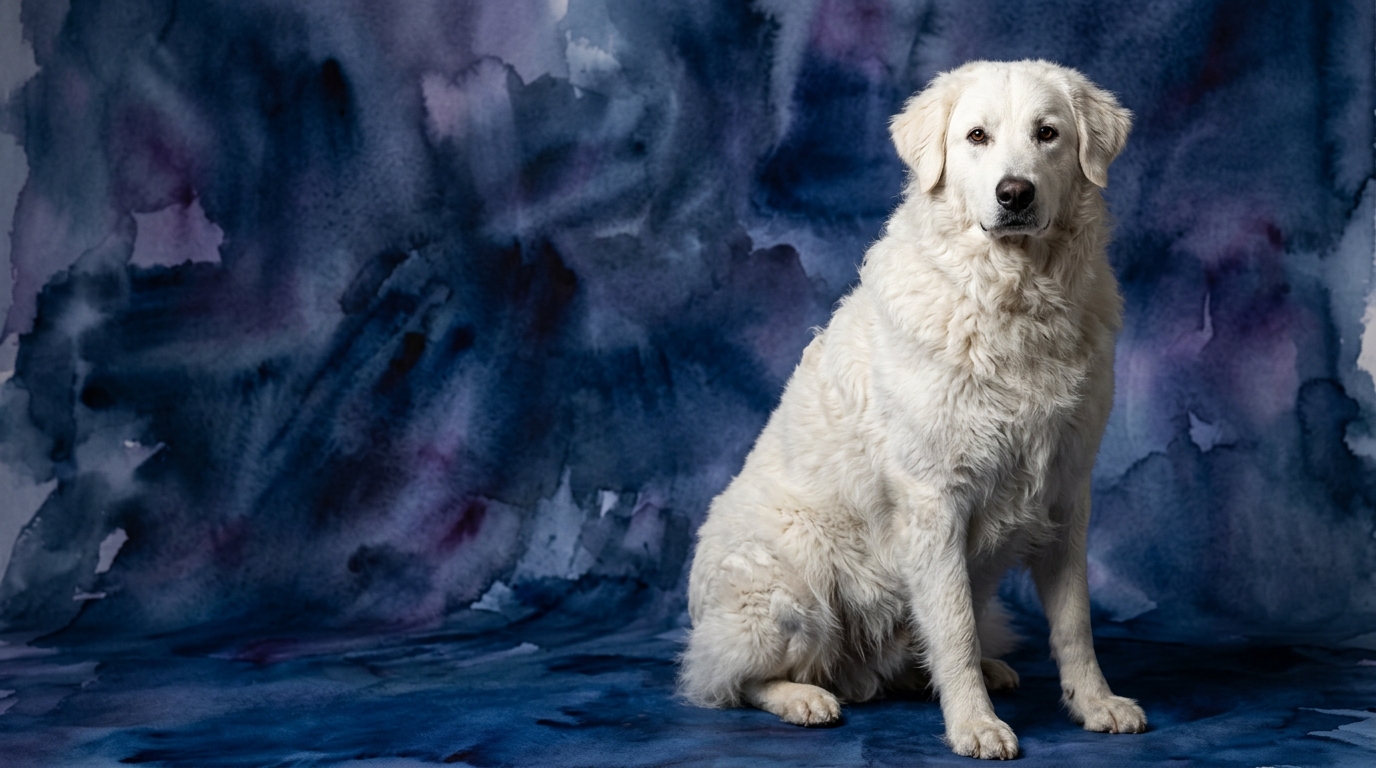
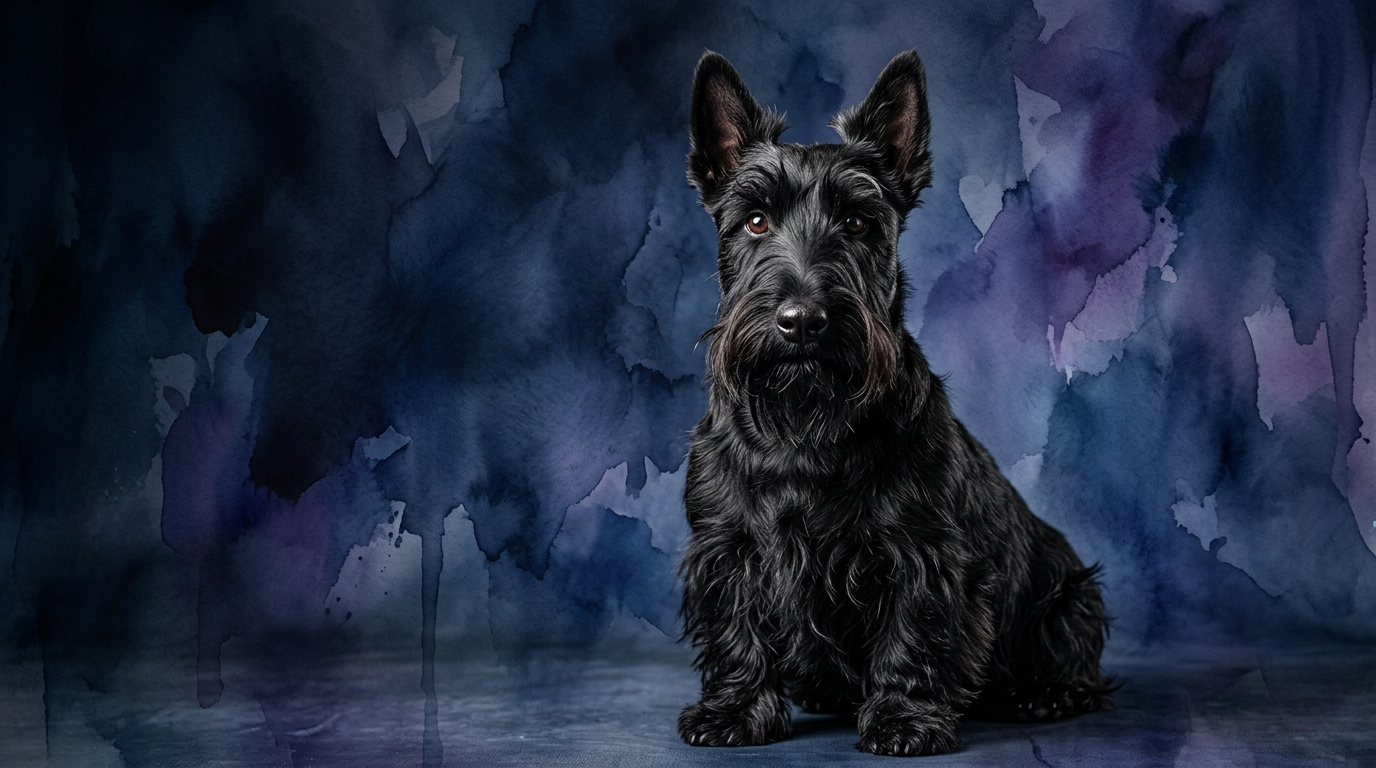
Side-by-Side IQ Profile: Kuvasz vs. Scottish Terrier
The Cosmic Pet Pet IQ Lab employs a five-dimensional framework to assess canine intelligence, offering a nuanced view beyond simple obedience. For the Kuvasz, a Working breed ranked #42 by Coren, and the Scottish Terrier, a Terrier breed ranked #65, these dimensions reveal fascinating insights into their cognitive strengths and approaches to the world.
**Kuvasz IQ Profile (Coren Rank #42):**
**Problem Solving (3/5):** The Kuvasz demonstrates practical problem-solving, primarily focused on its ancestral role of protecting livestock. This isn't about solving puzzle toys for amusement but assessing threats and strategizing defensive actions within its territory, often making independent and decisive judgments without human intervention. Their solutions are typically effective and situation-specific.
**Training Speed (3/5):** While capable of learning, the Kuvasz is not a breed that thrives on rote obedience for obedience's sake. Its training speed reflects its independent nature; it learns commands and tasks efficiently when it perceives a purpose or benefit, but might resist repetitive drills or commands it deems unnecessary. Early, consistent, and purpose-driven socialization and training are key.
**Social Intelligence (3/5):** The Kuvasz's social intelligence is highly attuned to its family and perceived flock. It can discern intentions, understand social hierarchies within its human family, and form deep bonds. However, its protective instincts mean it can be reserved or wary with strangers, requiring careful and controlled introductions to expand its social circle without triggering its guarding nature.
**Instinctive Drive (3/5):** This score primarily encompasses its powerful guarding instinct. The Kuvasz possesses an inherent drive to protect its territory, family, and any perceived dependents. This drive is deeply ingrained, manifesting as vigilance, territoriality, and a strong sense of responsibility, rather than a drive for retrieving or herding.
**Memory (4/5):** A standout trait, the Kuvasz exhibits excellent memory. It remembers people, places, and routines with remarkable fidelity, which is crucial for its guardian role. This strong recall aids in identifying familiar individuals from potential threats and remembering complex boundaries or patrol patterns over extended periods, contributing significantly to its effectiveness.
**Scottish Terrier IQ Profile (Coren Rank #65):**
**Problem Solving (3/5):** The Scottish Terrier's problem-solving skills are rooted in its earth dog heritage. This involves figuring out how to navigate tight spaces, outwit burrowing prey, and determine the most effective way to achieve a goal, often independently. Their solutions are typically tenacious and single-minded, driven by their strong prey drive and determination.
**Training Speed (3/5):** The Scottish Terrier learns at a moderate pace, but its independent and often stubborn nature can make training a test of wills. While capable of understanding commands, their willingness to comply often depends on their own agenda or the perceived value of the reward. Consistency, patience, and making training enjoyable are essential to overcome their inherent terrier willfulness.
**Social Intelligence (3/5):** Scottish Terriers are typically devoted to their immediate family but can be reserved or aloof with strangers. Their social intelligence allows them to form strong bonds and understand household dynamics, but they often choose their own companions and may not be overtly demonstrative. They can be quite discerning in their social interactions, preferring a select few.
**Instinctive Drive (3/5):** The Scottish Terrier's instinctive drive is primarily focused on hunting and digging. This powerful drive compelled them to pursue vermin underground, making them determined and persistent. This manifests as a strong prey drive, a love for digging, and an independent spirit focused on exploration and "the chase" of small creatures.
**Memory (3/5):** The Scottish Terrier possesses a good memory, capable of remembering commands, routines, and experiences. While not as exceptional as the Kuvasz's, their recall is sufficient for navigating their environment and retaining learned behaviors, though their independent streak might sometimes override their memory of a command if something more enticing captures their attention.
Where Kuvasz Wins Cognitively
The Kuvasz's most distinct cognitive advantage lies in its superior memory, scoring a 4/5 compared to the Scottish Terrier's 3/5. This enhanced recall is fundamental to its role as a livestock guardian, enabling it to remember the exact layout of its territory, the faces of its flock, and the subtle cues of potential threats over vast areas and extended periods. This memory isn't just about remembering specific commands; it's about forming comprehensive mental maps and social catalogs, crucial for effective, long-term guardianship.
Furthermore, while both breeds score similarly in social intelligence, the Kuvasz's application of this trait often involves a more nuanced understanding of family dynamics and the need for protective oversight. Its social intelligence is geared towards identifying and safeguarding its perceived dependents, requiring a sophisticated assessment of social situations and potential vulnerabilities within its human 'flock.' This depth of protective social cognition is a central pillar of its intelligence, less central to the Scottish Terrier's profile.
Where Scottish Terrier Wins Cognitively
The Scottish Terrier, despite its smaller stature, excels in a different realm of problem-solving, particularly those requiring tenacious focus and independent action in confined spaces. Its instinctive drive (3/5) is uniquely channeled into persistent pursuit and determination, allowing it to navigate complex underground tunnels or outmaneuver small prey. This specific type of problem-solving, rooted in its earth dog heritage, showcases an unwavering resolve that is distinct from the Kuvasz's broader, more open-field guardian strategies.
While both share a 3/5 in problem-solving, the Scottish Terrier's cognitive strength is in its sheer grit and self-reliance when faced with a challenge it deems worthy. Its ability to work independently for extended periods, making its own decisions in pursuit of a goal, highlights a particular brand of cognitive resilience and single-minded focus that defines its breed character. This tenacity, when applied to learning or challenges, can be a formidable cognitive asset, even if it often means they are solving problems on their own terms.
Which is Easier to Train and Why
When considering ease of training, both breeds present unique challenges despite their identical 3/5 Training Speed scores, necessitating different approaches. The Kuvasz, as a guardian breed, learns quickly when the task aligns with its perceived purpose, but its independent nature means it’s not inherently driven by a desire to please through rote obedience. Training a Kuvasz requires a handler who understands its self-reliant decision-making and can motivate it by tapping into its protective instincts or offering clear, consistent, and purposeful instruction. Its strong memory aids in retention once a concept is understood and accepted as beneficial.
The Scottish Terrier, on the other hand, combines its 3/5 training speed with a significant dose of terrier stubbornness and a strong independent streak. While intelligent and capable of learning, a Scottie often has its own ideas about what constitutes a worthwhile activity. Training success hinges on making lessons engaging, fun, and highly rewarding to overcome its independent will and powerful prey drive. Consistency is paramount, and a trainer must be prepared for moments where the Scottie's focus shifts to an intriguing scent or a perceived 'mission,' making sustained attention a primary hurdle. Therefore, neither is 'easy' in the conventional sense, but the Scottish Terrier's ingrained tenacity often translates to a more challenging and persistent obedience experience for the average owner who isn't prepared for a battle of wits.
Which Suits Active Owners vs. Relaxed Owners
For active owners who relish a partnership with a thoughtful, protective companion, the Kuvasz is an excellent match. While not a high-energy 'go-go-go' breed for endless fetch, it thrives on purposeful activity that engages its formidable mind and body, such as patrolling a large yard, participating in guardian work, or long, exploratory walks. Owners must be prepared to provide consistent mental stimulation and clear leadership to channel its independent problem-solving and protective instincts constructively. Its need for space and a job to do means it's best suited for those with an active lifestyle that can accommodate a large, self-thinking dog and its inherent responsibilities.
The Scottish Terrier can suit both active and more relaxed owners, albeit with specific considerations. They enjoy brisk walks, playtime, and opportunities to 'hunt' (e.g., scent work, digging in a designated area), satisfying their instinctive drive. However, they are also content to relax indoors and enjoy quiet companionship. Their independence means they don't demand constant attention, making them suitable for owners who appreciate a dog with its own agenda. Relaxed owners must still commit to daily walks and mental engagement to prevent boredom, which can lead to destructive behaviors. Their compact size makes them more adaptable to various living situations, but their strong will requires an owner who is consistent and firm without being harsh, regardless of activity level.
The Verdict
Choose the Kuvasz if you are an experienced, active owner seeking a deeply loyal, independent guardian with exceptional memory and a profound sense of responsibility, ready to engage with its protective nature.
Opt for the Scottish Terrier if you appreciate a spirited, tenacious companion with a strong independent streak, capable of focused problem-solving, and you are prepared to engage its terrier drive with consistent, patient, and engaging training methods.
🧠 Find Your Pet's IQ Score
Our Pet IQ Lab assessment covers 25+ tests across 5 cognitive dimensions — personalized to your breed.
Take the Full IQ Test →Frequently Asked Questions
Do Kuvasz dogs bond well with their families?
Yes, Kuvasz dogs form extremely deep bonds with their immediate families, viewing them as their 'flock' to protect. Their social intelligence is strongly geared towards family loyalty and discerning intentions within their trusted circle, though they may be reserved with outsiders.
Are Scottish Terriers good apartment dogs?
Scottish Terriers can adapt well to apartment living due to their moderate exercise needs and relatively compact size, provided they receive daily walks and mental stimulation. However, their strong prey drive and love for digging mean owners must be diligent in providing outlets for these natural instincts to prevent boredom.
Which breed is more prone to independent decision-making?
Both breeds exhibit strong independent decision-making, a trait ingrained by their historical roles. The Kuvasz's independence stems from its need to make protective judgments alone, while the Scottish Terrier's comes from its self-reliant hunting of vermin, both requiring owners who respect and manage these inherent qualities.