
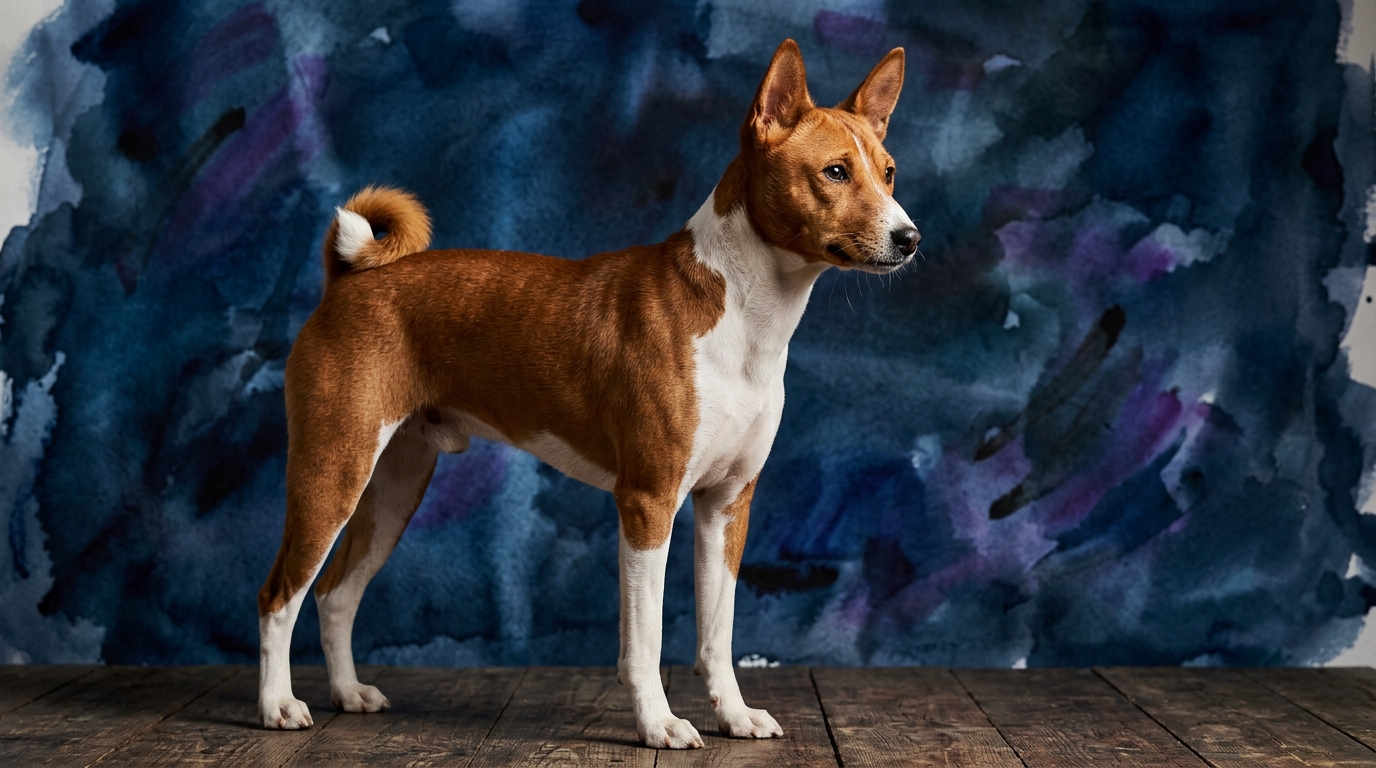
Side-by-Side Cognitive Profiles: Lab vs. Basenji
At The Cosmic Pet Pet IQ Lab, we delve beyond superficial observations to measure distinct cognitive dimensions, revealing the nuanced mental architecture of each breed. The Labrador Retriever, a Sporting group member, consistently ranks high in cooperative intelligence, while the Basenji, a Hound, demonstrates a profound capacity for independent thought.
The Labrador Retriever's profile shows a Problem Solving score of 4/5, indicating a strong capacity to tackle challenges, often in collaboration with humans. Their Training Speed is an exceptional 5/5, reflecting a deep eagerness to learn and comply. Social Intelligence, also 5/5, highlights their attunement to human cues and desire for connection. An Instinctive Drive of 4/5 points to their strong retrieve drive and moderate prey drive, while their Memory is a solid 4/5, ensuring retention of learned behaviors.
In stark contrast, the Basenji presents a unique cognitive landscape. Their Problem Solving is a perfect 5/5, signifying a remarkable ability to figure things out independently. However, their Training Speed is a mere 1/5, illustrating a strong-willed nature and a disinterest in conventional compliance. Social Intelligence stands at 3/5, suggesting they observe human interactions but prioritize their own agenda. An Instinctive Drive of 5/5 emphasizes their intense prey drive and exploratory urges, while their Memory is a respectable 4/5, enabling efficient learning that they apply on their own terms.
Where the Labrador Retriever Excels Cognitively
The Labrador Retriever's cognitive strengths are profoundly rooted in their capacity for partnership and cooperation. Their 5/5 Social Intelligence makes them exceptionally adept at interpreting human body language, vocal tones, and emotional states, fostering a profound connection and a desire to align their actions with owner expectations. This dimension is crucial for their role as service animals, therapy dogs, and devoted family companions, where understanding and responding to human needs is paramount.
Furthermore, their 5/5 Training Speed isn't merely about quick learning; it reflects a cognitive wiring that prioritizes understanding and executing tasks presented by their human companions. This willingness to engage in structured learning, coupled with their robust memory (4/5), allows them to master complex command sequences and retain them over time, making them highly receptive to advanced obedience, agility, and specialized working roles. Their cognitive disposition leans towards shared objectives and a collaborative approach to problem-solving, even if their individual problem-solving score is slightly lower than the Basenji's.
Where the Basenji Shines Cognitively
The Basenji's cognitive prowess truly stands out in areas demanding independent thought and self-reliance. Their remarkable 5/5 in Problem Solving highlights an ingenious capacity to devise solutions without human guidance. This manifests in their ability to navigate complex environments, outsmart enclosures, or creatively obtain desired objects, often surprising owners with their resourcefulness. This isn't about solving human-assigned tasks but solving self-initiated challenges driven by curiosity and intrinsic motivation.
Complementing this is their 5/5 Instinctive Drive, a powerful cognitive engine that fuels their exploration, hunting, and self-directed activities. This drive is not merely physical; it's a mental blueprint for engaging with the world, making them masters of tracking scents, surveying their surroundings, and pursuing their own interests with unwavering focus. Their memory (4/5) serves this drive well, allowing them to recall locations, successful strategies, and the nuances of their environment, reinforcing their independent nature and ensuring they learn from their experiences, albeit often on their own terms.
Training Dynamics: Cooperation vs. Independence
The stark difference in Training Speed (Lab 5/5, Basenji 1/5) is the most significant factor in their trainability. The Labrador Retriever's high social intelligence and eagerness to please mean they actively seek to understand and comply with human directives. They view training as a collaborative activity, quickly grasping concepts and motivated by positive reinforcement and the opportunity to work alongside their owner. Their cognitive makeup is designed for partnership, making them highly responsive to cues and consistent in their learned behaviors.
Conversely, the Basenji's low training speed reflects a cognitive disposition that values autonomy over compliance. While they possess a 5/5 in problem-solving and a good memory, their moderate social intelligence (3/5) means they observe rather than inherently seek to cooperate. Training a Basenji requires immense patience, creativity, and a deep understanding of their motivations. They are less driven by a desire to please and more by what benefits them personally. Success often involves making tasks seem like their idea or highly rewarding, as they are prone to 'selective hearing' when a more interesting scent or independent pursuit beckons. Their problem-solving might be applied to finding ways *around* commands rather than executing them.
Matching Canine Minds to Lifestyles
For active owners who thrive on shared activities and structured engagement, the Labrador Retriever is an ideal match. Their cognitive profile, with high training speed and social intelligence, makes them excellent partners for long runs, retrieving games, obedience training, and even canine sports like agility or dock diving. They flourish in environments where their human companions provide direction and opportunities for collaborative mental and physical stimulation, embracing a team-oriented approach to daily life.
The Basenji, while also requiring significant activity, suits owners who appreciate and accommodate a more independent spirit. These are active owners who understand that 'activity' for a Basenji might involve long, leash-led scent walks where the dog is primarily directing the route, or engaging with complex puzzle toys they solve alone. Their cognitive strengths in problem-solving and instinctive drive mean they need environments that are securely contained but also offer mental challenges that allow them to exercise their ingenuity and explore independently. Owners who are relaxed about conventional obedience but dedicated to providing outlets for their unique cognitive needs will find a fulfilling partnership with a Basenji.
The Verdict
Choose the Labrador Retriever if you desire a highly cooperative companion eager to learn, excel in training, and integrate seamlessly into family routines with strong social bonds.
Opt for the Basenji if you admire independent thinkers, appreciate a dog that solves its own puzzles, and are prepared for a unique training journey guided by their strong instinctive drives.
🧠 Find Your Pet's IQ Score
Our Pet IQ Lab assessment covers 25+ tests across 5 cognitive dimensions — personalized to your breed.
Take the Full IQ Test →Frequently Asked Questions
Is a Basenji difficult to train?
Yes, their 1/5 training speed and independent problem-solving nature mean they are less inclined to follow commands than other breeds. Success requires patience, creative motivation, and understanding their innate drive to make their own decisions.
How does the Labrador Retriever's social intelligence manifest?
With a 5/5 social intelligence, Labrador Retrievers are exceptionally attuned to human emotions and cues, fostering deep bonds and a strong desire to cooperate. This makes them highly responsive companions in various family and working roles.
Can Basenjis be good family pets despite their independence?
Absolutely. While independent, Basenjis form strong attachments to their families. Their cognitive strengths lie in self-reliance, which can be endearing, but owners must provide appropriate outlets for their instinctive drives and problem-solving skills to ensure a harmonious household.