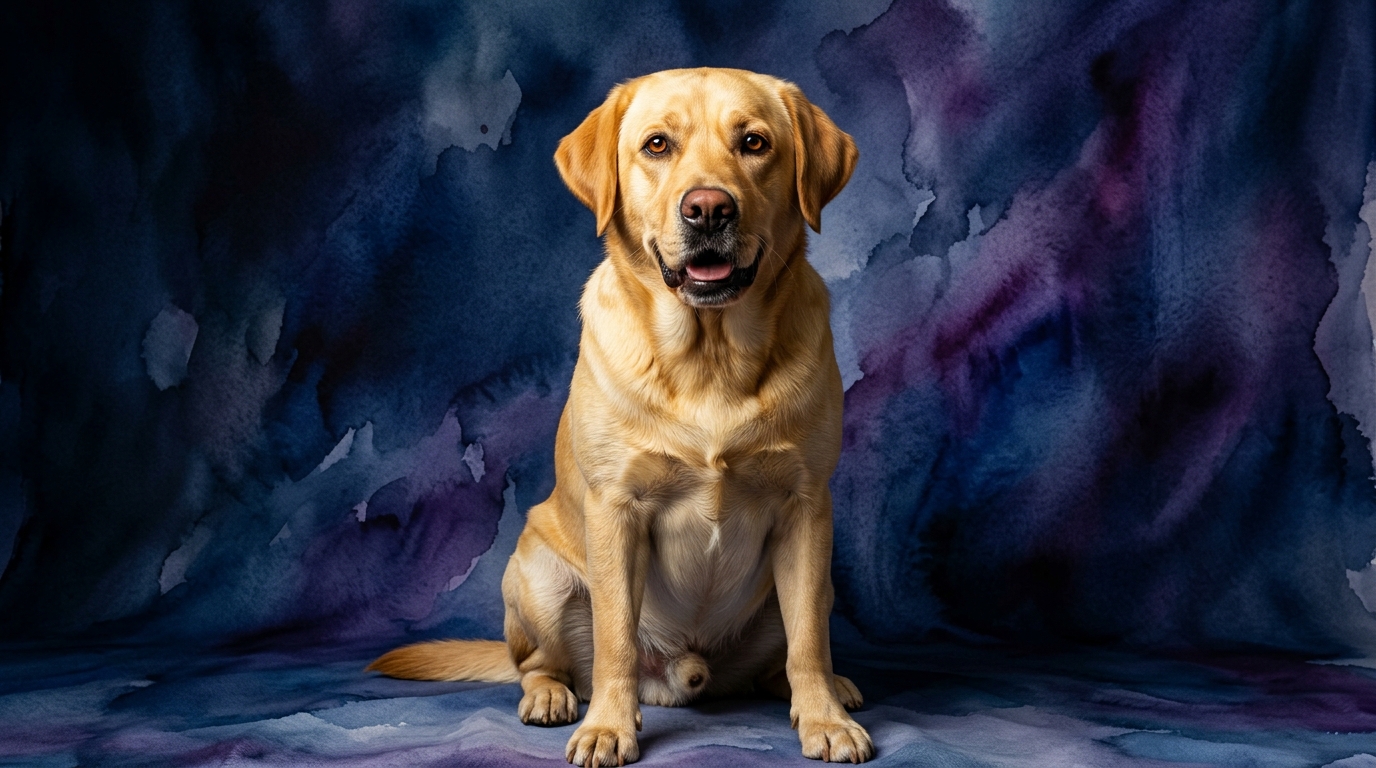

Side-by-Side IQ Profile: Lab vs. Basset
The Cosmic Pet Pet IQ Lab assesses canine intelligence across five critical dimensions, providing a nuanced understanding beyond simple obedience. For the Labrador Retriever, a Sporting breed ranked #7 by Coren, its profile highlights a well-rounded cognitive athlete. Its Problem Solving is rated 4/5, indicating a strong capacity for adaptive thought. Training Speed stands at a perfect 5/5, reflecting rapid learning. Social Intelligence also scores 5/5, showing profound attunement to human cues. Instinctive Drive is 4/5, channeling its natural urges effectively, and Memory is 4/5, supporting consistent recall of information.
In contrast, the Basset Hound, a Hound breed with a Coren rank of #71, presents a specialized cognitive makeup. Its Problem Solving is 3/5, often relying on persistence rather than abstract reasoning. Training Speed is 3/5, requiring more patience and consistency. Social Intelligence is 3/5, indicating a friendly but less overtly communicative nature. Instinctive Drive is also 3/5, heavily focused on its olfactory world, and Memory is 3/5, with a particular strength in retaining scent-related information.
Where the Labrador Retriever Excels Cognitively
Labrador Retrievers consistently demonstrate superior cognitive flexibility and responsiveness, as evidenced by their higher scores. Their 4/5 problem-solving ability means they are adept at navigating complex tasks, often figuring out how to retrieve objects from challenging spots or manipulate simple latches. This isn't just about trial and error; it's about applying learned solutions to new, similar scenarios, showcasing a remarkable capacity for adaptive thinking. This cognitive adaptability makes them excellent candidates for diverse roles, from service work to search and rescue.
The Labrador's 5/5 training speed is a testament to their attentiveness and eagerness to engage with human instruction. They form strong associative links between cues and actions with remarkable efficiency, grasping new commands and routines quickly. This rapid learning, coupled with their 5/5 social intelligence, allows them to interpret subtle human body language and vocal intonation, fostering seamless integration into family dynamics and making them highly cooperative partners. Their 4/5 memory ensures that these learned behaviors and social cues are retained effectively, allowing them to perform complex sequences and recall solutions to previously encountered challenges with consistency.
Where the Basset Hound's Cognition Shines Uniquely
While the Basset Hound's overall IQ scores may appear lower, their cognitive strengths are highly specialized and deeply rooted in their scent-hunting heritage. Their instinctive drive, rated 3/5, isn't a deficiency but an overwhelming, single-minded focus on olfaction. This means their ability to track a scent trail over long distances, often ignoring significant visual or auditory distractions, is a profound cognitive feat of sustained attention and highly specialized sensory processing. They are masters of their olfactory world, navigating it with an unmatched dedication.
The Basset Hound's memory, also 3/5, is exceptional for retaining scent pathways and specific odor profiles. A Basset will remember a particular rabbit trail from days ago, demonstrating a memory type that is distinct from a Labrador's recall of commands. This specialized memory allows them to navigate intricate environments purely by olfaction, a skill that few other breeds can match. Their problem-solving (3/5) often manifests as persistent, methodical scent-following rather than quick, abstract solutions. They solve the 'where is the scent source?' problem with unwavering dedication, relying on their nose to guide them through intricate puzzles that would overwhelm visually-oriented dogs.
Training Ease: Cooperation vs. Olfactory Independence
When it comes to training, the differences between these two breeds are pronounced due to their cognitive profiles. The Labrador Retriever, with its 5/5 Training Speed, 4/5 Problem Solving, and 5/5 Social Intelligence, is generally much easier to train. They are eager to please, highly motivated by praise and food, and possess a strong desire to work cooperatively with their human companions. Labradors learn rapidly, generalize commands well across different environments, and are highly responsive to their handler's cues. Their strong memory (4/5) helps consolidate learning, making complex sequences and advanced obedience relatively straightforward for them.
The Basset Hound, in contrast, presents a more unique training challenge. Their moderate scores (3/5 across the board) reflect an independent, scent-driven nature that often prioritizes olfactory exploration over human commands. Training a Basset requires immense patience, consistency, and highly motivating positive reinforcement. They will learn, but often at their own pace and on their own terms, and may exhibit 'selective hearing' when a compelling odor is present. Their powerful instinctive drive for scent can easily override learned behaviors, making off-leash reliability particularly challenging. Their memory, while excellent for scent trails, may not translate as readily to recalling commands under distraction, requiring dedicated effort to compete with their primary sensory focus.
Matching Breeds to Owner Lifestyles
The distinct cognitive and temperamental traits of these breeds naturally align with different owner lifestyles. Active owners who enjoy extensive outdoor activities, dog sports, or purposeful work will find the Labrador Retriever an ideal companion. Their 4/5 instinctive drive translates into a need for consistent physical activity and mental engagement, whether it's hiking, running, swimming, or participating in field trials. Their high training speed and social intelligence make them excellent candidates for advanced obedience, agility, or even service work, requiring an owner dedicated to consistent engagement and channeling their considerable energy and intellect.
For more relaxed owners, the Basset Hound offers a wonderfully amiable and low-key companionship. While they certainly need daily walks to satisfy their innate sniffing instincts, Basset Hounds are generally content with a more leisurely pace and do not demand constant high-octane physical exertion. Their moderate instinctive drive (3/5) and specialized problem-solving mean they don't constantly seek out complex mental challenges beyond their scent-driven explorations. Owners who appreciate a calm, affectionate presence for gentle strolls and quiet evenings at home will find the Basset Hound's temperament appealing. They thrive on companionship and the opportunity to follow their nose, but do not require the intense 'work' ethic of a Labrador.
The Verdict
Opt for a Labrador Retriever if you seek a highly trainable, socially astute companion eager for cooperative activities, mental challenges, and an active lifestyle. Their balanced cognitive profile makes them adaptable to various roles, from family pet to working dog.
Select a Basset Hound if you value an amiable, patient companion whose primary joy comes from following fascinating scent trails and enjoying a relaxed home life. Be prepared for a training journey that celebrates their independent, scent-focused nature.
🧠 Find Your Pet's IQ Score
Our Pet IQ Lab assessment covers 25+ tests across 5 cognitive dimensions — personalized to your breed.
Take the Full IQ Test →Frequently Asked Questions
Does Coren rank directly correlate with The Cosmic Pet's IQ scores?
Coren's ranking primarily assesses 'working and obedience intelligence,' reflecting how quickly a dog learns and obeys commands. The Cosmic Pet IQ Lab offers a more granular view, breaking intelligence into five distinct dimensions, providing a broader cognitive profile beyond just obedience.
Can a Basset Hound excel in activities like agility or complex obedience?
While a Basset Hound can certainly learn basic obedience, their independent nature and powerful scent drive make high-level agility or complex obedience more challenging than for a Labrador. They might participate, but often with less enthusiasm for speed and precision, preferring activities that engage their nose.
How does 'instinctive drive' differ between these two breeds?
For the Labrador, instinctive drive (4/5) is often channeled into retrieving, swimming, and cooperative tasks, making them eager partners in activities. For the Basset Hound, instinctive drive (3/5) is almost exclusively centered on scent tracking, making them incredibly persistent in following a trail, sometimes to the exclusion of all else.