
Side-by-Side Cognitive Profiles
At The Cosmic Pet Pet IQ Lab, we analyze canine cognition across five key dimensions. Understanding these specific scores helps illuminate the unique mental blueprints of each breed.
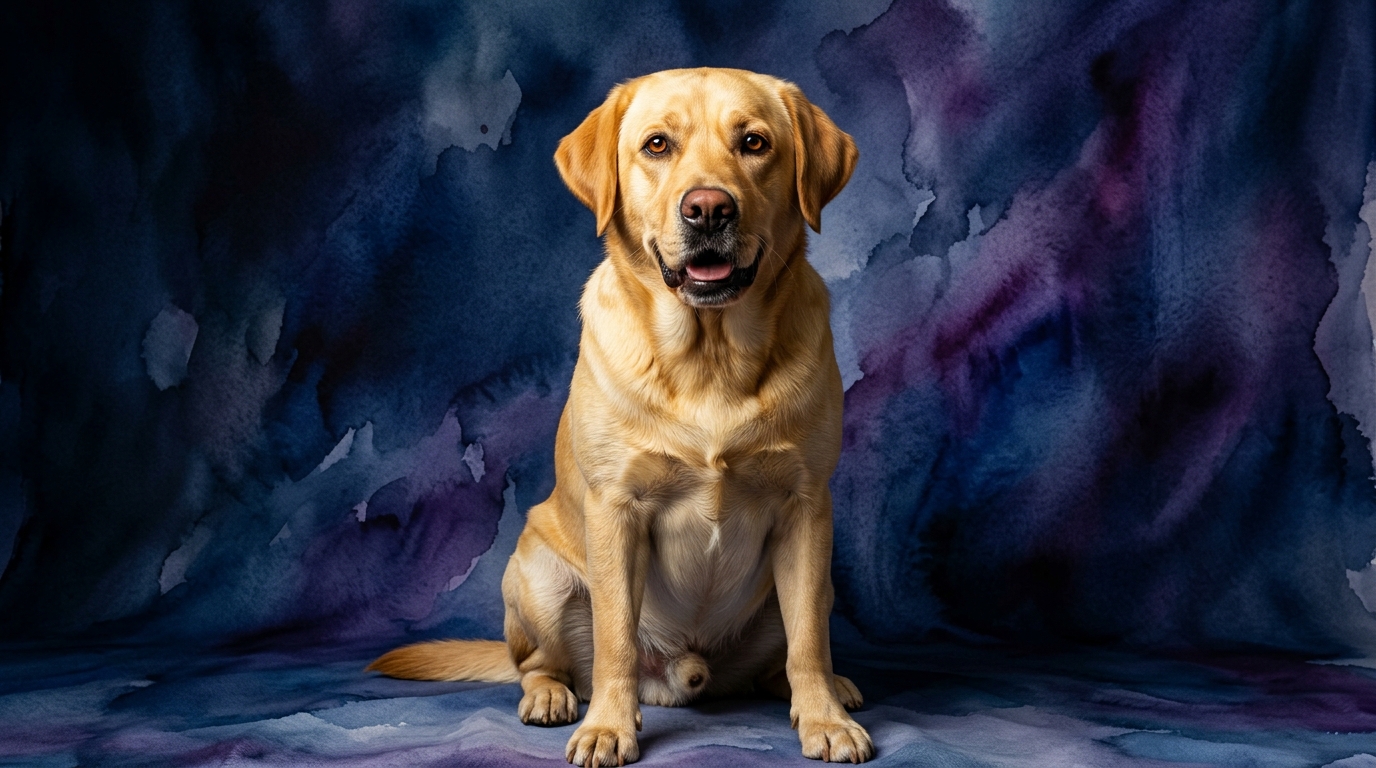
The Labrador Retriever, a Sporting group dog with a Coren rank of #7, demonstrates a balanced and socially-oriented cognitive profile:
• Problem Solving (4/5): Labrador Retrievers exhibit strong practical problem-solving skills, adept at efficiently navigating environments or retrieving objects. They effectively use learned associations and spatial memory to overcome daily obstacles.
• Training Speed (5/5): These dogs acquire new commands and behaviors with remarkable alacrity, often grasping concepts in just a few repetitions. Their eagerness to please and strong associative learning make them exceptionally quick studies in structured training.
• Social Intelligence (5/5): Their capacity to interpret human cues, emotions, and intentions is outstanding. Labradors excel at reading social situations, integrating seamlessly into family dynamics and interacting positively with diverse individuals.
• Instinctive Drive (4/5): The breed's foundational drive centers on retrieving and cooperative work, manifesting as a strong desire to carry objects and engage in scent-based tasks. This inherent inclination supports activities like fetch, dock diving, and assistance work.
• Memory (4/5): Labrador Retrievers possess solid working memory, enabling them to recall commands, routines, and the locations of objects or people over considerable periods. They effectively store and retrieve information relevant to their daily lives and learned tasks.
The Belgian Sheepdog (Groenendael), a Herding group dog with a Coren rank of #15, presents a profile marked by independent thought and precise recall:
• Problem Solving (5/5): Groenendaels demonstrate exceptional analytical problem-solving, often approaching new challenges with a thoughtful, independent strategy. They are adept at complex tasks requiring multiple steps and can devise novel solutions.
• Training Speed (5/5): Like Labradors, Groenendaels absorb new information and commands with impressive speed, mastering tasks with minimal repetition. Their focused attention and drive to perform make them highly responsive to consistent, engaging training.
• Social Intelligence (3/5): While capable of forming deep bonds with their primary caregivers, Groenendaels can be more reserved or discerning in social interactions with strangers or unfamiliar dogs. Their social awareness is often channeled towards their immediate family unit, requiring careful socialization.
• Instinctive Drive (3/5): The Groenendael's instinctive drives are rooted in herding, manifesting as a watchful nature and a desire to patrol or gather. However, this drive is less overtly expressed in everyday activities compared to the Labrador's retrieving impulse, often requiring specific outlets.
• Memory (5/5): Groenendaels exhibit superior long-term memory, retaining complex sequences of commands, spatial layouts, and detailed environmental information with remarkable precision. This cognitive strength allows them to build vast repertoires of learned behaviors and recall them reliably.
Where the Labrador Retriever Excels Cognitively
Labrador Retrievers truly shine in their social acumen. Their perfect 5/5 social intelligence score indicates an unparalleled ability to interpret human intentions, moods, and social cues, fostering seamless integration into diverse family structures and public settings. This makes them exceptionally adaptable companions, readily understanding what is expected of them in varied social contexts, from a bustling park to a quiet home.
Their strong instinctive drive for cooperative work, rated 4/5, further complements this social intelligence. Labradors are inherently motivated to work alongside humans, eager to participate in tasks that involve retrieving, carrying, or assisting, which can be seen in their historical roles as hunting companions and modern-day service dogs. This cooperative drive means they are not just capable of understanding but are also actively seeking to engage in shared activities, making them profoundly responsive partners.
Where the Belgian Sheepdog (Groenendael) Shows Its Cognitive Strength
The Belgian Sheepdog (Groenendael) demonstrates a distinct cognitive edge in areas demanding independent thought and precise recall. Their problem-solving ability, rated 5/5, surpasses the Labrador's, indicating a capacity for more intricate and analytical approaches to novel situations. A Groenendael might independently strategize how to open a complex latch or navigate a new obstacle course without direct human prompting, relying on their own assessment and learned principles.
Furthermore, their memory score of 5/5 is a standout feature. This superior long-term recall allows them to master and retain vast amounts of information, from elaborate obedience routines to complex scent discrimination tasks, over extended periods. This deep memory capacity means that once a Groenendael learns something, it is typically ingrained with exceptional durability, making them formidable competitors in advanced dog sports requiring intricate sequences and precise execution.
Ease of Training: A Nuanced Comparison
Both breeds boast a perfect 5/5 in training speed, suggesting they absorb new commands rapidly. However, the *ease* of training can differ significantly due to their other cognitive profiles. The Labrador Retriever's exceptional social intelligence (5/5) and strong cooperative instinctive drive (4/5) make training generally more straightforward and forgiving. They are often inherently motivated to please their human companions, making them highly responsive to positive reinforcement and less likely to challenge directives.
Their natural inclination to work *with* people means they often anticipate cues and are eager to comply, simplifying the teaching process, especially for novice owners. If a Labrador makes a mistake, they are typically quick to recover and re-engage, demonstrating a consistent willingness to learn. This makes the training journey for a Labrador often feel more collaborative and less demanding on the handler's experience.
Conversely, while the Belgian Sheepdog (Groenendael) learns just as quickly, their lower social intelligence (3/5) and independent problem-solving (5/5) can introduce nuances to their training experience. Groenendaels require a handler who understands their need for clear, consistent, and confident leadership. They are not necessarily 'eager to please' in the same broad social sense as a Labrador; instead, they are driven by the challenge of the task itself and their bond with their specific handler.
Their independent nature means they might test boundaries or try to solve problems their own way if the training isn't engaging or the handler isn't precise. This demands a more experienced trainer who can channel their deep memory and analytical skills into complex tasks, rather than relying solely on their inherent desire for social approval. While they learn fast, maintaining engagement and ensuring compliance requires a more sophisticated understanding of their independent cognitive style and a commitment to structured, stimulating training.
Matching Breeds to Lifestyles: Active vs. Relaxed Owners
For active owners seeking a dynamic partner, both breeds offer considerable appeal, but their energy outlets differ. The Labrador Retriever, with its 4/5 instinctive drive rooted in retrieving and cooperative work, thrives on activities like fetch, swimming, hiking, and participating in dog sports such as agility or obedience. They are typically enthusiastic participants, enjoying shared adventures with their human family. Their high social intelligence also means they adapt well to various active social environments, from dog parks to busy trails.
For the more relaxed owner, the Labrador's adaptable nature makes it a suitable companion, provided its fundamental needs for exercise and mental engagement are met. They are generally content to settle down after a good play session, easily transitioning from high-energy activity to calm companionship within the home.
The Belgian Sheepdog (Groenendael), despite a 3/5 instinctive drive in our metrics, possesses a working dog heritage that necessitates substantial mental and physical stimulation. Their superior problem-solving and memory skills demand complex tasks, such as advanced obedience, protection work, herding, or intricate scent detection. They require an owner who is not only active but also dedicated to providing consistent, structured mental challenges to prevent boredom and potential behavioral issues. A Groenendael is less likely to be satisfied with simple walks and casual play; they crave purpose and a job to do.
Therefore, owners who define 'active' as engaging in structured, challenging dog sports or working roles will find the Groenendael an exceptional match. For owners who prefer a more flexible, socially outgoing companion for varied outdoor activities and home life, the Labrador Retriever typically offers an easier fit.
The Verdict
Opt for a Labrador Retriever if you prioritize a highly adaptable, socially intuitive companion eager to engage in cooperative activities and seamlessly integrate into a diverse family and social life. Their forgiving nature and strong desire to please make them an excellent choice for first-time dog owners or those seeking a versatile family pet.
Select a Belgian Sheepdog (Groenendael) if you are an experienced owner prepared to commit to consistent, challenging mental and physical engagement, appreciating a dog with exceptional independent problem-solving and memory for complex tasks. They thrive with structured work and a confident leader, excelling in advanced dog sports or working roles.
🧠 Find Your Pet's IQ Score
Our Pet IQ Lab assessment covers 25+ tests across 5 cognitive dimensions — personalized to your breed.
Take the Full IQ Test →Frequently Asked Questions
Are Belgian Sheepdogs good family dogs?
Belgian Sheepdogs can be wonderful family dogs, forming deep bonds with their immediate household. However, their social intelligence rating of 3/5 suggests they may be more reserved with strangers and require consistent socialization from a young age to ensure they are comfortable in varied social settings.
How much exercise does a Labrador Retriever need daily?
Labrador Retrievers require a moderate to high amount of daily exercise, typically 60-90 minutes of vigorous activity like running, swimming, or active play. This helps manage their 4/5 instinctive drive and keeps them physically and mentally healthy.
Which breed is better for obedience competitions?
Both breeds excel in obedience due to their 5/5 training speed, but for advanced, intricate obedience competitions, the Belgian Sheepdog (Groenendael) might have a slight edge. Their 5/5 memory and superior problem-solving allow them to master and reliably execute complex, multi-step routines with remarkable precision.