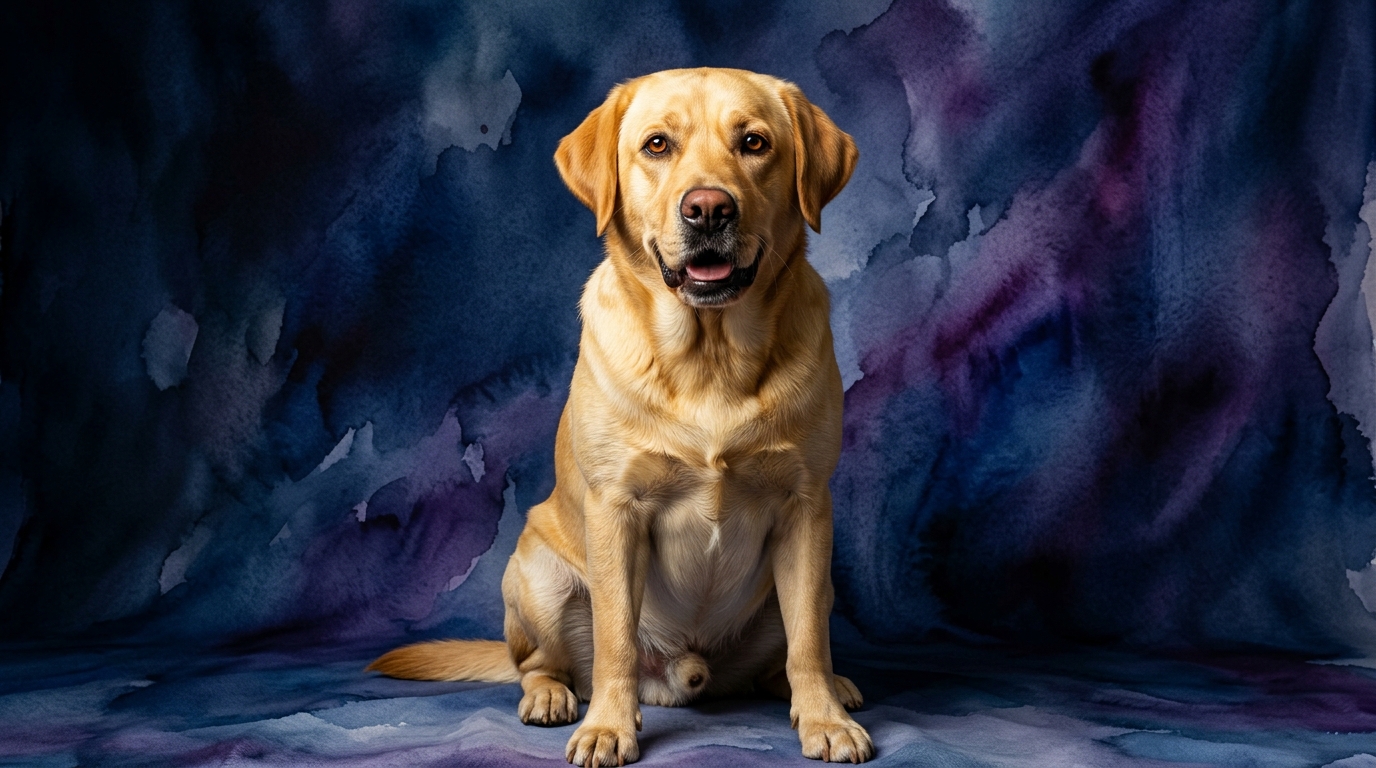

Side-by-Side IQ Profile: Deconstructing Canine Cognition
To truly understand the cognitive makeup of the Labrador Retriever and the Bloodhound, we must look beyond generalized notions of 'smartness' and examine their specific intellectual dimensions. Our Pet IQ Lab evaluates five critical areas: problem solving, training speed, social intelligence, instinctive drive, and memory, providing a nuanced view of each breed's mental architecture.
The Labrador Retriever, a quintessential Sporting Group dog with a Coren ranking of #7, showcases a well-rounded cognitive profile geared towards cooperation and adaptability. They earn a 4/5 in Problem Solving, indicating a flexible approach to novel situations and practical challenges. Their Training Speed is an outstanding 5/5, reflecting their eagerness to learn and retain commands rapidly. Social Intelligence also scores a perfect 5/5, highlighting their deep attunement to human cues and strong desire for companionship. Instinctive Drive, primarily for retrieving and companionship, stands at a robust 4/5, while their Memory for tasks and associations is strong at 4/5.
Conversely, the Bloodhound, a member of the Hound Group and ranked #74 by Coren, presents a highly specialized cognitive blueprint. Their Problem Solving ability is rated an exceptional 5/5, specifically in the intricate deduction required for scent tracking. However, their Training Speed is a notably low 1/5, indicating a deliberate, often independent learning style. Social Intelligence is also lower at 2/5, as their focus is less on human interaction and more on their primary drive. That Instinctive Drive, an unparalleled urge to follow scent, is a perfect 5/5, and their Memory for scent trails and specific tasks is likewise an extraordinary 5/5.
This side-by-side view immediately reveals that while both breeds possess profound cognitive capacities, their strengths lie in distinct domains, shaping their interactions with the world and their human companions in fundamentally different ways.
Where the Labrador Retriever Excels Cognitively
The Labrador Retriever's cognitive strengths are deeply rooted in their capacity for cooperative engagement and general learning. Their perfect 5/5 score in Training Speed is not just about quick command acquisition; it signifies a keen desire to engage with human instruction and a rapid ability to form associations between actions and outcomes. This translates into a dog that enjoys the learning process, making them highly receptive to a wide array of training disciplines, from basic obedience to complex service tasks.
Their equally impressive 5/5 in Social Intelligence speaks to their profound understanding of human emotions, intentions, and communication. A Labrador will often anticipate a handler's next move or respond intuitively to subtle cues, fostering a remarkably strong and responsive bond. This social awareness makes them exceptional companions, therapy animals, and working partners where human-canine synergy is paramount. They are adept at reading body language and vocal inflections, adjusting their behavior accordingly.
While their Problem Solving at 4/5 might not match the Bloodhound's specialized deduction, the Labrador's approach is one of practical adaptability. They excel at figuring out how to retrieve a toy from an awkward spot or navigating new environments with confidence. Their 4/5 Memory supports this, enabling them to retain a vast repertoire of learned behaviors and recognize people and places over extended periods, making them reliable and consistent companions in diverse settings. These combined traits allow the Labrador to integrate seamlessly into human lives, responding readily to guidance and thriving on shared activities.
Where the Bloodhound's Mind Shines Brightest
The Bloodhound’s cognitive brilliance is a testament to highly specialized evolution, centered almost entirely around their incomparable olfactory abilities. Their perfect 5/5 in Problem Solving is not about fetching a ball or learning a trick, but about the intricate mental mapping and deduction required to follow a faint, aged scent trail across varied terrain, often ignoring distractions. This involves complex pattern recognition, memory recall for specific scent signatures, and a relentless focus that few other breeds can replicate. They are, in essence, canine detectives, piecing together invisible puzzles with their noses.
Their exceptional 5/5 in Instinctive Drive is the engine of this intellectual prowess. This isn't merely a drive to 'do something' but an all-consuming, innate compulsion to track. Once a Bloodhound locks onto a scent, their world narrows to that single, compelling thread. This profound drive overrides many other stimuli, including human commands, which can be misinterpreted as stubbornness but is, in fact, an intense dedication to their primary cognitive function.
Supporting this is their perfect 5/5 in Memory, particularly for scent. A Bloodhound can retain the memory of a specific scent for days, even weeks, and recall the exact path it took. This is a different kind of memory than a Labrador's recall of obedience commands; it's a vast library of olfactory information, allowing them to cross-reference and follow trails with astonishing accuracy. While their Social Intelligence at 2/5 and Training Speed at 1/5 suggest less interest in conventional human-centric interaction or rapid command acquisition, these lower scores are a trade-off for their singular, profound gift. Their intelligence is profound, just expressed in a way that prioritizes their sensory world over human approval.
Navigating the Leash: Training Speed and Behavioral Differences
The most striking divergence between these two breeds lies in their Training Speed, with the Labrador Retriever scoring a 5/5 and the Bloodhound a 1/5. This disparity isn't a measure of their inherent capacity to learn, but rather their motivation, focus, and responsiveness to human direction during the training process. The Labrador's high social intelligence and eagerness to please mean they actively seek to understand and comply with human requests. They thrive on positive reinforcement, forming quick associations between commands and rewards, making them exceptionally biddable and a joy to train for a wide range of tasks.
A Labrador's rapid training speed is also bolstered by their generalist nature; they are designed to adapt to various roles and environments. Their strong memory for commands and consistent desire to cooperate mean that once a behavior is learned, it is typically retained and performed reliably. This makes them ideal candidates for advanced obedience, agility, and complex service work, where consistent, rapid responses are crucial.
The Bloodhound's 1/5 Training Speed, however, tells a different story. Their profound instinctive drive for scent work often makes them appear 'stubborn' or difficult to train for conventional obedience. When a Bloodhound detects an interesting scent, their world shrinks to that olfactory stimulus, and human commands become secondary. Their lower social intelligence means they are less motivated by human approval and more by the intrinsic reward of following a trail. Training a Bloodhound requires immense patience, creativity, and an understanding that their primary cognitive function is not always aligned with human agendas.
While Bloodhounds can learn commands, the acquisition process is often slower and requires more repetition, and their recall in the face of a compelling scent can be unreliable. Their problem-solving skills are directed towards unraveling scent puzzles, not deciphering human requests for 'sit' or 'stay' when a captivating odor is present. This fundamental behavioral difference means that training methods must be adapted to channel their specific drives rather than attempting to suppress them, emphasizing positive reinforcement that integrates their scenting passion.
Matching Minds to Lifestyles: Active Owners vs. Relaxed Owners
Choosing between a Labrador Retriever and a Bloodhound involves more than just physical activity levels; it's about aligning with their distinct cognitive needs and behavioral patterns. The Labrador Retriever is an ideal match for active owners who seek a highly interactive and engaged canine partner. Their high social intelligence and training speed mean they thrive on shared activities, whether it's obedience training, dog sports, hiking, or simply being an integral part of family outings. They require consistent mental stimulation that involves human direction and cooperation, making them perfect for owners who want a responsive, eager-to-please companion for a wide variety of endeavors. Owners who are relaxed about training consistency or prefer a dog that operates largely independently might find a Labrador's constant desire for engagement overwhelming.
The Bloodhound, while appearing 'relaxed' in their deliberate pace, is suited for a very specific type of active owner – one who is dedicated to channeling their intense instinctive drive. These are not dogs for owners seeking a conventionally obedient companion for casual walks. Rather, they thrive with individuals who understand and appreciate their singular talent for scent work, providing outlets like tracking, nose work, or even search and rescue. Owners must be prepared for their independent nature, their slower training speed, and their profound focus on scent, which can make them difficult to recall or redirect once on a trail. They demand mental engagement that caters to their specialized cognitive abilities, not necessarily generalized play or constant social interaction. An owner who is relaxed about conventional obedience but deeply committed to providing scent-based enrichment will find a Bloodhound fulfilling, while an owner expecting a dog to seamlessly integrate into a busy, structured life without specialized outlets might find the Bloodhound's independence challenging. Their 'activity' is cerebral and olfactory, requiring dedicated human facilitation.
The Verdict: When to Choose Each Breed
The choice between a Labrador Retriever and a Bloodhound ultimately hinges on an owner's lifestyle, expectations, and willingness to adapt to unique canine cognitive profiles. Both breeds offer profound companionship, but their paths to engagement are vastly different.
For those seeking a highly cooperative, adaptable, and socially attuned companion that excels in a wide range of activities and is responsive to training, the Labrador Retriever is an outstanding choice. They thrive on shared experiences and integrate readily into family life, eager to please and quick to learn.
For individuals who are captivated by unparalleled scenting abilities, possess immense patience for training, and are prepared to provide dedicated outlets for an independent, task-driven mind, the Bloodhound offers a unique and deeply rewarding partnership. They are for those who appreciate a dog whose brilliance lies in its relentless, singular pursuit of a scent, rather than general obedience.
The Verdict
Choose a Labrador Retriever if you desire a highly trainable, socially interactive companion eager for diverse activities and quick to learn commands. They thrive on cooperative engagement and seamlessly integrate into active family life.
Opt for a Bloodhound if you are dedicated to channeling an unparalleled scent drive, appreciate an independent problem-solver, and have the patience for a more deliberate training approach. They offer a unique partnership focused on their specialized tracking abilities.
🧠 Find Your Pet's IQ Score
Our Pet IQ Lab assessment covers 25+ tests across 5 cognitive dimensions — personalized to your breed.
Take the Full IQ Test →Frequently Asked Questions
Is a Bloodhound truly difficult to train, given its 1/5 training speed score?
The 1/5 training speed for a Bloodhound indicates they learn conventional obedience commands at a slower pace and are less motivated by human approval than many other breeds. Their profound instinctive drive for scent often overrides other stimuli, requiring immense patience and specialized, scent-based training methods to achieve reliable responses.
What makes a Labrador Retriever so adaptable to various roles and environments?
A Labrador Retriever's high social intelligence (5/5) and rapid training speed (5/5) are key to their adaptability. They are highly attuned to human cues, eager to please, and quickly learn new tasks and rules, allowing them to excel as service dogs, family companions, and participants in diverse dog sports.
Can a Bloodhound be a good family pet despite its lower social intelligence score?
Yes, a Bloodhound can be a good family pet, though their social intelligence (2/5) means they are generally more independent and less outwardly demonstrative of affection than a Labrador. They are typically gentle and tolerant, but their primary focus remains on scent, so families must understand and respect their unique motivations and provide appropriate outlets for their tracking instincts.