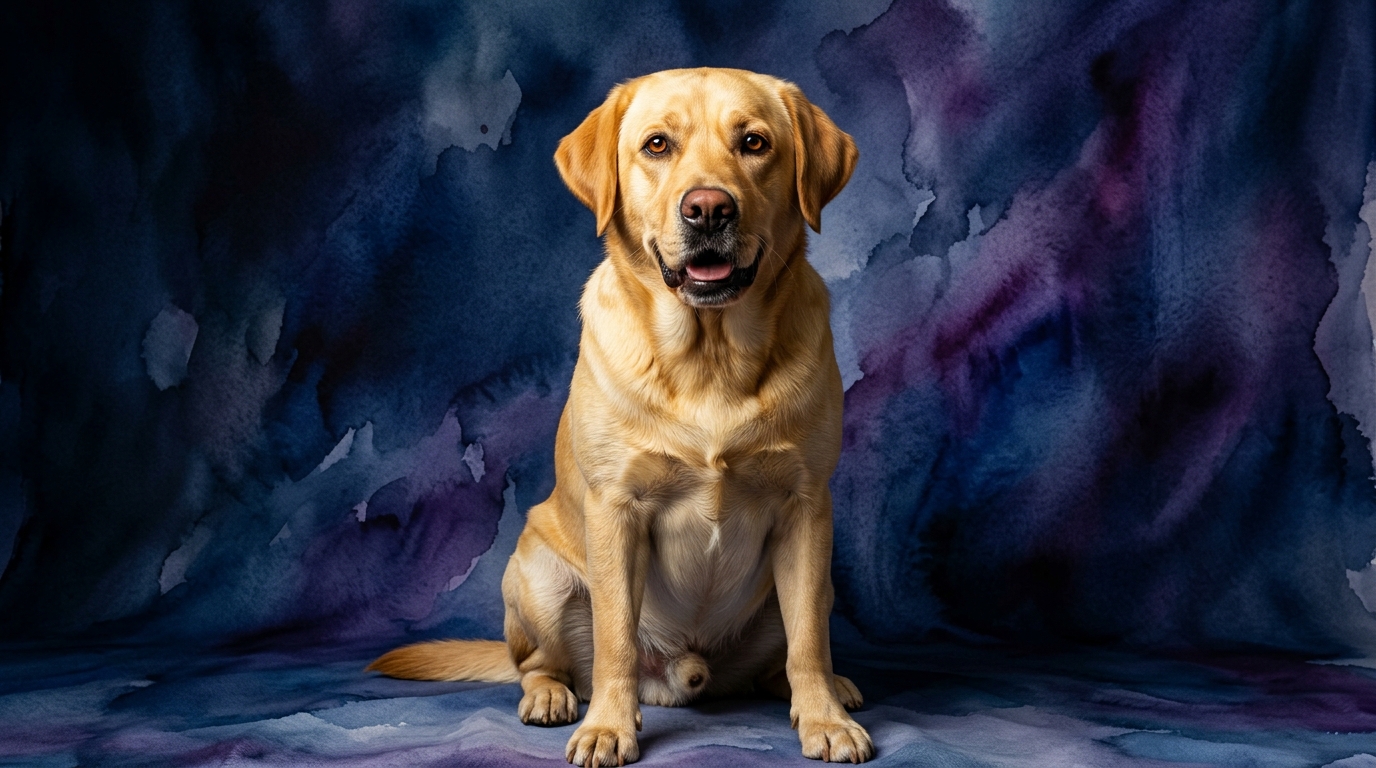
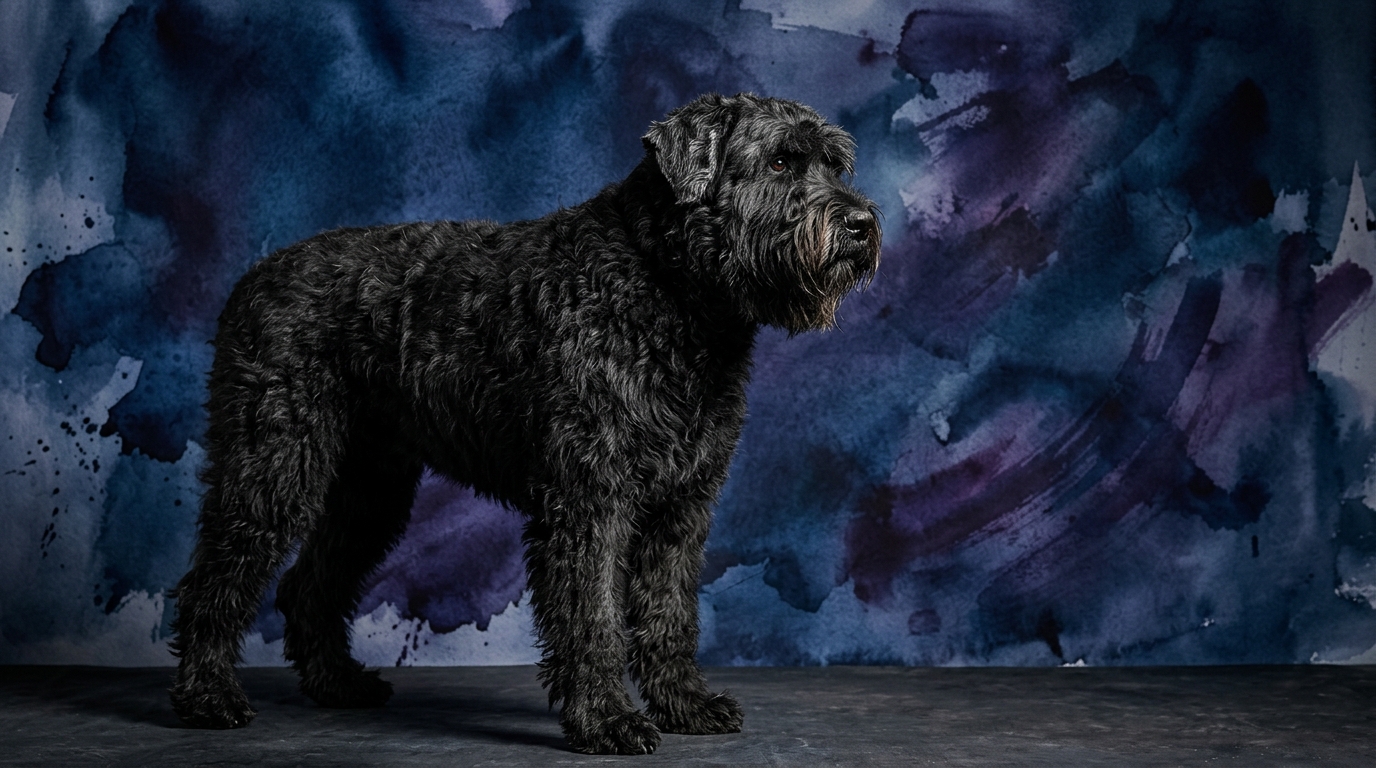
Side-by-Side IQ Profile: Labrador Retriever vs. Bouvier des Flandres
At The Cosmic Pet Pet IQ Lab, we evaluate canine intelligence across five key dimensions, providing a granular view of each breed's cognitive strengths. Understanding these specific profiles allows us to appreciate the unique mental architecture of the Labrador Retriever and the Bouvier des Flandres.
**Problem Solving:** This dimension assesses a dog's ability to figure out new situations, overcome obstacles, or devise strategies independently. Labradors (4/5) exhibit a notable capacity for practical problem-solving, particularly when it involves retrieving objects or navigating familiar environments to achieve a goal. They can often deduce how to open a simple latch or find a hidden toy, demonstrating a flexible approach to challenges. Bouviers (3/5) possess a functional problem-solving ability, excelling in tasks related to their working heritage, such as managing livestock or navigating complex terrain. While they may not independently solve abstract puzzles as quickly, they are adept at finding solutions within established routines or for practical, real-world obstacles.
**Training Speed:** This refers to how quickly a dog grasps and consistently performs new commands or behaviors. Labradors (5/5) are exceptionally quick learners, often needing just a few repetitions to understand and execute a new command. Their eagerness to please and high motivation make them highly responsive to training cues, making them a popular choice for various working roles and canine sports. Bouviers (3/5) learn at a more deliberate pace. They require consistent, patient training methods and clear communication. While they may take longer to acquire a new skill, once a concept is understood and ingrained, their performance tends to be reliable and enduring, reflecting a deep, rather than superficial, comprehension.
**Social Intelligence:** This dimension evaluates a dog's ability to understand and respond appropriately to human and other animal social cues, exhibiting empathy and adaptability. Labradors (5/5) excel in social intelligence, demonstrating a remarkable ability to read human emotions and intentions. They are highly attuned to their family members' moods, adapt readily to new people and situations, and often seek to engage socially, making them exceptional therapy and assistance animals. Bouviers (3/5) display a more reserved form of social intelligence. They are deeply devoted to their immediate family, forming strong, protective bonds. While they may be discerning and aloof with strangers, their social acumen lies in their ability to assess situations for potential threats and act as steadfast guardians, valuing loyalty and trust within their inner circle.
**Instinctive Drive:** This refers to the inherent, genetically predisposed behaviors and motivations that are strong in a breed, often linked to their historical purpose. Labradors (4/5) possess a strong instinctive drive rooted in their retrieving heritage. This manifests as a powerful desire to carry objects, a natural affinity for water, and a keen sense of smell for tracking. These drives make them adept at tasks like hunting, search and rescue, and various scent work activities. Bouviers (3/5) exhibit a pronounced instinctive drive centered on herding and guarding. This includes a natural inclination to gather, protect, and control movement, coupled with a territorial instinct. Their drive is less about retrieving and more about surveillance, protection, and managing their perceived flock or family unit.
**Memory:** This dimension assesses a dog's capacity to retain information, including learned commands, locations, and experiences. Labradors (4/5) possess a robust memory, allowing them to recall a vast repertoire of commands, remember specific people and places, and retain complex routines. This strong recall contributes significantly to their training success and their ability to perform intricate tasks over time. Bouviers (3/5) have a solid, practical memory, particularly for routines, boundaries, and previously encountered situations or individuals. While they may not recall as many distinct commands as quickly as a Labrador, their memory is reliable for established patterns and for remembering who belongs and who might be a stranger, vital for their guarding role.
Where the Labrador Retriever Excels Cognitively
The Labrador Retriever’s cognitive profile shines brightest in areas demanding rapid learning, enthusiastic social engagement, and versatile problem-solving. Their exceptional training speed (5/5) means they absorb new commands with remarkable alacrity, often eager to please and highly motivated by positive reinforcement, making them a joy to guide through new skills. This quick uptake is coupled with superior social intelligence (5/5), allowing them to intuitively understand human cues, adapt effortlessly to diverse social settings, and forge deep, empathetic connections, which is why they excel as service animals. Furthermore, their problem-solving abilities (4/5) are adept at navigating practical challenges, such as figuring out how to retrieve an item from a tricky spot or learning complex sequences in agility, driven by their inherent desire to work alongside humans. Their strong memory (4/5) ensures these learned behaviors and social understandings are retained effectively, building a reliable and responsive companion.
Where the Bouvier des Flandres Exhibits Unique Cognitive Strengths
The Bouvier des Flandres, while not exhibiting the same rapid-fire learning, possesses a distinct set of cognitive strengths rooted in its heritage as a steadfast working dog. Their problem-solving (3/5) is less about abstract puzzles and more about practical, situational reasoning, particularly in managing resources or navigating the environment with purpose, reflecting a deep understanding of their surroundings. Their training speed (3/5), though slower, leads to a profound and reliable retention once a command is mastered, indicative of a dog that processes information thoroughly rather than superficially. The Bouvier's social intelligence (3/5) manifests as a deep, unwavering loyalty to their core family, coupled with a discerning nature towards strangers, making them exceptional, protective companions. This isn't a social butterfly intelligence, but rather a keen understanding of their inner circle and the need to safeguard it. Finally, their instinctive drive (3/5) for herding and guarding provides an innate framework for purposeful behavior, translating into a dog that values responsibility and takes its role within the family unit seriously, making independent, sensible decisions in real-world scenarios.
Training Dynamics: Which Breed is Easier to Guide?
The Labrador Retriever is generally easier to train due to its exceptional training speed (5/5) and strong desire to please its human companions. Labradors actively seek to engage in learning, responding enthusiastically to positive reinforcement like treats, toys, and praise. Their high social intelligence further aids this process, as they are adept at reading human body language and vocal cues, often anticipating what is expected of them. This combination means they grasp new commands quickly and consistently, making training sessions efficient and rewarding for both dog and owner. In contrast, the Bouvier des Flandres, with a training speed of 3/5, requires a more patient, consistent, and structured approach. While equally capable of learning, Bouviers are more independent thinkers and less inherently driven by an eagerness to please. They need to understand the 'why' behind a command and respond best to clear, firm, but fair leadership. Their learning process is more deliberate, but once a behavior is ingrained, it is typically very reliable, demonstrating a deep understanding rather than a quick, superficial compliance.
Lifestyle Match: Active Owners vs. Relaxed Owners
For active owners seeking a versatile companion to join them in a wide array of activities, the Labrador Retriever is an excellent match. Their strong instinctive drive for retrieving (4/5) and love for water, combined with high energy levels, makes them ideal partners for hiking, swimming, fetch, and various dog sports. They thrive on mental and physical stimulation, happily participating in family adventures and adapting well to new experiences. While they can enjoy periods of relaxation, consistent engagement is crucial to prevent boredom. The Bouvier des Flandres also suits active owners, but of a different kind. These owners must appreciate a working dog's mentality and be prepared for consistent training and purposeful activities. Bouviers require structure, a job to do, and regular, vigorous exercise that engages both their body and mind, such as long walks, herding activities, or protection work. They are not well-suited for truly relaxed owners who prefer minimal engagement, as their strong will and protective instincts require confident guidance and a clear sense of purpose to prevent undesirable behaviors.
The Verdict
Choose a Labrador Retriever if you seek a highly adaptable, socially engaged family companion eager to learn and participate enthusiastically in a wide range of activities, offering empathetic connection and quick responsiveness.
Opt for a Bouvier des Flandres if you are an experienced owner prepared for consistent, patient training, seeking a loyal, protective, and independent working companion who thrives with structure and a defined role within the family.
🧠 Find Your Pet's IQ Score
Our Pet IQ Lab assessment covers 25+ tests across 5 cognitive dimensions — personalized to your breed.
Take the Full IQ Test →Frequently Asked Questions
Is the Bouvier des Flandres difficult to train?
While not inherently "difficult," Bouviers require a different training approach compared to more eager-to-please breeds like the Labrador. Their independent nature and deliberate learning speed mean they need consistent, patient, and clear guidance, often thriving with an owner who understands working dog psychology. Once they grasp a concept, however, their understanding is typically deep and reliable.
Do Labradors need a lot of mental stimulation?
Yes, Labradors benefit significantly from mental stimulation in addition to physical exercise. Their high problem-solving abilities and strong memory mean they thrive on learning new tricks, puzzle toys, scent work, and engaging in obedience or agility training. Lack of mental engagement can lead to boredom and potentially undesirable behaviors.
How do their social intelligences differ in practical terms?
The Labrador's social intelligence manifests as broad adaptability and eagerness to interact with many people and animals, making them excellent public companions and therapy dogs. The Bouvier's social intelligence is more focused and discerning; they are deeply loyal and protective of their family but reserved with strangers, making them effective guardians who carefully assess new social interactions.