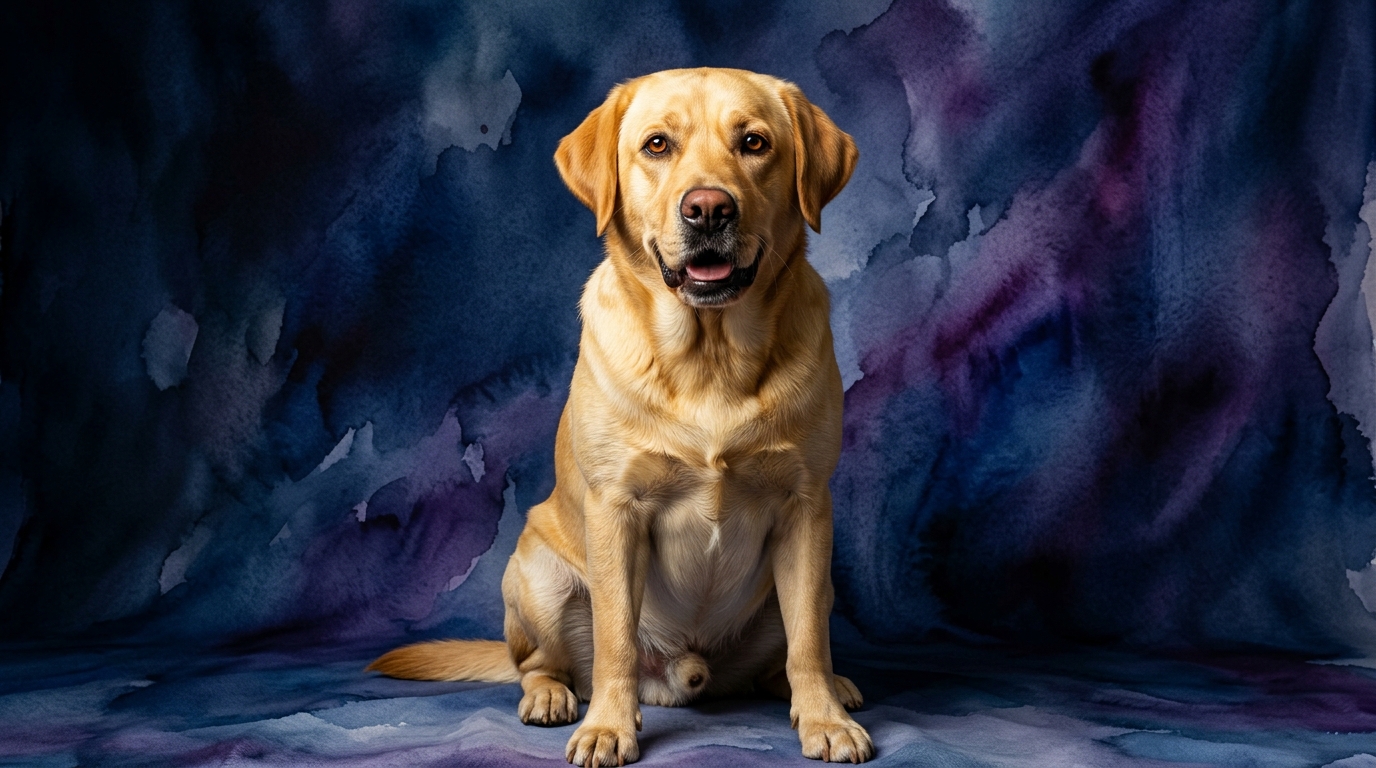

Decoding the Cognitive Blueprints: Labrador Retriever vs. Dachshund
The Cosmic Pet Pet IQ Lab employs five core dimensions for understanding canine cognition: Problem Solving, Training Speed, Social Intelligence, Instinctive Drive, and Memory. These metrics offer a nuanced view, moving beyond simple notions of mental acuity to specific aptitudes. We also consider Coren's ranking for working and obedience intelligence, acknowledging its focus on trainability and command following as an additional contextual layer.
The Labrador Retriever, a Sporting group member, ranks impressively at #7 in Coren's working intelligence scale, reflecting their historical role as retrieving companions. Their IQ scores paint a picture of balanced cognitive strength: Problem Solving at 4/5 indicates a strong capacity for navigating complex situations and learning new tasks; Training Speed at 5/5 signifies an exceptional eagerness and ability to grasp new commands quickly. Social Intelligence, also at 5/5, highlights their attunement to human cues and social dynamics, making them highly responsive partners. Their Instinctive Drive, rated 4/5, speaks to their powerful retrieving instincts and drive to work, while Memory at 4/5 confirms their ability to retain learned behaviors and information over time.
In contrast, the Dachshund, a Hound group member, holds a Coren rank of #49, suggesting a different cognitive emphasis. Their IQ profile reveals a unique set of aptitudes tailored to their historical purpose of hunting badgers. Problem Solving matches the Labrador at 4/5, indicating a similar capacity for independent thought and navigating challenges, albeit often with a different motivation. However, their Training Speed is notably lower at 2/5, suggesting a more independent learning curve. Social Intelligence at 3/5 points to a more self-directed nature, less driven by constant human affirmation. A remarkable Instinctive Drive of 5/5 underscores their unwavering prey drive and determination, while Memory at 3/5 reflects a functional retention for their specific tasks, perhaps less focused on human-centric commands.
The Labrador's Cognitive Edge: Partnership and Adaptability
The Labrador Retriever's cognitive strengths distinctly align with partnership and versatility. Their perfect 5/5 in Training Speed is a standout, reflecting an inherent desire to collaborate and a rapid acquisition of new behaviors. This isn't merely about following commands; it's about a quick understanding of desired actions and an eagerness to comply, making them exceptionally adaptable to diverse roles from service work to competitive obedience. Their high social intelligence, also 5/5, further amplifies this, allowing them to keenly interpret human body language, tone, and intent, fostering a deeply responsive working relationship.
This combination of rapid learning and social attunement means Labradors excel in environments requiring consistent, precise responses and intricate communication. For instance, in complex scent detection tasks or guiding roles, their ability to quickly learn sequences, remember specific cues, and work harmoniously with a handler gives them a significant advantage. Their 4/5 problem-solving skill, coupled with their trainability, means they can apply learned solutions to novel situations, often looking to their human companion for guidance when encountering new obstacles, rather than purely relying on independent trial-and-error.
The Dachshund's Tenacious Mind: Independent Problem-Solving and Drive
The Dachshund's cognitive profile, while different, is equally impressive in its specialized context. Their perfect 5/5 in Instinctive Drive is their defining cognitive superpower. This isn't just a strong urge; it's an unwavering focus and determination rooted in centuries of selective breeding for hunting badgers in tight, dark tunnels. This drive fuels their problem-solving ability, also rated 4/5, allowing them to independently assess situations and devise solutions to reach a goal, often without direct human prompting. Their problem-solving is less about pleasing an owner and more about achieving their own objective, whether it's burrowing under a fence or tracking an interesting scent.
This independence, while sometimes perceived as stubbornness in a training context, is a cognitive asset for their original purpose. A Dachshund needed to make quick, autonomous decisions underground, relying on their acute senses and unwavering resolve. Their 3/5 social intelligence, while lower than a Labrador's, means they process social cues differently; they are capable of affection but often prioritize their own sensory exploration or pursuit of instinctual goals over constant human interaction or approval. Their memory, at 3/5, is sufficient for retaining crucial information related to their environment and specific hunting tactics, even if it doesn't translate to extensive recall of arbitrary commands.
Navigating Training: Compliance vs. Conviction
The differences in Training Speed are perhaps the most pronounced distinction between these two breeds, fundamentally shaping their trainability. The Labrador Retriever, with a 5/5 Training Speed, is often described as a “people pleaser” because they derive satisfaction from successful collaboration with their human companions. They quickly associate commands with desired actions and are highly motivated by positive reinforcement, making them eager participants in structured training sessions. Their high social intelligence means they are constantly looking for cues and feedback, adjusting their behavior to meet expectations efficiently. This makes them ideal candidates for complex obedience routines, agility, and service work where precise, rapid responses are paramount.
The Dachshund, with a 2/5 Training Speed, presents a different challenge. This isn't a deficit in problem-solving capacity, but rather a reflection of their independent nature and strong instinctive drives. A Dachshund needs to be convinced that a command is worthwhile or aligns with their own interests. Their motivation often stems from internal drive rather than external approval. For example, teaching a “stay” might require more patience and creative reinforcement for a Dachshund, as their strong prey drive (5/5 instinctive drive) might constantly pull their attention towards perceived “targets.” Training a Dachshund often involves understanding their intrinsic motivations and making tasks seem like their idea, or at least highly rewarding in ways that appeal to their sensory-driven world. This requires a more nuanced, persistent, and often humorous approach, acknowledging their deep-seated independence.
Lifestyle Match: Energetic Partners or Independent Companions
Considering these cognitive profiles, the Labrador Retriever generally aligns well with active owners who enjoy structured activities and seek a highly engaged canine partner. Their robust instinctive drive (4/5) for retrieving and working, combined with their exceptional training speed and social intelligence, makes them enthusiastic participants in activities like hiking, swimming, advanced obedience, agility, and even field trials. They thrive on having a “job” and require consistent mental and physical stimulation to prevent boredom and channel their energy constructively. Owners who appreciate a dog that is always ready for the next adventure and thrives on collaborative tasks will find the Labrador to be an exceptional match.
The Dachshund, while possessing an incredibly strong instinctive drive (5/5) for scent work and “hunting,” offers a different kind of companionship, often appealing to owners who appreciate a more independent spirit and a less demanding physical routine. While they certainly need walks and opportunities to explore with their nose, their exercise requirements are generally lower than a Labrador's. Relaxed owners who enjoy leisurely strolls, short bursts of play, and a dog that is content to “supervise” from the couch after a good sniff-session will find the Dachshund's pace more suitable. However, “relaxed” does not mean “lazy”; Dachshunds still require mental engagement that taps into their problem-solving skills and strong drives, perhaps through puzzle toys or supervised scent games, to prevent them from finding their own, potentially destructive, entertainment. Their independence means they can be content with less constant direct interaction, offering a charmingly self-possessed presence.
The Verdict
Choose a Labrador Retriever if you seek a highly trainable, socially astute partner eager for collaborative activities and consistent engagement in a wide array of tasks. Their balanced cognitive profile makes them adaptable companions for active lifestyles and structured learning.
Opt for a Dachshund if you appreciate an independent, tenacious spirit with a profound instinctive drive, and are prepared for a more nuanced training approach that respects their self-directed problem-solving. They are ideal for owners who enjoy a less overtly compliant but deeply characterful companion.
🧠 Find Your Pet's IQ Score
Our Pet IQ Lab assessment covers 25+ tests across 5 cognitive dimensions — personalized to your breed.
Take the Full IQ Test →Frequently Asked Questions
Do Dachshunds really have the same problem-solving ability as Labradors?
The Cosmic Pet Pet IQ Lab data indicates both breeds score 4/5 in problem-solving. However, their motivation differs; Labradors often problem-solve to please, while Dachshunds use their skills to achieve their own instinctual goals, like tracking a scent or burrowing. This reflects different applications of a similar cognitive capacity.
Why is a Labrador's training speed so much higher than a Dachshund's?
Labrador Retrievers possess a strong desire to cooperate and a keen social intelligence, making them highly receptive to human cues and eager to learn new commands quickly. Dachshunds, conversely, are more independent and driven by their innate instincts, often requiring more patience and a different motivational approach during training.
Does a lower Coren rank mean a Dachshund is less intelligent overall?
Coren's ranking primarily assesses working and obedience intelligence, focusing on a dog's ability to learn and follow commands quickly. While a Dachshund ranks lower in this specific metric, their high instinctive drive and problem-solving skills in their specialized context demonstrate a distinct and equally valuable form of intelligence, tailored to their historical role.