
Side-by-Side Cognitive Profile
At The Cosmic Pet Pet IQ Lab, we analyze canine intelligence across five key dimensions, providing a granular view of each breed's unique cognitive landscape.
The **Labrador Retriever**, ranked #7 by Coren for working and obedience intelligence, demonstrates a strong aptitude for understanding and executing commands. Their Problem Solving is rated 4/5, indicating an ability to navigate complex situations and find solutions resourcefully. Training Speed is a standout 5/5, reflecting their rapid assimilation of new commands and routines, often mastering tasks with minimal repetition. Social Intelligence, also 5/5, highlights their profound capacity to interpret human cues, emotional states, and intentions, making them exceptionally attuned companions. Instincive Drive is 4/5, channeling their natural retrieving instincts and desire to work into purposeful activities. Finally, Memory at 4/5 signifies excellent retention of learned behaviors and social interactions.
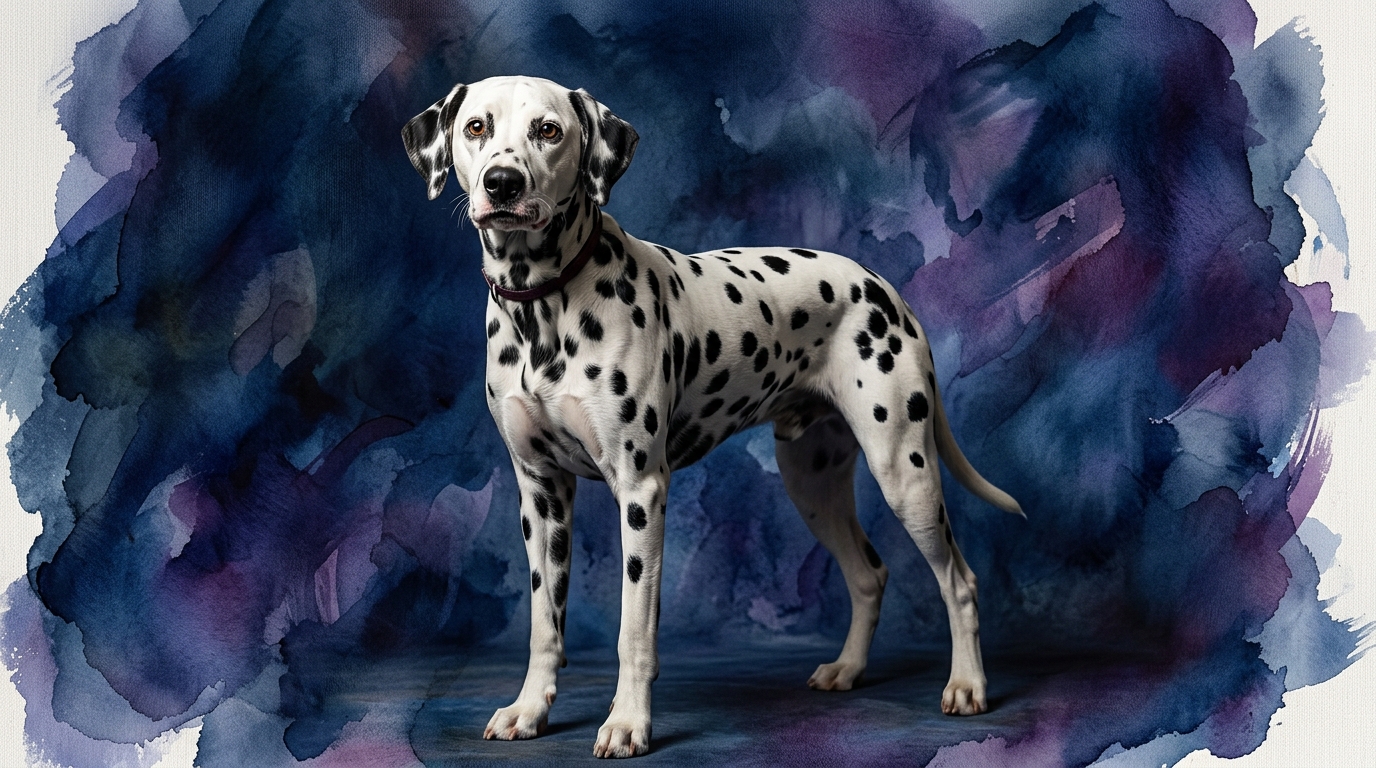
The **Dalmatian**, with a Coren rank of #39, presents a respectable yet more independent cognitive profile. Their Problem Solving is rated 3/5, showing competence in practical challenges, though they might employ a more direct or persistent approach. Training Speed is 3/5, meaning Dalmatians typically require more consistent repetition and varied motivation to solidify new commands, indicative of a more self-reliant learning style. Social Intelligence is 4/5, enabling them to form strong bonds and understand their family's dynamics, displaying loyalty and responsiveness to familiar individuals. Instincive Drive also stands at 4/5, reflecting their historical endurance for sustained activity, often expressed through vigorous pursuits. Their Memory is 4/5, demonstrating good recall for routines, people, and established patterns within their environment.
Where the Labrador Retriever Excels Cognitively
The Labrador Retriever's cognitive strengths distinctly position them as highly adaptable and cooperative partners. Their superior Training Speed, rated 5/5 compared to the Dalmatian's 3/5, means Labs absorb new commands and intricate sequences with remarkable quickness, achieving proficiency in significantly fewer repetitions. This makes them exceptionally versatile for roles demanding a broad and rapidly acquired repertoire of behaviors, from assistance work to competitive dog sports.
Furthermore, the Labrador’s higher Problem Solving ability (4/5) allows them to navigate novel situations with greater ingenuity, often finding independent solutions rather than relying solely on trial and error. This resourcefulness translates into a dog that can adapt to changing environments and unexpected challenges more readily. Their peak Social Intelligence (5/5) is another key differentiator; Labs possess an unparalleled ability to interpret subtle human emotional shifts and intentions, making them incredibly intuitive partners who can anticipate needs and respond appropriately to nuanced social cues. This cognitive edge fosters a deeper, more fluid communication channel between dog and owner, facilitating a highly cooperative working relationship.
Where the Dalmatian Demonstrates Unique Cognitive Strengths
While numerical scores don't indicate a direct "win" in every category, the Dalmatian's cognitive profile emphasizes resilience, independence, and an enduring spirit, particularly valuable in scenarios where self-reliance is prioritized over immediate human direction. Their Instincive Drive for sustained activity, rated equally at 4/5 with the Labrador, is often expressed through an impressive stamina and a keen awareness of their surroundings during long excursions, a legacy from their coach dog heritage. This drive, combined with a strong 4/5 Memory, enables them to master complex routes and routines for extensive periods, making them excellent companions for endurance activities.
The Dalmatian's slightly lower Problem Solving (3/5) and Training Speed (3/5) scores can sometimes reflect a greater self-sufficiency and a tendency to think for themselves rather than defaulting to human instruction. This independent streak, when channeled appropriately, can be a distinct advantage for tasks requiring persistence, independent decision-making, or prolonged effort without constant oversight. They are capable of learning and problem-solving, but they often approach tasks with a unique assertiveness, requiring an owner who appreciates and can guide this independent cognitive style.
Which is Easier to Train, and Why?
The Labrador Retriever is generally the easier breed to train, a difference rooted deeply in their respective cognitive profiles. With a Training Speed rating of 5/5, Labs grasp new commands and concepts with exceptional alacrity, often showing understanding after just a few repetitions. This rapid learning is profoundly complemented by their 5/5 Social Intelligence, which enables them to keenly observe and interpret human body language, vocal tones, and intentions, making them highly responsive to instruction and eager to please. Their inherent desire to work cooperatively with humans, a hallmark of their Sporting group heritage, further fuels their trainability, making training feel like a collaborative effort.
In contrast, the Dalmatian, with a Training Speed of 3/5, typically requires more patience, consistency, and creative motivation. Their independent nature, while not a cognitive deficit, means they may need more varied approaches and a stronger reinforcement schedule to internalize commands. While they possess good Social Intelligence at 4/5, their inclination towards self-directed action means an owner must work harder to consistently capture and maintain their focus. The training journey with a Dalmatian often requires a nuanced understanding of their spirited personality, making it a longer and more deliberate process than with a Labrador.
Which Suits Active Owners vs. Relaxed Owners?
For active owners, both breeds can be suitable, though they cater to slightly different types of activity. The Dalmatian, with its significant Instincive Drive (4/5) and historical role as a coach dog, thrives on sustained, vigorous physical activity like long-distance running, extensive hiking, or even competitive agility. They are ideal for individuals or families who embrace a consistently high-energy lifestyle and can provide daily, intense exercise, as their endurance and stamina are remarkable.
The Labrador Retriever, also possessing a robust Instincive Drive (4/5), is equally at home with active pursuits such as long walks, retrieving games, and swimming. However, their adaptability means they can also thrive in slightly less intense active environments, provided their mental and physical needs are met daily through engaging activities. For more relaxed owners, the Labrador Retriever presents a more adaptable option. Their high Social Intelligence and desire for companionship mean they are content with regular walks, mental engagement through training games, and ample family interaction. While still requiring daily exercise, they are generally more amenable to periods of calm. A Dalmatian, conversely, would likely struggle in a truly relaxed home environment without consistent, high-energy outlets, potentially leading to boredom-driven behaviors due to their inherent need for purpose and movement.
The Verdict
Choose a Labrador Retriever if you seek a highly trainable, socially astute companion eager to engage in cooperative tasks and adapt to a range of family dynamics. Their quick learning and intuitive understanding make them ideal for diverse roles and many first-time dog owners.
Opt for a Dalmatian if you are an experienced, highly active individual or family ready to embrace an independent, energetic partner that thrives on consistent physical challenges and mental stimulation. Their unique spirit requires dedicated engagement and a thorough understanding of their needs.
🧠 Find Your Pet's IQ Score
Our Pet IQ Lab assessment covers 25+ tests across 5 cognitive dimensions — personalized to your breed.
Take the Full IQ Test →Frequently Asked Questions
Is a Labrador Retriever or Dalmatian better for a family with children?
The Labrador Retriever's 5/5 Social Intelligence and inherent desire to please often make them exceptionally gentle and patient companions for children, adapting well to family life. While Dalmatians (4/5 Social Intelligence) can form strong family bonds, their higher energy and independent streak may require more supervision and consistent guidance around very young children.
Do both breeds require significant mental stimulation?
Yes, both breeds benefit from mental stimulation, but their needs differ. Labrador Retrievers thrive on puzzle toys and training sessions that leverage their problem-solving and training speed, enjoying cooperative learning activities. Dalmatians also need mental challenges, often preferring activities that engage their independent thinking and endurance, such as scent games, exploring new environments, or complex agility courses.
How do their Coren ranks reflect daily behavior?
The Labrador Retriever's Coren rank of #7 reflects their readiness to learn and obey, making them generally more compliant in daily routines and easier to manage with consistent training. The Dalmatian's #39 rank suggests a respectable cognitive capacity but a greater inclination towards independent thought, meaning they might require more consistent guidance and may not always default to immediate obedience, often preferring to assess situations themselves.