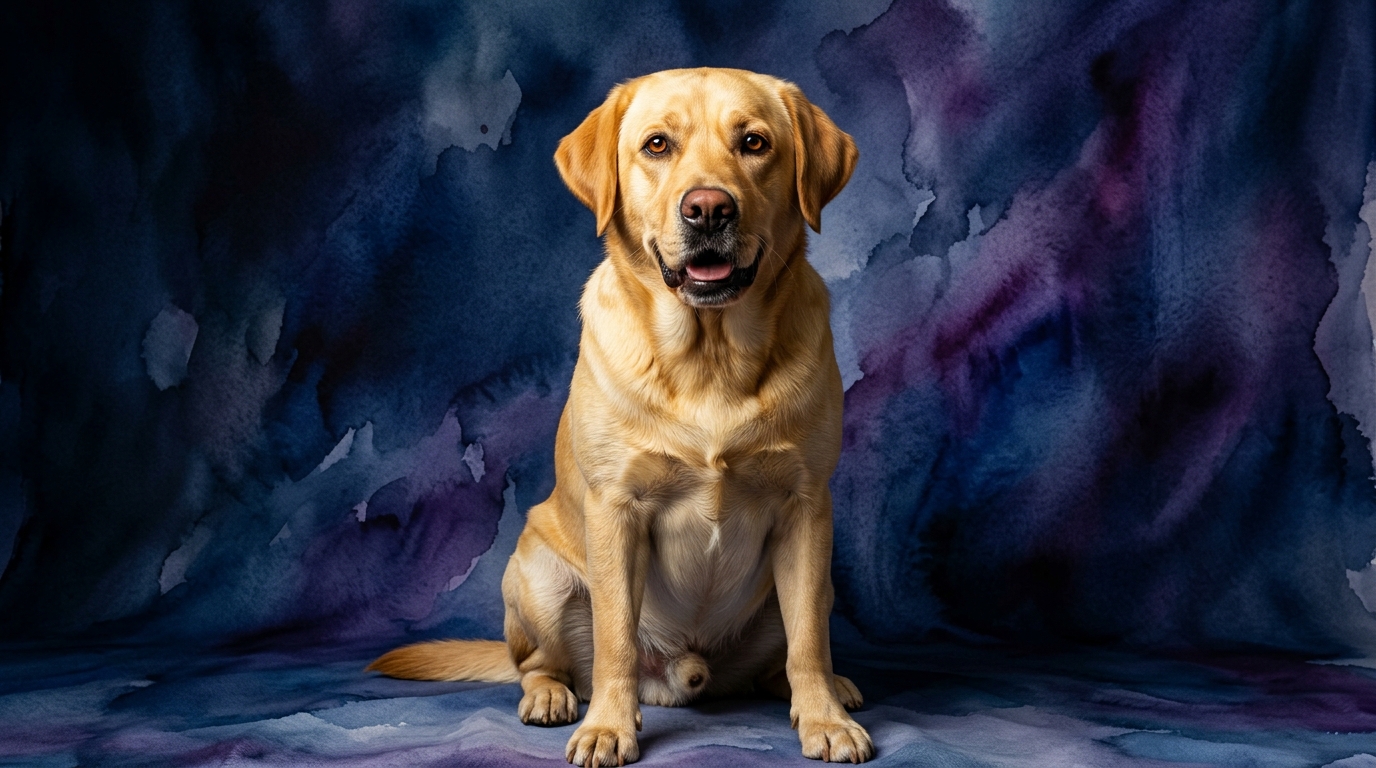

Side-by-Side IQ Profile: Sporting Drive vs. Companion Resolve
The Cosmic Pet Pet IQ Lab employs a comprehensive framework to assess canine intelligence across five critical dimensions. For the Labrador Retriever, a breed steeped in purpose and partnership, the scores reflect their heritage as retrievers and service animals. They achieve a Problem Solving score of 4/5, indicating a strong capacity to navigate challenges and adapt to new situations. Their Training Speed is an exceptional 5/5, showcasing rapid acquisition of commands and procedures. Social Intelligence also reaches a perfect 5/5, signifying an acute understanding of human cues and social dynamics. Instinctive Drive, crucial for their retrieving tasks, stands at 4/5, while their Memory is a solid 4/5, allowing for excellent retention of learned behaviors and experiences. This profile aligns with their Coren rank of #7, placing them among the most adept learners.
In contrast, the Lhasa Apso, historically a sentinel and companion from the Tibetan plateaus, presents a different cognitive blueprint, reflecting their independent spirit. They score 3/5 in Problem Solving, suggesting a methodical, self-directed approach to challenges rather than an eager-to-please one. Their Training Speed is 3/5, indicating they learn at a moderate pace, often requiring more repetition and patience. Social Intelligence is also 3/5, implying they are discerning in their social interactions, often forming deep bonds with their immediate family but being more reserved with strangers. Instinctive Drive, less focused on retrieving or herding, is 3/5, and their Memory is likewise 3/5, sufficient for their daily routines and household expectations. Their Coren rank of #68 positions them as a breed with a distinct, rather than less capable, cognitive style.
Where the Labrador Retriever Excels Cognitively
The Labrador Retriever's cognitive strengths are deeply rooted in their aptitude for partnership and utility. Their 5/5 Training Speed means they absorb complex command sequences with remarkable swiftness, making them prime candidates for advanced obedience, agility, and specialized working roles such as assistance or search and rescue. This rapid learning is often coupled with an eager-to-please disposition, facilitating an efficient training process. Their 5/5 Social Intelligence allows them to keenly interpret human body language, vocal tones, and emotional states, fostering an intuitive bond that makes them exceptional companions and responsive partners in tasks. They readily understand what is expected of them and strive to comply.
Furthermore, their 4/5 Problem Solving ability is demonstrated in their capacity to navigate varied environments and overcome obstacles to complete a task, whether it's retrieving a specific item or finding a scent. This cognitive flexibility, combined with their 4/5 Instinctive Drive, means they are not only capable of learning complex tasks but are also highly motivated to perform them consistently. Their robust 4/5 Memory ensures that once a skill is learned, it is retained effectively, allowing for reliable performance over time, even with breaks in practice. These combined traits make the Labrador Retriever a highly adaptable and dependable canine intellect.
Cognitive Nuances of the Lhasa Apso
While the Lhasa Apso's scores might appear lower in direct comparison, their cognitive profile is perfectly suited to their historical role and distinct personality. Their 3/5 Problem Solving isn't about a lack of capability, but rather a preference for independent thought and a less overt eagerness to be directed. They often solve problems on their own terms, such as figuring out how to get to a favored spot or manipulate their environment. This can manifest as a clever, sometimes stubborn, determination to achieve their own goals.
Their 3/5 Social Intelligence means they are selective in their affections and highly attuned to their immediate family, forming profound, loyal bonds. They might not exhibit the broad social responsiveness of a Labrador, but their loyalty within their chosen circle is deep and unwavering. Their 3/5 Instinctive Drive focuses more on their protective instincts and territorial awareness, rather than a drive for retrieving or working alongside humans in a sporting context. They possess a keen observational intellect, making them excellent watchdogs who are quick to alert their families to anything unusual. Their 3/5 Memory is entirely adequate for remembering routines, family members, and their boundaries, ensuring a stable and predictable home life.
Training Dynamics: Eagerness vs. Independence
When it comes to ease of training, the Labrador Retriever generally presents a more straightforward experience due to their 5/5 Training Speed and 5/5 Social Intelligence. They are typically highly motivated by praise, treats, and toys, and possess a strong desire to please their human companions. This combination leads to rapid learning and a high degree of compliance. Their attention spans are usually long, and they thrive on consistent positive reinforcement, making them ideal candidates for beginners or those seeking a highly obedient dog. Behavioral differences include their natural inclination to retrieve and carry objects, which can be channeled into constructive training games.
The Lhasa Apso, with a 3/5 Training Speed and 3/5 Social Intelligence, requires a different approach. They are often described as independent thinkers, sometimes exhibiting a stubborn streak. Training a Lhasa Apso demands patience, consistency, and a deep understanding of their motivations. They are less inclined to perform simply to please and may need more convincing that a task is worthwhile. While they are certainly capable of learning, the process might be slower and require more creative engagement to maintain their interest. Their independent nature means they may weigh commands against their own perceived self-interest, rather than immediately complying. Early socialization and consistent positive reinforcement are crucial to shaping their behavior effectively.
Lifestyle Match: Active Engagement vs. Relaxed Companionship
The differing cognitive profiles and breed characteristics naturally lead to suitability for distinct owner lifestyles. Labrador Retrievers, with their high scores in training speed, social intelligence, and instinctive drive, thrive with active and engaged owners. They require significant mental stimulation and physical activity to prevent boredom and channel their abundant energy. Owners who enjoy outdoor adventures, participate in dog sports like agility or obedience, or are looking for a partner in service work will find a Labrador to be an unparalleled match. Their cognitive makeup means they genuinely enjoy learning new things and participating in family activities, making them excellent companions for dynamic households.
Lhasa Apsos, on the other hand, are better suited for owners who appreciate a more relaxed pace and an independent companion. While they benefit from regular walks and play, their physical exercise requirements are moderate. Their cognitive strengths lean towards being a watchful, loyal presence rather than a constant participant in vigorous activities. Owners who prefer a dog that is content with indoor companionship, enjoys puzzle toys, and doesn't demand constant instruction will likely find a Lhasa Apso to be a delightful fit. They are often happy to observe their surroundings from a comfortable perch, offering quiet companionship and alert guardianship.
The Verdict
Choose a Labrador Retriever if you seek an enthusiastic, highly trainable partner for active lifestyles, advanced training, or service work, valuing their eager-to-please nature and strong social intelligence.
Opt for a Lhasa Apso if you prefer an independent, watchful, and loyal companion for a more relaxed home environment, appreciating their self-assured temperament and deep, selective affection.
🧠 Find Your Pet's IQ Score
Our Pet IQ Lab assessment covers 25+ tests across 5 cognitive dimensions — personalized to your breed.
Take the Full IQ Test →Frequently Asked Questions
Are Lhasa Apsos difficult to train due to their lower IQ scores?
Lhasa Apsos are not difficult to train, but they do require patience and consistency due to their independent nature and moderate training speed. They learn effectively, but may need more motivation and repetition than a Labrador Retriever, responding best to positive reinforcement and engaging methods.
Do Labrador Retrievers require a lot of mental stimulation?
Yes, Labrador Retrievers thrive on mental stimulation. Their high problem-solving ability and strong instinctive drive mean they need regular opportunities to learn, work, and engage their minds through training, puzzle toys, and interactive play to prevent boredom.
Which breed is better for first-time dog owners?
For first-time dog owners, a Labrador Retriever is often recommended due to their high training speed and eager-to-please nature, which makes the training process generally more forgiving. Lhasa Apsos can be great for first-time owners who are prepared for a more independent learner and are committed to consistent, patient training.