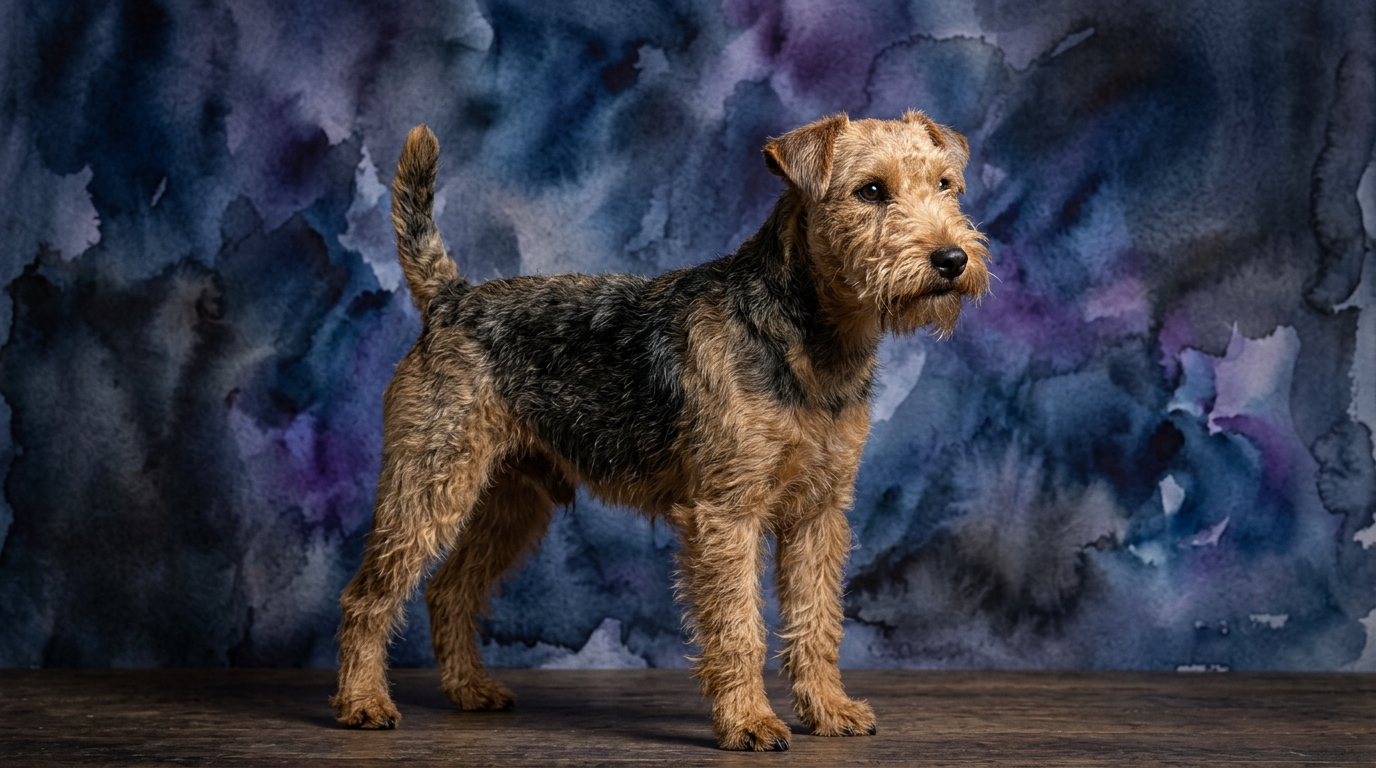

Side-by-side IQ Profile: Unpacking Identical Scores
At first glance, the Pet IQ Lab scores for both the Lakeland Terrier and the Black and Tan Coonhound present a curious parity: each breed registers a consistent 3 out of 5 across all five cognitive dimensions – Problem Solving, Training Speed, Social Intelligence, Instinctive Drive, and Memory. This numerical equivalence, however, does not suggest identical cognitive profiles or behavioral manifestations. Instead, it invites a deeper exploration into how these moderate cognitive abilities are uniquely expressed through each breed’s distinct heritage, purpose, and temperament, painting a picture of diverse intelligence within the same scoring bracket.
For the Lakeland Terrier, a breed historically honed in the rugged fells of England to hunt fox and vermin, their 3/5 in Problem Solving often translates into a quick, decisive approach to immediate environmental challenges. They might swiftly deduce how to retrieve a hidden toy, navigate a complex agility course, or even outsmart a curious gate latch. Their 3/5 Training Speed reflects an ability to grasp new commands with moderate repetition, yet this is often coupled with an independent streak, meaning application can be selective, requiring engaging and positive reinforcement. Their Social Intelligence, also a 3/5, allows them to be highly attuned to family dynamics and human emotions, forming strong bonds, but they can also exhibit a confident, sometimes assertive, demeanor with strangers or other dogs. The 3/5 Instinctive Drive is a powerful prey drive, evident in their keen interest in small, fast-moving objects, digging, and alert barking. Finally, their 3/5 Memory serves them well in recalling routines, specific commands, and the layout of their familiar territory, contributing to their adaptable nature.
In contrast, the Black and Tan Coonhound, bred for trailing game over vast distances in varied terrain, expresses its 3/5 Problem Solving in a fundamentally different manner. Their intelligence is less about rapid-fire decisions and more about methodical, sustained focus on unraveling complex scent trails, navigating through dense underbrush, and persistent pursuit. Their 3/5 Training Speed requires immense patience and consistent, positive reinforcement, as their profound scent drive can easily divert their attention. However, once a behavior is deeply ingrained, particularly if it aligns with their natural instincts, they can be remarkably reliable. A 3/5 in Social Intelligence means they are generally good-natured, tolerant, and form deep, loyal bonds with their families, often amiable with other dogs in a 'pack' setting, valuing harmony. Their 3/5 Instinctive Drive is overwhelmingly centered on scent; it's a powerful, unwavering force that compels them to track and vocalize with their characteristic bay. Their 3/5 Memory is specialized, exhibiting an exceptional capacity for retaining intricate scent information, remembering complex trails, and the nuances of their hunting grounds, a cognitive skill distinct from a terrier's recall of simple domestic tasks.
Where the Lakeland Terrier's Cognition Shines
While both breeds score 3/5 in problem-solving, the Lakeland Terrier's cognitive strengths often manifest in ways that are more immediately recognizable and applicable within a typical human household. Their intelligence is geared towards quick assessments and direct action, a legacy of their vermin-hunting days where swift decisions meant success. This means they excel at interactive games, quickly figuring out how to open a treat-dispensing puzzle or navigating a new obstacle course in the living room. Their 3/5 problem-solving often involves a tangible, visible goal, making them engaging partners for owners who enjoy teaching tricks or participating in dog sports like agility, where rapid understanding and execution are valued. They possess a cunning ability to 'figure things out' from a human perspective, often surprising owners with their ingenuity in achieving a desired outcome, whether it's reaching a counter-top snack or opening a door.
Furthermore, their 3/5 social intelligence allows them to be highly interactive and responsive to their human family. They possess a keen awareness of their surroundings and the emotional atmosphere, often seeking to be involved in family activities. This translates into a strong capacity for learning through observation and direct human instruction, making them feel like very 'present' and engaged members of the household. Their memory (3/5) for specific routines, people, and learned commands reinforces this, making them adaptable companions who can quickly adjust to a structured daily life and remember what's expected of them in various situations, from their daily walk schedule to where their favorite toy is stored.
Where the Black and Tan Coonhound's Cognition Excels
The Black and Tan Coonhound's cognitive strengths, though also rated 3/5, are profoundly specialized and deeply rooted in their historical purpose. Their problem-solving (3/5) is less about quick tricks and more about sustained, methodical deduction in the natural world. They demonstrate an extraordinary capacity to process vast amounts of olfactory information, differentiating between myriad scents, following faint trails, and working through complex environmental distractions for hours on end. This isn't a 'win' in terms of speed, but in terms of endurance, precision, and an almost meditative focus on a singular, intricate task. Their intelligence is an exercise in sustained mental effort, often requiring them to piece together an invisible puzzle across miles of varied terrain, showcasing a unique form of cognitive resilience.
Their 3/5 instinctive drive is not merely a physical urge but a profound cognitive commitment. Once a Coonhound locks onto a scent, their mental faculties are entirely dedicated to that pursuit, demonstrating a powerful form of cognitive persistence. This unwavering focus, combined with their exceptional 3/5 memory for scent patterns and territorial nuances, allows them to build a detailed mental map of their environment based on olfactory cues. They 'remember' a landscape through its smells, making them exceptionally capable at navigating and performing tasks in environments where visual cues might be limited. This specialized memory is a hallmark of their cognitive prowess, allowing them to recall and interpret information vital to their tracking work with remarkable accuracy, often over significant periods.
Training Dynamics: Identical Scores, Different Approaches
Despite identical 3/5 training speed scores, the *experience* of training a Lakeland Terrier versus a Black and Tan Coonhound differs significantly due to their inherent behavioral patterns. Lakeland Terriers, with their independent and often spirited nature, can grasp commands quickly but may then choose when to obey, often weighing the command against their own immediate desires. Training them requires creativity, short, engaging sessions, and making the learning process feel like their own exciting idea. They can be quick to pick up new tricks and excel in activities that challenge their intellect and agility, but owners must be prepared for their tendency to test boundaries and require consistent, firm, yet positive reinforcement to maintain compliance.
Black and Tan Coonhounds, while generally good-natured and eager to please their family, are profoundly governed by their powerful scent drive. This means that while they are capable of learning commands, their focus can be easily diverted by an interesting smell, making training in distracting environments particularly challenging. Training requires immense patience, consistency, and often needs to incorporate their natural drive, such as scent work or long-line tracking, to be truly effective. They might take more repetitions to solidify a concept, especially if it doesn't align with their natural instincts, but are often more reliable once a command is deeply ingrained, provided the environment is controlled and free from overwhelming olfactory distractions. Their perceived 'stubbornness' often stems from being engrossed in a scent, rather than outright defiance.
Lifestyle Suitability: Active vs. Active (Differently)
Both Lakeland Terriers and Black and Tan Coonhounds, with their consistent 3/5 scores across the board, are breeds that suit active owners, though their activity needs manifest differently. Lakeland Terriers are suited for owners who appreciate a dog with a zest for life and a need for consistent mental engagement. They thrive on varied activities, from agility and earthdog trials to brisk walks and interactive playtime in a secure yard. Their independent problem-solving and moderate energy mean owners must be prepared to provide stimulating tasks and manage their strong prey drive with appropriate outlets. They enjoy being central to family activities and can adapt well to urban or suburban living with sufficient exercise.
Black and Tan Coonhounds also require active owners, but their activity needs lean towards sustained, methodical exploration rather than quick bursts. They need long, consistent walks or runs where they can explore scents, ideally in a secure, fenced area or on a long leash in safe environments. Their cognitive strength lies in endurance and methodical tracking, making them ideal for owners who enjoy hiking, participating in scent work or tracking sports, or have a large, securely fenced property where they can follow their nose. Owners who prefer a more relaxed lifestyle might find their baying, relentless tracking drive, and potential for wandering challenging without appropriate and consistent outlets for their specialized cognitive and physical energy.
The Verdict
Choose a Lakeland Terrier if you seek a spirited, engaging companion who enjoys interactive problem-solving games and thrives on varied mental and physical stimulation within a family setting. Be prepared for their independent streak and a need for consistent, creative training to channel their quick wit and assertive personality.
Opt for a Black and Tan Coonhound if you are an owner who appreciates a dog with an unparalleled dedication to scent work and possesses the patience to channel their powerful tracking drive. They excel in environments where they can methodically explore and exercise their specialized cognitive abilities over long distances, forming a deep, loyal bond with a patient family.
🧠 Find Your Pet's IQ Score
Our Pet IQ Lab assessment covers 25+ tests across 5 cognitive dimensions — personalized to your breed.
Take the Full IQ Test →Frequently Asked Questions
Do Lakeland Terriers and Black and Tan Coonhounds learn at the same pace?
While both breeds score 3/5 in training speed, their learning styles differ significantly. Lakeland Terriers can grasp concepts quickly but may choose when to perform, requiring engaging methods. Black and Tan Coonhounds may take more repetitions due to their strong scent drive but become very reliable once a command is truly solidified, especially if training incorporates their natural instincts.
Which breed is better for puzzle toys?
Lakeland Terriers generally excel with puzzle toys, using their independent problem-solving (3/5) to quickly manipulate objects and figure out how to get to a reward. Their quick, direct approach to challenges makes these toys highly engaging for them. Black and Tan Coonhounds might approach them, but their primary cognitive strength lies in sustained scent-based problem-solving rather than quick manipulation of objects for a visible reward.
How does their social intelligence (3/5) manifest differently?
A Lakeland Terrier's social intelligence often involves direct, interactive engagement with family members, being highly attuned to their emotions, but also expressing their own assertive personality. A Black and Tan Coonhound's social intelligence tends to be more about pack harmony, forming strong, loyal bonds with family and generally being tolerant and good-natured with familiar individuals and other dogs in a communal setting.