
Side-by-Side Cognitive Profiles
Despite both breeds scoring 3/5 across all five cognitive dimensions, their expressions of these traits are profoundly shaped by their breed groups. The Lakeland Terrier, a member of the tenacious Terrier group, approaches the world with a distinct independence, while the English Foxhound, a dedicated scent hound, filters much of its cognition through an extraordinary sense of smell.
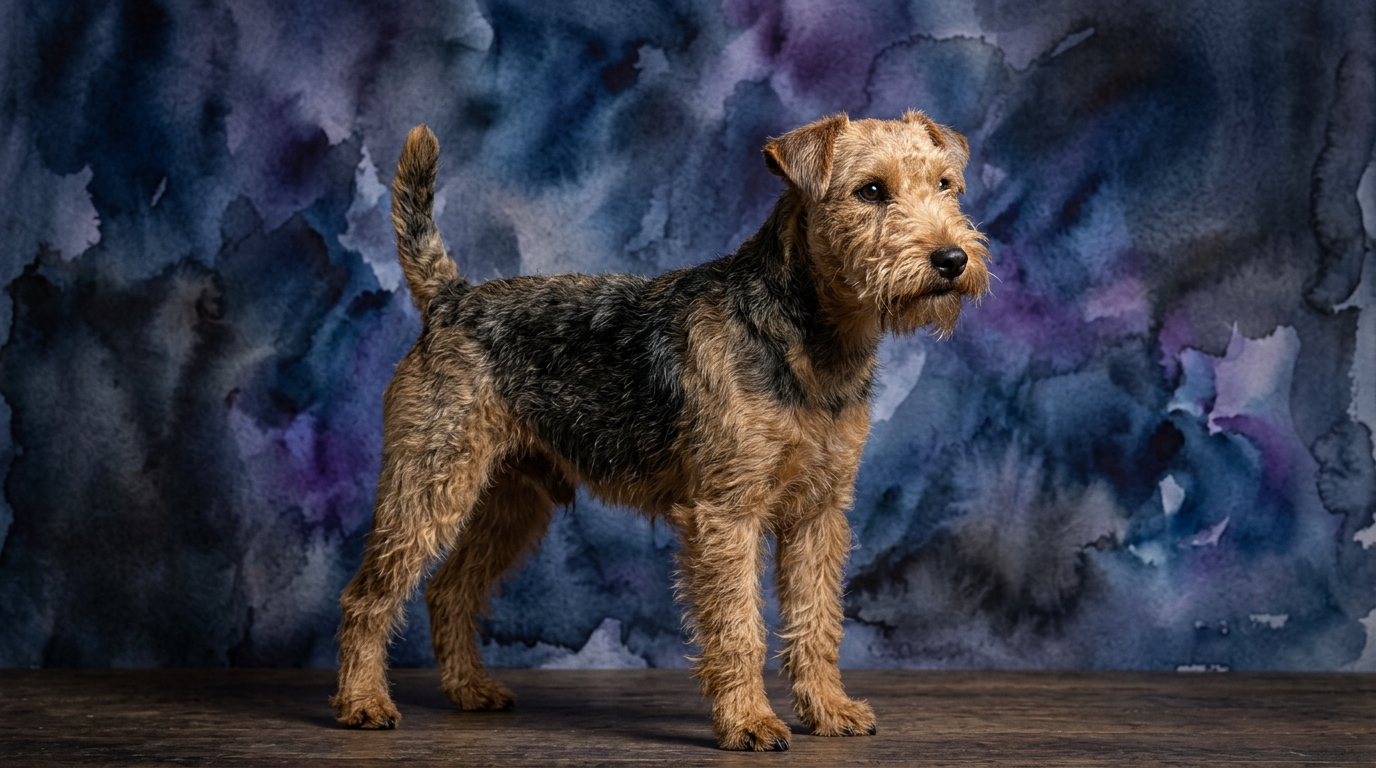
For the **Lakeland Terrier**, a 3/5 in **Problem Solving** reflects a pragmatic, hands-on approach. Lakeland Terriers aren't necessarily strategic planners in an abstract sense, but they are incredibly persistent and resourceful when faced with a tangible challenge, particularly one involving an object or a perceived 'prey' item. They will experiment with different methods, often using their paws, nose, and teeth, until a solution is found, driven by a strong internal motivation rather than external direction. Their **Training Speed** at 3/5 indicates they are capable of learning commands efficiently, but their strong independent streak and self-assured nature mean they weigh the value of compliance against their own impulses. They learn best with positive reinforcement, clear expectations, and varied training sessions that keep their inquisitive minds engaged, but rote repetition might lead to boredom and selective hearing. Their **Social Intelligence** (3/5) shows they are astute observers of their human family's emotions and routines, forming deep, loyal bonds. However, their social intelligence with other canines can be more nuanced; they are often confident and will stand their ground, which requires careful socialization to ensure polite interactions rather than confrontational ones. The 3/5 **Instinctive Drive** for a Lakeland is robust but generally manageable within a domestic setting with appropriate outlets. This indicates a healthy drive for chasing, digging, and exploring, which needs channeling into structured activities like earthdog trials, fetch, or puzzle toys, rather than being allowed to run rampant. Finally, their **Memory** (3/5) is good for commands, routines, and past experiences, both positive and negative. If a particular training method was ineffective or an experience unpleasant, they will remember it, making consistency paramount to avoid reinforcing undesirable behaviors.
For the **English Foxhound**, a 3/5 in **Problem Solving** is intrinsically linked to its primary purpose: scent-tracking. Their score highlights their exceptional ability to analyze and follow complex olfactory trails, navigating varied terrains and distractions with single-minded determination. However, their problem-solving outside of this specialized domain, especially abstract or novel household challenges, might not be as intuitive or adaptable as breeds bred for general utility. Their **Training Speed** (3/5) means Foxhounds can absorb commands and routines, particularly when they align with their natural drives. Yet, this speed is often challenged by their profound focus on scent; once a captivating odor is detected, their ability to process and respond to human commands significantly diminishes. Training requires immense patience, high-value rewards, and often, a strong umbilical leash. As a pack breed, English Foxhounds typically exhibit good **Social Intelligence** (3/5) with other dogs, understanding and adhering to canine hierarchy and communication. With humans, they are generally amiable and tolerant, though their affection might be expressed more broadly to the 'pack' (family) rather than intensely focused on a single individual, reflecting their cooperative heritage. The 3/5 **Instinctive Drive** for a Foxhound is almost entirely dominated by its powerful nose and endurance for the chase. This isn't a subtle drive; it's a profound, persistent urge to follow a scent, requiring dedicated outlets like scent work, long hikes, or even participation in field trials to fulfill this fundamental aspect of their being. Foxhounds possess a strong **Memory** (3/5), particularly for scent patterns, routes, and the location of familiar places. They remember training cues and routines, but as with their training speed, this memory can be temporarily overridden by an overpowering scent, making "selective hearing" a common trait when their nose is engaged.
Where the Lakeland Terrier Cognitively Excels
The Lakeland Terrier, with its terrier heritage, often demonstrates a particular cognitive advantage in tasks requiring independent thought and tenacious, self-directed problem-solving. While rated 3/5 for problem-solving, their style is one of persistent trial-and-error, often driven by a strong will to achieve a goal, whether it's retrieving a hidden toy from a tight spot or figuring out a gate latch. Their intelligence shines in adaptability to diverse challenges that don't solely rely on scent, making them adept at navigating novel domestic situations with a clever, sometimes mischievous, approach. They tend to be more focused on their immediate human environment, observing and learning from interactions within the home, a manifestation of their social intelligence that is more family-centric than pack-oriented.
Where the English Foxhound Cognitively Excels
The English Foxhound's cognitive strengths lie profoundly in its specialized sensory intelligence and endurance, especially in its instinctive drive. Though also rated 3/5 in problem-solving, their expertise is unparalleled in olfactory discrimination and sustained tracking. This breed excels at following complex scent trails over long distances, demonstrating an incredible capacity for sustained mental focus on a singular, deeply ingrained task. Their cooperative nature, honed by generations of pack work, also indicates a sophisticated understanding of group dynamics with other canines, allowing them to work in concert with minimal human direction once a scent is engaged. This specialized intelligence makes them masters of their ancestral craft.
Which is Easier to Train and Why
Determining which breed is 'easier' to train is less about raw learning capacity and more about managing inherent drives. The Lakeland Terrier, while possessing a 3/5 training speed, can present challenges due to its independent spirit and occasional stubborn streak. Training requires consistent, engaging methods that appeal to their desire to work *with* you, rather than simply *for* you. They respond well to varied activities and clear boundaries, but their strong will means an owner must be patient and creative to maintain their attention and compliance. Their memory for both positive and negative experiences means consistency in commands and expectations is crucial.
In contrast, the English Foxhound also carries a 3/5 training speed, but its primary training hurdle is its overwhelming instinctive drive for scent. While they can learn commands readily, particularly those related to their hunting instincts, achieving reliable recall or focus in a scent-rich environment is a monumental task. Their minds are constantly processing olfactory information, often overriding verbal cues, and their strong memory for scents means they'll pursue a trail tenaciously. Therefore, while both require dedicated training, the Foxhound demands a significantly higher level of environmental management and specialized training to counteract its powerful nose, making the Lakeland Terrier generally more adaptable to a variety of training disciplines in a typical home setting.
Which Suits Active Owners vs. Relaxed Owners
Neither the Lakeland Terrier nor the English Foxhound is ideally suited for genuinely 'relaxed' owners in the traditional sense, as both possess significant energy and mental needs. However, their activity profiles differ. The Lakeland Terrier, while energetic, requires a more varied and mentally engaging exercise routine. They thrive with owners who can provide consistent training, interactive games, and opportunities for digging or exploring, channeling their terrier tenacity into constructive outlets. Their exercise needs can often be met with vigorous walks, playtime, and brain games within a secure yard or on a leash, coupled with plenty of human interaction.
Conversely, the English Foxhound is unequivocally a breed for highly active owners. Their heritage demands extensive, sustained physical exercise, ideally involving long runs, hiking, or dedicated scent work. They are built for endurance and require daily opportunities to expend significant energy. An owner who enjoys long-distance running, rural living, or has access to large, securely fenced areas where they can truly stretch their legs will find the Foxhound a more suitable companion. A 'relaxed' owner would quickly find themselves overwhelmed by either breed's unmet needs, but particularly by the Foxhound's relentless drive for movement and pursuit of scent.
The Verdict
Choose a Lakeland Terrier if you seek an interactive, clever companion who thrives on varied mental stimulation and spirited play within a family setting, and you appreciate a dog with an independent streak.
Opt for an English Foxhound if you are a highly active individual or family with access to vast, securely fenced spaces, prepared to dedicate significant time to their extensive exercise needs and channeling their powerful scent drive.
🧠 Find Your Pet's IQ Score
Our Pet IQ Lab assessment covers 25+ tests across 5 cognitive dimensions — personalized to your breed.
Take the Full IQ Test →Frequently Asked Questions
Are Lakeland Terriers considered stubborn?
Yes, their independent nature and strong will, a hallmark of the Terrier group, can make them seem stubborn. Successful training with a Lakeland Terrier requires consistent, positive reinforcement and making training fun and engaging to hold their attention.
Can English Foxhounds live in apartments?
English Foxhounds are not ideally suited for apartment living. Their high exercise needs, powerful instinct to run, and tendency to be vocal (baying) make them much better suited for homes with ample outdoor space and owners who can provide significant daily physical activity.
Do both breeds typically do well with children?
Both breeds can do well with children when properly socialized and supervised. Lakeland Terriers are sturdy, playful companions who can form strong bonds, while English Foxhounds are generally amiable but their larger size and boisterous energy might be overwhelming for very small children without careful management.