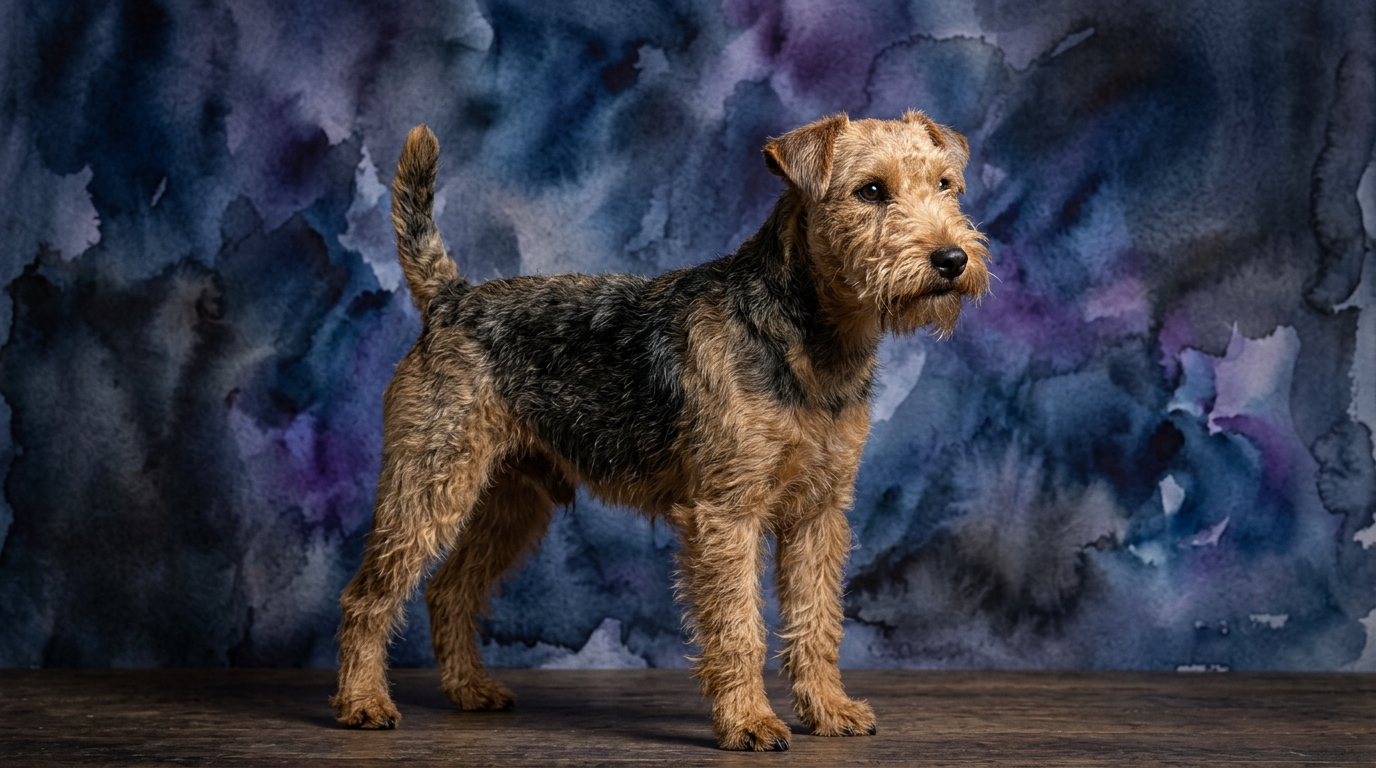

Side-by-Side IQ Profile: Unpacking the 3/5 Scores
At The Cosmic Pet Pet IQ Lab, we assess canine intelligence across five key dimensions, each rated on a scale of 1 to 5. Interestingly, both the Lakeland Terrier and the Rat Terrier register a consistent 3/5 across all categories. This numerical parity doesn't suggest identical mental processes, but rather a comparable level of cognitive ability that unfolds uniquely in each breed's specific context and personality.
For the **Lakeland Terrier**, their 3/5 in **Problem Solving** reflects a tenacious, independent approach to challenges. Bred to work alone in rugged terrain, they excel at figuring out how to navigate complex landscapes, overcome obstacles like dense undergrowth, or persist in digging to reach quarry. This isn't about rapid-fire solutions, but rather a determined, methodical persistence until the goal is achieved. Their **Training Speed** also at 3/5 indicates they learn with consistency, but their independent streak means they often require clear, compelling motivation and a patient handler who understands the terrier mindset. They aren't always quick to obey if they don't see the immediate benefit or if their instincts override the command. Their **Social Intelligence** at 3/5 means they are observant and form deep, loyal bonds with their families, often reading household dynamics well, but they can be reserved or discerning with strangers and other dogs, requiring careful socialization. The 3/5 **Instinctive Drive** for the Lakeland is deeply rooted in their hunting heritage, manifesting as a strong prey drive, a propensity for digging, and a watchful territoriality. They are driven by scent and sight, capable of sustained pursuit. Finally, their **Memory** score of 3/5 suggests they retain information moderately well, particularly routes, boundaries, and past experiences related to their hunting tasks or daily routines, contributing to their reliable navigation and tracking abilities.
The **Rat Terrier**, also scoring 3/5 across the board, applies these cognitive strengths with a different flavor. Their **Problem Solving** at 3/5 often appears as quick assessment and agile decision-making, particularly in confined spaces or when dealing with fast-moving targets. They might quickly devise strategies to locate hidden objects, outwit pests, or figure out how to access forbidden areas. This problem-solving is often characterized by speed and adaptability. Their **Training Speed** at 3/5 means they can learn commands readily when engaged, often showing an eagerness to please that differs from the Lakeland's independence. However, their high energy and potential for distraction by environmental stimuli, particularly small critters, can make consistent focus a challenge, requiring creative training methods. **Social Intelligence** for the Rat Terrier, also 3/5, often presents as a more openly expressive and adaptable demeanor. They are generally more outgoing than many terriers, quick to gauge the intentions of new people and often sensitive to their owner's moods, making them quite responsive companions. Their 3/5 **Instinctive Drive** is intensely focused on vermin detection and dispatch. This drive is characterized by rapid detection, quick pounces, and a high state of alertness, making them exceptional watchdogs and pest controllers. Unlike the Lakeland's sustained digging, the Rat Terrier's drive is more about quick action and agility. Their **Memory** at 3/5 is often precise, excelling at recalling routines, the location of hidden toys or treats, and specific training cues, making them quite predictable in their habits once established.
Where the Lakeland Terrier Excels Cognitively
Despite identical numerical scores, the Lakeland Terrier's cognitive strengths shine in situations demanding robust independence and sustained focus on a singular, often challenging, task. Their problem-solving, while not always rapid, is characterized by a dogged determination to see a task through, whether it's navigating a complex hiking trail or working a scent for an extended period without direct human intervention. This self-reliance means they can intelligently assess and react to environments autonomously, a trait invaluable for owners who appreciate a dog capable of making sound decisions in the field. Their memory for terrain and scent trails also contributes to their proficiency in independent exploration and tracking, making them adept at remembering where they've been and where they need to go. Their social intelligence, though reserved, allows them to form deep, discerning bonds, making them highly attuned to the subtle cues within their immediate family unit, often anticipating needs or moods without overt signals.
Where the Rat Terrier Holds a Cognitive Edge
The Rat Terrier's cognitive prowess often lies in their agility of thought and quick responsiveness, particularly in dynamic, fast-paced scenarios. Their problem-solving manifests as a keen ability to quickly assess and adapt to changing conditions, making split-second decisions to achieve an objective, such as finding the quickest route to a perceived 'prey' or figuring out a puzzle toy with speed. This quick-wittedness, combined with their sharp observational skills, allows them to react swiftly to novel stimuli and learn new tasks with an engaging promptness. Their social intelligence, often more outwardly expressive, allows for quicker rapport with a wider range of people, making them quite adaptable in varied social settings. The precision of their memory for routines and specific learned behaviors also gives them an edge in structured environments, where consistency and rapid recall are beneficial.
Which is Easier to Train, and Why?
When it comes to ease of training, the distinction between these two breeds, both with a 3/5 training speed, lies more in the *type* of training challenge they present. The Rat Terrier often appears 'easier' to train due to their generally more eager-to-please disposition and quicker reaction times. They tend to be highly motivated by positive reinforcement and enjoy the engagement of training sessions, often picking up new commands with enthusiasm. Their agility of mind allows them to quickly grasp concepts, making them excellent candidates for activities like agility or trick training. However, their strong instinctive drive and potential for distraction mean that proofing commands in stimulating environments requires significant effort and consistency to ensure reliability.
The Lakeland Terrier, while equally capable of learning (3/5 training speed), often requires a more patient and understanding approach. Their inherent independence means they are less inclined to blindly follow commands and will often 'think' about the request before complying. Training a Lakeland requires a handler who can make learning a rewarding experience, utilizing their natural tenacity and problem-solving skills rather than trying to overpower their will. They respond best to fair, consistent, and engaging methods that respect their intelligent, self-reliant nature. While they may not learn as 'quickly' in terms of immediate compliance, once a Lakeland understands the value of a command, their memory ensures it sticks, but their independent application of it might still surprise you. Therefore, neither is 'easy' in the conventional sense, but the Rat Terrier might offer more immediate gratification for a novice trainer, while the Lakeland demands a deeper understanding of terrier psychology.
Suitability for Active vs. Relaxed Owners
Both the Lakeland Terrier and the Rat Terrier are active breeds, and neither is truly suited for a 'relaxed' owner in the sense of minimal engagement. However, their activity needs and how they express them differ. The **Lakeland Terrier** thrives with owners who lead an active, outdoorsy lifestyle. They need regular opportunities for vigorous exercise, such as long hikes, challenging walks, or participation in earthdog trials, where their natural instincts can be safely channeled. Owners who appreciate a dog with a strong personality and an independent streak will find the Lakeland rewarding. They require mental engagement to prevent boredom, which can manifest as inventive mischief. Their cognitive strengths are best utilized when given 'jobs' or challenges that tap into their problem-solving and instinctive drives, making them ideal for individuals who enjoy collaborative outdoor adventures.
The **Rat Terrier**, while equally energetic, can often be more adaptable to various living situations, including apartments, provided their exercise and mental stimulation needs are met daily. They excel in short bursts of high-intensity activity like fetch, agility, or obedience training sessions. Owners who enjoy interactive play, puzzle toys, and consistent training will find the Rat Terrier a delightful companion. Their quick-wittedness and adaptability mean they can thrive with owners who are consistent in providing varied mental challenges and physical outlets. They are often more content with structured play and training within a yard or home setting, though they certainly enjoy exploring. Essentially, the Lakeland leans towards rugged, sustained outdoor activity, while the Rat Terrier prefers agile, varied, and often shorter bursts of intense engagement.
The Verdict: When to Choose Each Breed
The Verdict
Choose the Lakeland Terrier if you seek a resilient, independent companion for rugged outdoor adventures and appreciate a dog with a strong, self-reliant personality that thrives on methodical challenges.
Opt for the Rat Terrier if you desire a quick-witted, agile companion for interactive play, training, and a dog that excels in fast-paced problem-solving and adapts well to varied environments.
🧠 Find Your Pet's IQ Score
Our Pet IQ Lab assessment covers 25+ tests across 5 cognitive dimensions — personalized to your breed.
Take the Full IQ Test →Frequently Asked Questions
Are Lakeland Terriers good with children?
Lakeland Terriers can be excellent family dogs, forming strong bonds with children when properly socialized from a young age. Their sturdy nature and playful spirit make them good companions, but supervision is always advised due to their terrier tenacity.
Do Rat Terriers have a strong prey drive?
Yes, Rat Terriers possess a very strong prey drive, stemming from their original purpose as farm vermin eradicators. This means they are likely to chase small animals and require secure leashes and yards, as well as consistent training to manage this instinct.
Which breed is more vocal?
Both breeds can be vocal, as is common with terriers, often barking to alert or express excitement. However, Rat Terriers might be slightly more prone to barking and 'talking' as a form of communication, especially if bored or not adequately stimulated.