
Side-by-Side Cognitive Profiles
Despite sharing identical scores across five cognitive dimensions, the manner in which Leonbergers and Petit Basset Griffon Vendéens apply these capacities differs significantly, shaped by their breed heritage and primary functions. Understanding these nuances moves beyond mere numbers to reveal the intricate workings of each breed's mind.
The Leonberger, belonging to the Working Group, demonstrates a practical, cooperative approach to problem-solving (3/5), often involving understanding human requests to achieve a goal. They excel at deciphering multi-step tasks, like retrieving specific items or navigating complex environments to assist their family, relying on learned patterns and spatial memory. Their solutions are generally geared towards maintaining order or aiding their human companions. Leonbergers typically learn new commands at a steady pace (Training Speed 3/5), driven by a desire to please and a strong bond with their handlers. Their training success often hinges on clear communication and consistent positive reinforcement, as they thrive on structured interaction and understanding their role within the family unit. With a strong affinity for family, Leonbergers exhibit nuanced social understanding (Social Intelligence 3/5), picking up on human emotional states and household dynamics. They use this awareness to provide comfort or alert their owners to changes, often demonstrating empathy and a protective instinct rooted in their social bonds. Their primary drives (Instinctive Drive 3/5) are often oriented towards companionship, protection, and gentle guardianship, stemming from their heritage as farm and estate dogs. This drive manifests as a watchful presence and a readiness to engage in activities that foster family cohesion, rather than an independent, task-specific obsession. Leonbergers possess a solid memory (Memory 3/5) for routines, specific commands, and the faces and habits of their family members. They recall learned behaviors and boundaries consistently, contributing to their reputation as dependable companions, and remember past interactions, both positive and negative, influencing their future responses.
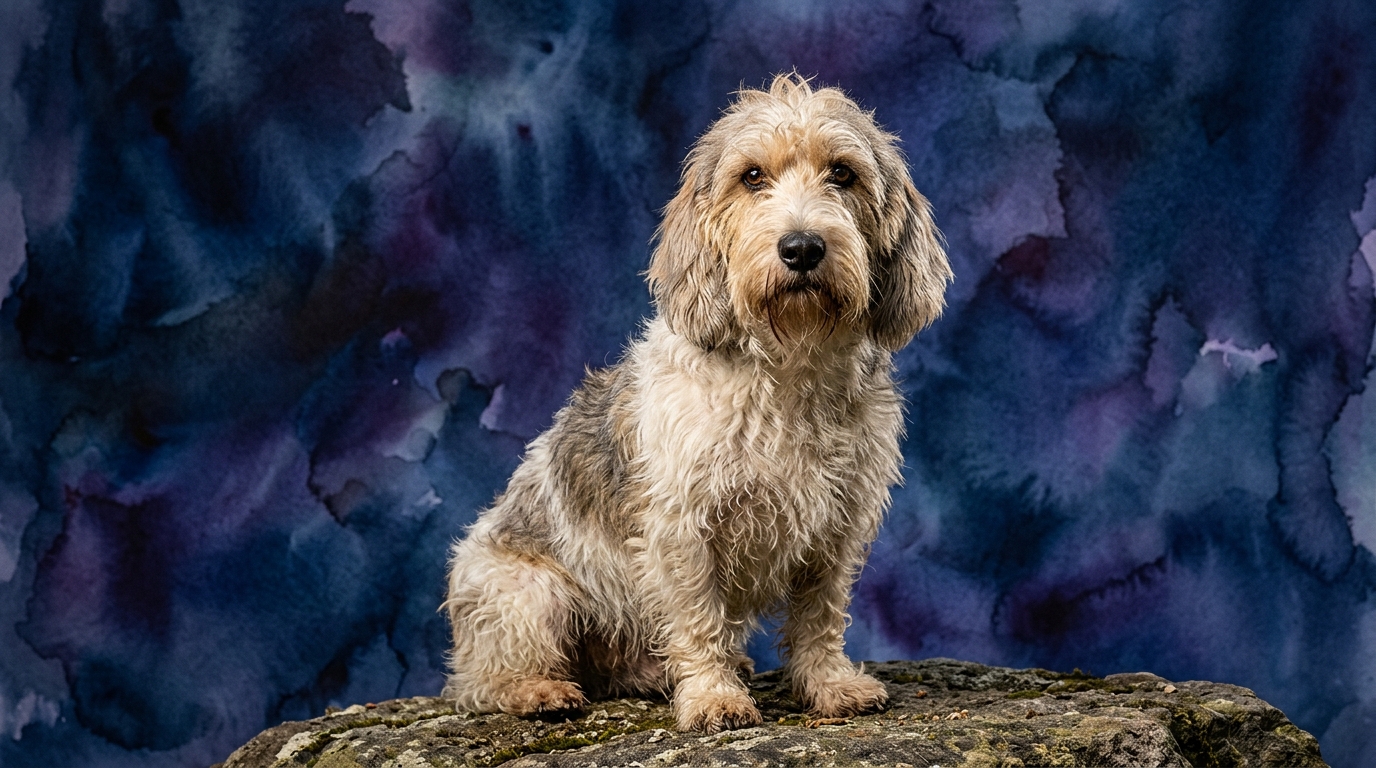
The Petit Basset Griffon Vendéen (PBGV), a member of the Hound Group, showcases problem-solving prowess (3/5) deeply rooted in their olfactory capabilities, excelling at intricate scent puzzles. They independently strategize how to navigate obstacles, follow faint trails, and locate hidden scent sources, demonstrating persistence and ingenuity driven by their powerful nose rather than human direction. Their solutions are often about achieving a sensory goal. While capable of learning, the PBGV's training speed (3/5) can appear slower in traditional obedience settings due to their independent nature and strong prey drive. They learn best with highly motivating, reward-based methods that compete with the allure of a captivating scent. PBGVs are sociable hounds (Social Intelligence 3/5), often thriving in a “pack” environment, whether canine or human. They understand social hierarchies and enjoy interaction but may prioritize their individual sensory investigations over direct human-centric engagement, sometimes withdrawing into their own world when a compelling scent arises. This breed’s instinctive drive (3/5) is overwhelmingly focused on scent and tracking. They possess an unwavering determination to pursue a trail, often tuning out other stimuli. This drive is a powerful, self-rewarding force, making them relentless in their pursuit of an interesting smell, a hallmark of their hound heritage. PBGVs exhibit a good memory (3/5) for scent trails, familiar hunting grounds, and the locations where they’ve previously encountered interesting smells. They also remember routines associated with their activities, like walk times or where treats are stored, but their memory is heavily influenced by olfactory associations.
Where the Leonberger Wins Cognitively
Despite the identical numerical scores, the Leonberger demonstrates a cognitive advantage in areas requiring cooperative reasoning and a more generalized understanding of human social structures. Their problem-solving, while rated 3/5, often involves deciphering human intent and working collaboratively towards a shared objective, such as retrieving a specific item from another room based on a verbal cue, which requires integrating language comprehension with object recognition. Their social intelligence, also 3/5, shines in their ability to anticipate household needs and emotional shifts, offering comfort or acting as a vigilant guardian without explicit instruction, showcasing a deeper integration into the human family unit beyond simple affection. They excel at understanding and adhering to complex household rules and routines, demonstrating a cognitive flexibility in applying learned behaviors across various contexts to maintain harmony.
Where the Petit Basset Griffon Vendéen Wins Cognitively
Conversely, the Petit Basset Griffon Vendéen excels in cognitive domains demanding intense, independent sensory processing and sustained focus on a singular task: scent work. Their 3/5 problem-solving manifests as an unparalleled ability to navigate complex scent puzzles, distinguishing subtle variations in odor and devising strategies to overcome physical barriers to reach a scent source, a task that requires remarkable olfactory discrimination and spatial reasoning independent of human guidance. Their instinctive drive, also 3/5, is a powerful cognitive engine, enabling them to maintain relentless focus on a trail for extended periods, even in distracting environments, demonstrating a mental stamina and singular purpose that few breeds can match. This specialized focus allows them to process and interpret a vast amount of sensory information from their environment, creating a detailed mental map based on scent.
Which is Easier to Train and Why
When considering ease of training, the Leonberger generally presents a more straightforward experience for the average owner. Their 3/5 training speed is often bolstered by a strong desire to please their human companions and a cooperative nature, making them responsive to traditional obedience methods. They are typically motivated by praise and the opportunity to engage with their family, learning commands steadily and reliably integrating them into their behavior. In contrast, the PBGV, despite also scoring 3/5 in training speed, poses a unique challenge due to their profound independent streak and overwhelming scent drive. While perfectly capable of learning, a PBGV’s nose frequently overrides their ears, meaning that a captivating scent can instantly divert their attention from a command. Training a PBGV requires immense patience, creative strategies, and often higher-value rewards to compete with their natural inclinations, making them less “easy” in a conventional obedience sense, but rewarding for those who embrace their independent spirit and work with their drives.
Which Suits Active Owners vs. Relaxed Owners
For owners with an active lifestyle, both breeds offer engaging companionship, though their activity needs differ in nature. The Leonberger, with its substantial size and working heritage, requires consistent physical exercise like long walks, hikes, or structured play, alongside mental stimulation through training and family interaction to prevent boredom. They thrive on having a “job,” even if it’s just being a vigilant family guardian, and are well-suited to active owners who can integrate them into family adventures. However, they are also content to relax indoors with their family after their exercise needs are met. The Petit Basset Griffon Vendéen, while smaller, demands a more specific type of activity driven by their innate hunting instincts. They require regular opportunities for off-leash exploration in secure areas where they can follow scents, or engagement in scent work sports. A “relaxed” owner who prefers minimal structured activity might find the PBGV’s relentless need to sniff and explore a challenge, as their mental and physical well-being relies heavily on fulfilling this instinctive drive, making them better suited for owners who enjoy engaging with their dog’s natural predispositions through active, exploratory outings.
The Verdict
Select a Leonberger if you value a cooperative, family-oriented companion who thrives on shared tasks and integrates seamlessly into a structured home life, offering a blend of affectionate guardianship and steady learning. This breed suits owners seeking a large, gentle giant who is eager to please and will be a constant, reassuring presence.
Opt for a PBGV if you are an owner who appreciates a spirited, independent companion with an insatiable curiosity and a deep connection to the olfactory world, and are prepared to channel their strong scent drive into engaging activities. This breed is ideal for those who enjoy a lively, often comical, canine partner and can provide consistent opportunities for scent exploration.
🧠 Find Your Pet's IQ Score
Our Pet IQ Lab assessment covers 25+ tests across 5 cognitive dimensions — personalized to your breed.
Take the Full IQ Test →Frequently Asked Questions
Do Leonbergers need a lot of mental stimulation?
Yes, Leonbergers benefit significantly from mental stimulation beyond just physical exercise. Their cooperative problem-solving and social intelligence mean they thrive on learning new commands, engaging in interactive games, and participating in family activities that give them a sense of purpose and belonging. Consistent training and varied experiences help keep their minds sharp and prevent boredom.
Can a PBGV be trained for purposes other than scent work?
Absolutely, a PBGV can be trained for various purposes, but it often requires more patience and creative motivation than some other breeds. While their strong scent drive is primary, they can excel in agility, rally, or even therapy work if training is made engaging and highly rewarding, often incorporating elements that appeal to their natural curiosity and desire to explore. Consistency and understanding their independent nature are key to success.
Are either of these breeds good with children?
Both breeds can be good with children, though supervision is always essential with any dog. Leonbergers are often known for their gentle and patient nature with children, acting as watchful guardians within the family. PBGVs are typically playful and robust, enjoying interaction, but their independent spirit and tendency to follow their nose mean they might not always be as singularly focused on child interaction as a Leonberger.