
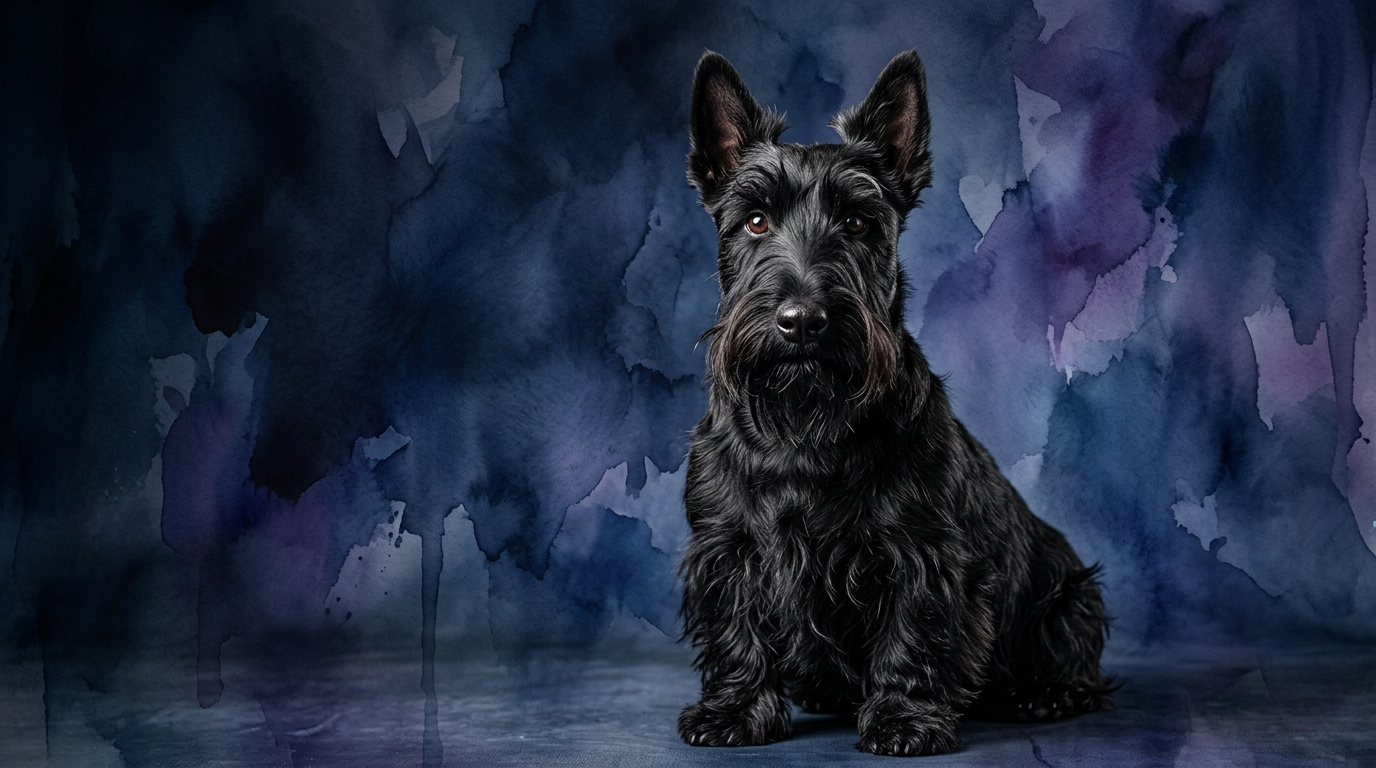
Side-by-Side IQ Profile: Leonberger vs. Scottish Terrier
The Cosmic Pet Pet IQ Lab assigns both the Leonberger and the Scottish Terrier identical scores across five key cognitive dimensions, suggesting a baseline parity in their overall mental processing capacity. However, the manifestation of these scores is uniquely colored by each breed's heritage and physical attributes. For the Leonberger, a Working breed, problem-solving (3/5) often involves navigating complex physical environments or understanding multi-step tasks related to their guardian roles, like discerning a threat or retrieving an object from water. Their training speed (3/5) reflects a steady, thoughtful absorption of commands, building on a desire to cooperate. Social intelligence (3/5) in a Leonberger means a nuanced understanding of human emotions and family dynamics, fostering deep, protective bonds. Their instinctive drive (3/5) is rooted in guarding, companionship, and a natural affinity for water rescue, guiding their actions with purpose. Memory (3/5) is robust, allowing them to recall routines, people, and learned behaviors over long periods, crucial for a family companion.
The Scottish Terrier, a member of the Terrier group, also scores 3/5 in problem-solving, but their approach is often more independent and tenacious, focused on overcoming obstacles to achieve a goal, such as digging or tracking perceived prey. Their training speed (3/5) indicates they are capable learners, though their strong will can sometimes make the process feel less straightforward than with a more biddable breed, requiring consistent and engaging methods. Social intelligence (3/5) for the Scottie is characterized by fierce loyalty to their inner circle, often accompanied by a reserved or discerning attitude towards strangers, reflecting their independent nature. Instinctive drive (3/5) is profoundly shaped by their original purpose: hunting vermin. This manifests as a powerful prey drive, a love for digging, and an alert vigilance. Their memory (3/5) is excellent for remembering boundaries, favored hunting spots, and the routines of their human companions, contributing to their confident and sometimes stubborn demeanor.
Where the Leonberger Wins Cognitively
The Leonberger's cognitive strengths shine particularly in areas requiring cooperative intelligence and a calm, deliberate approach to complex situations. Their problem-solving, while rated similarly, often involves a more strategic, less impulsive process when working alongside humans. For instance, a Leonberger might methodically figure out how to open a child-proof gate by observing human actions, rather than attempting to brute force it. Their social intelligence at 3/5 is notably geared towards discerning human needs and moods, making them exceptional therapy or assistance animals where emotional attunement is paramount. They excel in tasks requiring patience and a gentle touch, understanding that their immense size necessitates careful interaction. The Leonberger's memory for intricate family routines and the specific emotional states of individual family members provides a foundation for their role as a devoted and intuitive guardian, remembering who needs comfort or protection at any given moment.
Where the Scottish Terrier Wins Cognitively
The Scottish Terrier’s cognitive advantages are deeply rooted in their terrier heritage, emphasizing independent thought, tenacity, and acute observational skills for their specific tasks. Their problem-solving, also rated 3/5, manifests as exceptional resourcefulness in pursuit of a goal, often involving creative solutions to overcome obstacles, such as navigating tight spaces or dislodging a toy from an awkward spot. This breed's instinctive drive (3/5) is a powerful cognitive asset, making them highly effective at tasks requiring focus and determination, like tracking scents or persistent digging. This drive translates into a focused intelligence for specific, often self-directed, activities. Their social intelligence, while expressed differently, allows for a keen assessment of their immediate environment and the intentions of newcomers, making them excellent watchdogs. The Scottie's memory is particularly strong for territorial markers and the location of "intruders" (like squirrels), allowing them to maintain vigilance and patrol their domain with efficiency.
Which Is Easier to Train and Why
When considering ease of training, the Leonberger generally presents a more straightforward experience for most owners. Despite identical 'training speed' scores of 3/5, the Leonberger's working breed background instills a higher degree of biddability and a stronger desire to please their human companions. They are often more receptive to instruction and eager to participate in structured learning, making them a cooperative student. Their cognitive process during training involves a thoughtful consideration of commands and a willingness to comply, which reduces friction. Real behavioral differences include the Leonberger's natural inclination towards teamwork and their calm demeanor, which allows them to focus longer on tasks and respond consistently to cues, even in distracting environments.
The Scottish Terrier, while intelligent and capable of learning at the same rate, often brings a distinctive terrier independence to the training process. Their strong instinctive drive and inherent willfulness can lead to moments of selective hearing, especially if a command conflicts with a more pressing instinct, such as chasing a squirrel. Training a Scottie requires immense patience, consistency, and a deep understanding of their terrier nature. They respond best to positive reinforcement, engaging games, and short, varied sessions that keep their keen minds stimulated without allowing boredom or stubbornness to set in. While they learn commands, their execution can sometimes be contingent on their current motivation or perceived importance of the task, making them a more challenging prospect for novice trainers seeking immediate, consistent obedience.
Which Suits Active Owners vs. Relaxed Owners
For active owners seeking a canine companion for outdoor adventures and consistent engagement, both breeds offer unique benefits, though the Leonberger often aligns more with high-energy, space-rich lifestyles. A Leonberger requires significant daily exercise, not just in duration but in variety, including long walks, swimming, and mentally stimulating games. Their large size necessitates ample living space, preferably with a securely fenced yard where they can stretch their legs. Active owners who enjoy training for canine sports like obedience, draft work, or water rescue will find the Leonberger an eager and capable partner, thriving on purpose and shared activity. Their need for consistent mental and physical engagement means they are not suited to a sedentary lifestyle, which can lead to boredom and destructive behaviors.
The Scottish Terrier, while possessing a vibrant energy, can often adapt better to owners with a slightly more relaxed definition of 'active,' particularly those living in smaller spaces like apartments, provided their exercise needs are met with focused bursts of activity. They require daily walks, often with opportunities for off-leash running in safe, contained areas, and mental stimulation through puzzle toys and training games. Their strong prey drive means they excel in activities like Earthdog trials or agility, which tap into their natural instincts. Relaxed owners who are content with regular, structured playtime and focused training sessions, rather than continuous long-distance hikes, might find the Scottie a better fit. However, 'relaxed' does not mean neglecting their need for mental and physical outlets; a bored Scottie can be a destructive Scottie, making consistent engagement crucial for their well-being.
The Verdict
Choose the Leonberger if you seek a gentle giant with a cooperative spirit, requiring ample space and consistent engagement for their thoughtful, protective nature.
Opt for the Scottish Terrier if you appreciate an independent, tenacious companion with a sharp wit, suited to owners who can consistently channel their spirited drive and provide focused mental stimulation.
🧠 Find Your Pet's IQ Score
Our Pet IQ Lab assessment covers 25+ tests across 5 cognitive dimensions — personalized to your breed.
Take the Full IQ Test →Frequently Asked Questions
Do Leonbergers bark a lot?
Leonbergers are not typically excessive barkers, but they will use their voice to alert their family to perceived threats or unusual occurrences. Their barks are usually deep and authoritative, serving as an effective deterrent, and they are generally discerning about when to vocalize.
Are Scottish Terriers good with children?
Scottish Terriers can be good with older, respectful children who understand how to interact with dogs, but their independent and sometimes sensitive nature means they may not tolerate rough play. Early socialization and supervision are crucial for positive interactions within the family.
Which breed sheds more, Leonberger or Scottish Terrier?
The Leonberger, with its thick double coat, typically sheds considerably more, especially during seasonal changes, requiring regular grooming to manage. The Scottish Terrier, having a wiry coat, sheds less but still requires regular brushing and professional stripping or clipping to maintain coat health and minimize loose hair.