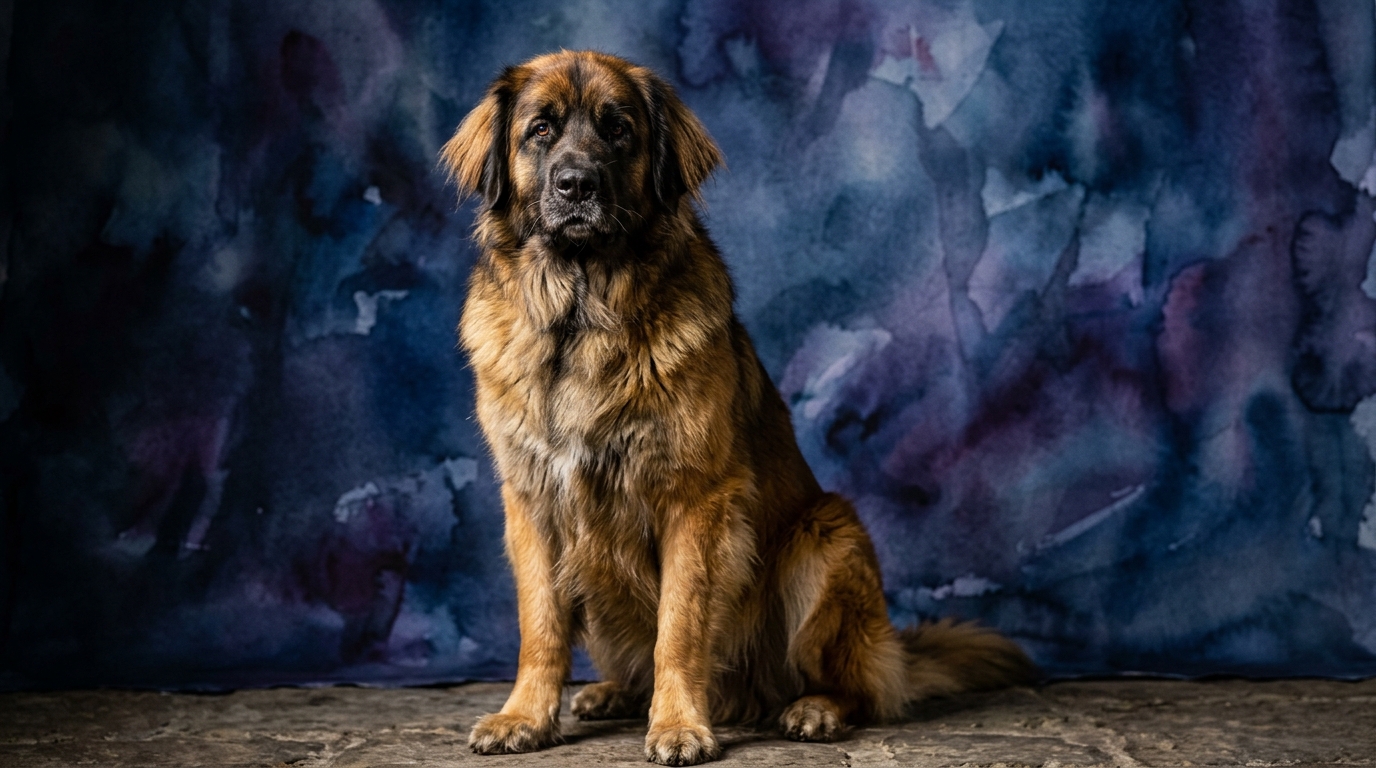

Side-by-Side IQ Profile: Leonberger vs. Tibetan Terrier
The Cosmic Pet Pet IQ Lab assesses canine intelligence across five crucial dimensions, each rated on a scale of 1 to 5. Both the Leonberger and the Tibetan Terrier, despite their vastly different sizes and origins, share a consistent 3/5 rating across all these cognitive parameters. This uniformity on paper, however, belies the distinct ways their intelligence manifests in behavior and problem-solving.
Leonberger (Working Group, Not Coren-ranked)
Problem Solving (3/5): Leonbergers approach challenges with a practical, methodical mindset. Their problem-solving often involves assessing situations like navigating obstacles or understanding how to move objects, applying their physical presence and strength for effective, tangible solutions rooted in their farm dog and draft animal heritage.
Training Speed (3/5): A 3/5 indicates a steady, consistent learning curve for Leonbergers. They reliably assimilate new information and behaviors with patient, positive reinforcement and clear communication. Their desire to please and working heritage make them generally enjoy structured training, processing and retaining instructions at a moderate, dependable pace.
Social Intelligence (3/5): Leonbergers possess balanced social acumen, perceptive of human emotions and family dynamics. This score reflects their ability to integrate smoothly, understanding social cues from humans and other animals, contributing to their role as gentle, protective family companions who adapt well to various social contexts.
Instinctive Drive (3/5): Their 3/5 instinctive drive speaks to inherent predispositions for guarding, protection, and a moderate inclination towards draft work. This balanced set of instincts makes them attentive to their environment and dedicated to their family role, often manifesting as a desire to participate or 'help' in activities.
Memory (3/5): Leonbergers demonstrate a robust, practical memory for commands, routines, and the identities of people and places. This encompasses recalling home layouts, daily schedules, and family members, aiding their consistency in training and confident navigation of their world, building strong, lasting relationships.
Tibetan Terrier (Non-Sporting Group, Coren Rank #63)
Problem Solving (3/5): Tibetan Terriers approach problem-solving with a clever, independent streak. Their 3/5 score shows they are adept at figuring out how to achieve goals, whether manipulating puzzle toys or navigating complex environments, often using subtle manipulations, observation, and trial-and-error reflecting their adaptable nature.
Training Speed (3/5): Despite their Coren rank #63, their 3/5 training speed indicates a solid learning aptitude, not lightning-fast. Tibetan Terriers respond well to positive reinforcement, but their independent nature can make them seem less instantly compliant. They process information steadily, needing engaging, consistent methods; once they understand, they are reliable.
Social Intelligence (3/5): Tibetan Terriers exhibit nuanced social intelligence, sensitive to human moods and good at reading social cues, forming strong bonds. This score reflects their ability to integrate into family routines while retaining independence. They are often selective in affections, deep with family but reserved with strangers, showing discerning social awareness.
Instinctive Drive (3/5): Their instinctive drive is characterized by a strong companion instinct and an alert, watchful nature. The 3/5 score means a moderate drive for companionship and a distinct 'watchdog' tendency, barking to alert owners, making them vigilant household members attuned to surroundings.
Memory (3/5): Tibetan Terriers possess a good memory for routines, people, and experiences. Their 3/5 score indicates they readily recall commands, territory layout, and family habits, aiding confidence and adaptability. They remember past interactions, influencing future responses, making environmental consistency impactful.
Where the Leonberger Wins Cognitively
The Leonberger's cognitive strengths often manifest in areas requiring sustained effort, physical application, and a practical, direct approach. Their size and working heritage mean they excel in problem-solving that involves manipulating their environment through force or persistence, such as figuring out how to open a gate or pull a specific object. While both breeds score 3/5 in problem-solving, the Leonberger's execution is typically more about straightforward, physical solutions to tangible tasks, often related to their historical roles of protecting livestock or pulling carts. Their social intelligence, while rated the same, often leans towards a gentle, empathetic understanding within a family unit, making them exceptionally attuned to the emotional states of their human companions, offering comfort and loyalty through a calm, reassuring presence. They process and retain information well for tasks that require consistency and repetition, making them reliable partners in structured activities.
Where the Tibetan Terrier Wins Cognitively
The Tibetan Terrier’s cognitive wins are often found in their agility of thought and their independent, resourceful nature. Despite matching the Leonberger's 3/5 in problem-solving, the Tibetan Terrier's approach is typically more nuanced and less reliant on brute force, often involving cleverness, observation, and a trial-and-error method to outsmart a situation or achieve a desired outcome. Their social intelligence, also 3/5, often manifests as a keen awareness of their surroundings and a selective, discerning affection for their family, making them excellent watchdogs who understand subtle shifts in their environment. Their memory, while rated similarly, can be particularly strong for recognizing patterns and remembering specific 'tricks' or ways to manipulate situations to their advantage, showcasing a more cunning aspect of their intelligence. Furthermore, their Coren ranking (#63) suggests a slightly higher inherent biddability in formal obedience contexts compared to the unranked Leonberger, indicating an aptitude for processing and responding to human commands within a structured learning framework.
Which is Easier to Train and Why
Determining which breed is 'easier' to train, despite both having a 3/5 training speed, comes down to their underlying motivations and behavioral tendencies. The Leonberger, as a working dog with a strong desire to please and a moderate instinctive drive for purposeful activity, often thrives in structured training environments. Their physical strength and imposing size mean early and consistent training is crucial, but their eager-to-please nature and steady learning curve make them generally responsive to positive reinforcement. They learn at a consistent pace, and once a behavior is established, it tends to be deeply ingrained due to their practical memory and desire for routine.
The Tibetan Terrier, conversely, presents a different training dynamic. While they also learn at a 3/5 pace and are capable of mastering many commands, their independent and sometimes stubborn nature can make the training process feel less straightforward. Their problem-solving skills might be directed at figuring out how to *avoid* a command or how to get *their* way, rather than immediate compliance. Training a Tibetan Terrier requires creativity, patience, and a deep understanding of their sensitive yet independent personality. They respond best to engaging, reward-based methods that make training feel like a game, rather than a chore. Therefore, for an owner seeking a dog that generally leans into cooperation with a consistent desire to work alongside them, the Leonberger might feel 'easier' due to their more straightforward biddability. For an owner who enjoys a challenge and values a dog's independent thought, the Tibetan Terrier offers a rewarding, albeit sometimes more complex, training journey.
Which Suits Active Owners vs. Relaxed Owners
The choice between a Leonberger and a Tibetan Terrier significantly depends on an owner's lifestyle and activity levels. The Leonberger, despite its calm demeanor indoors, is a large, powerful working breed with a 3/5 instinctive drive and a need for consistent physical and mental engagement. They are best suited for active owners who can provide regular, purposeful exercise such as long walks, hiking, or opportunities for draft work or canine sports like obedience or therapy work. These aren't dogs content with just a backyard; they require interaction and a 'job' to do, even if that job is simply being a devoted family companion on daily adventures. Their robust physical needs and desire to participate make them ideal for owners who enjoy spending significant time outdoors and can integrate their dog into an active, family-oriented lifestyle.
The Tibetan Terrier, while smaller, is far from a sedentary lap dog. With a 3/5 instinctive drive for companionship and alertness, combined with their clever problem-solving, they thrive with owners who are engaged and enjoy providing both physical activity and mental stimulation. They are agile and playful, enjoying walks, puzzle toys, and interactive games. They can adapt to apartment living if their exercise needs are met, but they are not suited for purely relaxed owners who prefer minimal interaction or exercise. They require daily walks and opportunities to explore, but their needs are generally less demanding than a giant working breed. They are a good fit for owners who appreciate a lively, intelligent companion for daily activities and indoor play, without the intense physical demands of a true working dog.
The Verdict
Choose Leonberger if you are an active owner seeking a gentle giant with a practical, steadfast intelligence, eager to be a devoted, protective family member and participate in purposeful outdoor activities, appreciating a dog that learns steadily and thrives on routine and companionship.
Choose Tibetan Terrier if you appreciate a clever, independent-thinking companion with a nuanced social intelligence, capable of both deep affection and discerning watchfulness, and are prepared to engage with a dog that enjoys mental challenges and agile play, even if their training journey requires more creativity and patience.
🧠 Find Your Pet's IQ Score
Our Pet IQ Lab assessment covers 25+ tests across 5 cognitive dimensions — personalized to your breed.
Take the Full IQ Test →Frequently Asked Questions
Are Leonbergers good with children?
Yes, Leonbergers are often called 'nanny dogs' due to their gentle, patient, and protective nature with children. Their social intelligence and calm demeanor allow them to interact thoughtfully, making them wonderful family companions, though supervision is always recommended due to their sheer size.
Do Tibetan Terriers bark a lot?
Tibetan Terriers have a moderate instinctive drive for alertness and can be quite vocal, using barks to alert their families to perceived intruders or unusual sounds. While not excessive, their watchdog tendencies mean they will reliably make their presence known, which can be managed with consistent training.
Which breed is more adaptable to different living situations?
The Tibetan Terrier generally shows more adaptability to various living situations, including apartments, provided their exercise and mental stimulation needs are met. The Leonberger, due to its large size and working heritage, typically requires more space and a more structured, active lifestyle to thrive optimally.