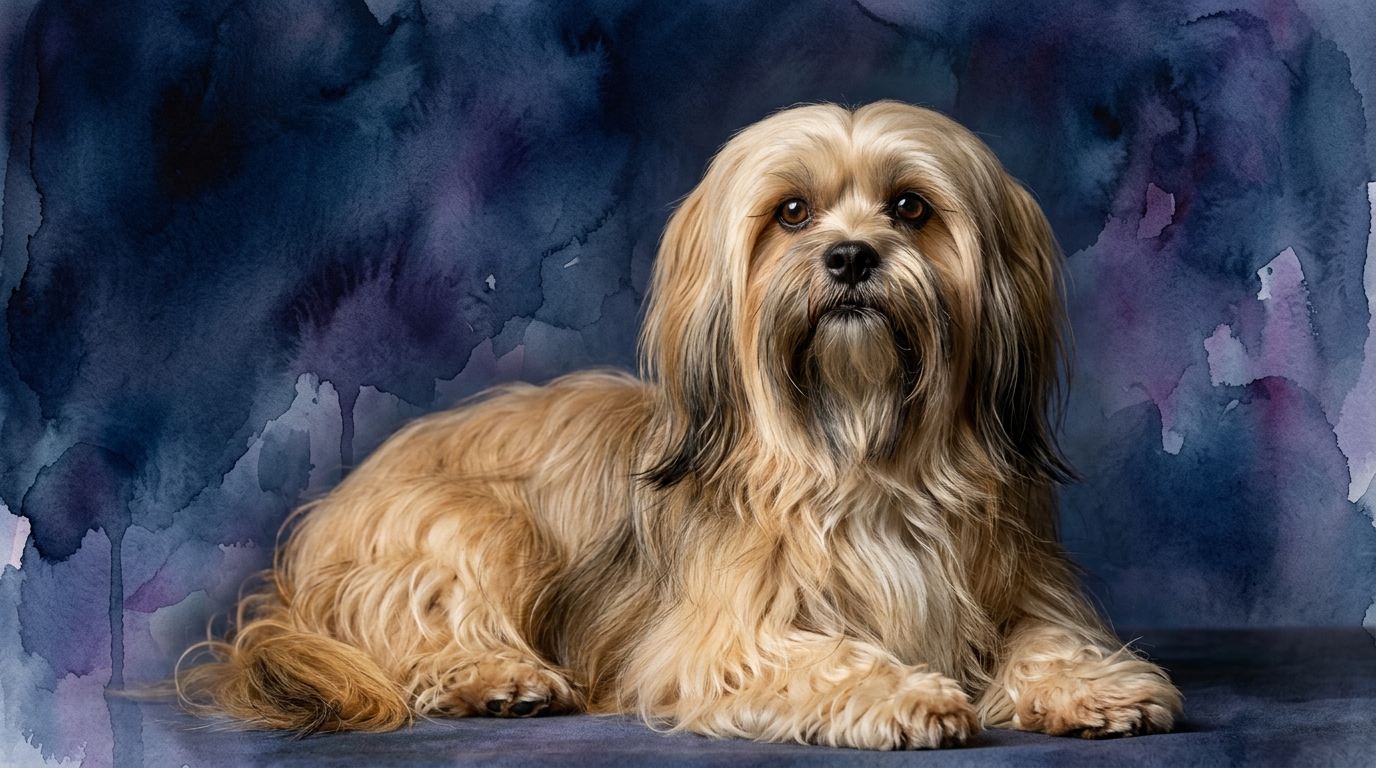
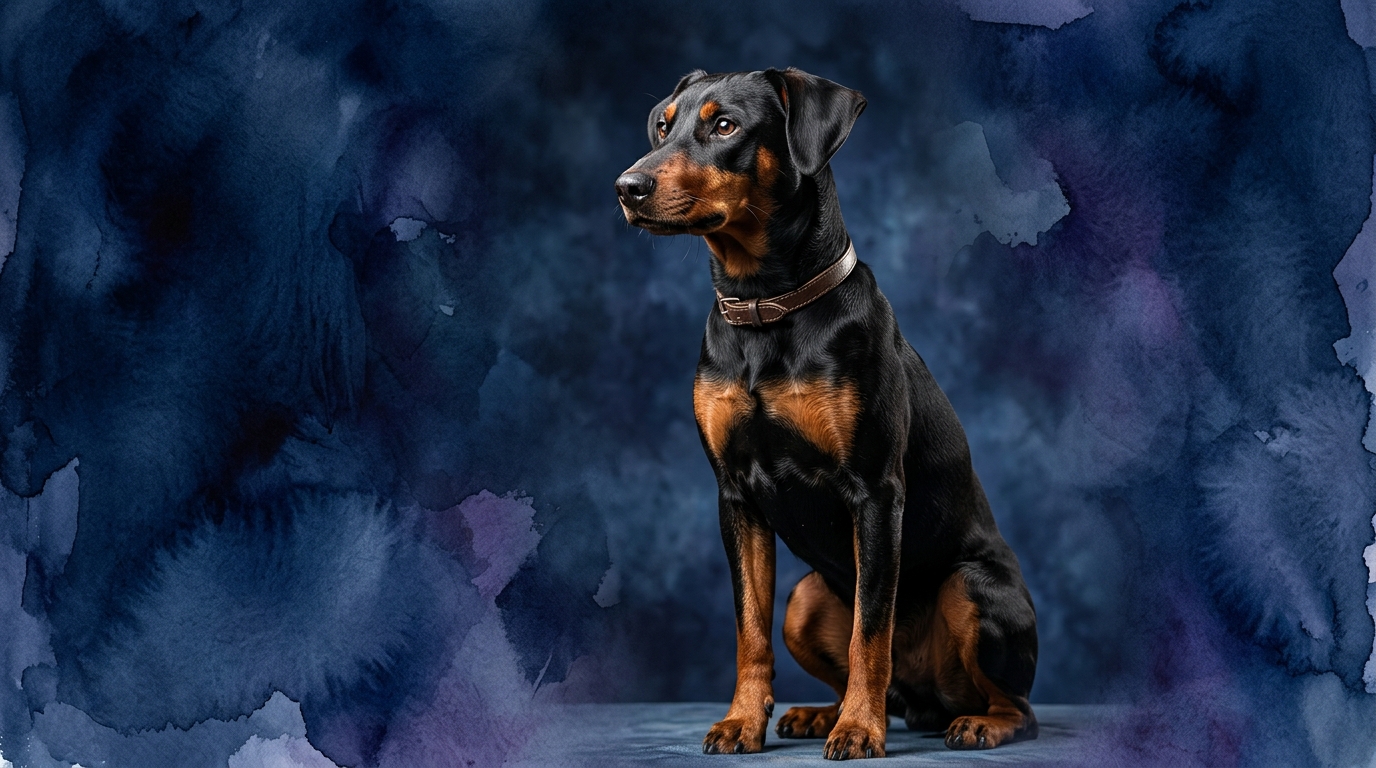
Side-by-Side IQ Profile: Deconstructing Identical Scores
**Problem Solving (3/5):** For the Lhasa Apso, a 3/5 in problem-solving often manifests as independent thought, particularly in navigating its home for comfort or advantage. They cleverly figure out how to get their way, demonstrating a stubborn yet effective approach to daily obstacles. The German Pinscher's 3/5 capability is expressed through alertness and quick assessment of surroundings, identifying threats or opportunities. Their solutions are typically direct and physically oriented, reflecting their working heritage.
**Training Speed (3/5):** A 3/5 training speed for the Lhasa Apso means they learn commands, but their independent spirit demands consistency and strong motivation. They learn quickly but may choose to comply only when it suits them, making training feel like a negotiation. The German Pinscher, also at 3/5, absorbs training quickly when engaged and given clear direction. Their drive to participate and sharp focus mean swift learning, though their energy requires maintaining engagement and channeling enthusiasm effectively.
**Social Intelligence (3/5):** Lhasa Apsos, with a 3/5, are astute observers of human emotion and household dynamics, forming deep bonds with family while remaining reserved with strangers. They understand social cues within their 'pack' and are sensitive to routine changes. The German Pinscher's 3/5 social intelligence is characterized by strong family awareness and protective instinct. They quickly recognize social hierarchies and respond to leadership, displaying a confident presence, though wary of unfamiliar people.
**Instinctive Drive (3/5):** The Lhasa Apso's 3/5 instinctive drive is rooted in its sentinel role, possessing strong guarding instinct and territoriality. This manifests as an alert nature, quick to bark at perceived intruders. For the German Pinscher, a 3/5 drive speaks to its vermin hunter and guard dog history. They possess a robust prey drive, a natural inclination to chase, and a strong protective urge for family and property, expressed through energetic vigilance.
**Memory (3/5):** Both breeds share a 3/5 memory score. The Lhasa Apso exhibits reliable memory for routines, people, and places, easily recalling past experiences and consistent behaviors within its familiar environment. The German Pinscher's 3/5 memory is evident in its ability to retain complex training sequences and recall spatial information, supporting its adaptability and effectiveness in various tasks by learning and applying information efficiently.
Where the Lhasa Apso Wins Cognitively
The Lhasa Apso particularly excels in nuanced, independent decision-making that prioritizes its own comfort and the security of its immediate family. Their cognitive strengths lie in their ability to astutely assess social situations within their trusted circle, subtly influencing outcomes or communicating needs. This breed displays a finely tuned memory for established social dynamics and preferred routines, making them excellent at anticipating household patterns and reacting to subtle shifts in their environment. Their problem-solving, while not always overtly cooperative, is remarkably effective at achieving their desired personal outcomes, demonstrating a unique self-serving cleverness.
Where the German Pinscher Wins Cognitively
The German Pinscher's cognitive advantages manifest in its proactive, action-oriented intelligence, making it exceptionally adept at situations requiring quick processing and decisive responses. Their superior vigilance and rapid assessment of novel stimuli allow them to identify potential issues and react swiftly, a direct reflection of their protective and working heritage. They demonstrate a robust ability to learn and execute complex sequences of commands with precision, translating their instinctive drives into purposeful action with a strong focus on task completion. This breed's memory is particularly strong for practical information, such as intricate training cues and territorial boundaries, enabling them to operate with exceptional confidence and efficiency in dynamic environments.
Which is Easier to Train and Why
While both breeds score 3/5 in training speed, the German Pinscher generally presents as easier to train for traditional obedience and task-oriented activities due to its inherent temperament. Their working background imbues them with a natural drive to engage, a desire for purpose, and a keen responsiveness to clear, consistent leadership. They thrive on structured routines, mental challenges, and physical activity, making them eager and focused participants in training sessions when their significant energy is properly channeled through positive reinforcement. The Lhasa Apso, conversely, often requires a more patient, creative, and highly motivating approach. Their independent nature means they certainly learn quickly but may choose to comply only if they perceive a clear personal benefit, the training method is highly engaging, or the reward is irresistible. Their intelligence is often directed more towards self-preservation and personal comfort rather than eager cooperation, which can be easily misinterpreted as stubbornness by an inexperienced owner. Therefore, the German Pinscher's inherent drive for partnership and task execution typically makes it a more straightforward and often more rewarding trainee for most owners seeking a responsive learner.
Which Suits Active Owners vs Relaxed Owners
For owners seeking a highly active companion, the German Pinscher is the unequivocal choice. This breed possesses significant energy levels and a robust need for consistent physical exercise and mental engagement. They thrive in environments where they can participate in activities like agility, hiking, or extended play sessions, requiring an owner who can dedicate substantial time to their daily stimulation. Conversely, the Lhasa Apso is better suited for more relaxed owners. While they enjoy regular walks and playtime, their exercise needs are moderate, and they are generally content with a comfortable indoor lifestyle, provided they receive sufficient attention and mental enrichment within the home. Their adaptability makes them excellent companions for those who appreciate an independent yet affectionate presence without demanding constant high-octane activity.
The Verdict
Opt for a Lhasa Apso if you value an independent, observant companion who thrives in a consistent, relaxed home environment and appreciates a more subtle, self-directed form of intelligence.
Select a German Pinscher if you are an active individual or family seeking a highly energetic, driven partner eager for engagement, training, and a strong sense of purpose.
🧠 Find Your Pet's IQ Score
Our Pet IQ Lab assessment covers 25+ tests across 5 cognitive dimensions — personalized to your breed.
Take the Full IQ Test →Frequently Asked Questions
Do Lhasa Apsos and German Pinschers need a lot of mental stimulation?
Both breeds benefit from mental stimulation, but its form differs. Lhasa Apsos enjoy puzzle toys and learning new tricks at their own pace, while German Pinschers require more structured training, interactive games, and activities that challenge their problem-solving and drive.
Are these breeds good with children?
Lhasa Apsos can be good with respectful children who understand their independent nature, often preferring older, calmer kids. German Pinschers, with proper socialization and training, can be energetic and playful companions for children, but their high energy requires supervision to prevent accidental rough play.
What are the main differences in their protective instincts?
The Lhasa Apso's protective instinct is primarily territorial and vocal, serving as an alert system for its home. The German Pinscher's protection is more active and physical, combining vigilant observation with a readiness to defend its family and property, reflecting its historical role as a guard dog.