Side-by-Side IQ Profile: Maltese vs. Black Russian Terrier
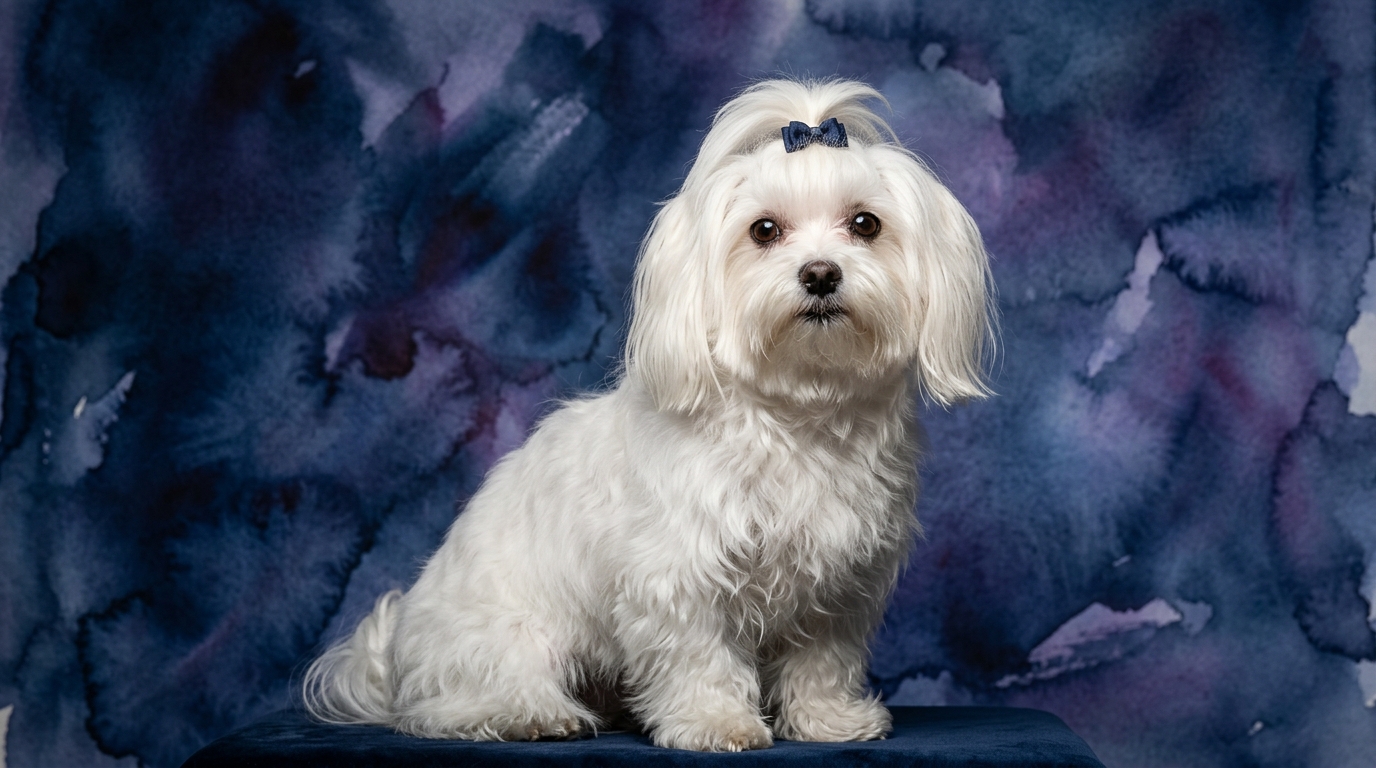
The Cosmic Pet Pet IQ Lab employs a five-dimensional framework to assess canine cognitive abilities, offering a nuanced understanding. For the Maltese, a Toy breed, their Problem Solving is rated 3/5, indicating an average capacity for simple environmental challenges or sequential tasks. Training Speed also stands at 3/5, meaning they acquire commands at a steady pace with positive reinforcement. Where the Maltese truly shines is in Social Intelligence, scoring a remarkable 5/5; they are exceptionally adept at reading human emotions, understanding social cues, and forming deep, intuitive bonds. Their Instinctive Drive is lower at 2/5, reflecting a diminished inclination for independent work, primarily seeking companionship. Finally, their Memory is 3/5, allowing them to retain learned behaviors effectively with consistent practice.
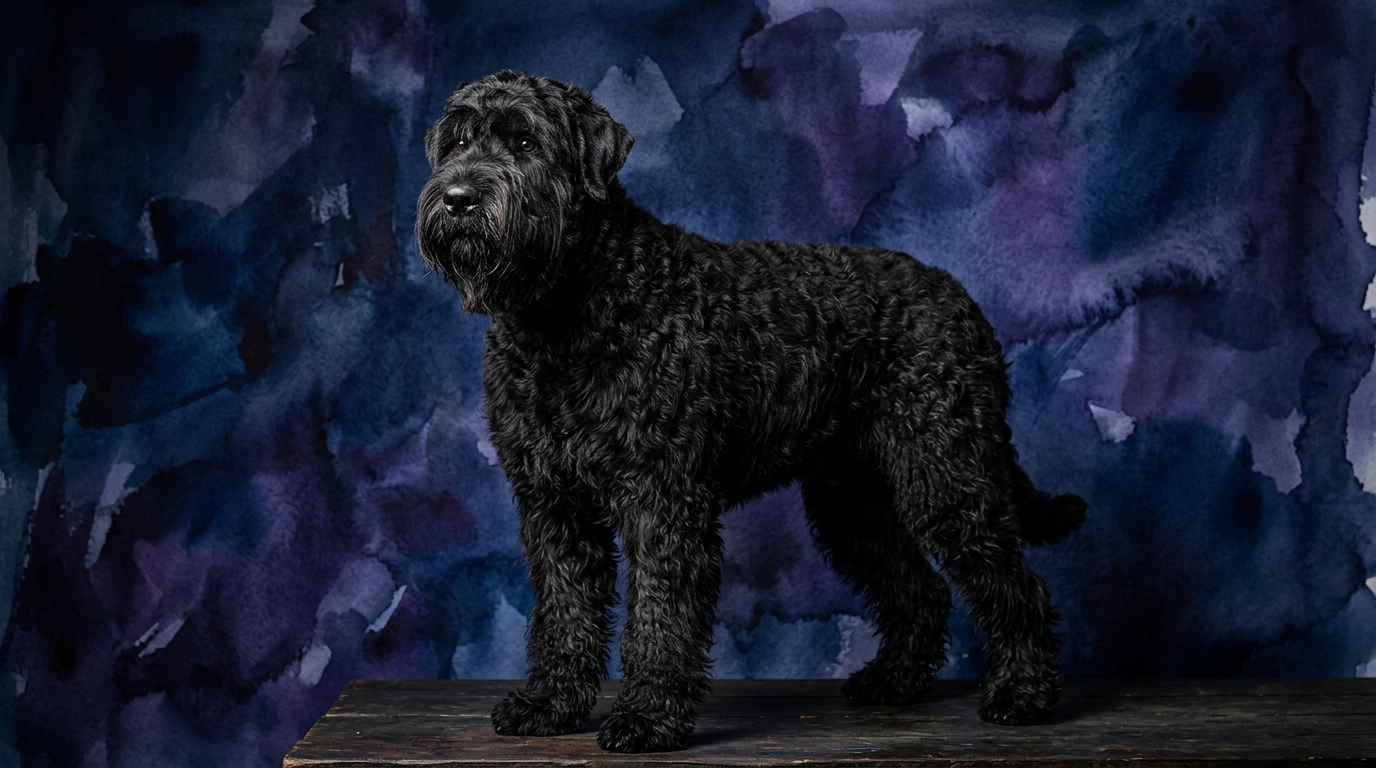
In contrast, the Black Russian Terrier, a powerful Working breed, presents a different cognitive landscape. Its Problem Solving ability matches the Maltese at 3/5, suggesting it can figure out moderately complex situations and apply learned strategies. Its Training Speed is also 3/5, indicating it processes new information consistently, thriving on clear, structured direction. The Black Russian Terrier’s Social Intelligence is rated 3/5; while understanding social hierarchies and human intentions, its expression is more reserved and independent, often displaying a stoic loyalty. Its Instinctive Drive is higher at 3/5, reflecting a moderate intrinsic motivation for work, protection, and guarding, aligning with its historical development. Like the Maltese, its Memory is 3/5, demonstrating an average capacity for recalling commands and experiences.
Where the Maltese Wins Cognitively
The Maltese’s undisputed cognitive advantage lies in its exceptional Social Intelligence, scoring a perfect 5/5 compared to the Black Russian Terrier’s 3/5. This signifies a profound ability to interpret subtle human cues, emotional states, and social dynamics. A Maltese is remarkably attuned to a household's emotional atmosphere, often instinctively offering comfort to a distressed owner or engaging playfully when spirits are high. Their cognitive processing in social contexts allows them to adapt seamlessly to various family routines and personalities, making them highly responsive companions. For instance, a Maltese is more likely to notice a slight shift in an owner's mood and react with a gentle nudge or by settling quietly beside them, demonstrating an advanced capacity for emotional empathy. This deep social acumen allows them to navigate complex human relationships with remarkable ease, often becoming the emotional anchor of a home.
Where the Black Russian Terrier Wins Cognitively
While both breeds share similar scores in Problem Solving and Training Speed, the Black Russian Terrier’s cognitive strengths emerge from its elevated Instinctive Drive, rated 3/5 compared to the Maltese’s 2/5, coupled with its inherent working dog characteristics. This breed possesses a robust capacity for independent thought within its historical purpose, particularly in guarding and protection. A BRT's problem-solving skills, while numerically similar, often manifest in more complex, real-world scenarios related to security or task completion. They can assess novel situations with a degree of self-reliance, making judgments based on learned experiences and innate protective instincts. For example, a BRT might more effectively evaluate the perceived threat level of an unfamiliar visitor, choosing an appropriate response from a range of learned behaviors, whereas a Maltese might primarily seek its owner's attention. Their cognitive processing is geared towards purposeful action and sustained focus, making them adept at tasks requiring vigilance and physical endurance.
Which is Easier to Train and Why
Both the Maltese and the Black Russian Terrier share a Training Speed score of 3/5, suggesting neither is inherently faster or slower at learning commands. However, the *ease* of training differs significantly due to their other cognitive and behavioral traits. The Maltese, with its superior Social Intelligence (5/5), is often highly motivated by human praise, attention, and the desire to please. This strong social connection makes them generally eager participants in training, as their reward often comes from positive human interaction. Their smaller size also makes them physically easier to manage during early training, reducing the potential for accidental misbehavior. While they can exhibit a charming stubbornness, their intrinsic motivation to bond usually keeps them engaged.
The Black Russian Terrier, conversely, with its moderate Social Intelligence (3/5) and higher Instinctive Drive (3/5), requires a more confident, consistent, and structured training approach. While equally capable of learning, the BRT is less inherently driven by the sole desire to please and may require clearer purpose and boundaries. Its independent nature and working heritage mean it responds best to a trainer who establishes themselves as a clear, benevolent leader. The sheer size and strength of a BRT also mean that any inconsistencies in early training can lead to significant behavioral challenges, demanding a higher level of commitment and skill from the owner. Therefore, while both learn at a similar pace, the Maltese is often perceived as "easier" to train for the average owner due to its social eagerness and manageable size, while the BRT demands a more experienced and assertive hand.
Which Suits Active Owners vs. Relaxed Owners
The distinct cognitive profiles of the Maltese and Black Russian Terrier point to clear preferences regarding owner lifestyles. For highly active owners seeking a canine partner for structured activities, the Black Russian Terrier is the more suitable choice. Its Instinctive Drive (3/5) and working breed heritage mean it thrives on purpose, consistent mental engagement, and robust physical exercise. BRTs require daily opportunities to channel their protective instincts and problem-solving abilities into meaningful tasks, whether obedience training, agility, or simply long, purposeful walks. An active owner can provide the necessary outlets for their moderate drive, preventing boredom and potential behavioral issues.
Conversely, for more relaxed owners who prioritize companionship and gentle interaction, the Maltese stands out. Its lower Instinctive Drive (2/5) and exceptional Social Intelligence (5/5) make it content as a devoted lap companion. While they enjoy play and short walks, their primary need is close human connection and emotional engagement rather than intense physical exertion or complex tasks. A Maltese seamlessly integrates into a quieter household, finding joy in simply being present with its people, making them an ideal choice for individuals or families who desire a deeply affectionate and less demanding canine presence.
The Verdict
The Maltese is ideal for individuals or families seeking a deeply empathetic companion who thrives on close social interaction and requires less structured activity, fitting seamlessly into a relaxed home environment.
Opt for the Black Russian Terrier if you are an experienced, active owner prepared to provide consistent training, purposeful work, and robust physical and mental engagement for a self-assured and protective companion.
🧠 Find Your Pet's IQ Score
Our Pet IQ Lab assessment covers 25+ tests across 5 cognitive dimensions — personalized to your breed.
Take the Full IQ Test →Frequently Asked Questions
Are Maltese good at learning tricks?
Yes, Maltese are quite capable of learning tricks. While their Training Speed is average (3/5), their high Social Intelligence (5/5) means they are eager to please their owners and respond well to positive reinforcement, making them enjoyable to teach.
Do Black Russian Terriers need a lot of mental stimulation?
Absolutely, Black Russian Terriers require significant mental stimulation. Their moderate Instinctive Drive (3/5) and working heritage mean they thrive on purposeful tasks, consistent training, and problem-solving activities to prevent boredom and channel their energy constructively.
Which breed is better for a first-time dog owner?
Generally, the Maltese is more forgiving for a first-time dog owner due to its smaller size, high social motivation, and lower exercise demands. The Black Russian Terrier's size, strength, and need for experienced, consistent leadership make it more suitable for owners with prior dog experience.