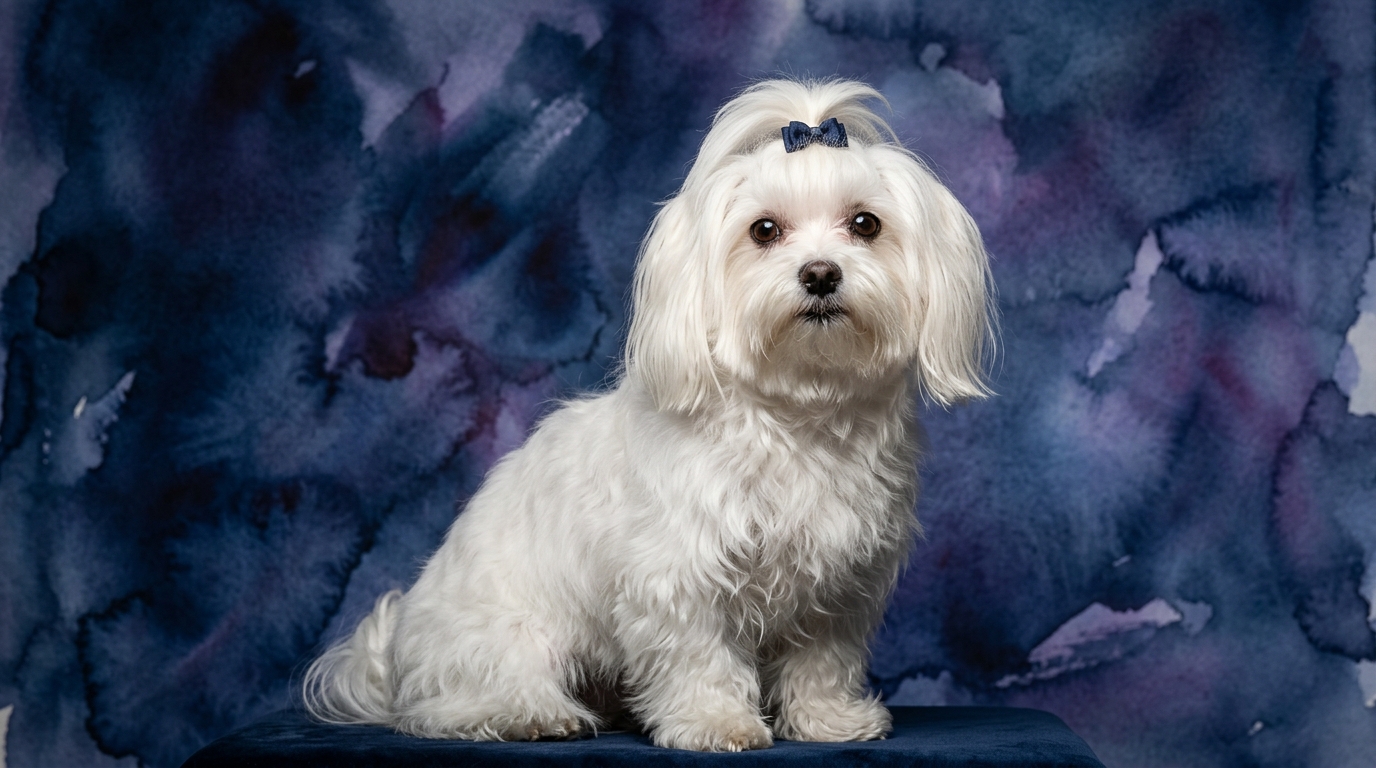
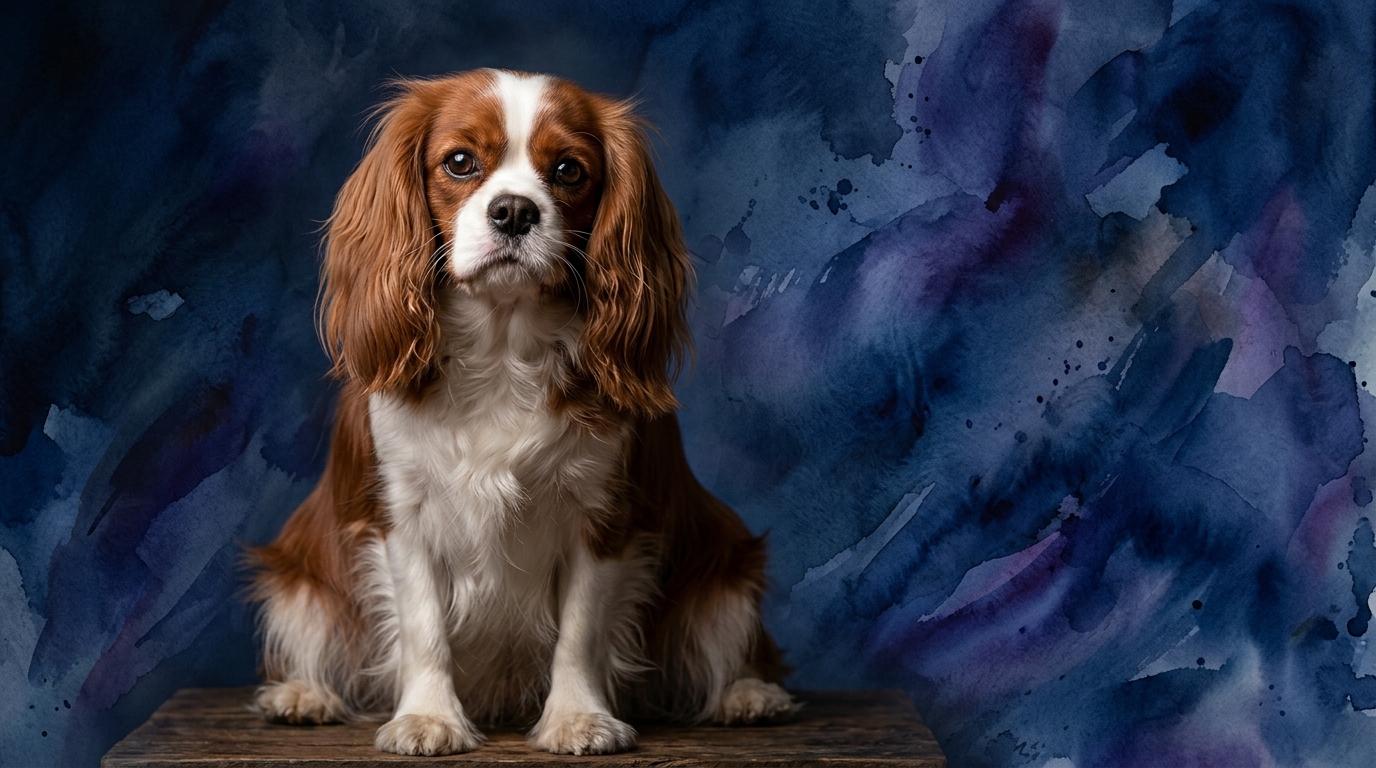
Side-by-Side IQ Profile: Maltese vs. Cavalier King Charles Spaniel
To truly appreciate the unique cognitive makeup of these beloved toy breeds, The Cosmic Pet's IQ Lab breaks down their intelligence across five critical dimensions. While both breeds excel as devoted companions, their subtle differences in problem-solving, training speed, social intelligence, instinctive drive, and memory paint a nuanced picture of their mental capabilities and how they interact with their environment and human counterparts.
**Maltese Cognitive Profile (Coren Rank #59)**
**Problem Solving (3/5):** Maltese demonstrate a practical problem-solving aptitude within their immediate environment. They are adept at figuring out how to retrieve a toy from under furniture, signal for attention when they want something, or navigate household obstacles. While they can grasp basic sequences, their problem-solving is typically driven by immediate gratification, such as access to food, comfort, or social interaction, rather than complex abstract challenges. They learn through trial and error, remembering successful strategies for recurring situations.
**Training Speed (3/5):** The learning curve for a Maltese is moderate, meaning they absorb new commands and routines at a steady pace. Effective training relies heavily on positive reinforcement, clear communication, and consistent repetition. They respond particularly well to praise and gentle encouragement, flourishing in environments where expectations are clear and rewards are motivating, often in the form of affection or small, desirable treats. Patience is key, as they may require more consistent reinforcement to solidify new behaviors.
**Social Intelligence (5/5):** This is where the Maltese truly excels, displaying an extraordinary capacity to read and respond to human emotions and social cues. They are incredibly attuned to their owners' moods, often offering comfort or seeking interaction based on subtle shifts in demeanor. Their profound ability to form deep, almost empathetic bonds means they often anticipate needs, making them intuitive and responsive companions who thrive on close, reciprocal relationships. This social acumen is central to their cognitive processing.
**Instinctive Drive (2/5):** Compared to many breeds, the Maltese possesses a remarkably low instinctive drive. Their natural inclinations towards hunting, guarding, or independent exploration are minimal. While they might occasionally chase a rolling ball, their primary motivation is companionship and comfort, not pursuit or territorial defense. This low drive means they are generally less distracted by environmental stimuli and more focused on their human interactions.
**Memory (3/5):** Maltese exhibit a moderate memory capacity, enabling them to retain a good number of commands, recognize familiar faces and places, and recall established routines. They learn associations quickly, remembering which actions lead to desirable outcomes, such as sitting for a treat or ringing a bell to go outside. This memory contributes to their ability to adapt to a stable household environment and maintain consistent behavior.
**Cavalier King Charles Spaniel Cognitive Profile (Coren Rank #44)**
**Problem Solving (3/5):5:** Cavaliers possess a moderate problem-solving ability, allowing them to navigate daily challenges effectively. They can learn to work simple puzzle toys for treats, figure out how to open a slightly ajar door, or find their way to a preferred resting spot. Their approach to problems is often pragmatic, driven by their desire for comfort, food, or engaging interaction. They learn from experience and can adapt strategies for familiar puzzles.
**Training Speed (3/5):** Cavaliers are generally agreeable students, learning new commands and behaviors at a moderate pace. Their eagerness to please, coupled with a gentle disposition, makes them responsive to positive, reward-based training methods. Consistency, patience, and clear instructions are paramount for successful training. While they may not pick up complex tricks instantly, their steady learning rate makes them reliable and enjoyable to teach, especially with motivating rewards like praise, treats, or short play sessions.
**Social Intelligence (5/5):** The Cavalier matches the Maltese in its exceptional social intelligence. They are renowned for their affectionate nature and profound ability to connect with humans, often intuiting emotional states and responding with comforting gestures. Cavaliers seamlessly integrate into family dynamics, demonstrating a keen awareness of social interactions and a desire to be involved. Their perceptive nature makes them highly responsive to human companionship and emotional cues.
**Instinctive Drive (3/5):** The Cavalier's instinctive drive is slightly higher than that of the Maltese, reflecting its spaniel heritage. While still primarily a companion breed, they often display a pleasant curiosity for scents, a gentle interest in "flushing" imaginary prey in the grass, or a desire for soft retrieving games. This drive is typically expressed as mild exploration or play rather than intense pursuit, adding a dimension of engagement with their environment beyond pure social interaction.
**Memory (3/5):** Cavaliers demonstrate a moderate memory, allowing them to consistently recall learned commands, recognize routines, and remember the people and places they encounter regularly. They form strong associations, remembering positive and negative experiences, which contributes to their stable temperament and ability to maintain learned behaviors over time. Their memory for social interactions also reinforces their strong bonds with family members.
Where the Maltese Wins Cognitively
While both breeds are paragons of social intelligence, the Maltese (5/5 social intelligence, 2/5 instinctive drive) showcases this trait with an almost singular focus that gives it a unique cognitive advantage in certain contexts. With a remarkably low instinctive drive, the Maltese directs nearly all its cognitive energy towards its human companions. This means their perceptive abilities are acutely honed to detect the most subtle shifts in human emotion, tone, and body language. They often appear to anticipate needs, offering comfort or seeking attention at precisely the right moment, almost as if reading minds. This intense dedication to the human-animal bond fosters an unparalleled level of emotional synchronicity. Their world revolves around their person, making them exceptionally intuitive and responsive to the nuances of human interaction, a cognitive strength that fosters deep, empathetic connections unmatched by breeds with more diversified drives.
Where the Cavalier King Charles Spaniel Wins Cognitively
The Cavalier King Charles Spaniel (5/5 social intelligence, 3/5 instinctive drive) holds a distinct cognitive edge stemming from its slightly higher, yet still gentle, instinctive drive. While equally devoted to human companionship, this elevated drive allows the Cavalier to engage with its environment in a broader, more exploratory manner. This manifests as a delightful curiosity about new sights, sounds, and scents, providing a wider spectrum of mental stimulation. Their cognitive processes can balance deep social connection with an interest in gentle investigation, making them more adaptable to varied surroundings and activities. For instance, they might be more inclined to engage with a puzzle toy independently for a period or enjoy following a scent trail on a walk, demonstrating a cognitive flexibility that extends beyond purely social cues. This capacity for diversified engagement allows them to thrive in a slightly wider range of interactive scenarios, adding another layer to their cognitive charm.
Which is Easier to Train and Why?
Both the Maltese and the Cavalier King Charles Spaniel share a similar training speed rating of 3/5, suggesting neither is inherently 'easier' or 'harder' to train in terms of raw learning capacity. However, their distinct behavioral profiles influence the training experience. The Maltese, with its lower instinctive drive and intense social focus, is often motivated primarily by human approval and connection. This makes them highly responsive to positive reinforcement centered around praise and affection. Their strong desire to be close to their owner can make recall training relatively straightforward, as their priority is often to remain within proximity. Conversely, their occasional stubborn streak, coupled with a propensity for separation anxiety if not managed, can present challenges, requiring consistent, patient guidance to prevent undesirable behaviors like excessive barking for attention.
The Cavalier's slightly higher instinctive drive means they might be more easily enticed by food rewards or interactive toys during training sessions, in addition to praise. Their eagerness to please, combined with a generally less prone-to-stubbornness temperament, can make them very agreeable students. However, their curiosity might occasionally lead to minor distractions during training, especially in stimulating environments. Both breeds thrive on positive, gentle methods, but the Maltese's singular focus on human connection can be a powerful motivator, while the Cavalier's broader interest in the world offers more diverse reward options, making both rewarding to train with consistent effort.
Which Suits Active Owners vs. Relaxed Owners?
For the relaxed owner seeking an almost constant, calm presence, the Maltese often aligns perfectly. Their low instinctive drive means they are content with minimal outdoor excursions, preferring short strolls and extensive indoor companionship. Their profound social intelligence and deep desire for connection make them ideal lap dogs who thrive on quiet cuddles and close proximity. They are less likely to seek out independent adventures or require extensive mental stimulation beyond social interaction, making them a serene companion for those with a more sedentary lifestyle. Their cognitive energy is primarily dedicated to observing and responding to their human family, creating a very focused and tranquil bond.
Conversely, the Cavalier King Charles Spaniel, with its slightly elevated instinctive drive, suits an owner who enjoys a moderate level of activity. While still very much a companion dog, they appreciate longer walks, opportunities to explore a backyard, or engage in gentle play sessions like soft retrieving. Their spaniel heritage gives them a pleasant curiosity about their surroundings, making them good partners for leisurely hikes or visits to dog-friendly parks where they can sniff and observe. They blend beautifully into family life, enjoying both quiet time and engaging in mild activities, making them versatile for owners who appreciate a balance of relaxation and gentle adventure without needing an overly strenuous exercise regimen.
The Verdict
Choose a Maltese if your lifestyle centers around quiet companionship and you desire a deeply intuitive, emotionally attuned partner whose primary focus is human connection and comfort.
Opt for a Cavalier King Charles Spaniel if you appreciate a loving companion who enjoys a balance of affectionate lap time and moderate, curious exploration, adapting well to a slightly more varied routine.
🧠 Find Your Pet's IQ Score
Our Pet IQ Lab assessment covers 25+ tests across 5 cognitive dimensions — personalized to your breed.
Take the Full IQ Test →Frequently Asked Questions
Do Maltese or Cavaliers bark more?
The Maltese, with its intense focus on human interaction and potential for separation anxiety, can be more prone to alert barking or barking for attention if not properly managed. Cavaliers are generally less vocal, though individual personalities vary, and they may bark to greet or signal excitement.
Are Maltese or Cavaliers better with children?
Both breeds can be good with gentle, respectful children due to their high social intelligence and affectionate nature. However, the Maltese's smaller, more delicate frame and tendency to bond intensely with one person might make the Cavalier, with its slightly more robust nature and broader social interest, a marginally more adaptable family dog for homes with active children, provided interactions are supervised.
Which breed is more independent?
Neither breed is particularly independent, as both possess exceptional social intelligence and thrive on companionship. However, the Cavalier's slightly higher instinctive drive means it might exhibit a touch more independent curiosity during walks or in a new environment compared to the Maltese, whose focus remains almost singularly on its human, making it more consistently attached.