
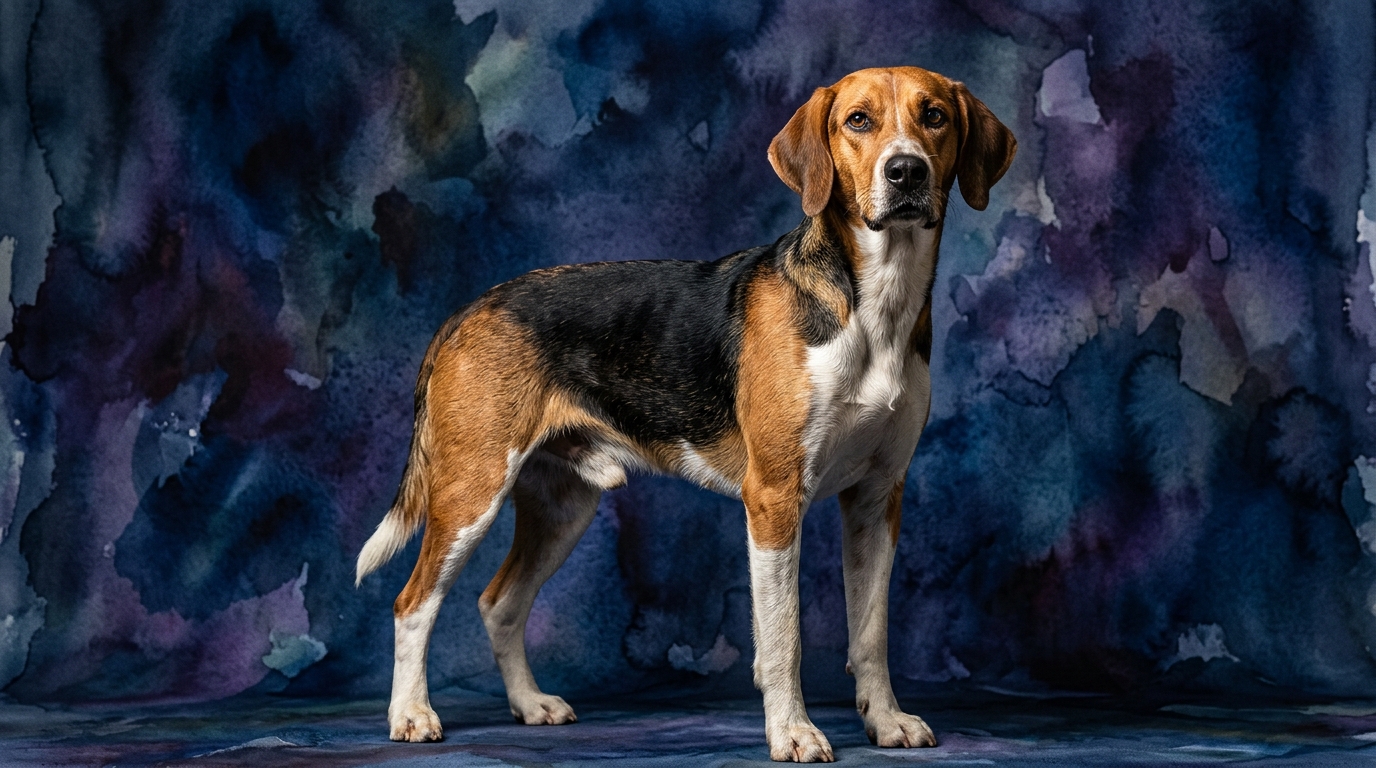
Side-by-Side IQ Profile: Maltese vs. English Foxhound
At first glance, the Maltese (Coren rank #59) and the English Foxhound (not Coren-ranked) share several cognitive scores, yet their application and manifestation of these traits diverge significantly due to their intrinsic breed natures. Understanding these nuances is crucial for appreciating their individual brilliance.
The Maltese, a breed refined over centuries for companionship, presents a cognitive makeup tailored to close human interaction. Its Problem Solving is rated 3/5, indicating a moderate capacity for navigating novel situations, often within a home environment, such as figuring out how to access a favorite toy. Training Speed also stands at 3/5, meaning they acquire new commands at an average pace, responsive to consistent, positive reinforcement. Where the Maltese truly excels is in Social Intelligence, scoring an exceptional 5/5. This reflects a profound ability to understand human emotions, intentions, and subtle cues, making them remarkably empathetic companions. Their Instinctive Drive is low at 2/5, showing minimal inclination towards independent hunting or guarding behaviors, as their evolutionary path prioritized domestic harmony. Lastly, their Memory is 3/5, reliably recalling routines, learned commands, and significant family members.
The English Foxhound, bred for the rigors of the hunt, possesses a cognitive profile geared towards endurance, scent work, and independent decision-making in the field. Its Problem Solving is also 3/5, but this manifests in navigating complex outdoor terrain, overcoming physical obstacles while tracking, or finding ways to continue a scent trail. Training Speed is likewise 3/5, meaning they learn at an average rate; however, their strong independent streak and powerful instincts can present unique training challenges. Social Intelligence is rated 3/5, indicating a moderate ability to form bonds and understand social cues within a pack or family, though often in a more direct, less nuanced manner than a companion breed. Their Instinctive Drive is 3/5, a moderate yet potent force compelling them to follow scents with unwavering focus and stamina. Their Memory is also 3/5, particularly robust for recalling scent trails, familiar hunting grounds, and spatial information relevant to their work.
While both breeds share identical numerical ratings in Problem Solving, Training Speed, and Memory, the context and primary drivers behind these capabilities are vastly different, reflecting their distinct historical roles and evolutionary pressures.
Where the Maltese Wins Cognitively
The Maltese's standout cognitive advantage lies unequivocally in its exceptional social intelligence (5/5), significantly surpassing the English Foxhound's moderate rating (3/5). This superior aptitude for social cognition means the Maltese is profoundly attuned to the human emotional landscape. They are masters at reading subtle body language, vocal inflections, and even anticipating their owner's moods or needs. This manifests as a remarkable capacity for empathy, offering comfort when sensing distress or engaging in playful antics to lighten the mood. Their interactions are rich with nuanced communication, making them feel like truly interconnected members of the family.
This high social intelligence translates into a deep desire to please and a strong motivation for social connection, which can indirectly influence their perceived trainability and adaptability within a human household. Unlike the Foxhound, whose primary drives are often external and scent-focused, the Maltese's internal world is heavily centered on its human bond. This makes them adept at navigating complex social dynamics within a family and forming strong, lasting emotional attachments, a cognitive strength invaluable for a dedicated companion animal.
Where the English Foxhound Wins Cognitively
While both breeds share similar ratings in problem-solving and memory, the English Foxhound's moderate instinctive drive (3/5) represents a distinct cognitive strength when viewed through the lens of its breed purpose, where the Maltese scores lower (2/5). This powerful drive, primarily focused on scent and pursuit, fuels a specialized form of intelligence critical for its historical role. The Foxhound exhibits an unparalleled ability to focus intensely on a scent trail, sifting through countless environmental distractions to follow a specific, often faint, odor for extended periods. This requires sustained attention, incredible sensory discrimination, and problem-solving skills applied to navigation and tracking.
Their problem-solving, while rated 3/5, is geared towards practical, environmental challenges: how to cross a stream, navigate dense underbrush, or find a way around an obstacle to stay on a trail. Their memory, also 3/5, is particularly robust for spatial information, recalling complex routes, and remembering specific scent profiles. This combination of drive, specialized problem-solving, and environmental memory allows the English Foxhound to operate with remarkable autonomy and effectiveness in challenging outdoor conditions, a cognitive domain where the Maltese would simply not be equipped to compete.
Which is Easier to Train and Why
Despite both breeds sharing a 'Training Speed' rating of 3/5, the practical experience of training a Maltese versus an English Foxhound can feel significantly different due to their other cognitive dimensions. The Maltese, with its exceptional social intelligence (5/5) and low instinctive drive (2/5), often presents as easier to train for typical household obedience. Their strong desire to please their human companions, coupled with minimal distractions from independent urges like scent tracking, means they are highly motivated by social rewards such as praise, affection, and interactive play. They form strong associations between commands and positive outcomes, eager to maintain harmony and connection with their family.
In contrast, the English Foxhound, while learning at an average pace, faces different challenges. Their moderate instinctive drive (3/5) for scent and pursuit can be a powerful distraction, making consistency and engagement crucial. When a compelling scent crosses their path, their innate drive can override learned commands, requiring immense patience and creative motivation from the trainer. Training a Foxhound often involves leveraging their natural drives, perhaps through scent games or structured outdoor activities, to make learning relevant and engaging. Their independent nature also means they might not be as inherently eager to please as the Maltese, requiring clearer boundaries and consistent, reward-based methods to solidify behaviors amidst potential environmental lures. Therefore, while both learn, the Maltese's cognitive profile makes the training journey generally smoother for a typical pet owner, while the Foxhound demands a more dedicated, understanding approach to manage its powerful, inherent instincts.
Which Suits Active Owners vs. Relaxed Owners
The stark differences in instinctive drive and historical purpose dictate which breed is better suited for active versus relaxed owners. The Maltese, with its low instinctive drive (2/5) and primary role as a companion, is an ideal fit for more relaxed or less intensely active owners. They thrive on close human interaction, enjoying lap time, gentle indoor play, and short, leisurely strolls around the neighborhood. While they benefit from daily exercise, their requirements are modest, and they are generally content with a comfortable home environment and consistent companionship. Their high social intelligence means they are satisfied by emotional connection rather than needing extensive physical outlets to feel fulfilled, making them excellent choices for apartment dwellers or individuals seeking a devoted, low-impact pet.
Conversely, the English Foxhound, defined by its moderate instinctive drive (3/5) and heritage as a hunting dog, is unequivocally suited for active owners. This breed requires substantial daily exercise that allows them to run, explore, and utilize their powerful sense of smell. Long, brisk walks, runs, or opportunities for off-leash exploration in secure areas are essential to prevent boredom and destructive behaviors. They excel in activities like canine sports, scent work, or simply accompanying their owners on hikes and outdoor adventures. A sedentary lifestyle would be detrimental to a Foxhound's well-being, as their cognitive and physical needs demand a stimulating, active environment where their natural drives can be constructively engaged. Owners who appreciate and can accommodate a dog with a strong working heritage will find the English Foxhound a rewarding, energetic companion.
The Verdict
Choose the Maltese for a devoted, empathetic companion who thrives on close human interaction and indoor comfort, perfect for those seeking a lapdog with remarkable emotional intelligence and modest exercise needs.
Opt for the English Foxhound if you are an active individual or family who can provide ample outdoor adventure, scent-based activities, and consistent, patient training for a dog driven by purpose and requiring significant exercise.
🧠 Find Your Pet's IQ Score
Our Pet IQ Lab assessment covers 25+ tests across 5 cognitive dimensions — personalized to your breed.
Take the Full IQ Test →Frequently Asked Questions
Are Maltese good therapy dogs given their social intelligence?
Yes, the Maltese's exceptional social intelligence (5/5) makes them well-suited for therapy work. Their profound ability to read human emotions and provide empathetic comfort allows them to form strong, reassuring bonds with those they interact with, offering solace and companionship effectively in various settings.
How does the English Foxhound's instinctive drive impact daily life for owners?
The English Foxhound's moderate instinctive drive (3/5) means they are powerfully drawn to scents and the potential for pursuit. This necessitates secure leashes, robustly fenced yards, and consistent recall training, as they may prioritize a compelling scent over human commands, requiring owners to actively manage this natural inclination to prevent them from wandering.
Despite similar training speed ratings, why might training feel different for these breeds?
While both are rated 3/5 for training speed, the Maltese's high social intelligence and desire to please often make training feel more cooperative and responsive. The English Foxhound's moderate instinctive drive and independent nature mean training often requires more patience and ingenuity to overcome scent distractions, and to channel their strong working drives into structured behaviors effectively.