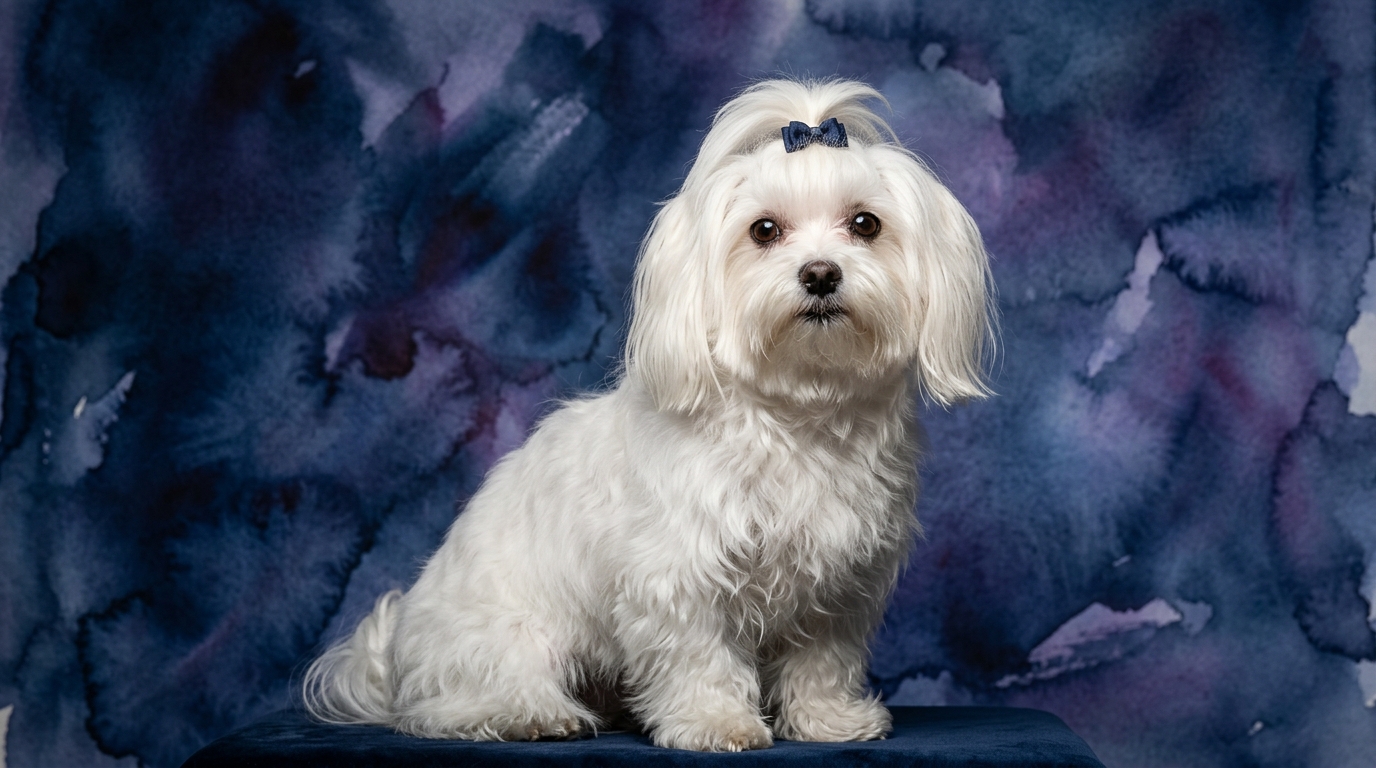

Unpacking the Cognitive Blueprints: Maltese vs. Lhasa Apso
The Cosmic Pet Pet IQ Lab provides a unique lens through which to examine the distinct mental faculties of these two beloved breeds. The Maltese, a graceful toy breed, registers a Problem Solving score of 3/5, indicating a moderate ability to navigate novel situations and figure things out independently. Its Training Speed also stands at 3/5, suggesting a reasonable pace for acquiring new commands and behaviors, while its Social Intelligence shines at an impressive 5/5, highlighting an exceptional capacity for understanding and responding to human cues and emotions. A lower Instinctive Drive of 2/5 means it's less driven by primal urges like hunting or territoriality, and its Memory is a solid 3/5, allowing it to retain learned information effectively.
In contrast, the Lhasa Apso, a sturdy non-sporting breed, shares some cognitive commonalities but diverges significantly in other areas. Like the Maltese, it scores 3/5 in Problem Solving and 3/5 in Training Speed, suggesting a similar baseline for learning and adaptability to new challenges. However, its Social Intelligence is rated at 3/5, indicating a more moderate, perhaps selective, engagement with human social signals compared to the Maltese. The Lhasa Apso's Instinctive Drive is slightly higher at 3/5, reflecting a more pronounced innate self-preservation and awareness of its surroundings. Its Memory, consistent with the Maltese, is also 3/5, enabling it to recall experiences and training effectively.
Maltese Cognitive Distinctions: The Social Maestro
The Maltese truly distinguishes itself in the realm of Social Intelligence, where its perfect 5/5 score outshines the Lhasa Apso's 3/5. This elevated social acumen means a Maltese is often exceptionally attuned to its owner's moods, intentions, and even subtle shifts in body language. They possess an innate ability to connect deeply, seeking out interaction and responding with a profound understanding of social dynamics within the household, making them incredibly empathetic companions. This isn't just about being affectionate; it's about a sophisticated processing of social cues that allows them to anticipate needs and offer comfort.
Furthermore, the Maltese's lower Instinctive Drive of 2/5, compared to the Lhasa Apso's 3/5, contributes to a more handler-focused disposition. While the Lhasa Apso might be more inclined to independently survey its environment or act on its own territorial instincts, the Maltese is less distracted by such urges. This lower drive translates to fewer self-directed behaviors that might conflict with human expectations, making them generally more pliable and eager to work alongside their people rather than embarking on their own agenda. Their focus tends to remain firmly on their human companions, making them less prone to independent exploration or guarding behaviors.
Lhasa Apso's Unique Strengths: The Vigilant Observer
While the Maltese excels in social bonding, the Lhasa Apso carves its own cognitive niche, particularly highlighted by its slightly higher Instinctive Drive of 3/5 compared to the Maltese's 2/5. This difference isn't about superiority but distinct functionality. The Lhasa Apso historically served as a sentinel in Tibetan monasteries, and this inherent watchfulness is reflected in its drive. They possess a robust sense of their territory and surroundings, often exhibiting a keen awareness of any changes or perceived intrusions. This translates to a natural vigilance, making them excellent, if sometimes vocal, alert systems for their households, rather than being primarily focused on human interaction for validation.
This elevated instinctive drive also underpins a more independent problem-solving approach to their environment. While both breeds score 3/5 in Problem Solving, the Lhasa Apso's drive gives that problem-solving a different motivation – often self-preservation or territorial management. They are more likely to assess situations from their own perspective, rather than immediately seeking human guidance, which can manifest as a more self-assured and sometimes stubborn demeanor. This independence means they are less likely to become overly dependent on their owners for entertainment or direction, finding satisfaction in observing and managing their own immediate world.
Training Trajectories: Maltese Cooperation vs. Lhasa Apso Independence
Both the Maltese and Lhasa Apso share a Training Speed score of 3/5, suggesting they both absorb new information at a moderate pace. However, the ease of training each breed can diverge significantly due to their other cognitive attributes. The Maltese, with its superior Social Intelligence (5/5), often presents as easier to train for companion behaviors. They are inherently motivated by human approval and connection, quickly learning that cooperative actions lead to positive social rewards like praise, petting, and shared attention. Their lower Instinctive Drive also means fewer internal distractions from self-motivated behaviors, allowing them to remain more focused on the task at hand and their trainer's cues. This makes them highly responsive to positive reinforcement methods, thriving on partnership in the learning process.
Conversely, while the Lhasa Apso also learns at a 3/5 pace, its lower Social Intelligence (3/5) and higher Instinctive Drive (3/5) mean training often requires a different approach. They are less inherently driven by the desire to please and may not find social praise as overwhelmingly motivating as a Maltese. Their independence and self-assured nature mean they might question the necessity of a command or choose to pursue their own interests if not adequately motivated. Training a Lhasa Apso demands consistency, clarity, and patience, focusing on building respect and clearly demonstrating the benefits of cooperation through tangible rewards or engaging activities. Their historical role as watchdogs also means specific training might be needed to manage vocalizations or territorial guarding, which are natural expressions of their higher instinctive drive.
Lifestyle Alignment: Companionable Maltese or Self-Assured Lhasa Apso?
When considering lifestyle fit, the cognitive profiles of these breeds offer clear guidance. The Maltese, with its exceptional Social Intelligence and lower Instinctive Drive, is ideally suited for owners who prioritize close companionship and a dog that thrives on shared emotional experiences. They flourish in environments where they receive consistent attention, gentle interaction, and are integral to the family's daily rhythm. Their moderate energy levels mean they are content with indoor play, short walks, and ample cuddle time, making them a superb choice for relaxed owners who desire a highly interactive and emotionally responsive pet to share their quiet moments. They adapt well to apartment living, provided their social needs are met.
The Lhasa Apso, conversely, with its more moderate Social Intelligence and higher Instinctive Drive, aligns well with owners who appreciate a dog with a distinct personality and a degree of independence. While they are loyal, their affection is often expressed on their own terms, and they require owners who respect their self-possessed nature. They enjoy moderate exercise but also benefit from mental stimulation that taps into their observational skills and sense of purpose. Owners who are active in a way that allows the Lhasa Apso to survey its surroundings, such as structured walks in varied environments, or those who can provide consistent, engaging training to channel their drive, will find a rewarding companion. They can suit relaxed owners who understand their need for personal space and are prepared for a dog that might not always be a 'lap dog' but offers steadfast, if sometimes reserved, companionship.
The Verdict
Choose a Maltese if you seek a highly socially attuned companion that thrives on close human interaction and responds readily to positive reinforcement, integrating seamlessly into a family's emotional rhythm.
Opt for a Lhasa Apso if you value a more independent spirit with a keen sense of its surroundings, appreciate a dog that offers a unique blend of loyalty and a self-assured demeanor, and are prepared for consistent, patient training.
🧠 Find Your Pet's IQ Score
Our Pet IQ Lab assessment covers 25+ tests across 5 cognitive dimensions — personalized to your breed.
Take the Full IQ Test →Frequently Asked Questions
Are Maltese dogs difficult to house train?
While Maltese possess a moderate training speed, their small size and social nature mean they respond well to consistent, positive reinforcement. Establishing a strict routine and utilizing crate training can overcome common challenges, as they are eager to please their human companions.
Do Lhasa Apsos bark a lot?
Lhasa Apsos, with their moderate instinctive drive and historical role as alert guardians, can be prone to barking if not properly managed. Their vocalizations often stem from a desire to alert their family to perceived intruders or changes in their environment, requiring early socialization and training to mitigate excessive noise.
Which breed is better with children?
The Maltese, with its superior social intelligence, often adapts well to gentle, respectful children, thriving on companionship. Lhasa Apsos can be good with older, considerate children who understand their more independent and sometimes reserved nature, but may be less tolerant of boisterous play due to their lower social score.