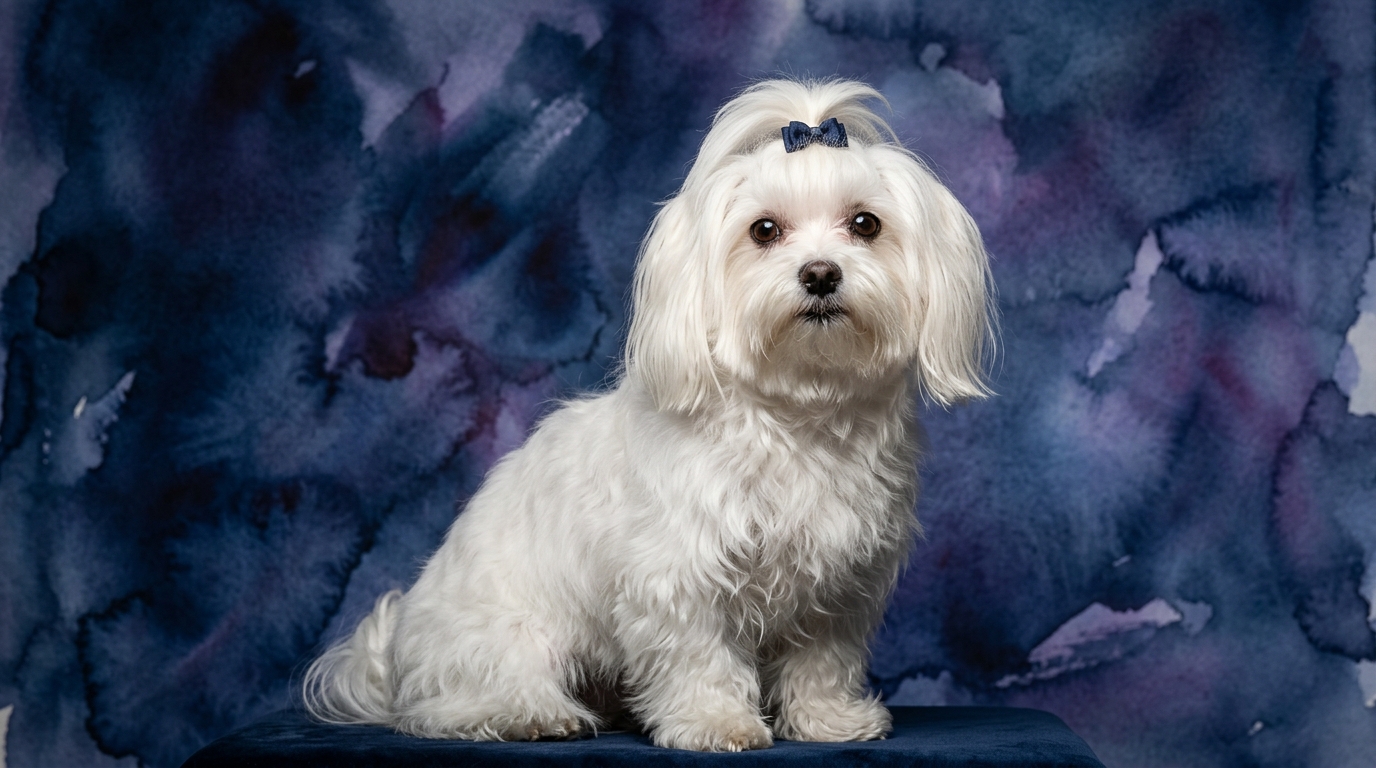
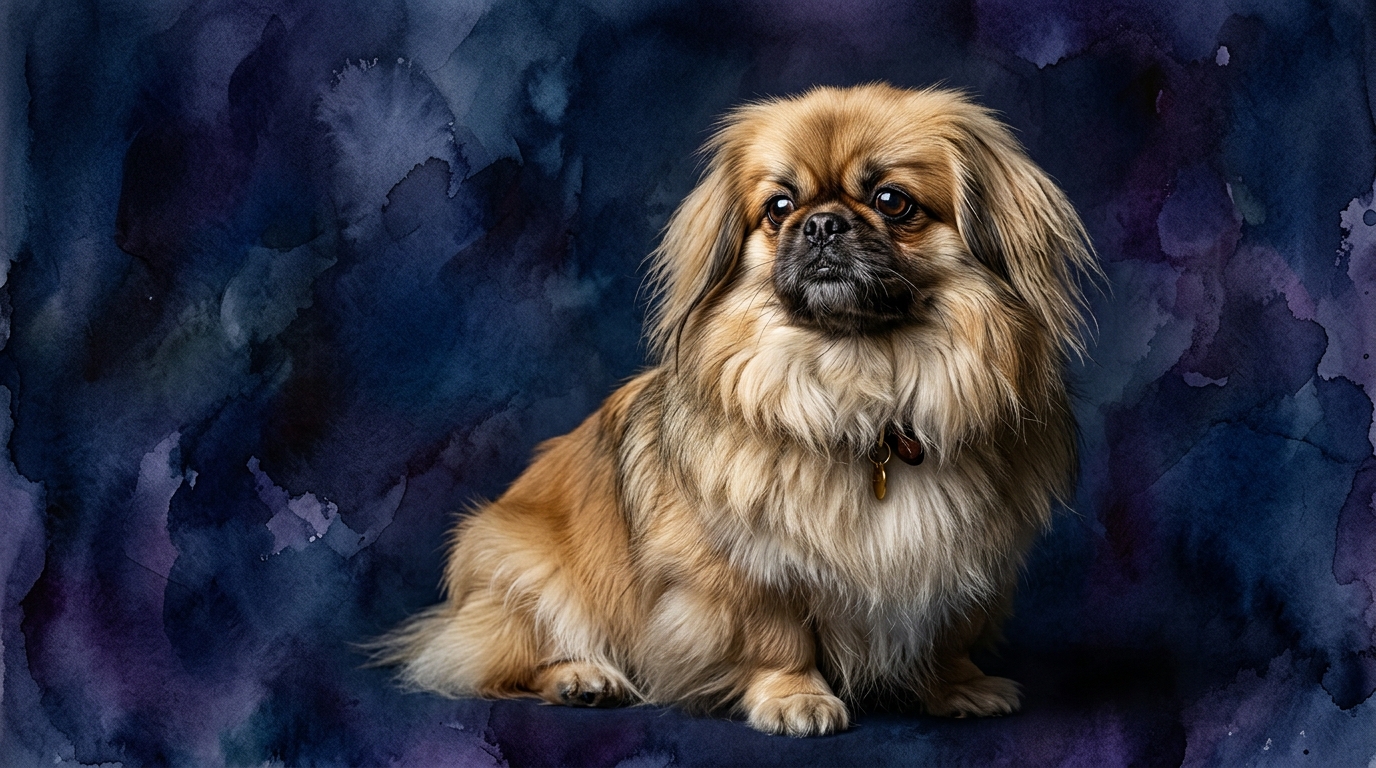
Side-by-Side IQ Profile: Maltese vs. Pekingese
**Maltese:** Ranked #59 by Coren, the Maltese demonstrates a balanced cognitive profile with a distinct strength in social understanding. Their Problem Solving is 3/5, indicating an ability to navigate moderate challenges and understand basic cause-and-effect within their environment. Training Speed is 3/5, meaning they learn new commands at an average pace, responsive to consistent positive reinforcement. Their standout feature is Social Intelligence at 5/5; they are profoundly attuned to human emotions and cues, forming deep, empathetic bonds. Instinctive Drive is low at 2/5, reflecting their role purely as companions with minimal independent task inclination. Memory is 3/5, allowing them to retain routines, learned behaviors, and associations effectively.
**Pekingese:** Ranked #77 by Coren, the Pekingese shares several cognitive scores with the Maltese but presents a unique temperament. Their Problem Solving is 3/5, showing competence in resolving moderate environmental challenges, often with a self-reliant approach. Training Speed is 3/5, requiring patience and engaging methods for learning new commands at an average rate. Social Intelligence stands at 3/5; they appreciate companionship and bond with family but are generally more reserved and independent in their interactions. Instinctive Drive is 3/5, a slight uptick from the Maltese, suggesting a greater inclination for self-preservation or territorial awareness. Memory is 3/5, enabling them to recall routines and learned commands with average retention.
Where the Maltese Wins Cognitively
The Maltese's undeniable cognitive strength lies in its exceptional Social Intelligence, scoring a perfect 5/5. They possess an unparalleled ability among these two breeds to interpret and respond to human emotions and subtle social cues. This high social acumen makes them incredibly responsive to their owners' moods and a highly intuitive companion, often forming an almost telepathic bond. Their low Instinctive Drive (2/5) further supports this role; they remain singularly focused on human interactions, making them adept at shared activities relying on mutual understanding and emotional connection.
Where the Pekingese Wins Cognitively
The Pekingese distinguishes itself with a slightly higher Instinctive Drive (3/5) compared to the Maltese. This manifests as a more self-reliant and independent streak, a subtle cognitive advantage for owners seeking a companion less intensely focused on constant human interaction. While still affectionate, a Pekingese's mental landscape allows for greater self-sufficiency; they are more content to entertain themselves without constant direct engagement. This higher drive can also translate into a stronger sense of territorial awareness or a determined approach to their own desires, reflecting robust internal motivation.
Which is Easier to Train, and Why?
Both Maltese and Pekingese share a Training Speed score of 3/5, but their cognitive profiles dramatically influence the training experience. The Maltese's superior Social Intelligence (5/5) makes them inherently more eager to please and attuned to their trainer's feedback. They thrive on positive reinforcement and the strong bond, often viewing training as a collaborative activity. Their low Instinctive Drive (2/5) means fewer distractions, allowing greater focus. Conversely, the Pekingese, with 3/5 Social Intelligence and 3/5 Instinctive Drive, can present a more independent demeanor. While capable, their motivation is less about pleasing and more about self-interest. Trainers need patience, creativity, and consistency to make sessions highly rewarding. For an owner, the Maltese will generally feel "easier" to train due to their cooperative spirit.
Suitability for Active vs. Relaxed Owners
The Maltese, with its exceptional Social Intelligence (5/5) and low Instinctive Drive (2/5), is profoundly suited for owners desiring a constant, interactive companion. Their cognitive makeup drives them to seek and thrive on human interaction, making them ideal for individuals or families who can dedicate significant time to companionship and cuddles. They are not dogs content alone for extended periods; their mental well-being links intrinsically to social engagement. Minimal instinctive drives mean they are perfectly content with indoor living and short, leisurely strolls, fitting a relaxed, companionship-focused routine.
The Pekingese, with its moderate Social Intelligence (3/5) and slightly higher Instinctive Drive (3/5), aligns well with owners appreciating a more independent companion. While cherishing family, their cognitive inclination allows for greater self-sufficiency; they are less demanding of constant attention and content observing their surroundings. Their stronger instinctive drive contributes to a more self-contained personality, making them suitable for owners with a more relaxed approach to constant interaction or a busier schedule, provided basic needs are met. They are less prone to separation anxiety due to their inherent mental fortitude.
The Verdict
Choose a Maltese if you seek an intensely social and emotionally intuitive companion who thrives on constant interaction and forms a profound, empathetic bond, perfect for a home where they are the center of attention.
Opt for a Pekingese if you appreciate a noble, independent companion with a self-sufficient streak, content to share space and affection on their own terms, fitting a home that values calm observation and less demanding social engagement.
🧠 Find Your Pet's IQ Score
Our Pet IQ Lab assessment covers 25+ tests across 5 cognitive dimensions — personalized to your breed.
Take the Full IQ Test →Frequently Asked Questions
Is the Maltese or Pekingese more prone to separation anxiety?
The Maltese, with its exceptionally high Social Intelligence, is generally more prone to separation anxiety because its cognitive makeup drives a deep need for constant human interaction. The Pekingese, having more moderate social intelligence and an independent streak, tends to handle solitude better, though all dogs require adequate companionship.
Do either of these breeds excel at dog sports or agility due to their intelligence?
Neither breed typically excels in high-intensity dog sports like agility. Their moderate problem-solving and training speed, combined with low to moderate instinctive drives, mean their cognitive strengths lie more in social bonding and companionship rather than athletic performance or complex task execution.
How does the Coren rank difference (Maltese #59 vs Pekingese #77) relate to their similar IQ scores?
The Coren rank, which often reflects "working and obedience intelligence," likely favors the Maltese due to its superior social intelligence, translating to greater eagerness to please and cooperation in training. The Pekingese's independent nature, influenced by its slightly higher instinctive drive and moderate social intelligence, can make it appear less "trainable" by traditional obedience metrics, thus a lower Coren rank.