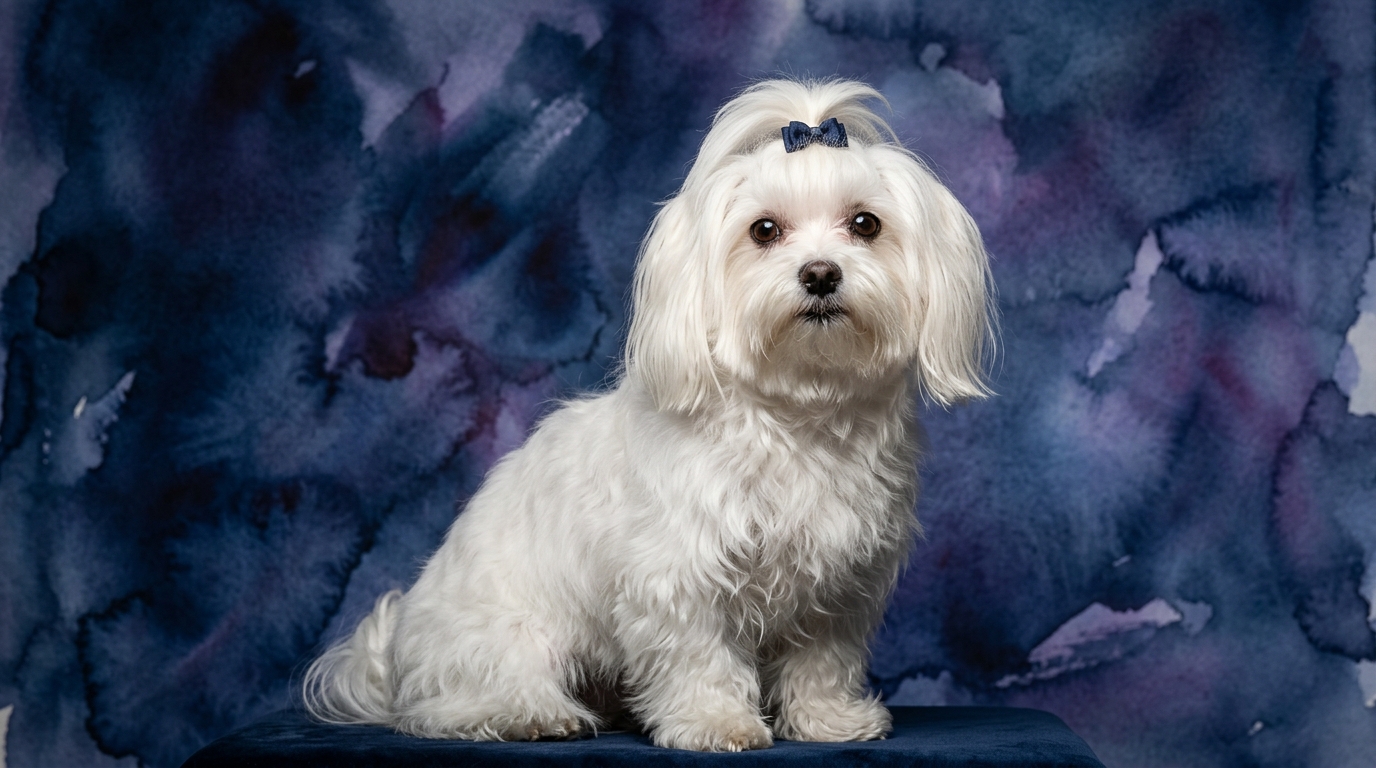
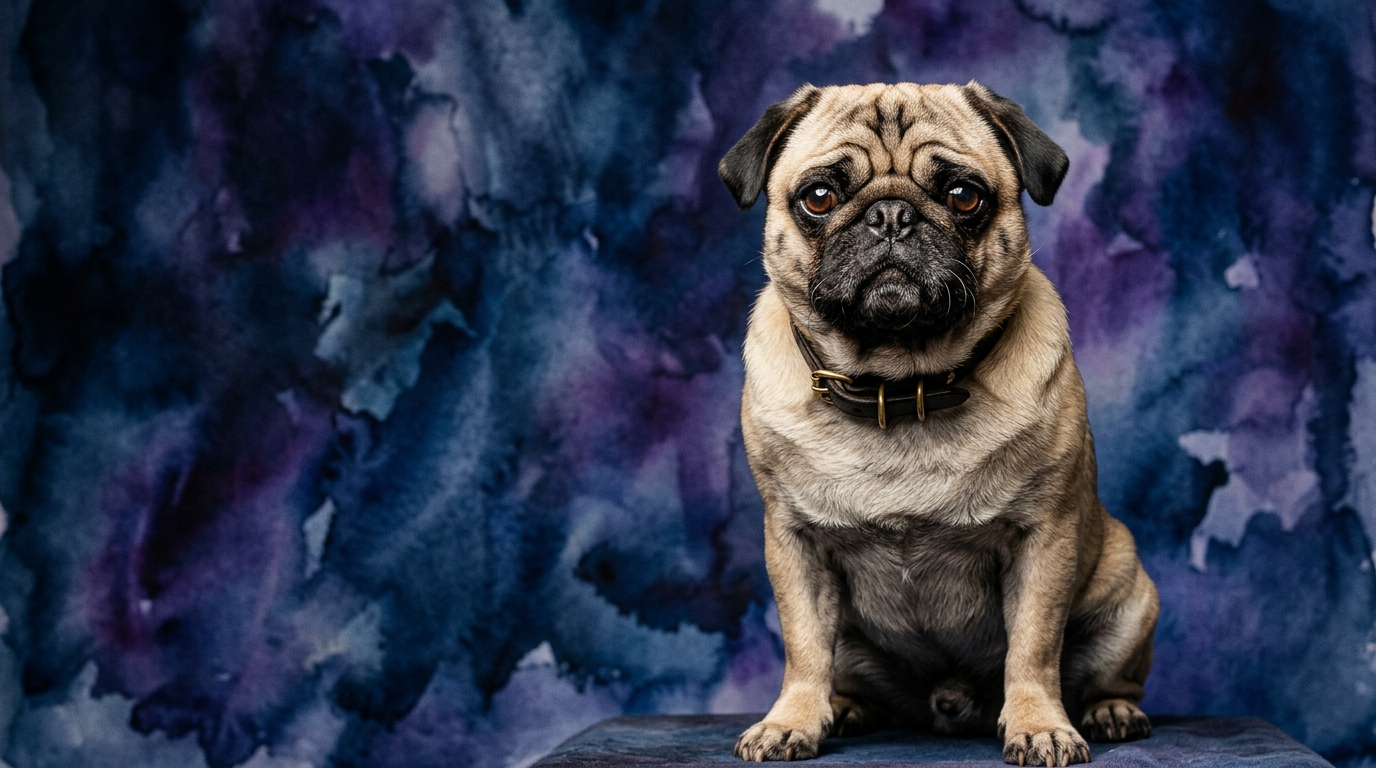
Side-by-Side Cognitive Profile: Maltese vs. Pug
At The Cosmic Pet Pet IQ Lab, we evaluate canine intelligence across five key dimensions: Problem Solving, Training Speed, Social Intelligence, Instinctive Drive, and Memory. This granular approach allows us to understand the nuanced cognitive landscapes of different breeds, moving beyond simple rankings to appreciate their specific intellectual gifts.
The Maltese, with a Coren ranking of #59, presents a balanced cognitive profile. They score 3 out of 5 for Problem Solving, indicating a moderate capacity to independently figure out novel situations or overcome obstacles. Their Training Speed also stands at 3 out of 5, suggesting a reasonable pace for acquiring new commands and behaviors. Where the Maltese truly shines is in Social Intelligence, earning a perfect 5 out of 5, reflecting an exceptional ability to read human cues and connect emotionally. Instinctive Drive is lower at 2 out of 5, consistent with a companion breed, and their Memory is a moderate 3 out of 5.
The Pug, ranked slightly higher at #57 by Coren, offers a distinct cognitive makeup. Their Problem Solving score is 2 out of 5, suggesting they may lean more on learned routines or human guidance rather than devising independent solutions. Similarly, their Training Speed is 2 out of 5, indicating a need for more patience and repetition during learning. Like the Maltese, the Pug excels in Social Intelligence with a 5 out of 5, showcasing deep empathy and an acute awareness of their human companions' emotional states. Their Instinctive Drive is also low at 2 out of 5, and their Memory matches the Maltese at 3 out of 5.
Where the Maltese Demonstrates Cognitive Strengths
The Maltese exhibits a slight cognitive advantage in areas requiring more independent thought and quicker learning. Their Problem Solving score of 3 out of 5, compared to the Pug's 2 out of 5, means a Maltese is often more inclined to explore different approaches when faced with a new challenge. For instance, if a favorite toy rolls under furniture, a Maltese might more readily experiment with nudging or pawing at the obstacle to retrieve it, whereas a Pug might be quicker to look to their owner for assistance.
Furthermore, the Maltese's Training Speed of 3 out of 5, against the Pug's 2 out of 5, indicates they generally absorb new commands and routines with fewer repetitions. This isn't to say a Maltese learns complex tasks instantly, but rather that they often bridge the gap between initial instruction and reliable execution with slightly greater alacrity. This cognitive edge translates to a potentially smoother experience when introducing new tricks or refining behaviors, as they seem to generalize learned concepts a bit more readily across different contexts.
Where the Pug Demonstrates Unique Cognitive Strengths
While the Pug’s scores in problem-solving and training speed are lower than the Maltese, their cognitive strengths are profoundly expressed through their exceptional Social Intelligence, scoring a perfect 5 out of 5, identical to the Maltese. For the Pug, this high social acuity often becomes their primary strategy for navigating the world, especially given their lesser inclination for independent problem-solving. They are masters at reading subtle human cues, anticipating needs, and engaging in reciprocal emotional communication.
The Pug's particular cognitive makeup means they are incredibly adept at leveraging their charm and connection with humans to achieve their goals. Their lower problem-solving score doesn't imply a lack of awareness, but rather a preference for collaborative solutions driven by their strong social bonds. They might not figure out a puzzle toy as quickly, but they are incredibly effective at communicating their desire for assistance or attention, often through expressive facial cues and body language that are difficult for humans to resist. This makes them profoundly empathetic and deeply attuned companions, where their cognitive energy is heavily invested in maintaining harmonious social interactions.
Training Dynamics: Which Breed is More Amenable?
When considering ease of training, the Maltese generally presents a slightly more straightforward experience due to their higher Training Speed (3/5) and Problem Solving (3/5) scores. A Maltese often picks up basic commands like 'sit,' 'stay,' or 'come' with fewer repetitions and tends to generalize these behaviors more quickly to different environments. Their moderate problem-solving ability means they are more likely to understand the connection between a command and the desired action, making positive reinforcement highly effective.
The Pug, with a Training Speed of 2/5 and Problem Solving of 2/5, typically requires more patience, consistency, and highly motivating rewards. They may take longer to grasp new concepts and might need extensive repetition before a behavior becomes reliable. For example, house-training a Pug might involve a longer period of consistent supervision and frequent outdoor trips compared to a Maltese. Pugs are also known for their strong desire for comfort; if a task doesn't seem immediately rewarding or comfortable, they might be less inclined to perform it, often leading to a charming stubbornness that requires creative engagement from their owner. This isn't a lack of ability, but a differing cognitive approach that prioritizes comfort and social interaction over independent task completion.
Matching Breeds to Lifestyles: Active vs. Relaxed Owners
Considering their cognitive profiles and overall temperaments, both Maltese and Pugs are primarily companion animals, but they suit slightly different owner lifestyles. The Maltese, with its moderate Problem Solving (3/5) and Training Speed (3/5), can thrive with owners who enjoy engaging in mental stimulation activities. While not a high-energy working breed, a Maltese often appreciates learning new tricks, participating in puzzle games, or even trying recreational dog sports like rally or agility. Their cognitive agility allows them to adapt to more structured play and training sessions, making them suitable for owners who enjoy a more interactive and mentally stimulating relationship with their pet, beyond just cuddles.
The Pug, on the other hand, with lower scores in Problem Solving (2/5) and Training Speed (2/5) but a perfect 5/5 in Social Intelligence, is an ideal match for more relaxed owners who prioritize companionship and affection above all else. Pugs are generally content with shorter, leisurely walks and prefer to spend the majority of their time physically close to their human companions. Their cognitive strengths lie in their ability to be incredibly present and responsive to their owner's emotional state, making them exceptional cuddle partners and comfort providers. Owners who appreciate a devoted, charming companion content with a predictable, cozy routine will find the Pug's intellectual and emotional disposition perfectly aligned with their lifestyle.
The Verdict
Choose the Maltese if you seek a highly social companion with slightly more cognitive agility for learning tricks and engaging in moderate mental challenges, alongside strong emotional bonds.
Choose the Pug if you desire an exceptionally social, affectionate companion content with a relaxed pace, prioritizing cuddles and predictable interactions over complex training routines.
🧠 Find Your Pet's IQ Score
Our Pet IQ Lab assessment covers 25+ tests across 5 cognitive dimensions — personalized to your breed.
Take the Full IQ Test →Frequently Asked Questions
Are Maltese or Pugs better at learning new tricks?
Based on their training speed scores, Maltese (3/5) typically grasp new tricks slightly faster than Pugs (2/5). Both can learn, but Maltese may show quicker acquisition and retention, benefiting from their moderate problem-solving abilities.
Do Maltese or Pugs have better memory?
Both breeds score 3/5 for memory in The Cosmic Pet Pet IQ Lab, indicating a moderate ability to recall learned commands and experiences. They will both benefit from consistent reinforcement and practice to keep their knowledge fresh and reliable.
Which breed is more adaptable to new situations?
The Maltese, with a problem-solving score of 3/5, generally exhibits slightly more adaptability to novel situations and environments compared to the Pug's 2/5. This suggests the Maltese might explore new challenges with a bit more independent curiosity and experimentation.