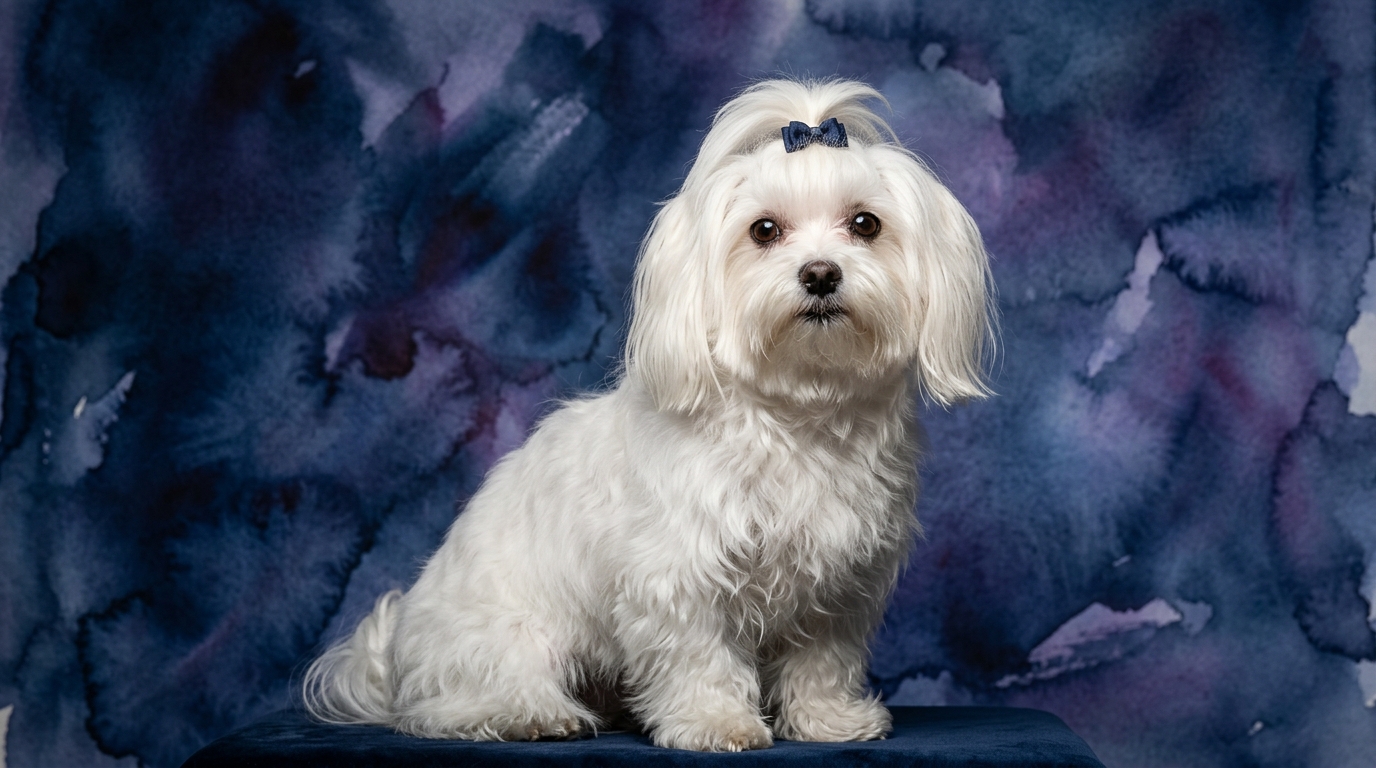
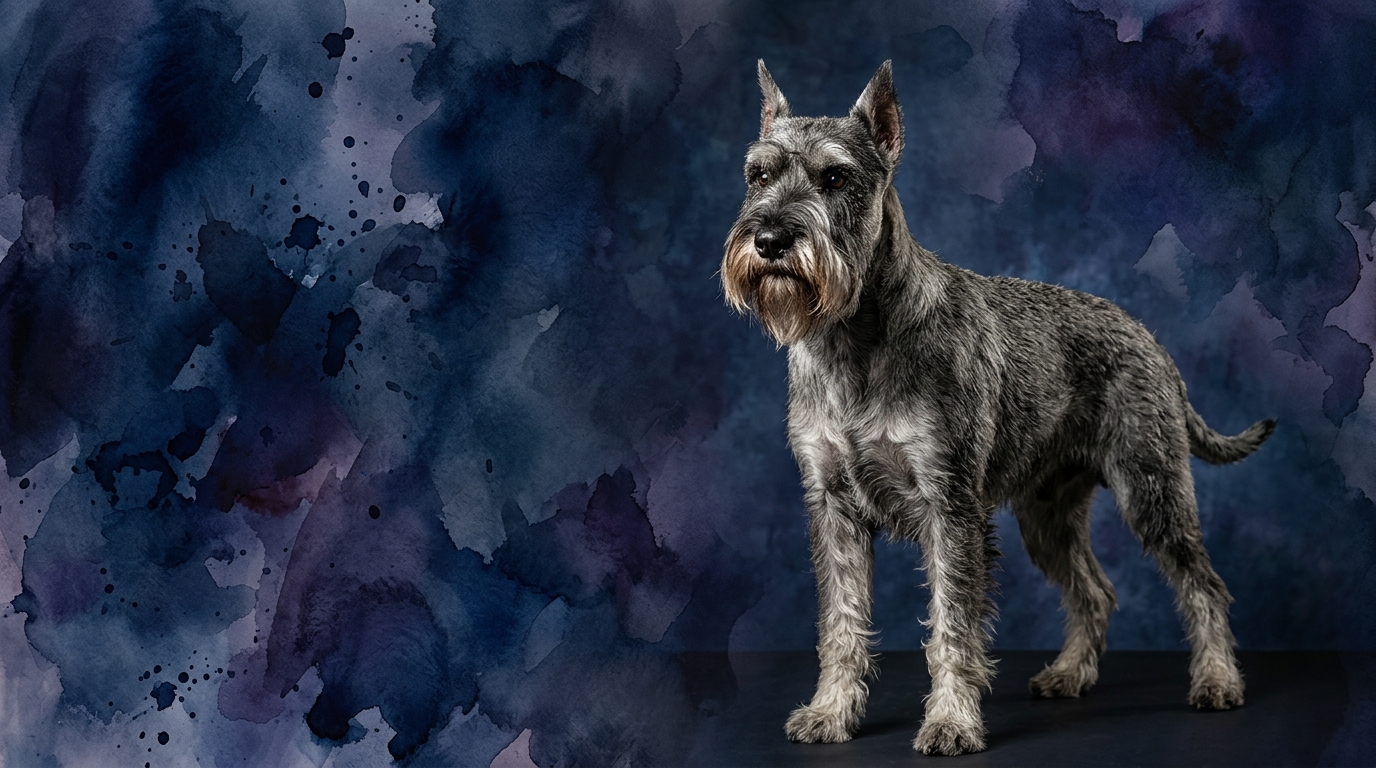
Side-by-Side Cognitive Profiles
The Cosmic Pet Pet IQ Lab employs a five-dimensional framework to assess canine intelligence, offering a nuanced view of how breeds like the Maltese (Coren rank #59) and the Standard Schnauzer (Coren rank #22) navigate their world. Understanding these dimensions helps illuminate their unique cognitive strengths and inclinations.
For the Maltese, a breed cherished for companionship, their cognitive profile reflects their primary role:
Problem Solving (3/5): Malteses demonstrate a moderate capacity for independent problem-solving. They can learn to navigate familiar environments and solve simple puzzles, but complex, multi-step challenges might require more repetition or assistance. Their approach often relies on learned associations rather than inventive strategies.
Training Speed (3/5): These companion dogs learn new commands at a steady pace. While not the quickest to grasp novel cues, their willingness to engage and desire for human interaction generally ensures consistent progress with patient, positive reinforcement. They respond well to reward-based methods, especially when training feels like a bonding activity.
Social Intelligence (5/5): Here, the Maltese truly shines, exhibiting exceptional social awareness. They are remarkably adept at reading human emotions, anticipating needs, and adjusting their behavior to maintain harmony within their family unit. This acute sensitivity makes them profoundly empathetic and responsive companions, often appearing to understand unspoken cues.
Instinctive Drive (2/5): The Maltese possesses a relatively low instinctive drive, meaning their natural urges for activities like hunting, herding, or guarding are minimal. Their primary motivation centers around companionship and social bonding, rather than task-oriented behaviors, making them less prone to independent pursuits.
Memory (3/5): Malteses have a solid, average memory for learned commands, routines, and significant social interactions. They can recall training cues and family members consistently, though they may not retain intricate sequences or less frequently encountered information with the same precision as breeds with higher memory scores.
In contrast, the Standard Schnauzer, a breed with a working heritage, presents a different cognitive blueprint:
Problem Solving (4/5): Standard Schnauzers display a strong aptitude for problem-solving, readily analyzing new situations and devising effective solutions. Their capacity extends to complex tasks, like figuring out how to open gates, retrieve hidden objects, or navigate intricate agility courses, often showing ingenuity in their approach.
Training Speed (4/5): These dogs learn new commands and routines with impressive swiftness. Their focus and eagerness to engage in structured activities allow them to pick up cues and sequences rapidly, often requiring fewer repetitions than many other breeds to achieve mastery, making them excellent candidates for advanced training.
Social Intelligence (3/5): Standard Schnauzers possess a balanced level of social intelligence. They are attentive to their human companions and can form strong bonds, but their focus often leans towards understanding commands and roles within a family structure rather than an acute emotional sensitivity. They are reliable and loyal without the same degree of emotional mirroring seen in some companion breeds.
Instinctive Drive (3/5): With a moderate instinctive drive, Standard Schnauzers exhibit natural predispositions for activities like guarding, tracking, and vermin control, reflecting their working heritage. This drive provides motivation for purposeful activities and can be channeled effectively into training and structured play, requiring outlets for their natural inclinations.
Memory (4/5): Standard Schnauzers demonstrate excellent memory retention. They reliably recall a wide array of commands, complex routines, and past experiences, making them highly consistent in their trained behaviors and capable of remembering intricate sequences over long periods, which is invaluable for working roles.
Where the Maltese Excels Cognitively
The Maltese’s crowning cognitive strength lies in their extraordinary social intelligence, rated at a perfect 5/5. This isn't merely about being affectionate; it represents a sophisticated ability to interpret human cues, moods, and intentions with remarkable accuracy. A Maltese might notice a subtle shift in your posture or tone and respond by offering comfort or seeking reassurance, demonstrating an innate understanding of emotional states. Their capacity to form deep, responsive bonds is underpinned by this cognitive skill, allowing them to adapt their behavior to create harmonious living environments. They excel in emotional reciprocity, often reflecting the emotional climate of their household, making them exceptionally attuned companions who thrive on empathetic connection. This high social IQ allows them to navigate complex human social dynamics, often acting as emotional barometers and providing targeted comfort or engagement when needed, making them profoundly intuitive family members.
Where the Standard Schnauzer Excels Cognitively
The Standard Schnauzer demonstrates clear cognitive advantages in several key areas, particularly in problem-solving (4/5), training speed (4/5), and memory (4/5). Their elevated problem-solving ability means they are more likely to independently strategize their way out of dilemmas, whether it's figuring out how to access a coveted toy or navigating a new environment. This isn't just about persistence; it’s about applying logical thought to achieve an outcome. Coupled with a rapid training speed, Standard Schnauzers can quickly assimilate new commands and intricate sequences, making them highly responsive to complex training regimes like agility, obedience, or protection work. Their superior memory ensures that once a lesson is learned, it is retained with remarkable consistency, reducing the need for frequent refreshers. This combination of mental agility, quick learning, and strong retention positions them as highly capable learners for a wide array of tasks and advanced training challenges, making them valuable partners in structured activities.
Training Aptitude: Which is Easier to Train?
When considering ease of training, the Standard Schnauzer generally presents a more straightforward path for owners seeking a highly obedient and task-oriented companion. Their higher training speed (4/5) means they grasp new commands quickly, often requiring fewer repetitions to achieve proficiency. This rapid learning, combined with a robust memory (4/5) and a moderate instinctive drive (3/5) that can be channeled into purposeful work, allows them to excel in structured training environments. They respond well to clear expectations and consistent methods, finding satisfaction in mastering tasks and performing their learned behaviors reliably. Their natural inclination towards purposeful activity makes them eager participants in training sessions, viewing them as engaging challenges rather than mere drills.
Conversely, the Maltese, with a training speed of 3/5, may require more patience and creative approaches. While their exceptional social intelligence (5/5) makes them eager to please and highly responsive to positive reinforcement, their lower instinctive drive (2/5) means they are less intrinsically motivated by tasks or routines for their own sake. Training a Maltese often hinges on leveraging their desire for social interaction and making the process feel like a game or a bonding experience. They might take longer to generalize commands across different contexts, and their moderate memory (3/5) may necessitate more frequent reinforcement sessions to maintain consistent behavior. While both breeds are trainable, the Schnauzer's cognitive profile is more aligned with traditional, efficient obedience training, whereas the Maltese benefits from a more relationship-centric, gentle, and engaging approach that prioritizes their emotional connection with their trainer.
Matching Cognitive Needs to Lifestyles: Active vs. Relaxed Owners
The cognitive profiles of these two breeds distinctly align with different owner lifestyles. The Standard Schnauzer, with its higher problem-solving aptitude, rapid training speed, and moderate instinctive drive, thrives with active owners who can provide ample mental stimulation and purposeful activity. These dogs require more than just physical exercise; they need challenges that engage their minds, such as advanced obedience, agility, scent work, or even just complex puzzle toys and regular training sessions. Owners who enjoy structured activities and can dedicate time to consistent mental engagement will find the Standard Schnauzer a rewarding and cooperative partner. Their cognitive needs align with a lifestyle that values routine, challenges, and shared accomplishments, making them excellent companions for those who enjoy an engaged, active partnership.
In contrast, the Maltese, with its unparalleled social intelligence and lower instinctive drive, is an ideal fit for more relaxed owners who prioritize companionship and emotional connection. While they enjoy gentle play and walks, their primary cognitive need is social interaction and being an integral part of their human family. They excel in environments where they can be close to their people, offering comfort and receiving affection. Their cognitive strengths are best nurtured in a home that values calm presence, emotional responsiveness, and a less demanding schedule for structured activities. Owners seeking a devoted, empathetic presence who are content with less rigorous mental tasks will find the Maltese exceptionally fulfilling, as their greatest joy comes from being a cherished, emotionally connected family member.
The Verdict
Choose the Maltese if your lifestyle prioritizes an exceptionally empathetic, emotionally responsive companion who thrives on close social bonding and a less demanding schedule for structured mental tasks. They are ideal for owners seeking a devoted lap dog whose primary cognitive strength lies in understanding and reflecting human emotions.
Opt for the Standard Schnauzer if you are an active owner looking for a highly capable, task-oriented canine partner who excels at problem-solving, learns quickly, and thrives on consistent mental challenges and purposeful activities. They are best suited for those who enjoy engaging in advanced training and providing structured opportunities for their dog to work and think.
🧠 Find Your Pet's IQ Score
Our Pet IQ Lab assessment covers 25+ tests across 5 cognitive dimensions — personalized to your breed.
Take the Full IQ Test →Frequently Asked Questions
Is a Maltese difficult to train?
While Malteses have a moderate training speed, they are not inherently difficult to train. Their exceptional social intelligence makes them eager to please their human companions, responding best to positive reinforcement, patience, and training methods that feel like engaging social interactions or games. Consistency is key to their learning.
What kind of mental exercise does a Standard Schnauzer need?
A Standard Schnauzer requires significant mental exercise that taps into their problem-solving skills and rapid learning. This includes regular training sessions, puzzle toys, agility or obedience classes, scent work, and opportunities to learn new tricks or commands. Engaging their minds prevents boredom and supports their cognitive well-being.
How do their different Coren ranks impact daily life?
The Coren ranks (Maltese #59, Standard Schnauzer #22) reflect general working and obedience intelligence. In daily life, this typically means a Standard Schnauzer might pick up routines and commands more quickly and require more structured mental engagement, while a Maltese might be more focused on social cues and companionship, adapting to routines through social observation rather than pure task mastery.