
Side-by-Side Cognitive Profiles: Manchester Terrier vs. Keeshond
The Cosmic Pet Pet IQ Lab provides a unique lens through which to compare the nuanced cognitive landscapes of different breeds. For the Manchester Terrier, we observe a consistently balanced cognitive profile, scoring 3/5 across all five dimensions: Problem Solving, Training Speed, Social Intelligence, Instinctive Drive, and Memory. This suggests a dog with a practical, consistent, and adaptable mind, capable across a range of tasks without extreme specialization in any single area. Its intelligence is often expressed through focused determination and a pragmatic approach to its environment, reflecting its terrier heritage.
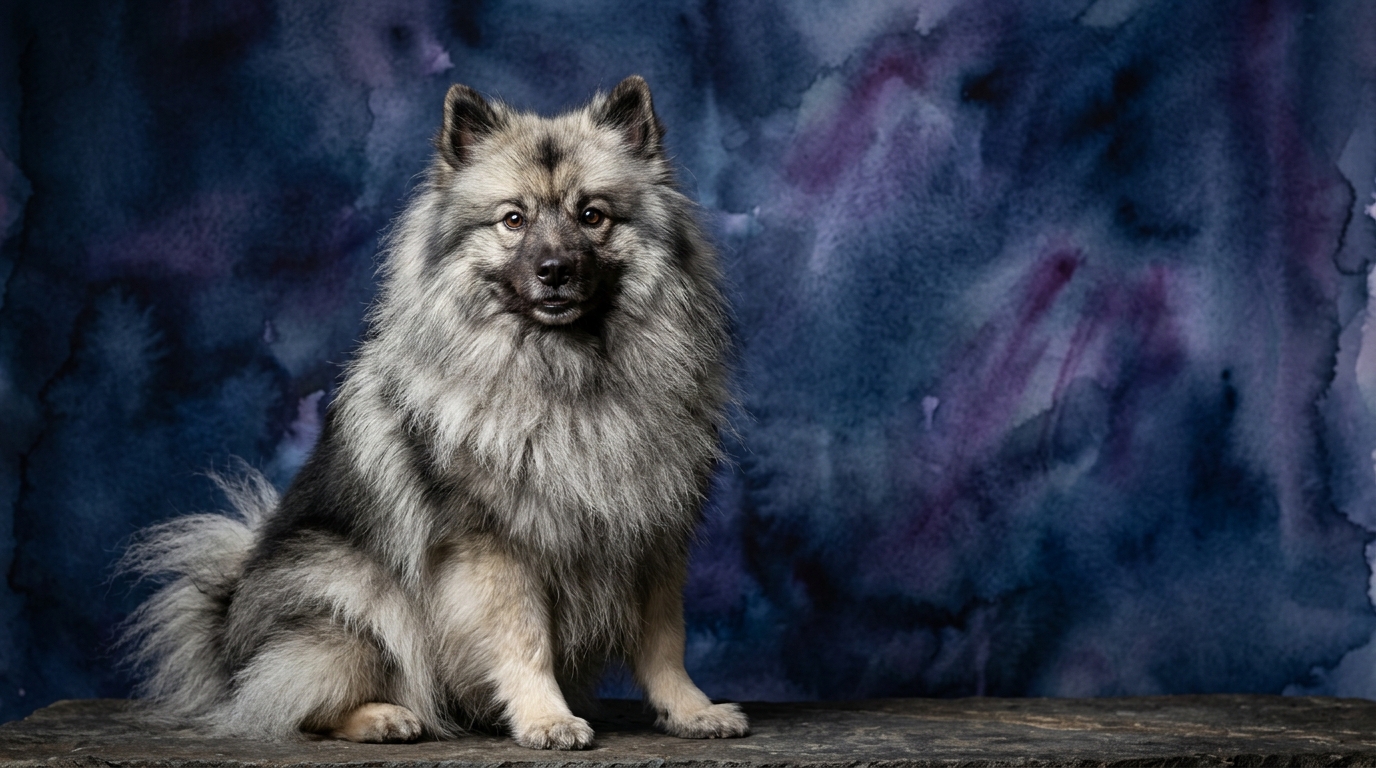
In contrast, the Keeshond presents a profile with notable peaks in certain cognitive areas. It scores 4/5 in Problem Solving and Training Speed, indicating a more resourceful and quicker-learning individual. Its Social Intelligence and Instinctive Drive are rated at 3/5, similar to the Manchester Terrier, suggesting a balanced approach to social dynamics and innate motivations, though rooted in different breed histories. The Keeshond's standout attribute is its exceptional 5/5 in Memory, hinting at a remarkable capacity for retention and recall that significantly impacts its learning and adaptability. This higher Coren rank of #16 also hints at a generally more biddable and easily trained disposition compared to many breeds.
Where the Manchester Terrier's Cognition Shines
While the Keeshond outscores the Manchester Terrier in several individual cognitive dimensions, the Manchester Terrier's balanced 3/5 profile across all categories presents a unique cognitive advantage in consistency and focused application. This breed demonstrates a reliable and predictable application of its faculties. Its 3/5 problem-solving isn't about complex, abstract thought, but rather a pragmatic, terrier-driven approach to immediate environmental challenges, often involving tenacious pursuit or clever navigation of obstacles. This consistency means less variability in its responses, offering a predictable companion to owners who appreciate a dog with clear motivations and reactions. Its 3/5 instinctive drive, while not as specialized as some breeds, is intensely focused when engaged, making it a determined worker in tasks that align with its historical purpose of vermin control. The Manchester Terrier's cognitive strength lies in its steadfast, practical intelligence, where all its capacities work in concert to achieve specific, tangible outcomes with a focused intensity, less prone to distraction by novel stimuli or over-analysis.
Furthermore, its 3/5 social intelligence translates to a discerning loyalty. A Manchester Terrier forms deep bonds with its inner circle, and while it might be reserved with strangers, this is a deliberate assessment rather than a lack of social capacity. This selective engagement means its affection and attention are particularly meaningful, and it can be a highly tuned companion to its chosen people. Its 3/5 memory, while not photographic, is consistently reliable for routines and learned boundaries, contributing to its overall predictability and making it a dependable member of the household once established.
Where the Keeshond's Cognition Excels
The Keeshond clearly shines in the more abstract and retention-focused aspects of cognition, boasting a 4/5 in Problem Solving, 4/5 in Training Speed, and an exceptional 5/5 in Memory. Its superior Problem Solving means a Keeshond is more likely to devise novel solutions to new puzzles or adapt quickly to changing routines, demonstrating a greater capacity for flexible thought and resourcefulness in unfamiliar situations. This makes them adept at navigating complex environments or learning multi-step tasks that require more than rote memorization.
The 4/5 Training Speed indicates a quicker grasp of new commands and concepts, making initial training periods often less labor-intensive and more rewarding for both dog and owner. This capacity for rapid learning means they can progress through obedience levels or learn complex tricks at an accelerated pace. However, the standout attribute is its 5/5 Memory. This exceptional recall means a Keeshond will retain learned behaviors, cues, and routines with remarkable consistency over long periods, minimizing the need for constant refreshers. This robust memory also contributes to its ability to build complex behavioral chains and understand intricate household dynamics, remembering patterns and expectations with ease. This combination allows for a more advanced and nuanced learning experience, fostering a truly versatile companion.
Training Dynamics: Ease and Behavioral Differences
When it comes to ease of training, the Keeshond holds a distinct advantage due to its higher scores in Training Speed (4/5) and Memory (5/5). These metrics indicate that a Keeshond will typically pick up new commands and concepts more quickly and retain them for longer periods without extensive repetition. Their history as companion and barge dogs has imbued them with a desire to be involved and a generally more biddable nature, often eager to please their human family. This makes them responsive to positive reinforcement and capable of mastering a wide repertoire of commands and tricks with relative efficiency, leading to a smoother training journey for many owners.
The Manchester Terrier, with its 3/5 in both Training Speed and Memory, requires a more consistent, patient, and engaging approach. Its terrier independence means it might prioritize its own interests or require stronger motivation to comply, rather than simply seeking to please. Training a Manchester Terrier is not inherently difficult, but it demands creativity, firmness, and a clear understanding of terrier psychology. Owners must be prepared for more repetition and to make training feel like a stimulating game to hold their attention. While they learn and remember, it's at a more deliberate pace, and owners should be prepared to reinforce lessons regularly to ensure long-term retention. Their problem-solving at 3/5 is often applied to finding ways around rules if not clearly established, a classic terrier trait that keeps owners on their toes.
Matching Lifestyles: Active vs. Relaxed Owners
The Manchester Terrier, with its balanced yet focused cognitive profile and terrier heritage, is generally better suited for active owners who enjoy structured engagement and appreciate a dog with a spirited demeanor. Its 3/5 problem-solving thrives on puzzles, scent work, and agility challenges, providing mental outlets for its keen mind. Its instinctive drive requires appropriate channels, meaning owners who can provide consistent exercise and interactive play will see the best in this breed. They enjoy being active participants in family life and can excel in dog sports that leverage their agility and determination. Owners who appreciate a dog that is loyal and discerning, and who are willing to invest in consistent, engaging training, will find a rewarding companion.
The Keeshond, while certainly not a couch potato, is more adaptable to a broader range of owner lifestyles, making it suitable for both active and moderately relaxed owners who can still provide mental stimulation. Its higher trainability and exceptional memory mean it can thrive with active owners who enjoy teaching new tricks, participating in obedience, or exploring dog sports. However, its companion nature and social intelligence (3/5) also make it content as a vigilant family member, enjoying regular walks and quality time with its people. While it possesses a 3/5 instinctive drive for alertness and companionship, it doesn't typically demand the intense, specialized outlets of a working terrier. This adaptability makes the Keeshond a versatile choice for families seeking a responsive, memory-rich companion who can adjust to varied activity levels as long as mental engagement and companionship are consistently provided.
Social Intelligence and Instinctive Drive in Detail
Both breeds score a 3/5 in Social Intelligence and Instinctive Drive, yet the manifestation of these traits differs significantly due to their breed histories. For the Manchester Terrier, its 3/5 social intelligence typically means it is deeply loyal and affectionate with its immediate family, forming strong, enduring bonds. However, it can be quite reserved or aloof with strangers, taking time to assess new people and situations. This isn't a deficiency but a discerning aspect of its nature, valuing its inner circle above all. Its 3/5 instinctive drive is classic terrier: a potent, focused drive for chasing and 'working' small prey, requiring careful management and appropriate outlets to prevent unwanted behaviors. This drive is purposeful and persistent, even if not at the highest intensity.
The Keeshond's 3/5 social intelligence also centers on deep family bonds, but it combines this with a natural watchfulness. As a historical companion and barge dog, it's attuned to its environment and can be quite vocal in alerting its family to newcomers or unusual occurrences, without necessarily being aggressive. It enjoys being part of family activities but retains a certain self-possessed dignity. Its 3/5 instinctive drive is less about prey pursuit and more about vigilance, companionship, and a strong desire to be involved with its human 'pack.' They thrive on interaction and can develop separation anxiety if left alone too much. Their drive is about being a present, alert, and engaged member of the family unit, rather than a hunter.
The Verdict
Choose the Manchester Terrier if you seek a spirited, independent companion who thrives on consistent routine, values direct engagement, and appreciates a dog with a pragmatic, terrier-focused approach to challenges.
Choose the Keeshond if you prioritize a highly trainable, memory-rich companion eager to learn new things, adapt to varied family life, and offer a resourceful yet vigilant perspective on daily interactions.
🧠 Find Your Pet's IQ Score
Our Pet IQ Lab assessment covers 25+ tests across 5 cognitive dimensions — personalized to your breed.
Take the Full IQ Test →Frequently Asked Questions
Are Manchester Terriers difficult to train due to their independence?
Manchester Terriers are not inherently difficult, but their 3/5 Training Speed and independent terrier nature mean they require consistent, patient, and engaging methods. Training should be fun and firm, making them more likely to cooperate and retain lessons over time.
Do Keeshonds require a lot of mental stimulation to prevent boredom?
Yes, Keeshonds, with their 4/5 Problem Solving and 5/5 Memory, benefit greatly from regular mental stimulation. They enjoy learning new tricks, puzzle toys, and interactive games to keep their sharp minds engaged and prevent boredom-related behaviors.
Which breed is generally better suited for families with children?
Both breeds score 3/5 in Social Intelligence, meaning their suitability with children depends more on individual temperament and proper socialization. The Keeshond's biddable nature and strong family bond often make it a gentle companion, while the Manchester Terrier's spirited nature requires supervision to ensure respectful interactions with young children.