
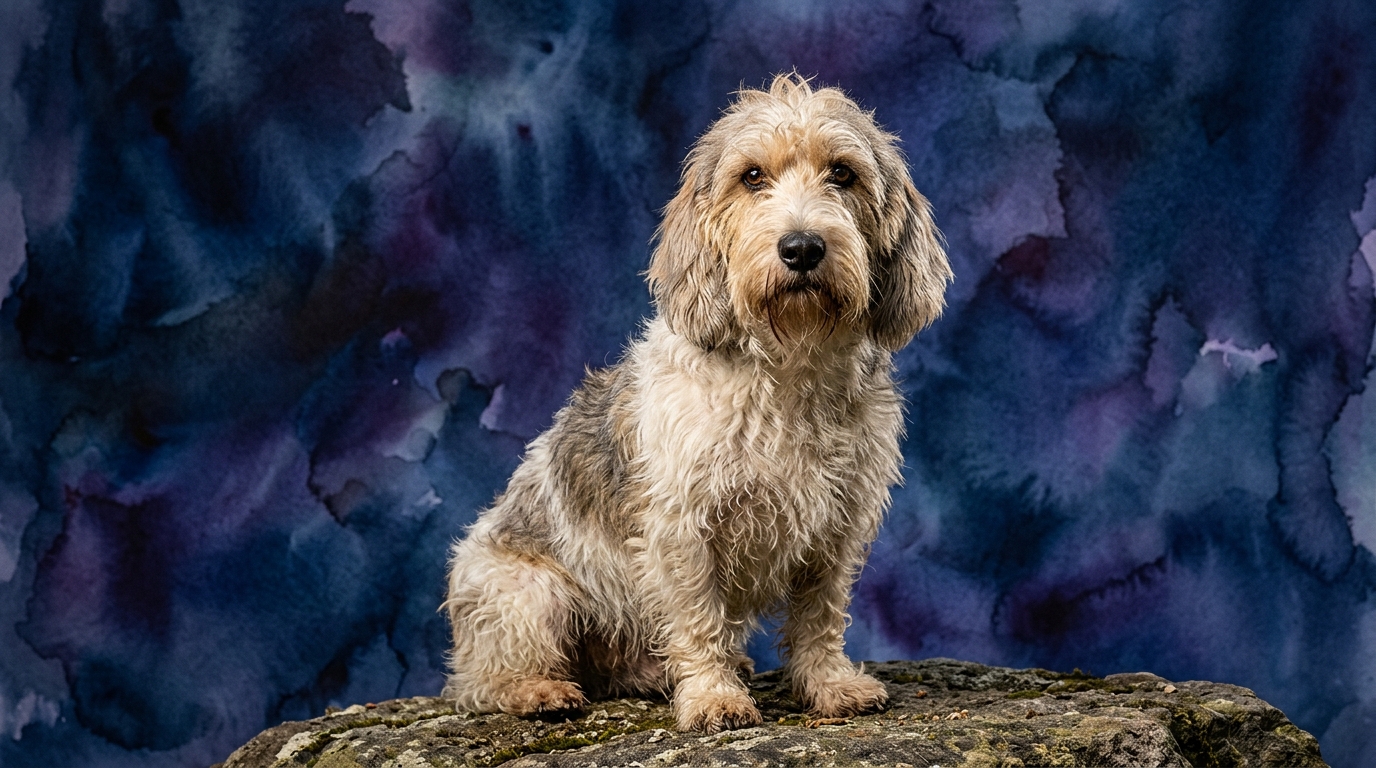
Side-by-Side Cognitive Profiles: Decoding the '3/5'
When The Cosmic Pet Pet IQ Lab assigns a 3/5 rating, it signifies a moderate yet capable aptitude, not a deficit. For both the Manchester Terrier and the Petit Basset Griffon Vendéen (PBGV), this '3' score manifests uniquely, reflecting their breed-specific inclinations and historical roles. Let's explore how these identical ratings translate into distinct cognitive expressions.
**Problem Solving (3/5):** The Manchester Terrier's problem-solving at 3/5 often manifests as a cleverness in navigating their immediate environment or strategizing to obtain a desired item. They might quickly assess a situation for loopholes, such as figuring out how to open a cabinet or outmaneuver a playmate, demonstrating a practical intelligence geared towards achieving immediate goals. In contrast, a 3/5 problem-solving capacity in the PBGV typically revolves around olfactory challenges. They excel at deciphering complex scent trails, piecing together environmental clues to locate a hidden object or track a path, showcasing a highly specialized, instinct-driven form of practical puzzle-solving.
**Training Speed (3/5):** Both breeds demonstrate a moderate training speed, meaning they learn new commands and routines with consistent, positive reinforcement, but aren't instant scholars. The Manchester Terrier often learns quickly when motivated by a clear reward and engaging methods, but their independent streak means they might choose to 'tune out' if bored or if something more interesting captures their attention. The PBGV, while eager to please, can be significantly distracted by environmental scents, requiring trainers to work harder to maintain focus and ensure lessons stick amidst competing sensory information.
**Social Intelligence (3/5):** A 3/5 in social intelligence suggests both breeds possess a decent understanding of social cues, though their expression differs. Manchester Terriers tend to be discerning; they form deep bonds with their primary family members and can be reserved with strangers, reading the subtle dynamics within their trusted circle with precision. PBGVs are generally more effusive and gregarious, readily engaging with a wider array of people and other dogs, interpreting social interactions through a lens of jovial companionship rather than reserved observation.
**Instinctive Drive (3/5):** Both breeds exhibit a moderate but pronounced instinctive drive. For the Manchester Terrier, this 3/5 primarily translates into a strong prey drive, manifesting as an urge to chase, dig, and investigate small scurrying creatures. Their alertness is often geared towards detecting potential 'game.' The PBGV's 3/5 instinctive drive is overwhelmingly scent-driven; they are compelled to follow interesting odors, track trails, and vocalize their discoveries, reflecting their heritage as robust hunting hounds.
**Memory (3/5):** Both breeds possess a 3/5 memory, allowing them to retain information adequately. Manchester Terriers reliably remember routines, previously learned commands, and significant past experiences, both positive and negative, which influences their future interactions and behaviors. PBGVs also retain commands and routines, but their memory is particularly strong for scent-related information, remembering specific people, places, and the intricate details of a scent trail they've encountered before, guiding their future explorations.
Where the Manchester Terrier's Cognition Shines
The Manchester Terrier's cognitive strengths, even at a 3/5 rating, are particularly suited to environments requiring agility, quick decision-making in confined spaces, and a focused bond with a select group. Their problem-solving, for instance, is often expressed in a nimble, opportunistic manner – they might quickly devise a way to bypass an obstacle or secure a dropped treat, leveraging their physical dexterity and observational skills. Their social intelligence, while not broadly outgoing, allows them to attune acutely to the moods and cues of their human family, often acting as sensitive companions who understand subtle shifts in household dynamics. This breed's memory supports a rapid recall of learned behaviors in structured settings, making them adept at obedience or agility trials where precision and speed are valued.
Where the Petit Basset Griffon Vendéen Excels Cognitively
The PBGV's cognitive prowess, despite matching scores, demonstrates its unique specialization, particularly in outdoor, exploratory contexts. Their 3/5 problem-solving is unparalleled when it comes to unraveling complex scent puzzles, using their nose as a primary tool to navigate and understand their world. This isn't about abstract thought, but a highly effective, persistent form of sensory analysis. Their social intelligence, while also 3/5, shines in their ability to integrate into larger social groups, be it a multi-dog household or a bustling family gathering, demonstrating a cheerful adaptability. The PBGV's memory is exceptionally strong for environmental landmarks and scent associations, allowing them to confidently retrace steps or remember locations where interesting smells were previously found, making them natural explorers and trackers.
Training Dynamics: Manchester Terrier vs. PBGV
When it comes to ease of training, both breeds present unique challenges despite their identical 3/5 training speed. The Manchester Terrier can be a quick study for basic obedience commands in a controlled environment, often eager to please and responsive to positive reinforcement, especially food or toy rewards. However, their inherent terrier independence and strong prey drive mean that consistency is paramount; they are not inherently compliant and can quickly become bored or distracted by external stimuli. Training needs to be engaging and varied to hold their attention and prevent them from deciding their own agenda.
The Petit Basset Griffon Vendéen, while also possessing a 3/5 training speed, faces a primary hurdle in its powerful scent drive. Their nose often overrides their ears, making it challenging to maintain focus, particularly in stimulating outdoor environments. Patience and creativity are essential when training a PBGV; techniques that incorporate scent work or make training feel like a fun game of exploration often yield better results than repetitive drills. While both require dedicated effort, the Manchester Terrier might appear slightly more straightforward for basic obedience in a quiet setting due to less environmental distraction, whereas the PBGV demands a trainer who can compete with the allure of a thousand smells.
Lifestyle Match: Active Owners vs. Relaxed Owners
Neither the Manchester Terrier nor the Petit Basset Griffon Vendéen are suited for genuinely relaxed, sedentary owners; both require significant daily engagement. The Manchester Terrier thrives with active individuals or families who enjoy brisk walks, structured play sessions, and potentially dog sports like agility or obedience. Their need for both physical exertion and mental stimulation means they appreciate owners who provide interactive games and consistent routines. They can adapt to urban living, provided their exercise needs are met.
The PBGV, with its hound heritage, needs substantial outdoor time for exploration and sniffing. Owners who enjoy long hikes, scent work, or simply allowing their dog to investigate a varied environment will find a perfect companion. While they can be calm indoors after sufficient exercise, their daily requirement for vigorous activity and mental stimulation through scent is non-negotiable. They are best suited for owners who embrace outdoor adventures and can manage a dog with a strong, independent nose.
The Verdict: When to Choose Each Breed
The Verdict
Choose a Manchester Terrier if you seek an agile, loyal companion for structured activities and a strong, discerning bond, appreciating a dog with a self-assured personality and a quick, practical mind. They thrive with consistent training and engaging mental challenges.
Opt for a Petit Basset Griffon Vendéen if you love outdoor adventures, appreciate a dog driven by scent and boundless curiosity, and are prepared for a boisterous, friendly companion who finds joy in every sniff and exploration.
🧠 Find Your Pet's IQ Score
Our Pet IQ Lab assessment covers 25+ tests across 5 cognitive dimensions — personalized to your breed.
Take the Full IQ Test →Frequently Asked Questions
Are Manchester Terriers good apartment dogs?
Yes, with sufficient daily exercise and mental stimulation, their compact size makes them adaptable to apartment living. They thrive on human companionship and indoor play, but still require regular outdoor activity to prevent boredom.
Do PBGVs bark a lot?
PBGVs are hounds and can be quite vocal, using barks, howls, and baying, especially when tracking a scent or alerting to new stimuli. Consistent training and managing their environment can help moderate this natural inclination.
Which breed is better with children?
Both breeds can be good with children, especially if raised together and socialized well from a young age. Manchester Terriers can be playful but may have less patience for rough play, while PBGVs are generally more boisterous and tolerant but require supervision due to their energetic nature.