The Cosmic Pet Pet IQ Lab: Mastiff vs. Otterhound Cognitive Profiles
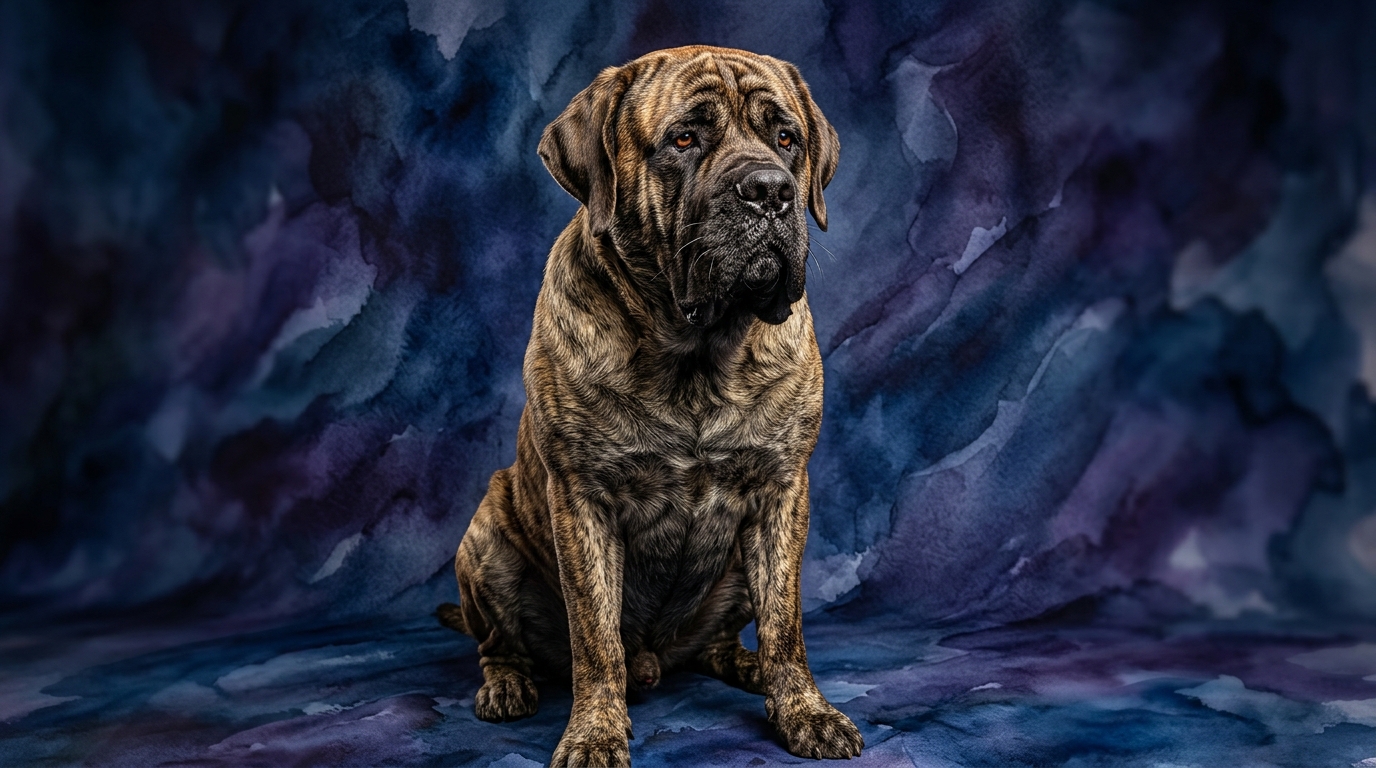
The Mastiff, a formidable guardian from the Working Group, registers a Coren rank of #72, placing it in the category of fair working/obedience intelligence. Our Pet IQ Lab scores reveal a balanced cognitive profile: Problem Solving 3/5, Training Speed 3/5, Social Intelligence 3/5, Instinctive Drive 3/5, and Memory 3/5. This consistency across dimensions suggests a steady, deliberate learner rather than a quick, adaptable one.
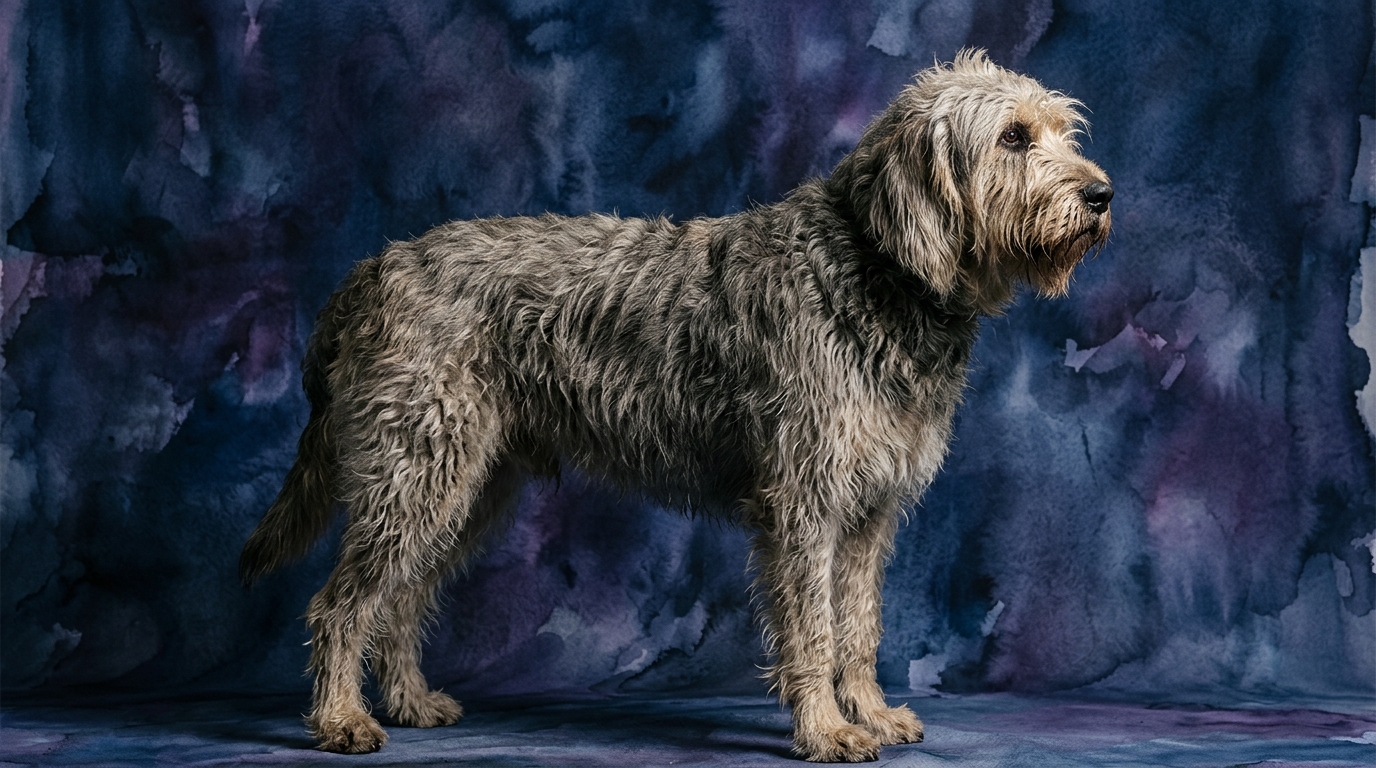
In contrast, the Otterhound, a boisterous member of the Hound Group, lacks a Coren ranking, often characteristic of breeds whose primary drives are instinct-driven rather than obedience-focused. Interestingly, its IQ Lab scores mirror the Mastiff's across the board: Problem Solving 3/5, Training Speed 3/5, Social Intelligence 3/5, Instinctive Drive 3/5, and Memory 3/5. This identical numeric profile challenges us to look beyond the numbers and delve into the qualitative differences in their application of these cognitive traits.
Dissecting Problem-Solving: Mastiff's Deliberate Approach
Both breeds achieve a 3/5 in Problem Solving, yet their methodologies differ significantly. The Mastiff, rooted in centuries of guarding, typically approaches challenges with a methodical, observational calm. When faced with a novel situation, such as a gate that needs opening or a toy stuck under furniture, a Mastiff might first survey the scene, perhaps attempting a few direct, powerful nudges or attempts before considering alternative strategies. Their problem-solving often involves applying learned physical solutions or relying on their impressive strength and persistence.
For instance, if a Mastiff wants a treat from a puzzle toy, they might initially try to force it open or simply lie down and try to lick the treat out for an extended period, demonstrating patience born from their protective nature rather than quick analytical thought. Their solutions tend to be robust and straightforward, reflecting a lack of need for complex, multi-step planning in their historical roles. Their cognitive processing leans towards a stable, predictable response, valuing persistence over immediate ingenuity.
Otterhound's Instinctive Problem-Solving and Environmental Acuity
The Otterhound, despite the identical 3/5 Problem Solving score, exhibits a different flavor of cognitive engagement. Their problem-solving is heavily influenced by their powerful scent drive and their historical role in hunting otters across varied terrains. An Otterhound encountering a similar puzzle toy might approach it with more exploratory pawing and sniffing, attempting to manipulate it with their nose and mouth, driven by the scent of the reward. Their solutions often involve trial-and-error, guided by sensory input and a persistent, almost obsessive focus on a task once engaged.
When faced with an obstacle, an Otterhound might not stand back and observe like a Mastiff. Instead, they are more likely to plunge in, testing boundaries, and using their physical attributes – their robust build, strong swimming ability, and powerful nose – to overcome the challenge. For example, if a ball rolls into a difficult-to-reach spot, an Otterhound might try to dig it out, push it with their head, or even attempt to get their entire body into the space, demonstrating a more physically active and instinct-driven problem-solving style. Their cognitive strength lies in their ability to integrate sensory information with physical action to achieve a goal.
Training Speed and Memory: Patience with the Mastiff, Persistence with the Otterhound
Both breeds score 3/5 in Training Speed and Memory, indicating they are not the fastest learners but are capable of retaining information with consistent effort. For the Mastiff, training requires patience and positive reinforcement. Their steady nature means they absorb commands reliably, but the process may not be rapid. Once a behavior is learned, their 3/5 memory ensures it is retained, especially if reinforced periodically. Their willingness to please, coupled with their desire for stability, makes them amenable to structured training, though they might not generalize commands to new situations as quickly as breeds with higher cognitive flexibility.
The Otterhound's 3/5 Training Speed is complicated by their independent hound nature. While they are capable of learning and remembering (3/5), their strong instinctive drive can often override their desire to comply. Training an Otterhound means contending with their nose leading the way; a captivating scent can instantly derail a training session, making consistent attention a challenge. Their memory is robust for things that matter to them, particularly related to their environment or routines, but recalling obedience cues in a distracting environment requires significant dedication and engaging methods from the trainer. They remember what they want to remember, which is a common trait among scent hounds.
Social Intelligence and Instinctive Drives: Different Manifestations of 3/5
A 3/5 in Social Intelligence for both breeds indicates a moderate capacity for understanding and responding to social cues. The Mastiff's social intelligence often manifests as a deep bond with their family, a quiet discernment of strangers, and a clear understanding of pack hierarchy within their household. They are attuned to their owner's moods and intentions, often responding with comforting presence or watchful vigilance. Their social interactions tend to be deliberate and measured, reflecting their protective instincts. They are not prone to overly effusive greetings with every new person, preferring to assess the situation.
The Otterhound's social intelligence, while numerically similar, expresses itself differently. They are generally friendly and boisterous, often greeting people with an enthusiastic, if sometimes clumsy, overture. Their social understanding is often interwoven with their instinctive drive (also 3/5) to be part of a group, whether human or canine. This drive makes them generally amiable but also prone to following their nose rather than always adhering to social etiquette, especially if a compelling scent is present. Their social cues might be less subtle than a Mastiff's, expressed through more overt body language and vocalizations characteristic of a hound. Their instinctive drive to track and follow scents is a dominant force, influencing their attention and responsiveness in social contexts.
Which is Easier to Train and Why?
Despite identical numeric scores in Training Speed (3/5), the Mastiff is generally considered easier to train for basic obedience. Their inherent desire to please their family, combined with a less distractible nature, means they are more likely to focus on the task at hand. While they may not grasp new commands instantly, their consistency and lower prey drive compared to the Otterhound allow for more structured and predictable training sessions. A Mastiff learns through repetition and positive reinforcement, valuing the stability and approval from their owner. Their substantial physical presence also means they are often more inclined to respond to clear, calm leadership without the same level of independent thought that can characterize hounds.
The Otterhound, with its equally rated 3/5 Training Speed, presents a more significant challenge due to its powerful instinctive drive and independent spirit. Their nose is their world, and once a scent trail is picked up, it can be incredibly difficult to redirect their attention. While they are capable of learning, their training success hinges heavily on the trainer's ability to make lessons engaging, fun, and competitive with the allure of the outdoors. Consistency is paramount, and early socialization and training are crucial to channel their boisterous energy and strong will. Without proper motivation or if training becomes monotonous, an Otterhound is far more likely to 'tune out' or follow their own agenda, making them a less straightforward candidate for traditional obedience.
Lifestyle Suitability: Active vs. Relaxed Owners
For owners seeking a more relaxed, yet watchful companion, the Mastiff fits well. Their moderate energy levels mean they are content with a few daily walks and ample lounging time at home, provided they have access to a secure yard. Their role as a guardian means they are naturally observant and prefer to be near their family, making them suitable for individuals or families who value a calm, protective presence without demanding constant physical activity. They thrive in environments where routine and quiet companionship are prioritized, adapting well to a predictable home life.
The Otterhound, conversely, is better suited for active owners who relish outdoor adventures. Their history as a hunting dog means they possess considerable stamina and a deep-seated need for exercise and mental stimulation. Daily long walks, opportunities to swim, and engaging scent work are crucial to their well-being. They are not content to be couch potatoes and can become restless or destructive without adequate outlets for their energy and powerful nose. Owners who enjoy hiking, exploring, and engaging in dog sports will find a willing and enthusiastic partner in the Otterhound, thriving in a more dynamic and less predictable routine.
The Verdict
Choose the Mastiff if you seek a calm, protective companion who thrives on routine and offers a stable, watchful presence in a relaxed home environment. Their deliberate learning style and strong family bond make them ideal for owners preferring steady progress in training and a less demanding exercise regimen.
Opt for the Otterhound if you're an active, adventurous owner who enjoys outdoor pursuits, can provide consistent, engaging training, and appreciates a boisterous, scent-driven companion with a joyful, independent spirit.
🧠 Find Your Pet's IQ Score
Our Pet IQ Lab assessment covers 25+ tests across 5 cognitive dimensions — personalized to your breed.
Take the Full IQ Test →Frequently Asked Questions
Do Mastiffs need a lot of exercise despite their calm demeanor?
While Mastiffs appear calm, they still require moderate daily exercise, typically a few walks, to maintain health and muscle tone. Over-exercising them, especially as puppies, can be detrimental to their joints, so balanced activity is key.
Is an Otterhound a good choice for a first-time dog owner?
An Otterhound can be challenging for a first-time owner due to its independent nature, strong scent drive, and high energy levels. They require consistent, positive training and owners prepared for their boisterous personality and grooming needs.
How do their grooming needs compare?
The Mastiff has a short, easy-care coat requiring minimal grooming, mainly brushing to remove loose hair. The Otterhound, however, has a coarse, shaggy, and oily double coat that needs regular brushing to prevent matting and occasional hand-stripping, especially after swimming.