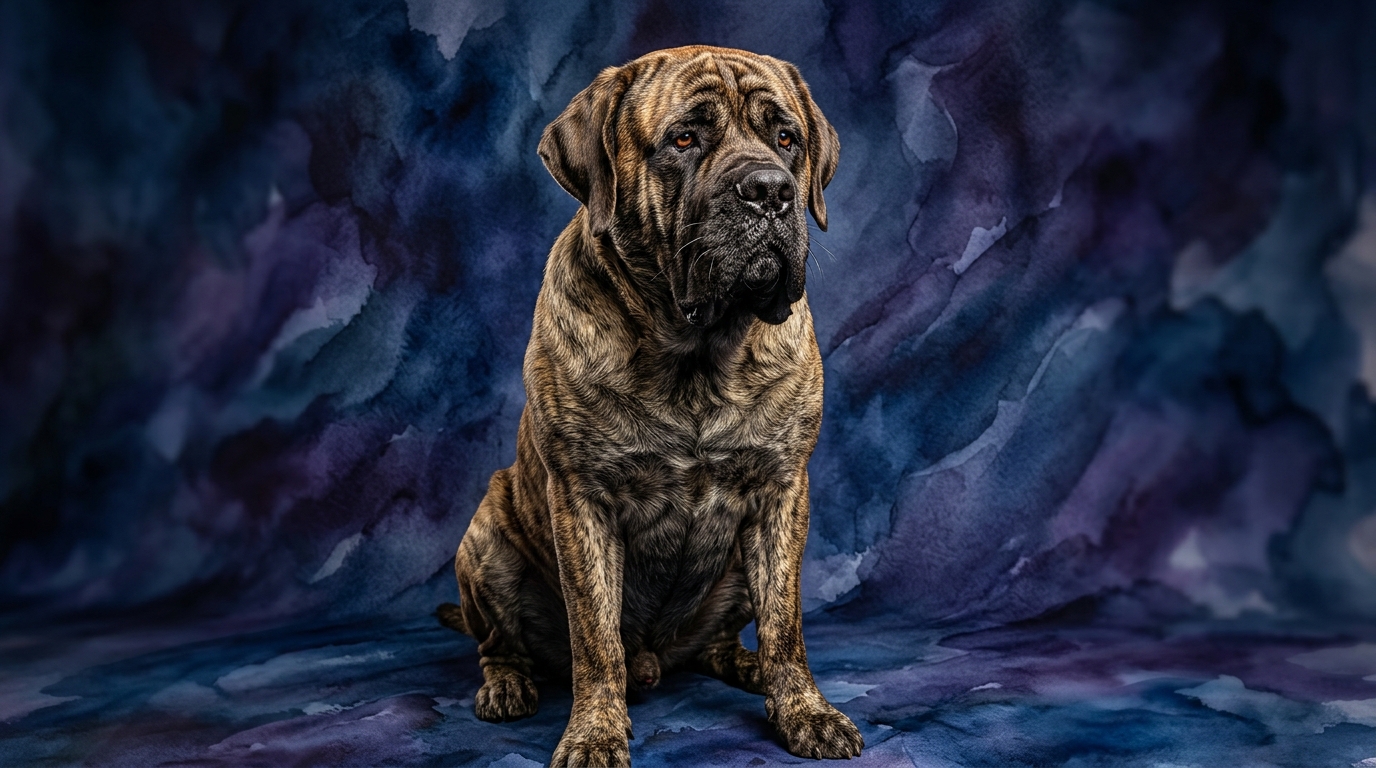
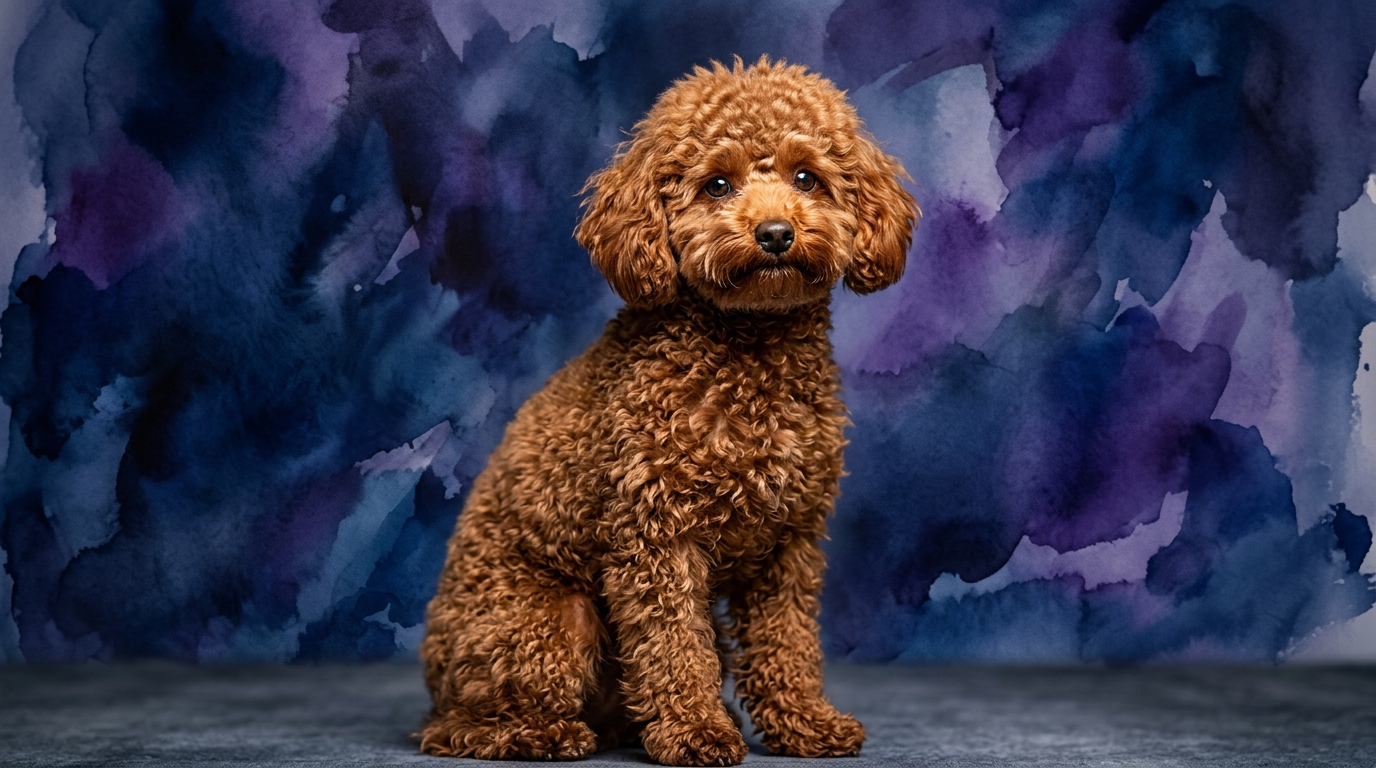
Side-by-Side IQ Profile: Mastiff vs. Toy Poodle
**Mastiff (Working Group, Coren Rank #72):** This colossal guardian demonstrates a steady, deliberate approach to cognition, reflecting its historical role as a protector rather than a quick-witted performer. Its Problem Solving is rated 3/5, suggesting it can work through challenges that directly impact its environment or family, but might not seek out complex puzzles for sport or abstract problem-solving. Training Speed at 3/5 indicates a moderate pace for learning new commands, meaning patience and consistent, positive reinforcement are key to success. Social Intelligence also scores 3/5, meaning they can read social cues adequately and respond appropriately to family members and familiar individuals, but might be reserved with strangers. Instinctive Drive, at 3/5, implies a balanced level of inherent behaviors, such as a strong protective instinct and territorial awareness, without being overly dominant or reactive. Finally, Memory at 3/5 suggests they retain information reliably over time, particularly routines and significant events, though perhaps not with the rapid recall or detail orientation of some other breeds.
**Toy Poodle (Toy Group, Coren Rank #2):** The diminutive Toy Poodle presents a sharply contrasting cognitive profile, often surprising those who underestimate its mental prowess due to its size. Its Problem Solving capability shines at 5/5, indicating a keen ability to navigate complex situations, figure things out independently, and adapt to new environments. Training Speed matches this at 5/5, meaning they grasp new concepts and commands with exceptional rapidity, often delighting in the learning process itself and showing a clear desire to please. Social Intelligence is rated 3/5, similar to the Mastiff, suggesting a decent understanding of social dynamics and a capacity for forming strong bonds, but they are not necessarily overly demonstrative or universally outgoing. Instinctive Drive is also 3/5, reflecting a balanced set of inherent behaviors, including a playful nature, an alert disposition, and sometimes a surprising prey drive. Crucially, Memory stands at 5/5, highlighting their impressive capacity for long-term retention of commands, routines, and past experiences, making them highly consistent and reliable once trained.
Where the Mastiff Wins Cognitively
While the Mastiff might not top the charts in pure processing speed, its cognitive strengths lie in areas often overlooked in favor of rapid learning, particularly in the realm of steady, reliable guardianship. Their 3/5 rating in Instinctive Drive, combined with their history as guardians, suggests a deep-seated, steady discernment in assessing threats and protecting their family, a cognitive function that prioritizes stability, observation, and calm authority over quick, flashy responses. This translates to a calm, measured intelligence when it comes to territory and family welfare, where their cognitive processes are geared towards long-term vigilance. Their moderate Problem Solving (3/5) is often applied to practical, real-world scenarios rather than abstract games; for instance, figuring out the most direct path to a loved one in a crowded room or how to position themselves to best observe their surroundings from a comfortable vantage point. This deliberate cognitive style means they process information thoroughly and methodically, leading to reliable, if not instantaneous, responses that are often well-considered. Their memory, while not photographic, is robust enough to recall consistent routines, the nuances of their environment, and the identities of trusted individuals, fostering a sense of predictable security for both the dog and its human companions.
Where the Toy Poodle Wins Cognitively
The Toy Poodle's cognitive advantages are immediately apparent in their exceptional scores for Problem Solving (5/5), Training Speed (5/5), and Memory (5/5). These combined attributes paint a picture of a highly adaptable and mentally agile canine, capable of complex thought. Their superior problem-solving allows them to quickly understand novel situations, whether it's figuring out how to open a child-proof cabinet, retrieving a dropped item from an awkward spot, or unraveling the logic of a complex puzzle toy with multiple steps. This isn't just about performing 'tricks'; it's about genuine cognitive flexibility and an intrinsic drive to understand and manipulate their environment. The lightning-fast Training Speed means they can acquire and perfect a vast repertoire of commands and behaviors with remarkable efficiency, often requiring only a few repetitions to solidify a new skill. This makes them excellent candidates for advanced obedience, agility, rally, or even specialized service work. Furthermore, their outstanding Memory ensures that once a lesson is learned or an experience processed, it sticks firmly in their long-term recall. This exceptional retention contributes to their consistency in behavior, their ability to build upon previous learning, and their capacity to recall complex sequences, making them perpetual students eager for new mental engagement.
Which is Easier to Train and Why
Based on The Cosmic Pet Pet IQ Lab data, the Toy Poodle is demonstrably easier to train than the Mastiff, primarily due to their intrinsic cognitive makeup. The Toy Poodle's 5/5 Training Speed means they process new information and associate actions with consequences almost instantaneously, often picking up new cues within a single short session. This translates to significantly fewer repetitions needed for a command to be understood and executed reliably, allowing for rapid progression through training levels. Their 5/5 Problem Solving also plays a crucial role; they actively try to understand what is being asked of them, often anticipating the trainer's next move and offering behaviors. This breed frequently enjoys the mental stimulation of training sessions and views them as a collaborative game, making them highly enthusiastic participants.
In contrast, the Mastiff's 3/5 Training Speed indicates a more measured and deliberate learning pace. While certainly capable of learning and mastering commands, they require more consistent, patient repetition and clear, unambiguous instructions presented in a calm manner. Their 3/5 Problem Solving means they might not actively seek to "figure out" the training task with the same eager curiosity as a Poodle, often waiting for clearer direction. Mastiffs tend to be less motivated by abstract praise alone and often benefit more from tangible rewards, a strong bond of trust, and a clear sense of purpose or utility in their training. Their protective instincts, rated 3/5, can sometimes make them appear stubborn or reluctant if they perceive a command as conflicting with their inherent guardian role or if they don't see the immediate value, requiring a trainer to build strong trust and make training relevant to their world and natural inclinations.
Which Suits Active Owners vs. Relaxed Owners
For owners who thrive on mental engagement and enjoy a canine partner eager for new challenges and constant interaction, the Toy Poodle is an ideal match. Their high scores in Problem Solving, Training Speed, and Memory mean they flourish with consistent mental stimulation, whether through daily short, engaging training sessions, interactive puzzle toys, or learning complex multi-step tricks. An "active owner" for a Toy Poodle isn't necessarily about extreme physical exertion, although they certainly enjoy walks, runs, and active play; it's more about providing a rich, varied, and ongoing intellectual environment. They suit owners who are prepared to dedicate time to ongoing cognitive enrichment to prevent boredom, which, if unaddressed, can sometimes manifest as unwanted or destructive behaviors.
Conversely, the Mastiff, with its balanced cognitive profile of 3/5 across the board, is better suited for more relaxed owners who appreciate a steadfast, calm, and predictable companion. While they absolutely benefit from consistent, clear, and fair training, they don't demand the same level of constant mental novelty or rapid-fire interaction as a Toy Poodle. Their "relaxed" owner is one who values loyalty, a quiet, watchful presence, and a stable routine, providing gentle guidance and a comfortable, secure home. Mastiffs are content with moderate physical activity, such as leisurely walks, and thrive in an environment where their protective instincts are respected but not overly stimulated or encouraged towards aggression. An owner who understands and respects their measured pace, deliberate nature, and profound calm will find a deeply rewarding and steadfast bond with a Mastiff.
The Verdict
Choose a Mastiff if you seek a calm, deeply loyal guardian whose intelligence manifests as steady discernment and a protective presence, thriving in a predictable, relaxed home.
Opt for a Toy Poodle if you desire a mentally agile, highly trainable companion eager for constant cognitive challenges and quick to learn new skills.
🧠 Find Your Pet's IQ Score
Our Pet IQ Lab assessment covers 25+ tests across 5 cognitive dimensions — personalized to your breed.
Take the Full IQ Test →Frequently Asked Questions
Are Mastiffs difficult to train?
Mastiffs are not difficult to train, but they require patience and consistency due to their moderate training speed. They learn best with clear, calm instructions and positive reinforcement, often responding well to training that feels purposeful to their guardian nature.
Do Toy Poodles need a lot of exercise?
While Toy Poodles enjoy physical activity like walks and play, their primary need is for mental stimulation. Owners should provide puzzle toys, training sessions, and interactive games to satisfy their high problem-solving and memory abilities.
Which breed is better with children?
Both breeds can be good with children in the right environment. Mastiffs are generally gentle giants, but their immense size requires supervision. Toy Poodles are playful and adaptable, but their delicate size means interactions with very young children should be carefully managed to prevent accidental injury.