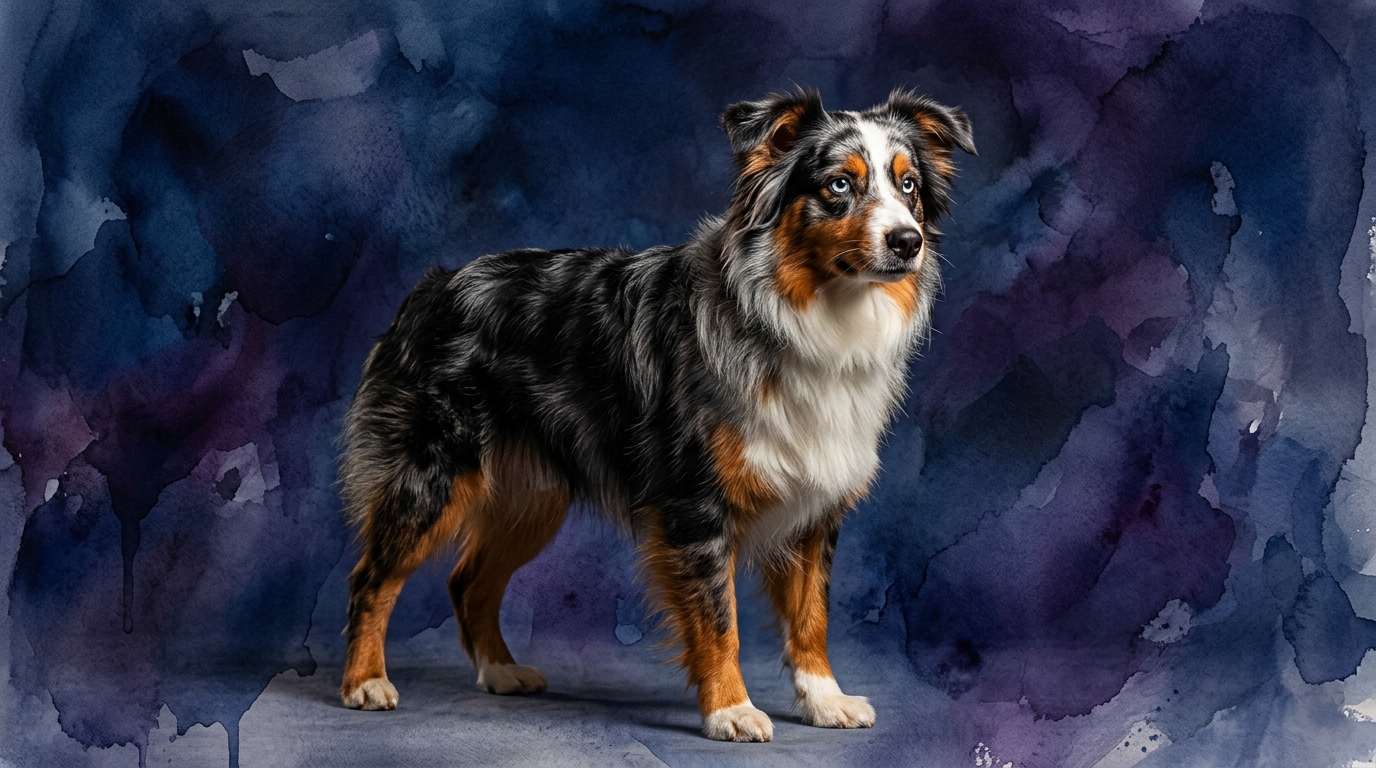
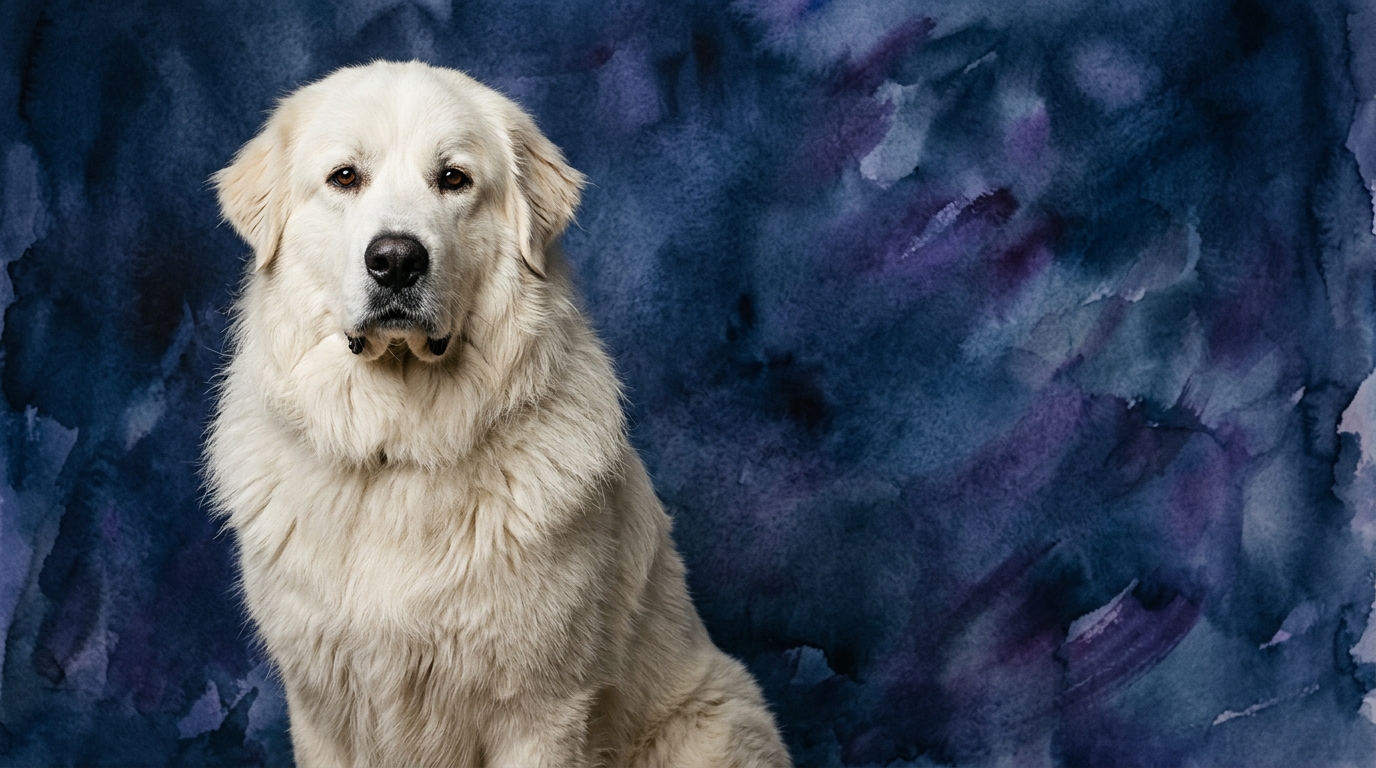
Side-by-Side Cognitive Profiles
The Cosmic Pet Pet IQ Lab assigns both the Miniature American Shepherd and the Great Pyrenees a consistent score of 3 out of 5 across all five cognitive dimensions: problem-solving, training speed, social intelligence, instinctive drive, and memory. While these scores appear identical on paper, the practical application and behavioral expression of these capabilities diverge significantly due to their distinct breed purposes.
For the Miniature American Shepherd, a Herding group dog, a 'Problem Solving' score of 3/5 indicates an ability to dynamically adapt herding strategies, navigate obstacles to gather livestock, or figure out how to move a stubborn animal within a structured task. Their 'Training Speed' at 3/5 reflects a moderate pace in grasping new commands and routines, particularly when these align with their inherent desire to work cooperatively with a handler. Their 'Social Intelligence' of 3/5 is keenly focused on reading handler cues, understanding flock dynamics, and navigating family interactions with a cooperative spirit. An 'Instinctive Drive' of 3/5 manifests as a strong, inherent urge to gather and control, translating into a need for purposeful activity. Finally, their 'Memory' at 3/5 ensures retention of complex command sequences, learned routines, and environmental layouts crucial for their agile, responsive work.
The Great Pyrenees, a Working group dog, applies its identical 3/5 scores through the lens of a livestock guardian. Their 'Problem Solving' at 3/5 is expressed through independent judgment, such as assessing potential threats from a distance, deciding whether to deter an intruder, or finding optimal defensive positions without direct human command. A 'Training Speed' of 3/5 means they are capable of learning, but their strong independent streak often requires more patience and a clear, perceived rationale for compliance, rather than simple obedience. Their 'Social Intelligence' at 3/5 is primarily directed towards discerning friend from foe, understanding the nuances of their flock, and observing their human family with watchful care. An 'Instinctive Drive' of 3/5 is a profound, innate compulsion to guard and protect their charges and territory, leading to self-sufficient vigilance. Their 'Memory' at 3/5 is robust for retaining boundaries, recognizing familiar and unfamiliar individuals, and recalling past experiences related to security and threat assessment.
Where the Miniature American Shepherd Excels Cognitively
Despite sharing identical raw IQ scores, the Miniature American Shepherd's cognitive strengths shine in areas demanding partnership and rapid responsiveness. Their herding heritage has cultivated a mind that excels at processing and executing complex, multi-step commands in quick succession. While their problem-solving score is 3/5, this manifests as an exceptional ability to make dynamic, real-time adjustments within a structured task, such as redirecting a flock or navigating an agility course, often anticipating their handler's next move. Their 3/5 social intelligence is particularly adept at reading human body language and vocal inflections, fostering a seamless working relationship. They thrive on collaborative mental engagement, making them highly proficient in dog sports and tasks that require intricate handler-dog communication and agile decision-making within a defined framework.
Where the Great Pyrenees Holds a Cognitive Advantage
The Great Pyrenees' cognitive prowess is rooted in self-reliance and independent judgment, qualities paramount for a livestock guardian. Their 3/5 problem-solving score is geared towards autonomous decision-making in critical situations, such as strategically positioning themselves to protect their flock or discerning the true nature of a perceived threat without human intervention. Unlike the MAS, their problem-solving isn't about rapid execution of human-directed tasks, but rather about deliberate, independent assessment and action. Their 3/5 social intelligence, while not focused on human partnership in the same way, grants them an uncanny ability to understand the subtle dynamics of their charges and their environment, enabling them to make nuanced protective choices. This breed excels in tasks requiring sustained vigilance, long-term memory of territorial boundaries, and an unwavering, self-directed sense of responsibility, displaying a calm yet formidable presence born from thoughtful independence.
Training: Biddable Partner vs. Independent Guardian
When it comes to ease of training, the behavioral differences between these two breeds become stark. The Miniature American Shepherd, with its herding background, is generally more biddable and eager to please its handler. Their 3/5 training speed, combined with a strong desire for cooperative work, means they typically learn and retain commands efficiently, responding well to positive reinforcement and structured training sessions. They are bred to take direction and often find satisfaction in performing tasks with their human partner, making them a rewarding choice for those who enjoy active, engaged training.
In contrast, the Great Pyrenees, designed for autonomous decision-making, often approaches training with a more independent mindset. While their 3/5 training speed indicates they are capable of learning, their inherent self-sufficiency means they may not see the immediate 'point' in obeying arbitrary commands. Training a Great Pyrenees requires immense patience, consistency, and an understanding that their primary motivation is often their protective instinct, not human approval. They might grasp a concept quickly but choose to execute it only if it aligns with their perceived duty or comfort, leading to a reputation for being 'stubborn' among those unfamiliar with their guardian nature. Owners must respect this independence, tailoring training to leverage natural instincts rather than expecting unwavering obedience.
Lifestyle Match: Active Engagement vs. Watchful Presence
The Miniature American Shepherd is an ideal companion for active owners who can provide consistent mental stimulation and physical exercise. Their robust 3/5 instinctive drive for herding translates into a need for a 'job,' whether that's participating in dog sports like agility, obedience, or rally, or engaging in extensive daily walks and training sessions. They thrive in environments where they are actively involved and challenged, making them a poor fit for sedentary lifestyles. An owner who enjoys a canine partner for adventures and structured activities will find the MAS incredibly fulfilling.
The Great Pyrenees, while requiring adequate space and regular, moderate exercise, suits owners who appreciate a more relaxed, watchful companion rather than an intensely active one. Their 3/5 instinctive drive for guarding means they are content patrolling their territory, observing their surroundings, and maintaining a vigilant presence. They are not typically high-energy in the same way a herding dog is, but they need purpose, which can be as simple as guarding the family or property. Owners must be prepared for their independence, potential territoriality, and occasional booming bark, but will be rewarded with a deeply loyal, calm presence that requires less structured activity but significant understanding of their guardian temperament.
The Verdict
Choose the Miniature American Shepherd if you seek an engaging, responsive partner for active pursuits, dog sports, or a 'working' companion who thrives on cooperative training and mental challenges.
Opt for the Great Pyrenees if you value an independent, watchful guardian with a calm, self-sufficient demeanor, appreciating deep loyalty over constant biddability and prepared for their protective instincts.
🧠 Find Your Pet's IQ Score
Our Pet IQ Lab assessment covers 25+ tests across 5 cognitive dimensions — personalized to your breed.
Take the Full IQ Test →Frequently Asked Questions
Do Miniature American Shepherds bark a lot?
Miniature American Shepherds can be vocal, using barks to communicate during play, to alert their owners, or when expressing excitement. Their herding background means they often use their voice as a tool, so consistent training can help manage excessive barking.
Are Great Pyrenees good with other pets?
Great Pyrenees, when properly socialized from a young age, typically get along well with other pets, including cats and smaller dogs, seeing them as part of their 'flock' to protect. However, their strong protective instincts mean introductions should always be supervised and managed carefully.
Which breed is better for first-time dog owners?
Neither breed is typically recommended for first-time dog owners without significant commitment to understanding their specific needs. The Miniature American Shepherd requires a dedicated owner willing to provide extensive training and activity, while the Great Pyrenees demands an owner who respects their independence and can manage their strong guardian instincts.