Side-by-Side Cognitive Profiles
At The Cosmic Pet Pet IQ Lab, we assess canine intelligence across five core dimensions, providing a comprehensive view of how a breed processes information and interacts with its world. Intriguingly, both the Miniature American Shepherd and the Norwegian Lundehund demonstrate a consistent score of 3 out of 5 across all categories, suggesting a balanced, moderate cognitive capacity that is adaptable yet not exceptional in any single area.
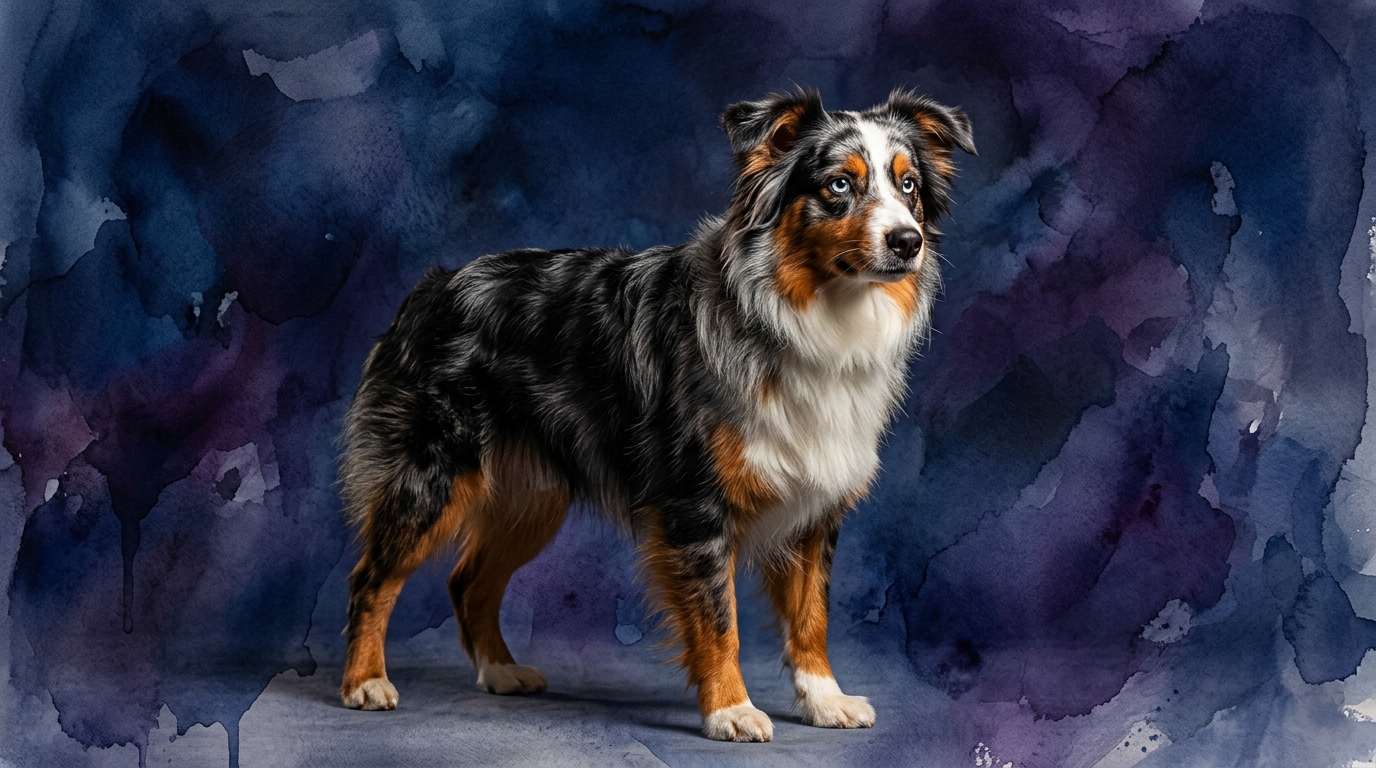
For the Miniature American Shepherd, a Herding group dog, a 'Problem Solving' score of 3/5 typically reflects an aptitude for tasks involving spatial reasoning and managing groups, like maneuvering livestock or navigating agility courses with guided instruction. Their 'Training Speed' at 3/5 indicates they are capable learners who respond well to consistent, positive reinforcement, often showing a desire to work alongside their human companions. 'Social Intelligence' at 3/5 means they are generally receptive to human cues and can form strong bonds, though they may exhibit initial reservation with unfamiliar individuals. Their 'Instinctive Drive' of 3/5 is rooted in their herding heritage, manifesting as a desire to gather, chase, and control movement, which can be channeled into various activities. Finally, a 'Memory' score of 3/5 suggests they retain learned commands and routines effectively, benefiting from structured environments.
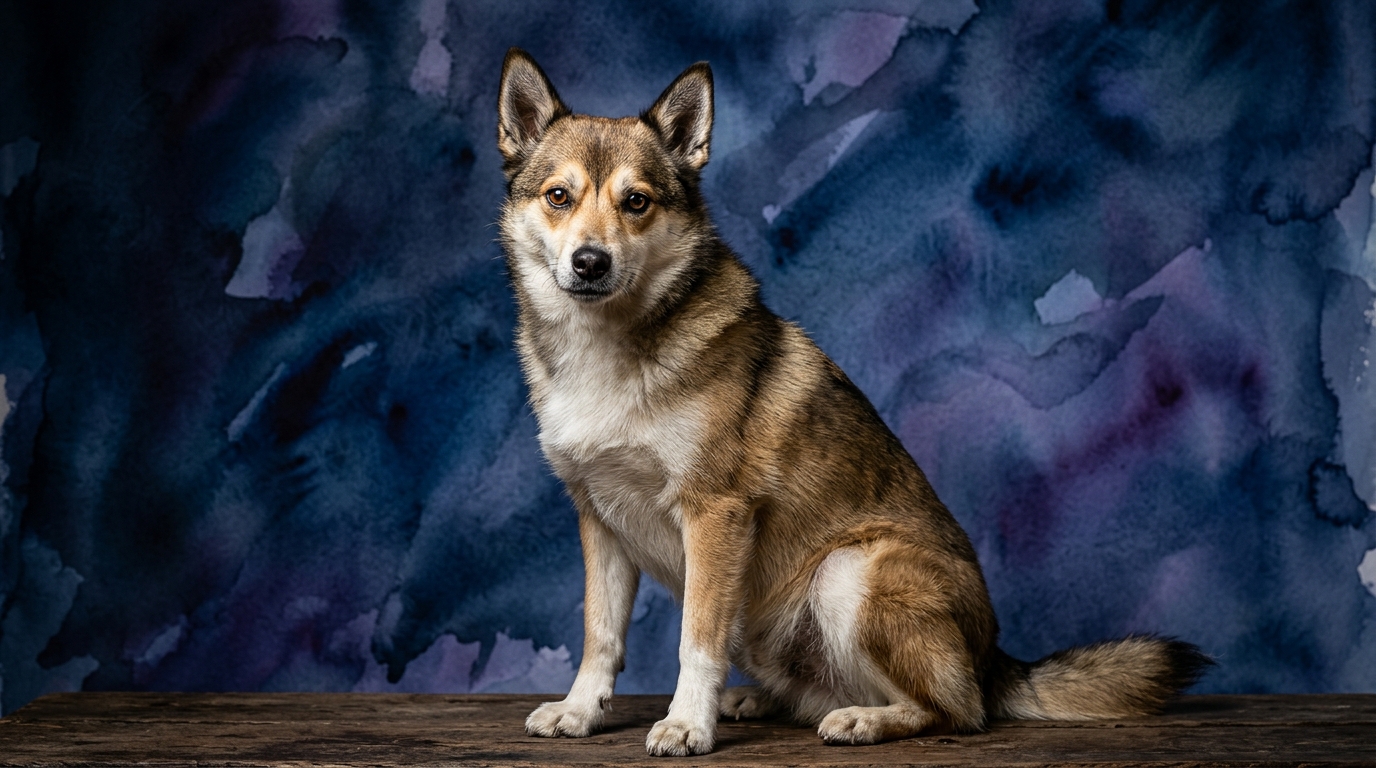
The Norwegian Lundehund, a Non-Sporting breed with a unique heritage as a puffin hunter, also scores 3/5 in 'Problem Solving.' For them, this often translates into an ability to independently navigate complex, confined spaces, such as rocky cliffs and small caves, demonstrating resourcefulness in finding their way through challenging environments. Their 'Training Speed' at 3/5 indicates they can learn, but their independent nature, developed from working alone, might mean a slower or more self-motivated approach to formal training. 'Social Intelligence' at 3/5 suggests they are capable of forming strong family bonds, yet their historical role didn't emphasize constant human direction, making them potentially more aloof or less outwardly demonstrative than some companion breeds. Their 'Instinctive Drive' of 3/5 is profoundly tied to their unique physical adaptations for climbing and navigating rough terrain, coupled with a strong prey drive. 'Memory' at 3/5 for the Lundehund likely involves remembering complex routes and locations, crucial for their hunting tasks, rather than an emphasis on human-directed sequences.
Where the Miniature American Shepherd Excels Cognitively
While their numerical scores are identical, the Miniature American Shepherd's cognitive strengths often manifest in ways that align more readily with common companion dog expectations. Their 3/5 in problem-solving often presents as a cooperative intelligence, where they are adept at solving tasks when guided by a human partner. This means they are likely to excel in structured activities like obedience, rally, or agility, where understanding and executing complex sequences of commands is key. Their herding instinct, represented by their 3/5 instinctive drive, translates into a drive for purposeful work and a desire for engagement, making them receptive to learning new skills that fulfill this innate need.
Furthermore, their 3/5 social intelligence, combined with their herding background, often leads to a keen awareness of their family unit and a desire to be involved in household activities. This makes them particularly responsive to human emotional cues and capable of adapting their behavior within a family dynamic. Their memory, also at 3/5, solidifies their ability to recall a wide array of commands and routines, ensuring that once a skill is learned, it is retained, making them reliable partners in various endeavors.
Where the Norwegian Lundehund Shines Cognitively
The Norwegian Lundehund's cognitive advantages, while numerically similar, stem from a vastly different evolutionary path, highlighting a unique set of skills. Their 3/5 problem-solving ability is less about cooperating on a human-designed task and more about independent, environmental problem-solving. They demonstrate a remarkable capacity for spatial reasoning and agility in navigating challenging physical landscapes, such as tight crevices or vertical climbs, autonomously finding solutions to physical obstacles. This independent streak, driven by their 3/5 instinctive drive for hunting and exploring, means they are often adept at figuring things out for themselves without constant human intervention.
Their memory score of 3/5, in the context of their historical role, is likely geared towards retaining detailed mental maps of their territory, recalling complex routes through their hunting grounds, and remembering the locations of burrows or nests. This type of memory is less about recalling obedience commands and more about a deep understanding of their physical environment. Their social intelligence of 3/5, while allowing for strong family bonds, often comes with a degree of self-sufficiency, meaning they are content to observe and explore their surroundings, rather than constantly seeking human interaction or direction. This independent nature is a hallmark of their specific cognitive strengths.
Which is Easier to Train and Why
When considering ease of training, the Miniature American Shepherd generally holds an advantage due to their inherent desire to collaborate and their herding lineage. Their 3/5 training speed is often amplified by a natural willingness to please and a strong work ethic; they typically respond enthusiastically to positive reinforcement and clear directives, viewing training as a shared activity. Their instinctive drive to gather and control lends itself well to structured obedience, as they are often eager to channel their energy into tasks provided by their handler. This breed typically thrives on consistent engagement and a clear understanding of expectations, making them responsive and relatively straightforward to guide through various learning processes.
In contrast, the Norwegian Lundehund, while scoring identically with a 3/5 in training speed, often presents a different training dynamic. Their historical role as solitary puffin hunters fostered a deep sense of independence and self-reliance, meaning they are not inherently driven by a strong desire to please or to work in close partnership with a human. Their problem-solving and instinctive drive are geared towards autonomous exploration and hunting, which can make them less biddable in traditional obedience settings. Training a Lundehund often requires exceptional patience, creativity, and a profound understanding of their unique motivations, as they are more likely to learn if they perceive the task as interesting or beneficial to their own independent pursuits, rather than simply obeying a command.
Active Owners vs. Relaxed Owners
For active owners seeking a dynamic partner in structured activities, the Miniature American Shepherd is often a more suitable choice. Their 3/5 instinctive drive for herding translates into a need for regular, mentally stimulating work and physical exercise that involves collaboration. They thrive in environments where they can engage in agility, flyball, herding trials, or long, brisk walks and runs, requiring an owner who can consistently provide an outlet for their energy and cooperative intelligence. They are happiest when they have a job to do and appreciate a structured routine that allows them to channel their problem-solving skills and memory into purposeful activities.
The Norwegian Lundehund, while also requiring an active lifestyle, appeals to a different kind of active owner—one who appreciates independent exploration and unique physical challenges. Their 3/5 instinctive drive is for climbing, navigating, and investigating, making them excellent companions for hiking rugged terrain, bouldering, or exploring new environments where their agility and independent problem-solving can shine. They are not necessarily looking for a structured 'job' in the same way a herding dog is, but rather opportunities to satisfy their natural curiosity and physical prowess. Owners who enjoy less structured, more free-ranging adventures will likely find a compatible spirit in the Lundehund, understanding that their energy is best expended through self-directed exploration rather than constant human-led tasks. For truly relaxed owners who prefer minimal activity, neither breed would be an ideal fit, as both possess moderate to high energy levels.
The Verdict
Choose the Miniature American Shepherd if you seek a cooperative, eager-to-please partner for structured activities and a strong family bond, appreciating their desire for purposeful work. Their balanced cognitive profile makes them adaptable companions who thrive on consistent engagement and clear guidance.
Opt for the Norwegian Lundehund if you are an independent adventurer who values a dog with unique physical and mental capabilities, appreciating their self-reliant problem-solving and love for exploring challenging environments. Be prepared for a training journey that respects their distinctive, independent spirit.
🧠 Find Your Pet's IQ Score
Our Pet IQ Lab assessment covers 25+ tests across 5 cognitive dimensions — personalized to your breed.
Take the Full IQ Test →Frequently Asked Questions
Do Miniature American Shepherds shed a lot?
Miniature American Shepherds have a double coat and do shed moderately year-round, with heavier shedding periods seasonally. Regular brushing, typically a few times a week, is recommended to manage loose hair and maintain coat health.
Are Norwegian Lundehunds good with children?
Norwegian Lundehunds can be good with children, especially if raised with them from a young age and properly socialized. Their independent nature means they might not always seek out interaction, but they are generally tolerant and playful with respectful children.
What unique physical traits do Norwegian Lundehunds possess?
Norwegian Lundehunds possess several unique physical traits, including six toes on each foot, highly flexible joints that allow them to turn their heads nearly 180 degrees backwards, and the ability to close their ear canals. These adaptations aided their historical role in hunting puffins in rocky crevices.