
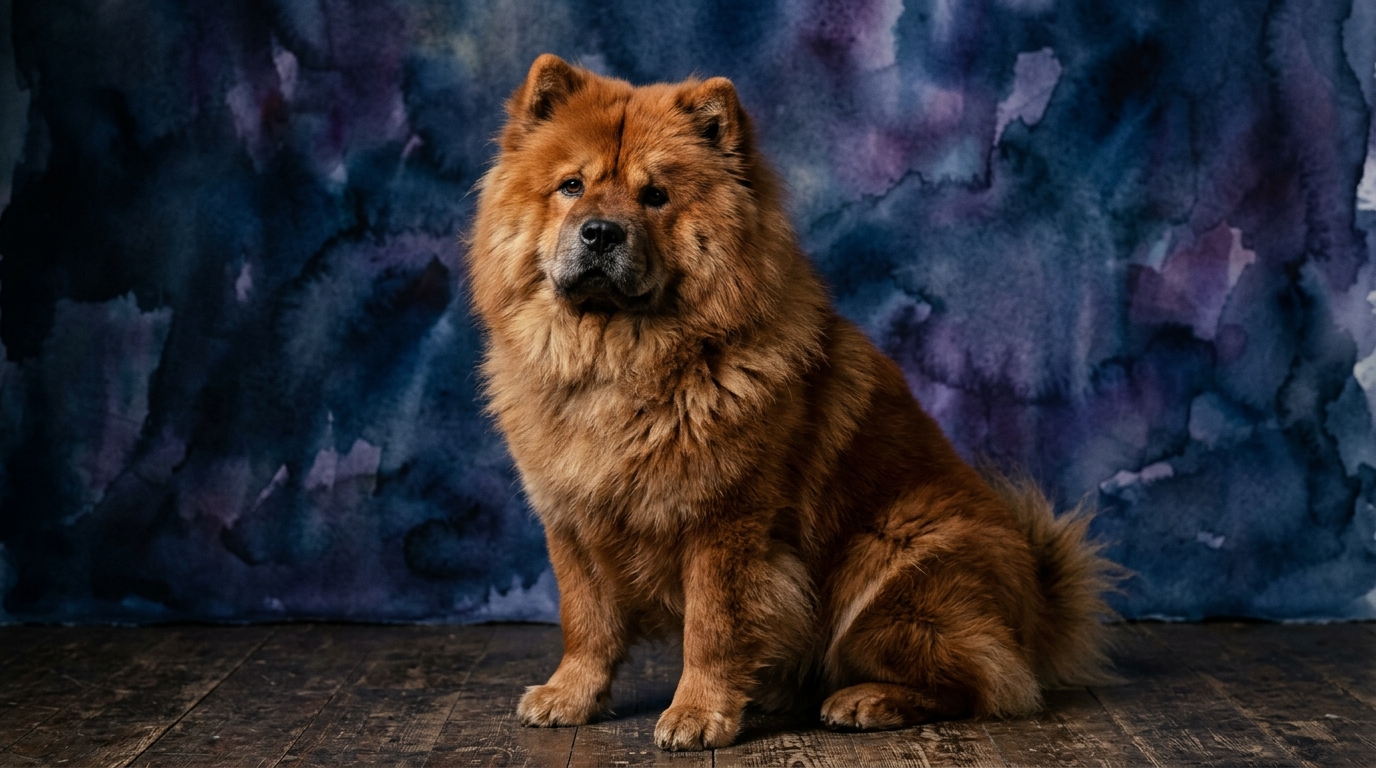
Side-by-Side IQ Profile: Miniature Bull Terrier vs. Chow Chow
For both the Miniature Bull Terrier (a Terrier breed, not Coren-ranked) and the Chow Chow (a Non-Sporting breed, Coren rank #76), The Cosmic Pet Pet IQ Lab assigns a consistent 3/5 across all cognitive dimensions. This identical scoring invites a closer look at how these breeds, with vastly different historical roles and temperaments, express their moderate intelligence.
**Problem Solving (3/5):** A 3/5 in problem-solving indicates a moderate capacity for independent thought and finding solutions. The Miniature Bull Terrier, with its terrier drive, often applies this to physical challenges—like figuring out how to retrieve a hidden toy, navigating a complex play area, or creatively bypassing barriers. Their problem-solving is typically dynamic and driven by curiosity and tenacity. The Chow Chow, conversely, often uses its 3/5 problem-solving in a more observational and strategic manner, assessing new situations or individuals before acting, or finding the most efficient way to maintain its preferred routine and comfort. Their solutions might be less about overt action and more about subtle environmental management.
**Training Speed (3/5):** A 3/5 suggests both breeds can learn new commands at a moderate pace, but their receptiveness differs significantly. The Miniature Bull Terrier’s 3/5 training speed often means they grasp concepts quickly when engaged, especially with high-value rewards or play. However, their independent terrier spirit can lead to moments of selective hearing when distractions arise, requiring consistent and engaging methods. The Chow Chow’s 3/5, influenced by its strong independence, means it learns effectively but often requires understanding the *purpose* behind a command. They may not offer eager compliance, instead needing patient, consistent training that respects their self-reliant nature and builds trust.
**Social Intelligence (3/5):** This score indicates a moderate ability to interpret and respond to social cues. The Miniature Bull Terrier often expresses its 3/5 social intelligence through expressive engagement with its primary human companions, understanding moods and seeking interaction, particularly in play. They are communicative within their chosen circle, though their exuberance can sometimes be misinterpreted. The Chow Chow’s 3/5 social intelligence is typically expressed with greater reserve; they are adept at observing and discerning social dynamics but are less likely to engage demonstratively. Their understanding allows them to navigate complex social interactions by maintaining a dignified distance or offering subtle approvals, indicating keen awareness without overt participation.
**Instinctive Drive (3/5):** A 3/5 in instinctive drive points to moderate, innate behavioral patterns. The Miniature Bull Terrier’s 3/5 drive is deeply rooted in its terrier heritage, manifesting as a strong inclination to chase, dig, and investigate with considerable focus and tenacity. This drive is a powerful motivator in their exploration and interactions. For the Chow Chow, a 3/5 instinctive drive is linked to its ancient role as a guardian, leading to a strong sense of territoriality, protectiveness towards its family, and a preference for routine. Their instincts guide them to be watchful and discerning, often expressed through a calm, vigilant demeanor rather than overt physical activity.
**Memory (3/5):** A 3/5 in memory signifies a moderate capacity to retain information. The Miniature Bull Terrier’s memory enables them to recall learned behaviors and associate cues with actions, contributing to their moderate training speed. They remember enjoyable games, favored routes, and the people they like, making them consistent companions once routines are established. The Chow Chow’s 3/5 memory is equally robust, allowing them to recall routines, remember boundaries, and recognize individuals within their trusted circle, even over long periods. Their memory underpins their preference for consistency and their ability to be trustworthy guardians, remembering who belongs and what is expected within their established territory.
Where Miniature Bull Terrier Wins Cognitively
Despite identical raw scores, the Miniature Bull Terrier’s cognitive profile often shines in scenarios demanding enthusiastic engagement and adaptive play. Their 3/5 problem-solving, fueled by a robust instinctive drive, makes them exceptionally resourceful in interactive games, such as figuring out puzzle toys that dispense treats or navigating complex agility courses. This isn't just about raw intellect, but about how their specific drives channel that intellect towards dynamic, physical challenges.
Their social intelligence, while a 3/5, is often expressed through an eagerness to participate and a clear desire to please their chosen humans in dynamic situations, making them more overtly communicative about their understanding and intentions during shared activities. The Miniature Bull Terrier's cognitive strengths lean towards a more 'active intelligence,' where their moderate abilities are amplified by their spirited nature and desire for partnership. This makes them adept at quickly adjusting tactics during a game of fetch or figuring out how to retrieve a toy from a challenging spot, demonstrating a practical, hands-on problem-solving that is distinctly terrier.
Where Chow Chow Wins Cognitively
The Chow Chow's cognitive strengths, though also rated 3/5, are rooted in a profound independence and observational acuity, making them masters of subtle discernment and self-reliance. Their problem-solving, while moderate, is often applied to assessing environmental stability and managing their own comfort and security, rather than actively seeking out new challenges for human amusement. A Chow Chow might excel at finding the warmest sunspot, strategically positioning themselves to monitor their surroundings, or subtly influencing household dynamics to suit their preferences, all without overt displays of effort. This reflects a 'strategic intelligence' focused on self-preservation and comfort.
Their social intelligence, a 3/5, manifests as a remarkable ability to read intentions and assess trustworthiness, often with a stoic demeanor that belies their internal processing. They are not easily fooled by superficial charm and possess a keen sense for genuine threats or benign visitors, acting as highly perceptive, if quiet, guardians. This discerning social cognition allows them to navigate complex family environments with a quiet authority. Furthermore, their memory, also 3/5, is particularly strong for routines, boundaries, and the long-term relationships within their trusted circle, contributing to their unwavering loyalty and consistency as family members. They remember past interactions and apply that knowledge to future encounters, reinforcing their reputation for being discerning and steadfast companions.
Which is Easier to Train and Why
When it comes to ease of training, the distinction between these breeds is less about raw learning capacity and more about motivation and temperament, despite both having a 3/5 training speed. The Miniature Bull Terrier, a terrier at heart, often approaches training with enthusiasm and a desire to engage with their handler. While they possess an independent streak and can be easily distracted by their environment or strong scents, their inherent drive for play and interaction means they are generally receptive to reward-based training. They can learn quickly, but their consistency in performance often depends on the excitement level of the task and the perceived value of the reward, requiring a trainer who can keep them engaged and make learning feel like a game. Their social intelligence, directed towards interaction, makes them more inclined to participate actively in a training dialogue.
The Chow Chow, by contrast, presents a different training challenge. Their 3/5 training speed indicates they *can* learn, but their strong independence and inherent aloofness mean they are often less motivated by a human's desire for compliance. A Chow Chow learns best when they perceive the command as logical, beneficial, or part of an established routine they respect. They are not typically eager to please in the conventional sense, and their social intelligence dictates they will assess the value of obeying a command based on their own judgment, rather than simply for approval. This requires an exceptionally patient, consistent, and understanding trainer who uses positive reinforcement, avoids harsh methods, and respects their independent spirit. Training a Chow Chow is more about building a relationship of mutual respect and understanding their unique cognitive framework, rather than expecting immediate, eager obedience.
Which Suits Active Owners vs. Relaxed Owners
The choice between a Miniature Bull Terrier and a Chow Chow often boils down to an owner's lifestyle and their expectations for canine companionship, reflecting how their 3/5 scores play out in daily life. Miniature Bull Terriers are typically suited for active owners who relish engagement and can provide consistent mental and physical stimulation. Their moderate instinctive drive and social intelligence make them keen participants in various activities, from long walks and vigorous play sessions to dog sports like agility or obedience. They thrive on having a 'job' or purpose, even if that purpose is just being an energetic companion for adventures. Owners who appreciate a dog with a robust personality, a playful nature, and a need for regular interaction will find the Miniature Bull Terrier a rewarding match. Their moderate problem-solving means they enjoy new challenges, and their memory allows them to learn complex routines for active pursuits.
Chow Chows, on the other hand, are generally better suited for more relaxed owners who appreciate a dignified, independent companion. While they benefit from regular, moderate exercise, they are not typically high-energy dogs seeking constant activity. Their cognitive strengths, particularly their observational problem-solving and discerning social intelligence, mean they are content to be watchful companions, often enjoying quiet companionship rather than boisterous play. Owners who value a dog with a strong sense of self, a calm demeanor, and a loyal but not overly demonstrative affection will find a Chow Chow fulfilling. They require owners who understand and respect their independent nature and who can provide a stable, predictable environment. Their memory for routine and preference for consistency align well with a more relaxed, structured home life.
The Verdict
Choose a Miniature Bull Terrier if you seek an enthusiastic, playful partner for active engagement and structured training, valuing their spirited problem-solving and interactive social nature.
Opt for a Chow Chow if you prefer a dignified, independent companion who excels in quiet observation and discerning judgment, appreciating their self-reliant nature and calm loyalty.
🧠 Find Your Pet's IQ Score
Our Pet IQ Lab assessment covers 25+ tests across 5 cognitive dimensions — personalized to your breed.
Take the Full IQ Test →Frequently Asked Questions
Do Miniature Bull Terriers dig a lot?
Yes, Miniature Bull Terriers often exhibit a strong digging instinct, stemming from their terrier heritage and 3/5 instinctive drive. This behavior is a natural outlet for their energy and curiosity, and owners should provide appropriate digging opportunities or redirect the behavior with training and enrichment.
Are Chow Chows good with strangers?
Chow Chows are typically reserved and aloof with strangers, a manifestation of their 3/5 social intelligence and guardian instincts. They are discerning rather than overtly friendly, often preferring to observe new people from a distance. Proper socialization from a young age is crucial to help them accept new individuals calmly.
Can a Miniature Bull Terrier live in an apartment?
A Miniature Bull Terrier can adapt to apartment living if their significant exercise and mental stimulation needs are consistently met. Their 3/5 instinctive drive and moderate energy require daily vigorous activity, structured play, and training to prevent boredom and destructive behaviors in a smaller space.