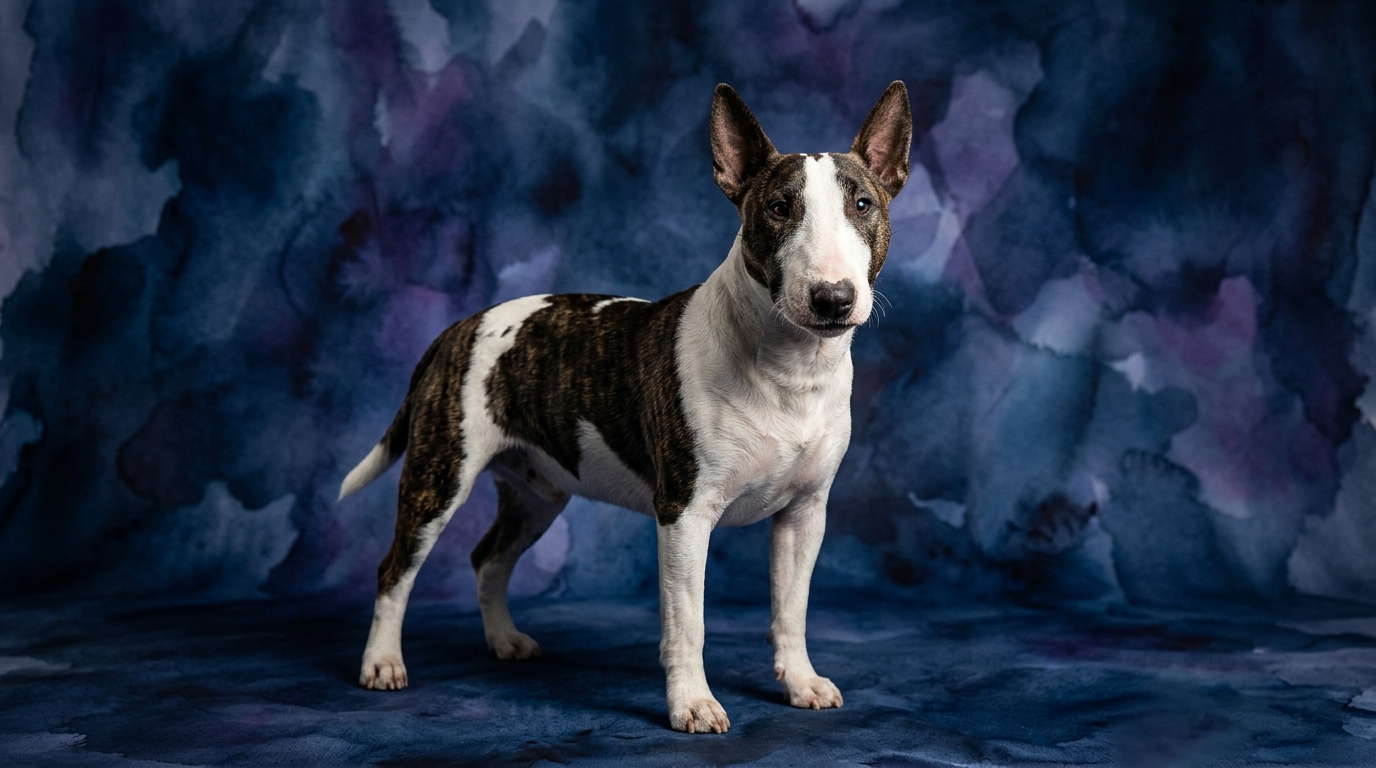
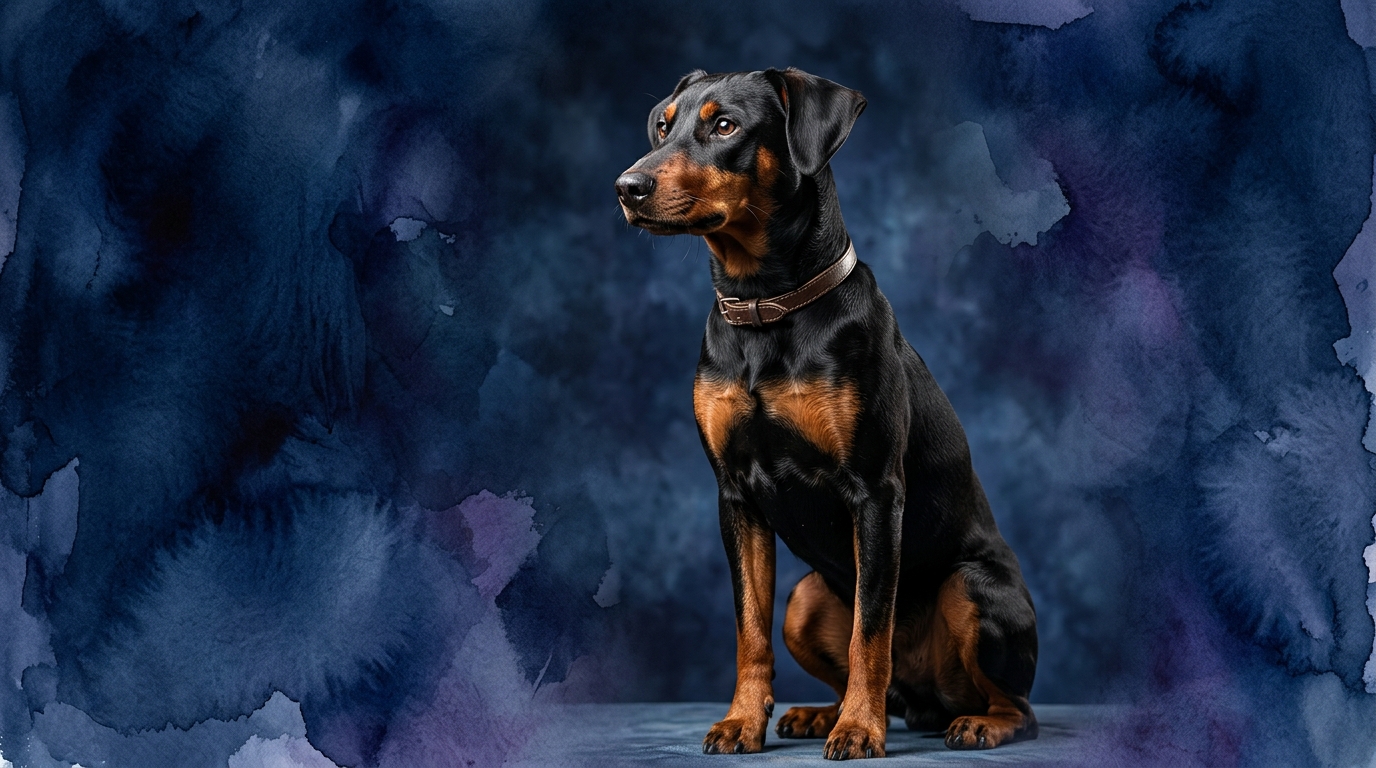
Side-by-Side IQ Profile
The Cosmic Pet Pet IQ Lab assesses canine intelligence across five key dimensions, each rated on a scale of 1 to 5. Interestingly, both the Miniature Bull Terrier and the German Pinscher score identically across the board at 3/5. However, the manifestation of these scores differs significantly due to their distinct breed histories and temperaments.
For the **Miniature Bull Terrier (Terrier Group)**, a 3/5 in **Problem Solving** reflects a knack for finding creative, often independent, solutions to immediate desires, such as opening cabinets or outwitting a baby gate. Their problem-solving isn't typically about complex obedience routines but rather about navigating their environment to achieve a personal goal, which can sometimes be mischievous. Their **Training Speed (3/5)** indicates they learn new commands at a moderate pace, capable of grasping concepts with consistent effort, yet their independent streak means compliance isn't always guaranteed; they often weigh a command against their own interests. In **Social Intelligence (3/5)**, these dogs possess a fair understanding of human emotions and social cues within their immediate family, often expressing their understanding through playful antics or stubborn refusal, particularly with strangers. Their **Instinctive Drive (3/5)**, rooted in their terrier heritage, manifests as a moderate yet persistent prey drive, often directed towards small scurrying animals or anything that can be chased and "conquered," alongside a desire to dig or mouth objects. Finally, their **Memory (3/5)** demonstrates good recall for learned commands and routines, especially those associated with positive experiences, and they tend to remember past interactions, both pleasant and unpleasant.
The **German Pinscher (Working Group)**, also scoring 3/5 across the board, interprets these aptitudes through a different lens. Their **Problem Solving (3/5)** skills are often applied to practical tasks, such as figuring out how to access a vantage point for observation or outmaneuvering a perceived threat. Their intelligence frequently leans towards strategic thinking related to their environment and social structure, reflecting their working background. In **Training Speed (3/5)**, these dogs learn rapidly when motivated, quickly picking up new commands and complex sequences. Their dedication to a task, once engaged, makes them quick studies, though their strong will means training requires clarity, consistency, and a confident leader. Their **Social Intelligence (3/5)** means they are acutely aware of their human family's dynamics and social hierarchies, often positioning themselves as watchful protectors, adept at reading intentions and discerning with strangers. The **Instinctive Drive (3/5)** of a German Pinscher, stemming from their working breed roots, manifests in a robust drive to guard, chase, and control their environment, translating into a natural inclination for vigilance, athleticism, and a desire for purpose. Their **Memory (3/5)** capabilities are strong, retaining training and experiences over long periods, remembering routines, boundaries, and individuals, which contributes to their reliability in established settings.
Where Miniature Bull Terrier Wins Cognitively
The Miniature Bull Terrier's cognitive edge often lies in its unique blend of stubborn independence and playful ingenuity. While both breeds score 3/5 in problem-solving, the Mini Bull Terrier frequently applies this to creative, sometimes mischievous, endeavors that challenge human expectations. For instance, their ability to 'figure out' a puzzle toy in an unconventional way, or devise a new game out of household objects, showcases a distinct brand of adaptive thinking driven by curiosity and a desire for self-amusement. Their social intelligence, though rated similarly, often manifests as a more overt, charming manipulation, where they use their charisma to get their way rather than a strict adherence to social norms, making them particularly adept at engaging humans in their playful schemes.
Where German Pinscher Wins Cognitively
The German Pinscher's cognitive strengths lean towards their pragmatic and watchful nature. Their 3/5 problem-solving score is often directed at understanding and navigating their environment for security and order, such as discerning the most efficient patrol route or assessing a new visitor's intentions. Unlike the Miniature Bull Terrier's playful problem-solving, the German Pinscher's intellect often serves a more protective or utilitarian purpose. Their instinctive drive, also 3/5, is channeled with a more focused intensity towards tasks like guarding or active engagement, making them highly responsive to purpose-driven activities. Their memory, while rated the same, contributes significantly to their reliability in structured environments, allowing them to consistently apply learned rules and anticipate events.
Which is Easier to Train and Why
Despite both breeds holding a 3/5 training speed score, the German Pinscher generally proves easier to train for consistent obedience and structured tasks. Their working dog heritage instills a fundamental desire for purpose and a willingness to cooperate when leadership is clear and confident. While they possess a strong will, it is often channeled into performing tasks with dedication once they understand the expectation. Miniature Bull Terriers, on the other hand, approach training with a more independent, 'what's in it for me?' attitude. Their terrier stubbornness means they learn, but their compliance is often conditional on their mood or perceived benefit. Training a Mini Bull Terrier requires immense patience, creativity, and a consistent ability to make learning fun and rewarding, often feeling more like a negotiation than direct instruction.
Which Suits Active Owners vs. Relaxed Owners
For active owners seeking a canine partner with a keen sense of purpose and robust energy, the German Pinscher is often the more suitable choice. Their strong instinctive drives and practical problem-solving skills thrive in environments that offer consistent mental and physical challenges, such as agility, obedience trials, or hiking. They enjoy having a 'job' and excel when their cognitive abilities are directed towards structured activities. Conversely, owners who appreciate a dog with an independent spirit, a unique sense of humor, and a moderate need for structured activity might find the Miniature Bull Terrier a better fit. While energetic, their drive is often for playful engagement and self-directed exploration rather than constant, high-intensity work. They can adapt to a more relaxed pace, provided their curious minds are kept engaged with novelties and interactive play.
The Verdict
Opt for the Miniature Bull Terrier if you seek a charismatic, independent companion who thrives on playful interaction and creative problem-solving, and you are prepared for a charmingly stubborn training journey.
Select the German Pinscher if you desire a vigilant, dedicated partner who excels in structured activities and requires consistent leadership to channel their purposeful energy and sharp wit.
🧠 Find Your Pet's IQ Score
Our Pet IQ Lab assessment covers 25+ tests across 5 cognitive dimensions — personalized to your breed.
Take the Full IQ Test →Frequently Asked Questions
Do Miniature Bull Terriers and German Pinschers learn at the same pace?
While both breeds score 3/5 in training speed, their learning styles differ. German Pinschers typically learn structured commands quickly with clear leadership, driven by a desire for purpose. Miniature Bull Terriers learn at a similar pace but often require more engaging, positive reinforcement due to their independent and sometimes stubborn nature, making compliance less predictable.
Which breed is better at understanding human emotions?
Both breeds score 3/5 in social intelligence, indicating a good understanding of human cues. German Pinschers often use this to gauge intentions and act as vigilant protectors, while Miniature Bull Terriers might interpret cues through a lens of playful manipulation or independent action, expressing their understanding in less conventional ways.
How do their problem-solving abilities differ despite identical scores?
Their 3/5 problem-solving manifests uniquely; Miniature Bull Terriers often apply it to creative, sometimes mischievous ways to achieve personal desires, like opening cupboards. German Pinschers typically use their problem-solving for more practical, security-focused tasks, such as navigating their environment or assessing potential threats, reflecting their working heritage.