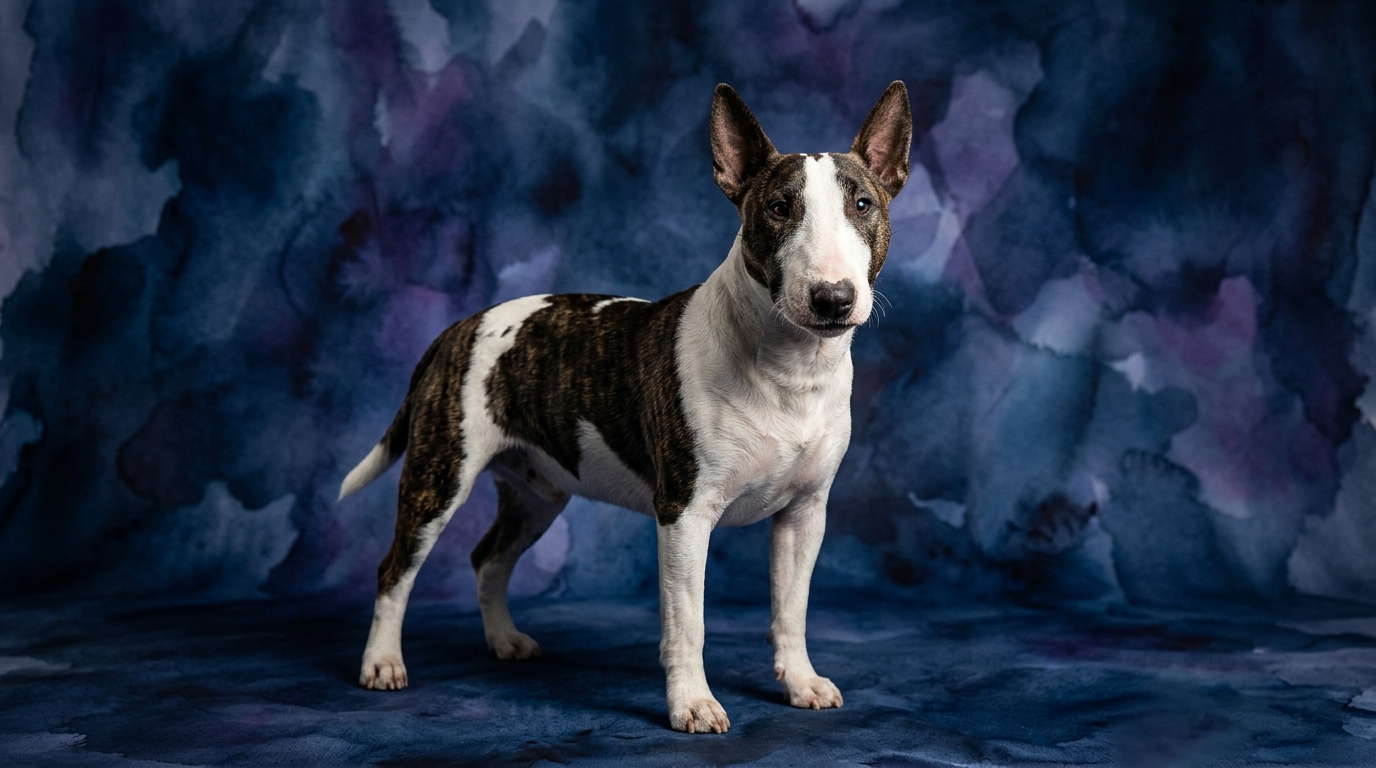
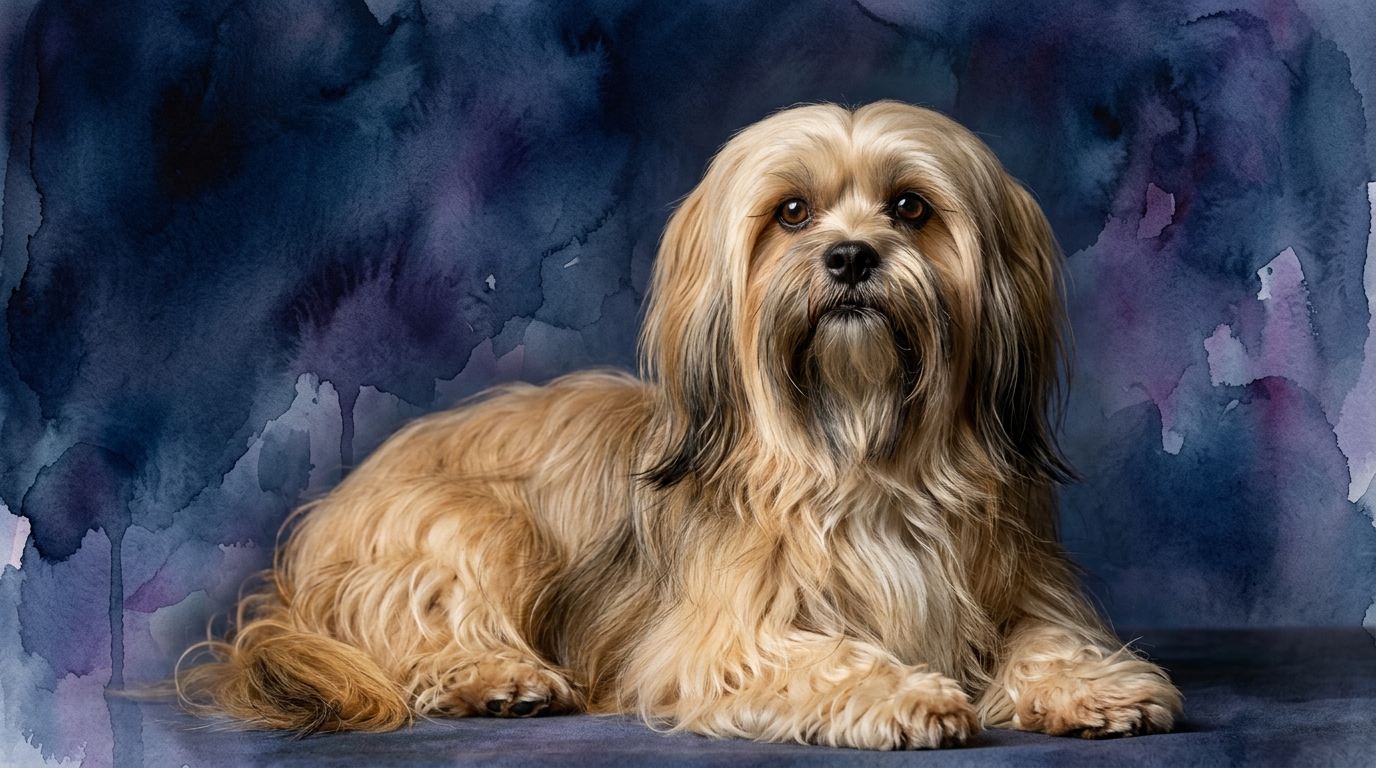
Side-by-Side IQ Profile: Miniature Bull Terrier vs. Lhasa Apso
The Cosmic Pet Pet IQ Lab assesses five crucial cognitive dimensions, and intriguingly, both the Miniature Bull Terrier and the Lhasa Apso score 3 out of 5 across the board. While the numerical scores are identical, the practical manifestation of these abilities is distinctly shaped by each breed's heritage and personality, offering a nuanced look beyond mere numbers.
For the **Miniature Bull Terrier**, a 3/5 in **Problem Solving** often translates into resourceful mischief, like cleverly figuring out how to open cabinets or outsmarting a gate latch to explore. Their solutions are typically self-directed, driven by immediate desires for play or access rather than a desire to please. Their **Training Speed (3/5)** indicates they grasp new commands moderately well, but their independent streak means consistency and engaging methods are crucial; they learn quickly when motivated but might just as quickly decide a task isn't worth their effort. **Social Intelligence (3/5)** means they possess a moderate ability to interpret human cues and other dogs' intentions, often responding with clownish antics or affectionate nudges to family, though compliance is not guaranteed. Their **Instinctive Drive (3/5)**, rooted in their terrier heritage, manifests as a keen interest in chasing small animals, a desire to dig, and a protective instinct, requiring channeling through appropriate outlets. Finally, their **Memory (3/5)** allows them to recall learned commands, routines, and experiences, remembering past interactions and learned habits, both good and bad.
The **Lhasa Apso**, conversely, also presents a 3/5 in **Problem Solving**, but this aptitude often manifests as cleverness in managing their environment or getting their way, aligning with their historical role as sentinels. This might involve strategically positioning themselves for maximum comfort, figuring out how to get attention, or cleverly alerting to perceived threats rather than directly engaging. Their **Training Speed (3/5)** means they are capable of learning, yet their independent and sometimes stubborn nature demands patient, consistent, and positive reinforcement; they learn best when they perceive a clear benefit to themselves. Their **Social Intelligence (3/5)** makes them particularly adept at discerning the moods and intentions of their family members, often offering comfort or seeking interaction when appropriate, though towards strangers, it often translates into a keen, watchful assessment. Their **Instinctive Drive (3/5)** is pronounced in their vigilance and territorial protection, manifesting as a strong tendency to bark at perceived intruders and a desire to oversee their domain. Their **Memory (3/5)** enables them to retain routines, learned behaviors, and social interactions, reliably recalling who belongs and who doesn't, maintaining consistent vigilance.
Where the Miniature Bull Terrier Wins Cognitively
Despite identical scores, the Miniature Bull Terrier often shines in situations requiring adaptable, sometimes improvisational problem-solving for self-directed goals. Their 3/5 problem-solving frequently manifests as a creative resourcefulness in navigating environmental challenges, like figuring out how to bypass an obstacle to reach a favorite toy, or ingeniously escaping a confined space. This isn't about rote learning, but about applying novel solutions to immediate, tangible desires. Their moderate instinctive drive, when channeled appropriately, gives them an edge in activities requiring sustained, playful engagement and physical tenacity, making them excellent companions for dynamic games that demand quick thinking and physical coordination. Their moderate social intelligence, combined with their playful nature, allows them to engage in complex, interactive play with humans, often initiating games or inventing new ways to interact that require a nuanced understanding of human responses and boundaries.
Where the Lhasa Apso Wins Cognitively
The Lhasa Apso, with its identical cognitive scores, excels in areas reflecting its sentinel heritage. Their 3/5 problem-solving often appears as shrewd observation and strategic decision-making, particularly concerning their environment and perceived threats. They might meticulously learn the sounds of approaching strangers versus family, or develop intricate routines for surveying their territory from optimal vantage points. This isn't about physical prowess but mental acumen in assessing and reacting to their surroundings. Their moderate social intelligence makes them exceptionally perceptive of household dynamics and emotional shifts within their trusted family, often anticipating needs or offering quiet companionship. Furthermore, their moderate memory contributes to their steadfastness; they reliably recall who belongs and who doesn't, maintaining consistent vigilance and territorial boundaries with unwavering focus, making them reliable, discerning watchdogs.
Which is Easier to Train and Why
While both breeds share a 3/5 training speed, the practical experience of training can differ significantly due to their underlying temperaments and motivations. The Miniature Bull Terrier, with its boisterous and sometimes clownish personality, can be highly engaging in training sessions, especially when novelty and play are incorporated. Their desire for interaction and attention, combined with their inherent drive, means they often respond well to reward-based training that keeps them mentally stimulated. However, their independent streak and occasional stubbornness mean that consistency and firm, fair boundaries are paramount; they will test limits and require an owner who can make training feel like a fun game rather than a chore. The Lhasa Apso, on the other hand, while equally capable of learning, approaches training with a more discerning and independent mindset. Their moderate social intelligence allows them to understand commands, but their strong will means they often weigh whether complying serves their own interests. They are not naturally eager to please and can be quite aloof, requiring an owner who can patiently build trust and demonstrate the value of cooperation. Training a Lhasa Apso often demands more patience and a deeper understanding of their motivations, focusing on positive reinforcement that appeals to their desire for comfort, security, or a favorite treat, rather than sheer enthusiasm. Therefore, neither is 'easier' in the conventional sense, but the Miniature Bull Terrier might offer more immediate, enthusiastic feedback, while the Lhasa Apso requires a more nuanced, persistent approach.
Suitability for Active vs. Relaxed Owners
For active owners seeking a dynamic companion, the Miniature Bull Terrier is often a more suitable match. Their moderate instinctive drive and playful problem-solving aptitude thrive on regular physical activity and mental engagement. They enjoy varied adventures, from brisk walks and playful romps in a secure yard to interactive games that challenge their resourceful nature. Owners who enjoy teaching new tricks, participating in dog sports, or simply spending active time outdoors will find their Minibull eager to join. A relaxed owner, however, might find their moderate energy levels and need for consistent engagement overwhelming without proper outlets. The Lhasa Apso, conversely, aligns more closely with relaxed owners who appreciate a watchful, independent companion. While they benefit from daily walks and mental enrichment, their moderate instinctive drive for guarding doesn't translate into a constant need for high-intensity physical exertion. Their preference for surveying their domain and their discerning social intelligence means they are content with quieter companionship once their exercise needs are met. Owners who enjoy a calm presence, are prepared for their independent nature, and appreciate a discerning watchdog will find the Lhasa Apso a fitting companion, though they must still provide consistent mental stimulation and socialization.
The Verdict
Choose the Miniature Bull Terrier if you seek a playful, resourceful companion eager for engaging activities and possess the dedication to channel their strong will with consistent, fun-filled training.
Opt for the Lhasa Apso if you value a watchful, independent companion who offers discerning affection and are prepared for a patient training approach that respects their self-assured nature.
🧠 Find Your Pet's IQ Score
Our Pet IQ Lab assessment covers 25+ tests across 5 cognitive dimensions — personalized to your breed.
Take the Full IQ Test →Frequently Asked Questions
Do Miniature Bull Terriers and Lhasa Apsos learn at the same pace?
While both breeds score 3/5 in training speed, indicating a moderate capacity for learning, their motivation differs. Miniature Bull Terriers often learn quickly with engaging, play-based methods, whereas Lhasa Apsos require more patience and a clear understanding of what's in it for them due to their independent streak.
How do their problem-solving skills differ despite identical scores?
Miniature Bull Terriers often apply their 3/5 problem-solving to achieve self-directed goals, like finding ways to play or explore, exhibiting resourceful mischief. Lhasa Apsos, with the same score, tend to use their problem-solving for strategic observation and managing their environment, particularly concerning their sentinel duties.
Which breed is more social with strangers?
Neither breed is typically effusive with strangers. Miniature Bull Terriers, with their 3/5 social intelligence, can be playful and friendly once they accept someone, though their initial approach might be boisterous. Lhasa Apsos, also 3/5 socially intelligent, are more reserved and watchful, often taking their time to assess new people before offering any interaction.