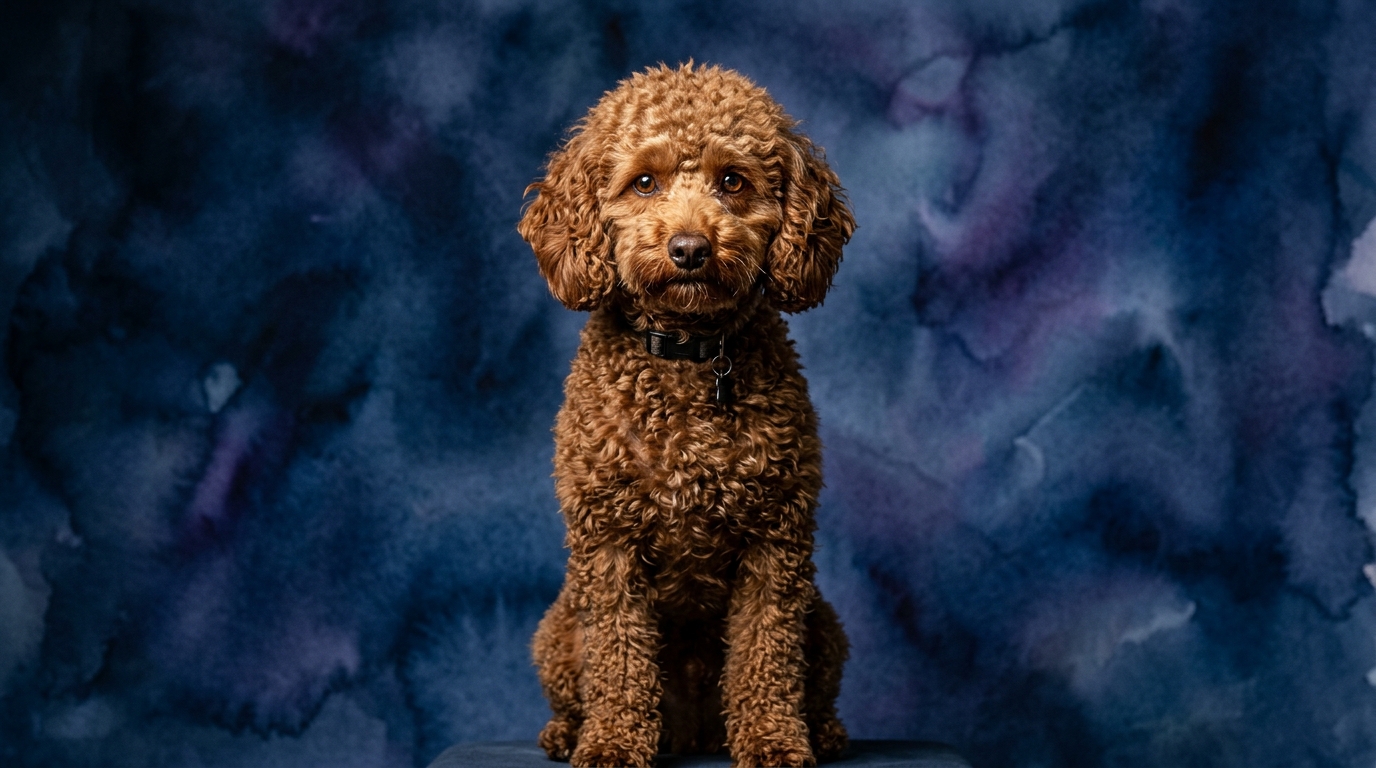
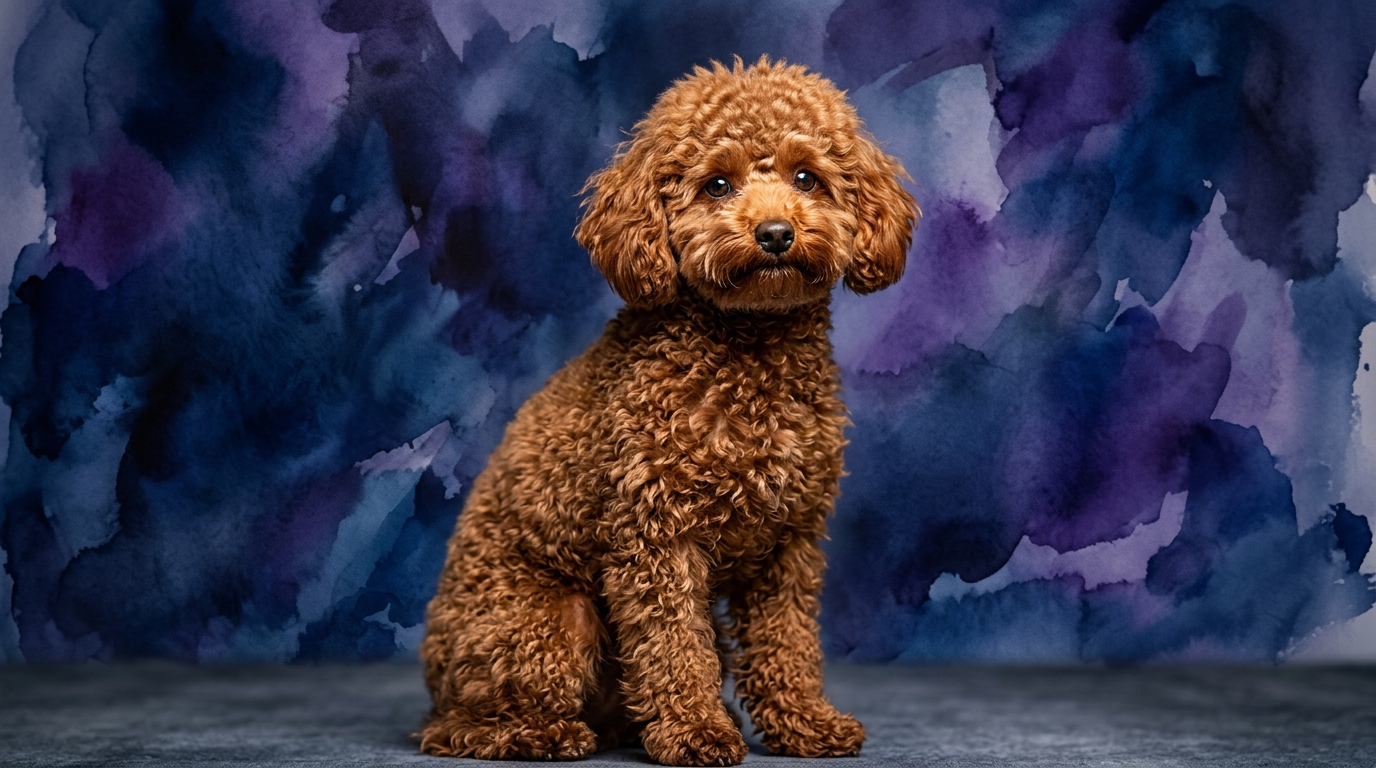
Side-by-Side IQ Profile: Identical Minds in Different Frames
At first glance, the cognitive data from The Cosmic Pet Pet IQ Lab presents a striking uniformity between the Miniature Poodle and the Toy Poodle. Both proudly hold a Coren rank of #2, indicating an exceptional capacity for learning and command adherence. This shared ranking places them among the most adept breeds in understanding new instructions with minimal repetition and responding reliably to known commands.
Delving into their specific IQ dimensions, both varieties score a perfect 5/5 for Problem Solving. This means they are highly adept at navigating complex situations, figuring out solutions to novel challenges, and understanding cause-and-effect relationships within their environment. Whether it's unlocking a puzzle feeder or devising a strategy to retrieve a hidden toy, their analytical minds are consistently engaged.
Their Training Speed also registers an impressive 5/5, signifying an extraordinary ability to pick up new cues and behaviors with remarkable efficiency. Owners typically find these Poodles grasp new commands in very few repetitions, making them highly responsive candidates for advanced obedience, trick training, and various dog sports. This speed is a testament to their attentiveness and capacity for associative learning.
For Social Intelligence, both Poodle varieties receive a 3/5. This moderate score indicates a good, but not exceptional, ability to interpret human emotions and social cues. They are generally responsive to their owners' moods and intentions but might not possess the highly specialized empathetic understanding seen in breeds specifically developed for service or therapy work requiring profound human-animal connection.
Their Instinctive Drive is also rated at 3/5. This suggests a balanced level of innate drives, such as prey drive, herding instinct, or guarding tendencies. It's sufficient to engage them in play and structured activities without being overwhelmingly dominant, allowing their learned behaviors to take precedence. They are neither overly independent nor excessively driven by primal urges.
Finally, both Poodles achieve a 5/5 in Memory. This exceptional score highlights their long-term retention of learned behaviors, routines, and even specific people and places. Once a command or routine is established, it tends to stick, making them reliable companions who remember their training and their family's daily rhythms over extended periods.
Where Miniature Poodle's Cognition Shines: Robust Application
Given their identical IQ scores, the Miniature Poodle's cognitive strengths often manifest through its slightly larger, more robust physique. Their 5/5 problem-solving ability, for instance, translates seamlessly into tackling physically demanding cognitive tasks. This might involve navigating intricate agility courses where quick mental mapping and physical coordination are paramount, or solving multi-stage puzzles that require both brainpower and a bit of physical manipulation.
The Miniature Poodle's 5/5 training speed, combined with their stamina, makes them particularly suited for sustained engagement in competitive obedience or rally. They can maintain focus and rapidly execute a sequence of complex commands over longer periods, thriving on the mental and physical challenge. Their ability to learn quickly allows them to master advanced routines and adapt to new competition environments with ease.
Their 3/5 social intelligence, while moderate, often expresses itself in a more independent yet observant manner compared to their smaller counterparts. A Miniature Poodle might quietly assess a new social situation, understanding the dynamics without needing to be constantly in the owner's lap. This allows them to interact confidently with a wider range of people and environments, applying their understanding of social cues without overt clinginess.
The 3/5 instinctive drive, coupled with their size, means Miniature Poodles can channel this energy into constructive activities like scent work or exploring varied outdoor terrains. Their keen memory (5/5) allows them to recall complex scent paths or navigate familiar trails, making them excellent companions for adventurous owners who appreciate a dog that can keep up both physically and mentally.
Where Toy Poodle's Cognition Excels: Precision and Companionship
The Toy Poodle, despite its diminutive stature, applies its identical cognitive prowess with a focus on precision and close companionship. Their 5/5 problem-solving often manifests in an exquisite ability to master intricate indoor puzzles, learn complex trick sequences that require fine motor control, or navigate the nuances of a busy household with uncanny foresight, anticipating movements and routines.
The rapid 5/5 training speed of the Toy Poodle makes them exceptional candidates for rapid-fire trick training, where they can learn and execute a diverse repertoire of commands with astounding quickness. This also makes them highly adaptable in therapy settings, where quick adjustments to patient needs or environmental changes are crucial, showcasing their ability to learn and respond on the fly.
Their 3/5 social intelligence, in the context of their size, often results in a heightened sensitivity to their immediate human companions. A Toy Poodle might be particularly attuned to subtle shifts in an owner's mood or expression, using their understanding of social cues to offer comfort or solicit interaction within a close-quarters dynamic. This makes them profoundly empathetic and responsive companions.
With a 5/5 memory, Toy Poodles are adept at remembering specific routines, the location of favored toys, and even intricate sequences of commands. This allows them to seamlessly integrate into household rhythms, often reminding owners of meal times or walk schedules. Their moderate 3/5 instinctive drive can be effectively channeled into focused play with smaller toys or engaging in structured, less physically demanding games that still provide ample mental stimulation.
Which is Easier to Train and Why: Behavioral Nuances
While both Poodle varieties share an identical 5/5 training speed, the 'ease' of training can be influenced by their inherent behavioral tendencies and physical attributes. Miniature Poodles, with their slightly larger build and greater robustness, tend to possess a more enduring attention span for prolonged training sessions. This makes them excellent candidates for advanced obedience or agility, where sustained focus on complex sequences is required.
Miniature Poodles generally exhibit a confident demeanor that allows them to engage with varied training environments and challenges without being easily overwhelmed. Their moderate instinctive drive is often straightforward to channel into focused tasks, making them less prone to distraction by minor external stimuli during training. This makes them quite versatile for different training modalities.
Toy Poodles, on the other hand, can present different training considerations. Their small size sometimes leads owners to inadvertently reinforce undesirable behaviors, such as incessant barking or demanding attention, simply because it's perceived as 'cute' or less disruptive than in a larger dog. This lack of consistent boundaries, rather than a lack of intelligence, can make training feel more challenging for some owners.
Furthermore, Toy Poodles can be more sensitive to harsh training methods due to their delicate nature. They respond best to very gentle, positive reinforcement techniques, where consistent praise and rewards are prioritized. Their portability, however, allows for consistent training in a greater variety of environments, from a quiet living room to a bustling cafe, which can be an advantage if properly managed.
Which Suits Active Owners vs. Relaxed Owners
For active owners seeking a dynamic companion, the Miniature Poodle is often the more suitable choice. Their robust build, coupled with slightly greater stamina, makes them excellent partners for longer walks, hiking, or sustained play sessions. Their Coren rank #2 intelligence, combined with their physical capability, means they thrive on engaging in competitive dog sports like agility, flyball, or advanced obedience, where both mental and physical prowess are celebrated.
Miniature Poodles require consistent physical and mental exercise to prevent boredom and channel their considerable cognitive energy productively. They enjoy exploring new environments and participating in family adventures, making them ideal for owners who lead an active lifestyle and want a dog that can genuinely keep pace and share in their activities.
Relaxed owners, or those living in smaller spaces, will find the Toy Poodle to be an exceptional fit. While still requiring mental stimulation to prevent boredom, their physical exercise needs are generally lower than their Miniature counterparts. They are content with shorter daily walks, engaging indoor play, and extensive cuddle sessions, making them perfect for apartment living or individuals with limited mobility.
The Toy Poodle's strong bond with its owner and its inherent sensitivity make it an unparalleled lap companion. They thrive on close human interaction and are often content to observe the world from the comfort of their owner's side, provided they receive regular mental engagement through tricks, interactive toys, or simply being involved in daily household activities. Their adaptability to a quieter lifestyle makes them a cherished presence for owners seeking warmth and companionship without rigorous demands.
The Verdict
Opt for a Miniature Poodle if you seek a robust companion for active pursuits, competitive dog sports, or a family dog that can keep pace with outdoor adventures, all while applying its keen intellect.
Select a Toy Poodle if you desire a highly adaptable, sensitive companion for urban living or a more relaxed lifestyle, appreciating its sharp mind applied to tricks, close companionship, and indoor activities.
🧠 Find Your Pet's IQ Score
Our Pet IQ Lab assessment covers 25+ tests across 5 cognitive dimensions — personalized to your breed.
Take the Full IQ Test →Frequently Asked Questions
Do Miniature Poodles and Toy Poodles have different Coren rankings for intelligence?
No, both Miniature Poodles and Toy Poodles share a Coren rank of #2, placing them among the breeds that understand new commands with very few repetitions and obey the first command 95% of the time or more. This indicates a consistent, high capacity for learning across both size variations.
Are there any practical differences in their problem-solving abilities given their identical 5/5 scores?
While their raw problem-solving capacity is identical, the *application* can differ due to size. Miniature Poodles might tackle more physically demanding puzzles or agility courses, whereas Toy Poodles might excel at intricate indoor brain games or complex trick sequences requiring fine motor skills within a smaller domain.
Despite identical intelligence scores, do they require different amounts of mental stimulation?
Both require substantial mental stimulation to prevent boredom and destructive behaviors. However, the *type* of stimulation might vary; Miniature Poodles might enjoy longer, more complex training sessions or varied outdoor exploration, while Toy Poodles might thrive on frequent, shorter trick training, interactive toys, and close, engaging companionship.