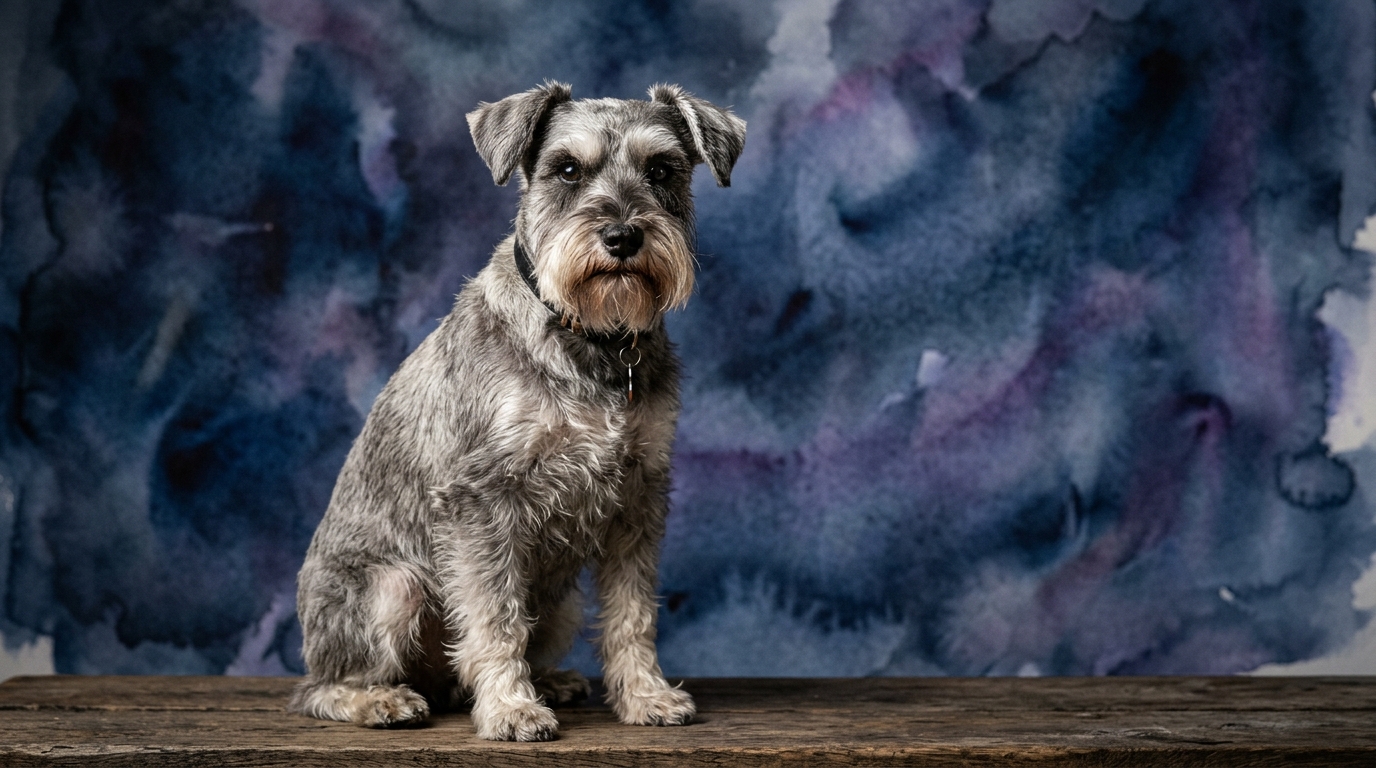
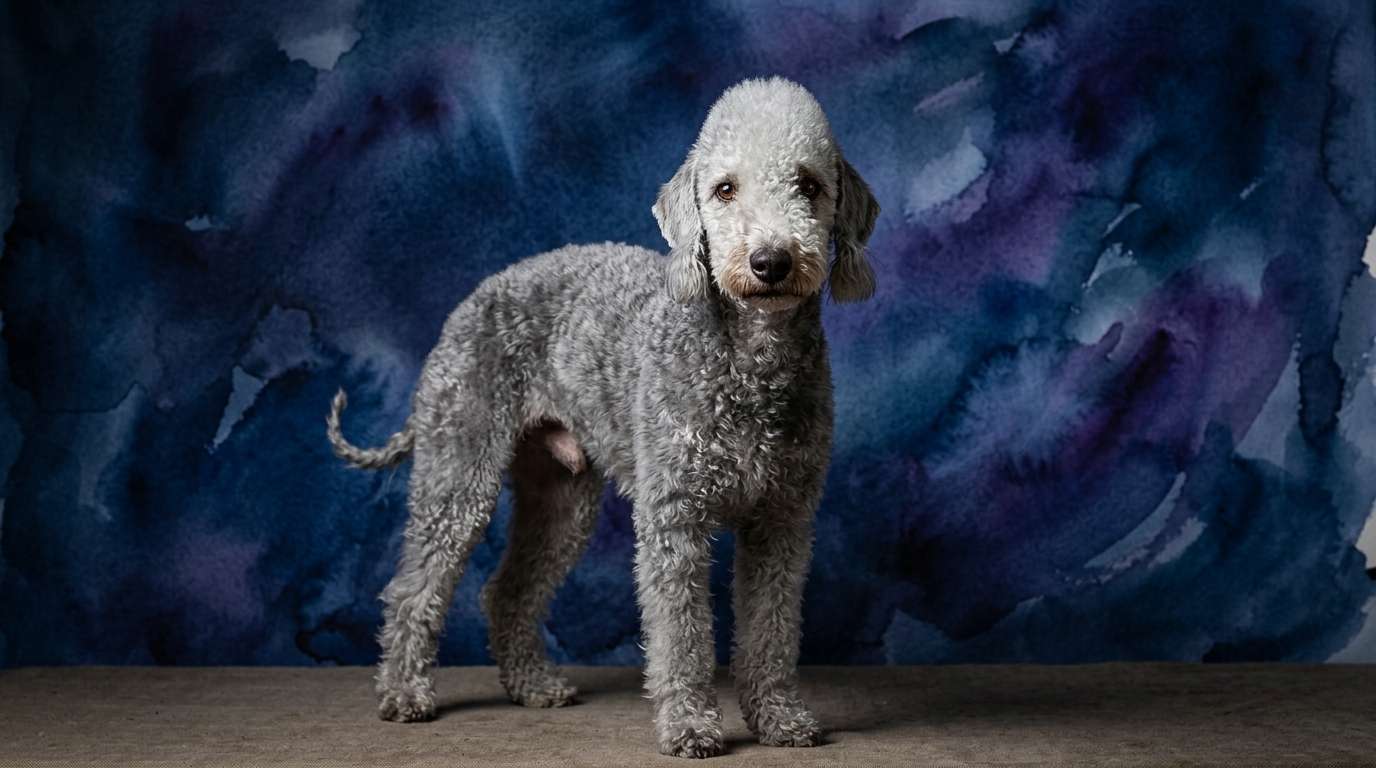
Side-by-side IQ Profile
The Miniature Schnauzer presents a well-rounded cognitive profile: Problem Solving 4/5, Training Speed 5/5, Social Intelligence 4/5, Instinctive Drive 4/5, and Memory 4/5. Their 4/5 in problem-solving indicates a capacity for navigating complex environments and figuring out novel solutions, while a 5/5 in training speed means they grasp new commands and routines with remarkable alacrity. Their social intelligence at 4/5 points to a strong ability to interpret human cues and bond, complemented by a 4/5 instinctive drive that powers their terrier spirit and a 4/5 memory for retaining learned behaviors and experiences.
The Bedlington Terrier, in contrast, shows a profile of Problem Solving 3/5, Training Speed 3/5, Social Intelligence 3/5, Instinctive Drive 3/5, and Memory 3/5. This suggests a more independent, perhaps less overtly biddable, but still capable mind. Their 3/5 in problem-solving means they approach new challenges with a steady, persistent effort, often relying on their senses and inherent terrier tenacity rather than immediate complex deductions. A 3/5 training speed signifies they learn at a moderate pace, requiring consistent reinforcement. Their 3/5 social intelligence points to a more reserved or selective engagement with human interaction, while a 3/5 instinctive drive is present but perhaps less intensely channeled than in some terriers. Their 3/5 memory suggests they retain information reliably, though perhaps not with the same vivid recall for intricate sequences.
Where Miniature Schnauzer Wins Cognitively
The Miniature Schnauzer’s cognitive profile shines across several dimensions, making them particularly adept learners and companions. Their Coren rank of #12 underscores their exceptional capacity for obedience and working intelligence. With a 5/5 in Training Speed, Schnauzers exhibit a remarkable aptitude for absorbing new commands and complex sequences of actions rapidly, often requiring fewer repetitions than many other breeds. This quick uptake translates into a dog that can master a diverse repertoire of tricks, sports, and practical tasks with relative ease, making them excellent candidates for advanced obedience, agility, or rally.
Their 4/5 in Problem Solving also gives them an edge in navigating novel situations and figuring out solutions to environmental puzzles, such as opening latches or retrieving hidden toys. This isn't just about simple tasks; it extends to understanding cause-and-effect relationships and adapting strategies when initial attempts fail. Furthermore, their 4/5 Social Intelligence allows them to quickly interpret human body language, tone, and intent, fostering a deeper, more responsive partnership. They often anticipate owner desires, showing a nuanced understanding of their role within the family unit. This blend of rapid learning, analytical thinking, and social attunement means the Miniature Schnauzer is consistently seeking engagement and excels in environments that provide consistent mental stimulation and partnership.
Where Bedlington Terrier Wins Cognitively
While the Bedlington Terrier's scores are consistently at 3/5, these numbers highlight a cognitive style that brings its own distinct advantages, particularly for certain lifestyles. Their 3/5 in Problem Solving suggests an approach to challenges that is less about immediate, complex deduction and more about persistent, independent exploration. This tenacity can be a strength; when faced with an obstacle, a Bedlington Terrier is less likely to give up quickly, preferring to try various physical or sensory approaches until a solution is found, albeit perhaps not as swiftly as a Schnauzer. This independent problem-solving can manifest as a self-reliance, making them less prone to anxiety when left to their own devices, as they are capable of entertaining themselves or finding ways to occupy their minds.
Their 3/5 Social Intelligence, while not indicating a lack of affection, suggests a more discerning or reserved engagement with social cues. This can be beneficial for owners seeking a companion that is devoted but not overly demanding of constant attention, capable of being present without being clingy. They are observant and form deep bonds, but often on their own terms, valuing quiet companionship. The 3/5 Instinctive Drive, while still a terrier trait, might translate to a more manageable prey drive compared to breeds with higher scores, making them potentially easier to integrate into multi-pet households or environments with small animals, provided proper training and socialization are in place. These qualities combine to create a dog whose cognitive strengths lie in resilience, self-sufficiency, and a unique blend of affectionate independence.
Which is Easier to Train and Why
When it comes to ease of training, the Miniature Schnauzer generally presents a more straightforward experience due to their higher cognitive scores, particularly their 5/5 Training Speed. This breed absorbs new information and commands with exceptional rapidity, often picking up new behaviors after just a few repetitions. Their 4/5 Social Intelligence also plays a crucial role, making them highly attuned to their owner's cues, expressions, and intentions. This responsiveness means they are often eager to please and quick to offer desired behaviors, making reward-based training highly effective and efficient. They thrive on the mental engagement that training provides and view it as a cooperative activity.
In contrast, the Bedlington Terrier, with a 3/5 Training Speed and 3/5 Social Intelligence, requires a different approach to training. While capable learners, they don't typically absorb commands with the same lightning speed as the Schnauzer. Their inherent terrier independence means they might be less inclined to blindly follow instructions and more likely to assess whether a command aligns with their own interests. This isn't stubbornness in a malicious sense, but rather a strong sense of self-will that requires patient, consistent, and highly motivating training methods. Owners need to make training feel like a fun game or a rewarding challenge, rather than a rote exercise. Building a strong bond and mutual respect is paramount, as a Bedlington is more likely to cooperate with an owner they trust and respect rather than one who tries to impose their will. Real behavioral differences include the Schnauzer's tendency to offer behaviors proactively, while the Bedlington might require more prompting and a higher value reward to maintain focus.
Which Suits Active Owners vs Relaxed Owners
The choice between a Miniature Schnauzer and a Bedlington Terrier also hinges significantly on an owner's lifestyle and their capacity for mental and physical engagement. The Miniature Schnauzer, with its robust cognitive profile—4/5 Problem Solving, 4/5 Instinctive Drive, and 4/5 Memory—thrives with active owners who enjoy consistent interaction and structured activities. Their mental acuity demands regular stimulation; without engaging tasks, they can become bored, potentially leading to creative but undesirable behaviors. Owners who enjoy teaching new tricks, participating in dog sports like agility or obedience, or even just engaging in complex puzzle toys will find the Schnauzer a willing and enthusiastic partner. Their 4/5 instinctive drive means they possess considerable energy and a keen interest in exploring, making them suitable for owners who appreciate regular walks, hikes, or vigorous play sessions. They are not content to simply observe; they want to participate and apply their keen minds.
The Bedlington Terrier, while still a terrier and thus possessing a degree of energy and an instinctive drive (3/5), might be a more adaptable fit for owners who lean slightly more towards a relaxed lifestyle, yet still understand the need for engagement. Their 3/5 in Problem Solving and Instinctive Drive suggests they are capable of self-amusement and might not demand the same intensity of structured mental work as a Schnauzer. While they certainly need daily exercise to maintain physical and mental well-being, their activities might involve less complex problem-solving scenarios and more free-form exploration or playful chasing. Their 3/5 Social Intelligence implies they are content with periods of quiet companionship, not constantly vying for attention, making them suitable for owners who enjoy a devoted presence without incessant demands. They appreciate a comfortable home environment and can be quite content curled up beside their owner after a good walk, rather than constantly seeking the next mental challenge. However, it's crucial to remember that “relaxed” for a terrier still means daily physical activity and consistent mental enrichment, just perhaps with a different flavor than the Schnauzer's more intense cognitive demands.
The Verdict
Choose the Miniature Schnauzer if you are an active owner eager for a highly trainable, socially responsive companion who excels in diverse learning environments and thrives on consistent mental challenges.
Opt for the Bedlington Terrier if you appreciate a more independent, resilient companion who offers devoted affection on their own terms, and you are prepared for patient, creative training methods to harness their unique terrier spirit.
🧠 Find Your Pet's IQ Score
Our Pet IQ Lab assessment covers 25+ tests across 5 cognitive dimensions — personalized to your breed.
Take the Full IQ Test →Frequently Asked Questions
Is the Miniature Schnauzer truly easier to train than the Bedlington Terrier?
Generally, yes. The Miniature Schnauzer's 5/5 Training Speed and 4/5 Social Intelligence mean they typically grasp commands and routines much faster, showing a greater eagerness to cooperate and respond to human cues during training sessions.
Do Bedlington Terriers require less exercise than Miniature Schnauzers?
Both breeds require daily exercise, but their needs differ in intensity and type. While a Bedlington Terrier's 3/5 Instinctive Drive might suggest a slightly less intense demand for vigorous activity than a Schnauzer's 4/5, both still need regular physical outlets to prevent boredom and maintain health.
Which breed is better for first-time dog owners?
The Miniature Schnauzer's higher trainability and social responsiveness (5/5 Training Speed, 4/5 Social Intelligence) often make them a more forgiving and rewarding choice for first-time owners willing to engage in consistent training and mental stimulation. The Bedlington Terrier's independence may require more experience to manage effectively.