Side-by-Side Cognitive Profiles: A Deeper Look
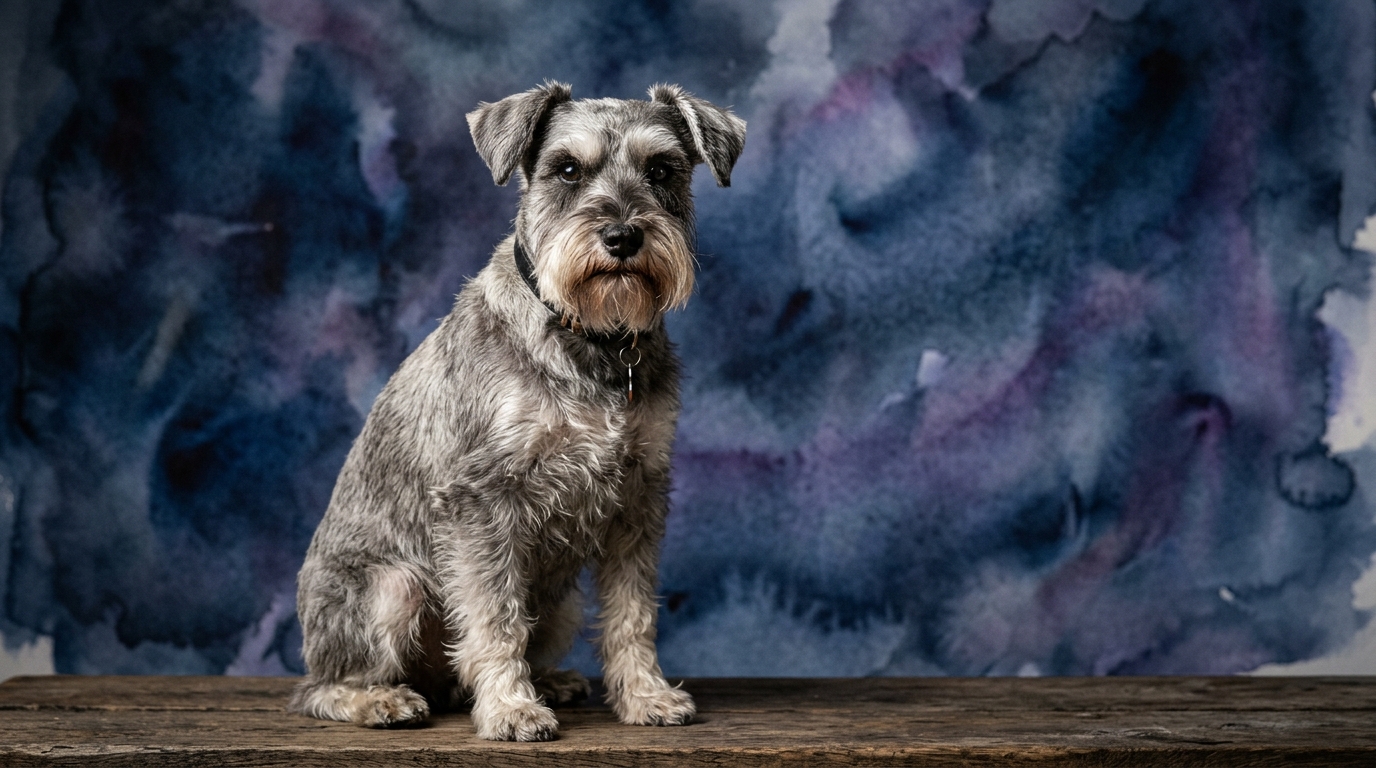
The Cosmic Pet Pet IQ Lab employs a five-dimensional framework to assess canine intelligence, offering a nuanced understanding beyond simple obedience. For the Miniature Schnauzer, we observe a robust cognitive profile: Problem Solving at 4/5, Training Speed at a remarkable 5/5, Social Intelligence at 4/5, Instinctive Drive at 4/5, and Memory at 4/5. This breed's high Coren ranking (12th overall) aligns with its capacity for rapid learning and adaptable thought processes. A 4/5 in Problem Solving indicates a dog that readily analyzes new situations and devises effective solutions, often with a keen eye for human cues. Their 5/5 Training Speed means they grasp new commands and routines with exceptional swiftness, often requiring fewer repetitions than many other breeds. A 4/5 in Social Intelligence reflects their ability to interpret human emotions and social structures, enabling harmonious cohabitation and responsiveness. Their Instinctive Drive, also 4/5, points to a strong, yet manageable, terrier persistence for tasks like vermin control, coupled with general alertness. Finally, a 4/5 in Memory suggests they retain learned behaviors and social interactions over extended periods, contributing to their consistency.
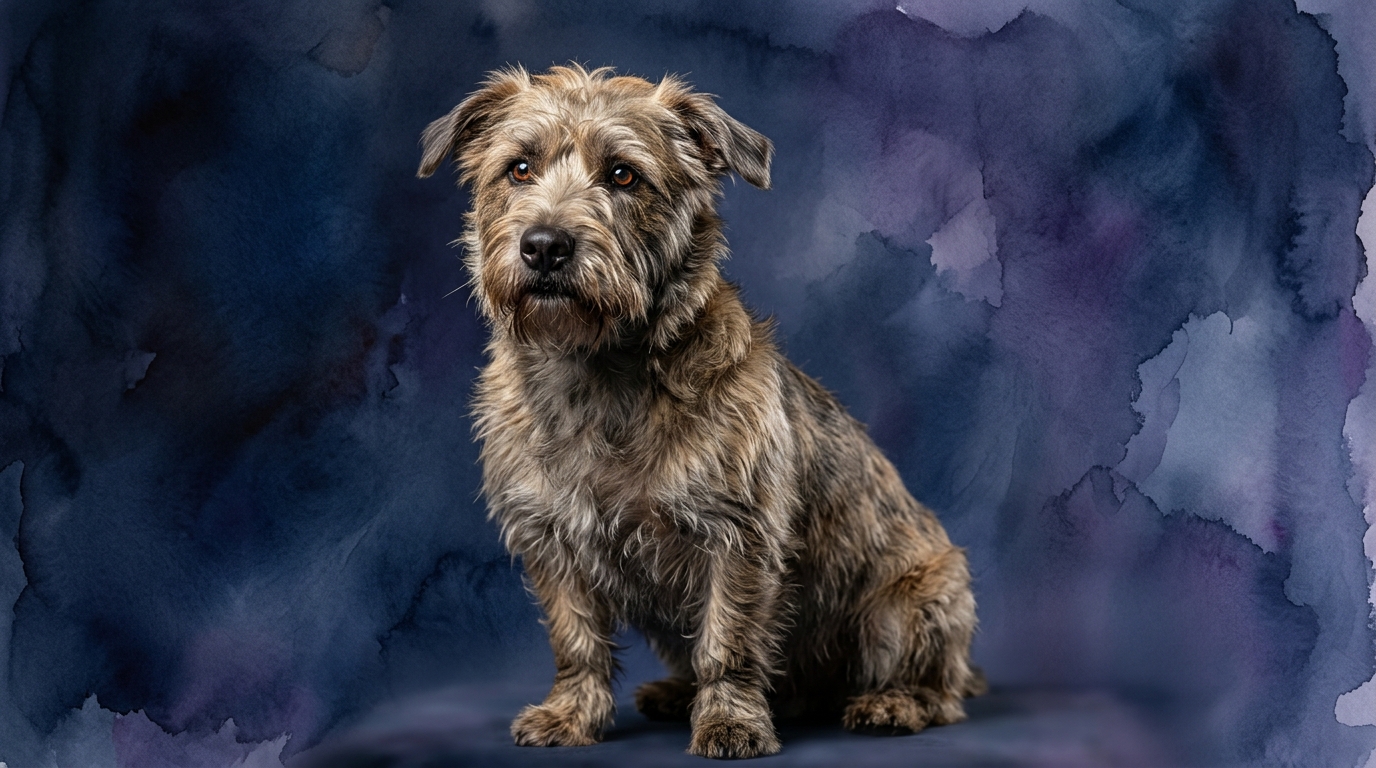
In contrast, the Glen of Imaal Terrier presents a more self-reliant, less outwardly collaborative cognitive blueprint. While not Coren-ranked, our IQ assessment places them at 3/5 across all five dimensions: Problem Solving, Training Speed, Social Intelligence, Instinctive Drive, and Memory. A 3/5 in Problem Solving signifies a dog that can navigate challenges, but often through trial and error, preferring to work things out independently rather than seeking human guidance. Their 3/5 Training Speed suggests they learn at a moderate pace, requiring patience and consistent, engaging methods to solidify new commands. For Social Intelligence, a 3/5 means they are generally amenable companions, but might display a more reserved or selective approach to social interactions, perhaps less attuned to subtle human emotional shifts than the Schnauzer. Their Instinctive Drive, at 3/5, is still present and potent, reflecting their historical role as badger and fox hunters, but it is often channeled with a singular focus and deep-seated resolve. A 3/5 in Memory indicates they retain information adequately, but perhaps require more reinforcement to maintain complex learned behaviors over time, or might be less prone to recalling every minute detail of past interactions.
Where the Miniature Schnauzer Excels Cognitively
The Miniature Schnauzer's cognitive strengths shine brightly in areas demanding quick comprehension and collaborative engagement. Their 5/5 Training Speed means they absorb new commands with remarkable alacrity, making them exceptionally responsive to structured learning environments. This isn't just about 'tricks'; it extends to quickly understanding household rules, adapting to new routines, and excelling in canine sports like obedience or agility where rapid pattern recognition is key. Furthermore, their 4/5 in Problem Solving ensures they are adept at navigating novel situations, often observing their environment and human companions to deduce solutions, whether it's figuring out how to open a cabinet or adapting to a new walking route. This collaborative problem-solving approach, coupled with their 4/5 Social Intelligence, allows them to integrate seamlessly into family dynamics, anticipating needs and responding to subtle social cues. Their strong memory (4/5) reinforces these advantages, ensuring that once a lesson is learned or a social expectation established, it tends to stick, building a foundation for consistent behavior.
Unique Cognitive Strengths of the Glen of Imaal Terrier
While the Glen of Imaal Terrier's scores might appear lower on a direct comparative scale, their unique cognitive profile presents distinct advantages for specific roles and owners. Their 3/5 in Problem Solving, combined with a generally independent nature, means they excel in situations requiring self-reliance and grit. A Glen is less likely to defer to a human for every solution, instead preferring to methodically work through a challenge on their own terms. This deep-seated persistence is a hallmark of their terrier spirit; once they commit to a task, they pursue it with unwavering focus. Their 3/5 Instinctive Drive, though numerically lower, is often highly specialized and intensely purposeful, making them exceptionally dedicated to tasks like digging or scent work, where a single-minded drive is paramount. They possess a quiet determination, a cognitive resilience that allows them to endure and overcome obstacles that might frustrate a more socially dependent breed. This independence also extends to their 3/5 Social Intelligence; they form strong bonds but are not constantly demanding of attention, content to observe and participate on their own terms, making them excellent companions for those who appreciate a dog with self-possession.
Trainability: Schnauzer's Swiftness vs. Glen's Deliberation
When it comes to ease of training, the Miniature Schnauzer undeniably holds the advantage, primarily due to its exceptional 5/5 Training Speed and robust 4/5 Social Intelligence. Miniature Schnauzers grasp commands quickly, often with just a few repetitions, and are highly motivated by praise and positive reinforcement from their human partners. Their inherent desire to please, combined with their ability to interpret human cues, makes them eager participants in training sessions. They are often described as 'biddable,' meaning they are generally inclined to comply with instruction. This contrasts with the Glen of Imaal Terrier, whose 3/5 Training Speed and more independent Problem Solving (3/5) mean they require a more patient, consistent, and creative approach to training. Glens are not inherently disobedient, but they process information at a more deliberate pace and are less inclined to perform simply for human approval. Their training success hinges on making the learning process engaging and relevant to their intrinsic motivations, often requiring more repetition and a deeper understanding of their independent drive to achieve lasting results. They are less likely to offer behaviors proactively and more likely to question the utility of a command, requiring the trainer to be equally persistent and clear.
Matching Canine Cognition to Owner Lifestyle
Considering their distinct cognitive profiles, the Miniature Schnauzer typically suits active owners who enjoy engaging their dogs in various activities and intellectual challenges. Their 4/5 Problem Solving and 4/5 Social Intelligence thrive on interaction, structured training, and opportunities to learn new skills. Owners who are keen on dog sports, extended walks, or consistent mental stimulation will find the Schnauzer a willing and capable partner. Their relatively high energy levels, combined with their desire for engagement, mean they benefit from a routine that includes both physical exercise and regular mental enrichment. Conversely, the Glen of Imaal Terrier, with its 3/5 scores across the board, might be a better fit for owners who appreciate a more relaxed, yet still active, companion with a strong independent streak. While Glens need daily exercise to satisfy their terrier instincts, they are less overtly demanding of constant human interaction or complex training regimens. Their contented self-possession means they are often happy to relax at home after a good walk or a focused digging session. Owners who enjoy quiet companionship but can provide outlets for instinctive drives, and who are patient with a dog that thinks for itself, will find a deep connection with a Glen of Imaal.
The Verdict
Choose a Miniature Schnauzer if you desire a highly trainable, socially engaged companion eager to participate in family activities and structured learning.
Opt for a Glen of Imaal Terrier if you appreciate a more independent, self-reliant dog with quiet determination, suited for owners who value grit and a less demanding social presence.
🧠 Find Your Pet's IQ Score
Our Pet IQ Lab assessment covers 25+ tests across 5 cognitive dimensions — personalized to your breed.
Take the Full IQ Test →Frequently Asked Questions
Is the Miniature Schnauzer truly quicker to learn than the Glen of Imaal Terrier?
Based on The Cosmic Pet Pet IQ Lab's metrics, the Miniature Schnauzer generally scores higher in cognitive dimensions like problem-solving and training speed. This suggests a more adaptable and collaborative cognitive style, making them quicker learners in many contexts.
What kind of mental stimulation does a Glen of Imaal Terrier need?
Glen of Imaal Terriers thrive on mental stimulation that engages their independent problem-solving and instinctive drives, such as scent work, puzzle toys they can solve on their own, or controlled digging opportunities. Activities that allow them to work autonomously are particularly rewarding for them.
How do the social intelligence differences impact household dynamics?
A Miniature Schnauzer's higher social intelligence (4/5) means they are generally more attuned to human emotions and social cues, often integrating smoothly into complex family interactions. A Glen of Imaal Terrier's 3/5 social intelligence suggests they are affectionate but may be more reserved, needing less constant social engagement and preferring to interact on their own terms.