Side-by-Side Cognitive Profiles
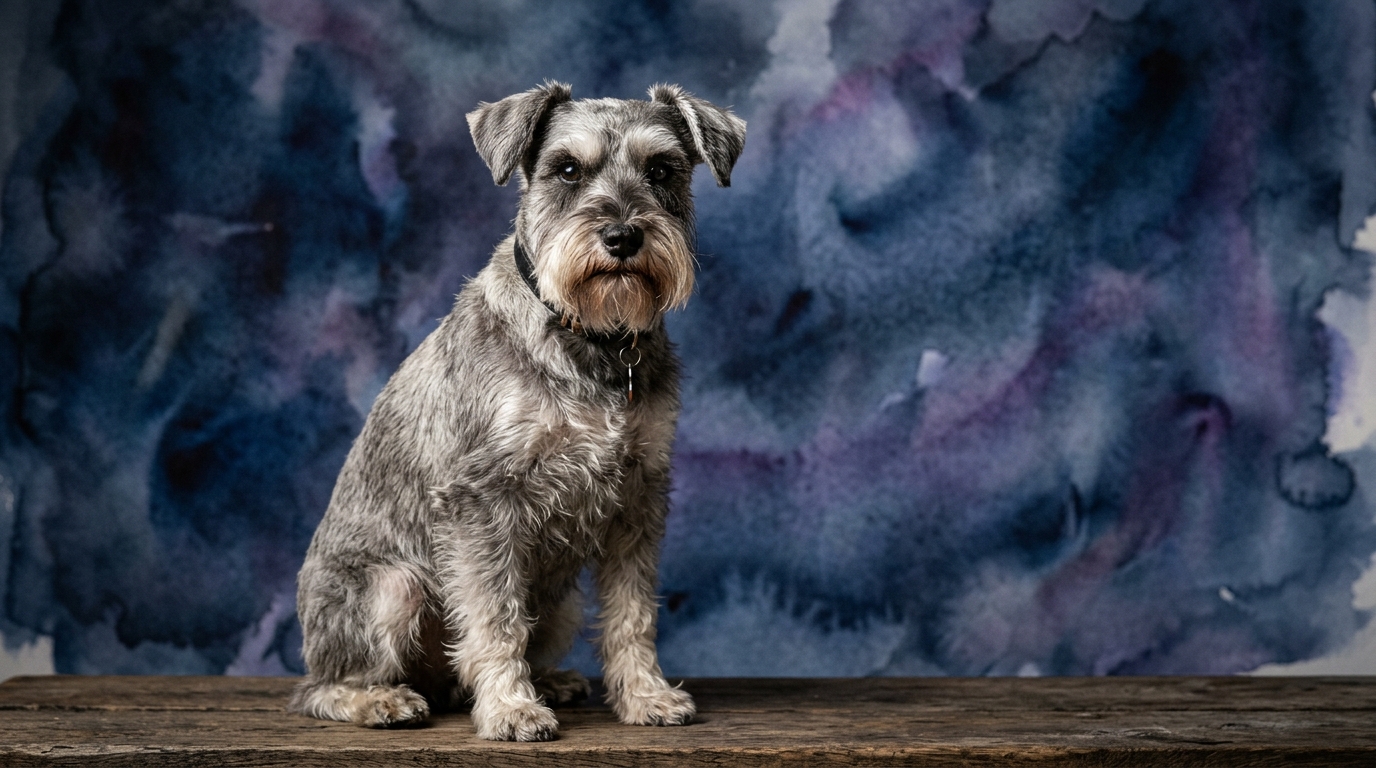
The Cosmic Pet Pet IQ Lab employs a comprehensive framework to assess canine intelligence across five critical dimensions. For the Miniature Schnauzer, a Terrier group member with a Coren rank of #12, we observe a robust cognitive profile: Problem Solving at 4/5, Training Speed at an exceptional 5/5, Social Intelligence at 4/5, Instinctive Drive at 4/5, and Memory at 4/5. This breed exhibits a sharp, agile mind, quick to grasp new concepts and adept at navigating complex situations.
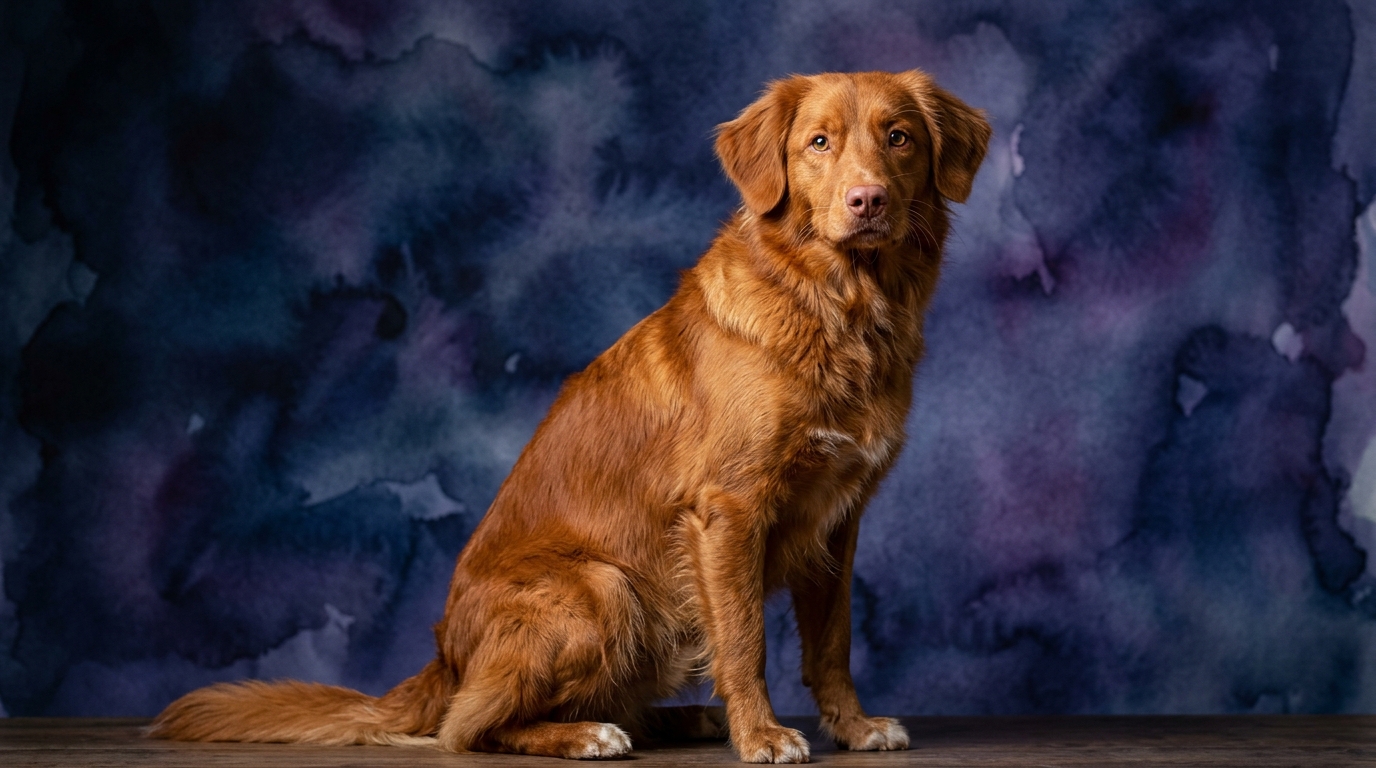
In contrast, the Nova Scotia Duck Tolling Retriever, a Sporting group member without a specific Coren rank, presents a more uniformly balanced, though slightly lower, cognitive baseline. Its scores are Problem Solving 3/5, Training Speed 3/5, Social Intelligence 3/5, Instinctive Drive 3/5, and Memory 3/5. This profile suggests a dog that is capable and consistent, excelling within its specialized role but perhaps not demonstrating the same breadth of rapid cognitive adaptation seen in the Miniature Schnauzer.
Where the Miniature Schnauzer Excels Cognitively
The Miniature Schnauzer's cognitive strengths are particularly evident in its rapid training acquisition and problem-solving abilities. With a Training Speed score of 5/5, these dogs demonstrate an exceptional capacity for learning new commands and routines with minimal repetition, making them highly responsive partners in obedience and trick training. Their Problem Solving score of 4/5 indicates a natural inclination to think through challenges, often devising novel solutions to access desired objects or navigate obstacles. This terrier tenacity translates into a dog that isn't easily deterred by puzzles or complex tasks, often approaching them with determined focus.
Furthermore, their 4/5 scores in Social Intelligence and Memory contribute to a well-rounded mental toolkit. A high social intelligence allows them to keenly observe and adapt to human cues and household dynamics, often anticipating needs or moods. Coupled with a strong memory, they retain learned behaviors and social etiquette over long periods, making them reliable companions once boundaries and expectations are established. This combination of quick learning, effective problem-solving, and good recall makes the Miniature Schnauzer a mentally engaging and adaptable breed for various activities beyond basic companionship.
Where the Nova Scotia Duck Tolling Retriever Shines Cognitively
While the Nova Scotia Duck Tolling Retriever's individual cognitive scores are generally a point lower than the Schnauzer's, their collective 3/5 scores across all dimensions speak to a consistent, focused mental aptitude perfectly suited for their historical role. Their Instinctive Drive, rated at 3/5, is specifically geared towards sustained, repetitive tasks like retrieving. This isn't a lower drive in terms of intensity, but rather a focused drive that enables them to perform their job with unwavering dedication, often demonstrating remarkable endurance and concentration on a single objective.
The Toller's 3/5 in Problem Solving manifests as a practical intelligence, where they excel at mastering established procedures for their work rather than needing to invent new ones. This makes them highly effective at learning and executing complex retrieving patterns or agility courses that rely on consistent, learned sequences. Their Social Intelligence at 3/5 often translates to a straightforward, eager-to-please demeanor, making them generally less prone to the complex social maneuvering sometimes seen in breeds with higher scores, fostering a clear and cooperative working relationship. Their memory (3/5) supports the retention of these learned tasks and routines, ensuring reliability in their performance.
Training Efficacy: Miniature Schnauzer vs. Nova Scotia Duck Tolling Retriever
When considering ease of training, the Miniature Schnauzer holds a distinct advantage, primarily due to its 5/5 Training Speed score. These dogs pick up commands with remarkable swiftness, often requiring only a few repetitions to solidify a new behavior. This quick uptake makes them highly rewarding to train for owners who enjoy teaching a wide repertoire of commands, tricks, or participating in dog sports like agility. However, their 4/5 Problem Solving and Instinctive Drive mean they are also capable of independent thought and can sometimes be persistent in pursuing their own agenda if not consistently guided, requiring an owner who can match their mental agility with clear, positive reinforcement.
The Nova Scotia Duck Tolling Retriever, with a Training Speed of 3/5, requires a more patient and consistent approach. While certainly capable of learning, they may need more repetitions to fully grasp and internalize new commands. Their strength lies in their focus once a task is understood, making them dedicated learners for activities that align with their retrieving instincts. Real behavioral differences include the Toller's potential for being more sensitive to harsh corrections, responding better to positive, reward-based methods that build trust and reinforce their desire to please. Their 3/5 Instinctive Drive, while lower than the Schnauzer's, is highly directed towards their working purpose, meaning that incorporating fetch or scent work into training can significantly boost their engagement and learning efficiency.
Suitability for Active vs. Relaxed Owners
For owners seeking a dynamic and mentally stimulating companion, the Miniature Schnauzer is an excellent fit. Their higher scores across the board, particularly in problem-solving and social intelligence, mean they thrive when given varied tasks, puzzle toys, and opportunities to engage their sharp minds. They can adapt to a range of activities from urban walks to moderate hikes, but their energy is often balanced with periods of calm indoors. Owners who appreciate a dog with a distinct personality, quick wit, and a desire for interactive play will find the Miniature Schnauzer a rewarding partner. They are not necessarily 'relaxed' dogs in the sense of being couch potatoes, but their cognitive needs can be met through engaging mental work as much as physical exertion.
The Nova Scotia Duck Tolling Retriever is ideally suited for genuinely active owners who embrace an outdoor, adventurous lifestyle. While their cognitive scores are 3/5, their underlying Sporting group temperament demands consistent physical activity, especially involving water or retrieving. These dogs possess substantial stamina and an innate drive to work alongside their human companions in activities like hiking, swimming, dock diving, or structured retrieving games. A Toller with insufficient outlets for its instinctive drive can become restless or channel its energy into undesirable behaviors. Owners who are dedicated to providing daily vigorous exercise and engaging in breed-appropriate activities will find the Toller an unparalleled, devoted partner, thriving on shared outdoor experiences.
The Verdict: When to Choose Each Breed
The Verdict
Choose the Miniature Schnauzer if you desire a quick-witted, highly trainable companion eager to learn new tricks and engage in diverse mental challenges, fitting into a moderately active household.
Opt for the Nova Scotia Duck Tolling Retriever if you lead a very active, outdoor-oriented lifestyle and seek a dedicated, focused partner for sustained physical activities, especially those involving retrieving and water.
🧠 Find Your Pet's IQ Score
Our Pet IQ Lab assessment covers 25+ tests across 5 cognitive dimensions — personalized to your breed.
Take the Full IQ Test →Frequently Asked Questions
Are Miniature Schnauzers difficult to train due to their terrier nature?
Miniature Schnauzers are quite responsive to training due to their 5/5 Training Speed score, making them quick learners. While their terrier independence (4/5 Instinctive Drive) means they can be persistent, consistent positive reinforcement yields excellent results, making them very capable students.
Do Nova Scotia Duck Tolling Retrievers require a lot of mental stimulation?
Yes, while their Problem Solving is 3/5, Tollers thrive on purposeful activity that engages their instinctive retrieving drive. Repetitive, structured tasks like advanced obedience, scent work, or retrieving games provide crucial mental stimulation and fulfill their working dog nature.
Which breed is better for a first-time dog owner?
The Miniature Schnauzer's higher Training Speed and adaptability might make them slightly more forgiving for a first-time owner willing to engage their sharp mind. A first-time owner considering a Toller should be fully committed to providing substantial daily exercise and consistent training to manage their high energy and focused drive effectively.