Side-by-Side Cognitive Profiles
The Cosmic Pet Pet IQ Lab assesses canine intelligence across five key dimensions, providing a nuanced understanding of each breed's mental landscape.
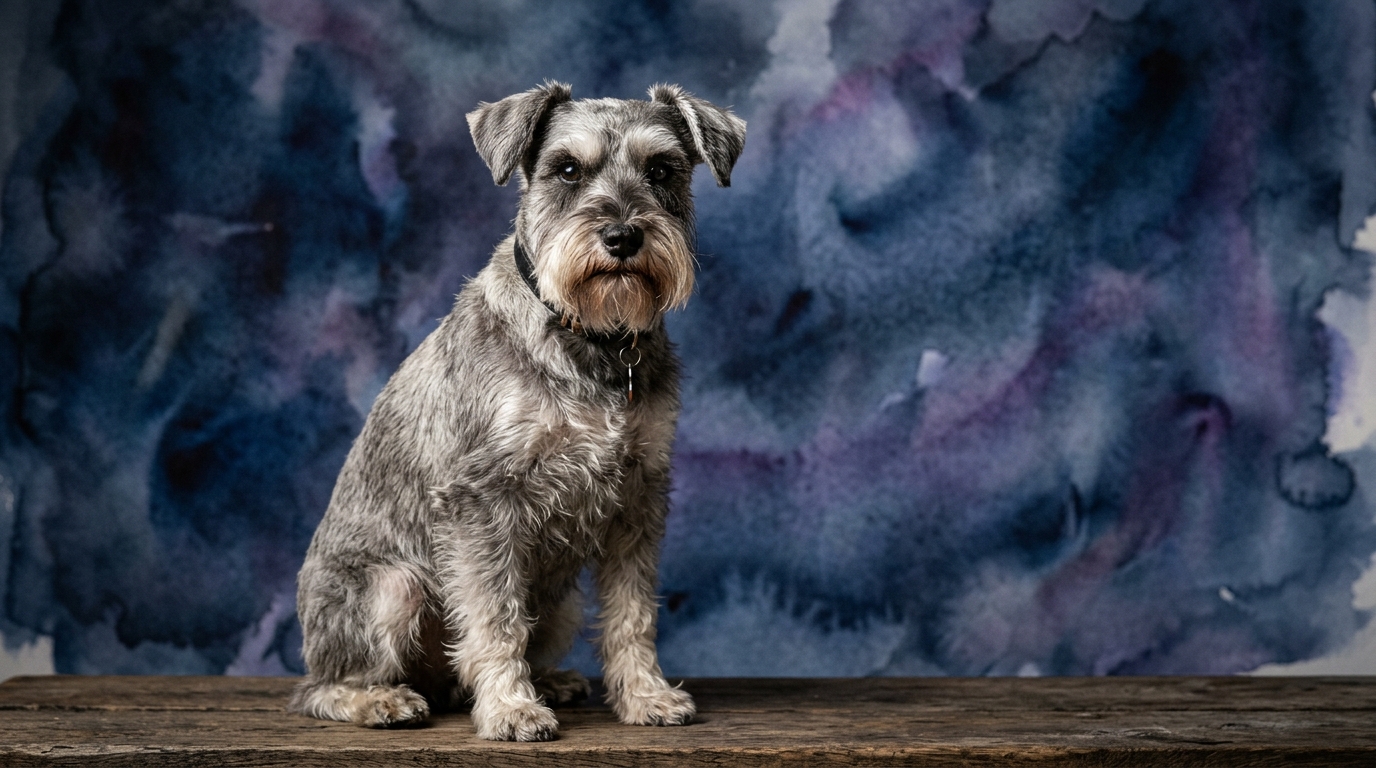
The Miniature Schnauzer, a terrier with a Coren ranking of #12, exhibits a robust cognitive profile. Their Problem Solving is rated 4/5, indicating a resourceful nature capable of figuring out environmental challenges and adapting strategies. Training Speed is an impressive 5/5, reflecting their rapid comprehension and eagerness to learn new commands and routines. Social Intelligence scores 4/5, showcasing their ability to discern human moods and intentions, fostering strong bonds. An Instinctive Drive of 4/5 points to their inherent terrier tenacity, prey drive, and alertness, while their Memory, also 4/5, allows for excellent retention of learned behaviors and experiences.
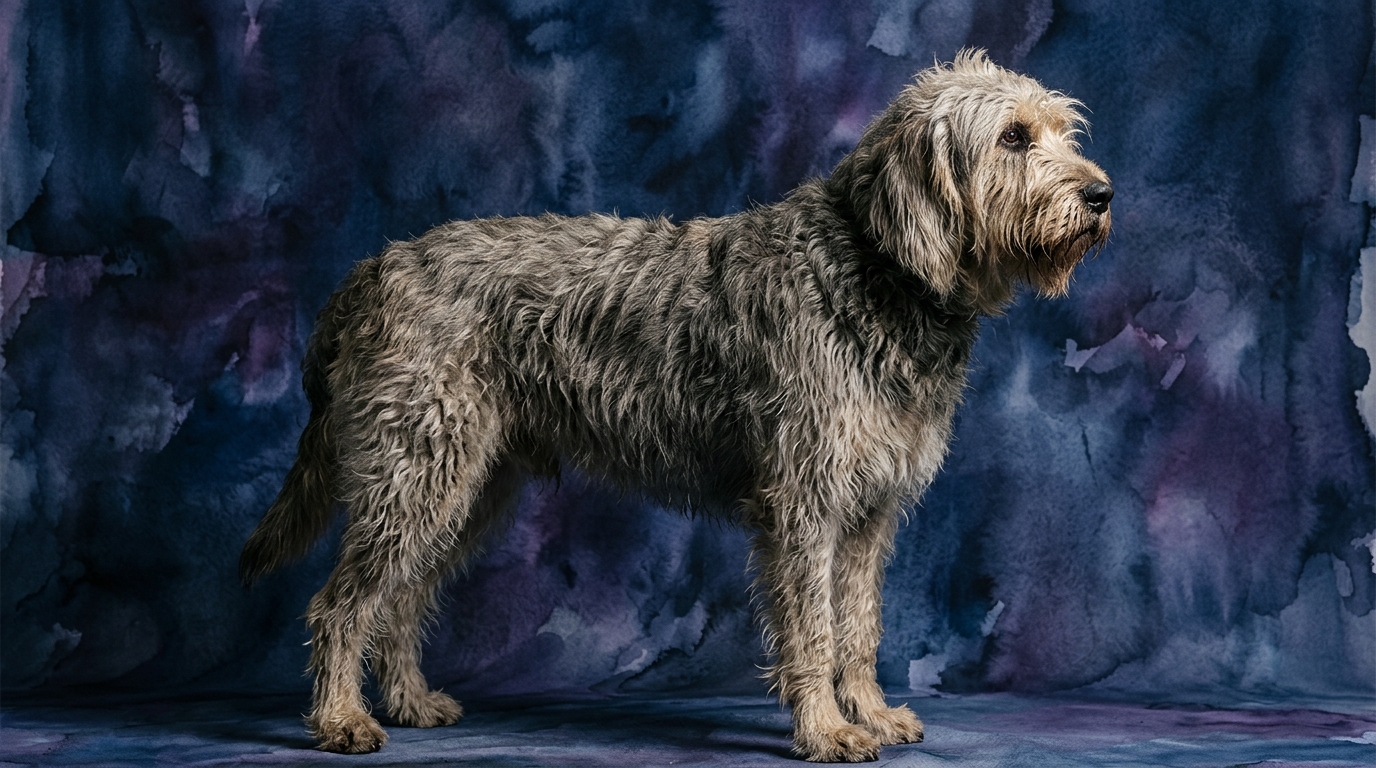
In contrast, the Otterhound, a breed not Coren-ranked, presents a different set of cognitive strengths, rooted in its heritage as a scent hound. Their Problem Solving is rated 3/5, suggesting a methodical approach, particularly when tracking, but perhaps less adaptability to abstract, non-scent-related puzzles. Training Speed is 3/5, indicating they require more repetition and patience due to their independent, scent-focused nature. Social Intelligence also stands at 3/5; while amiable, they may not be as finely attuned to subtle human social cues as some breeds. Their Instinctive Drive is 3/5, powerful and singular in its dedication to scent work and trailing. Finally, their Memory, rated 3/5, is proficient for scent-related tasks but may require more consistent reinforcement for general obedience commands.
Where the Miniature Schnauzer's Mind Shines
The Miniature Schnauzer's cognitive strengths are evident in its quick grasp of new concepts and its adaptive problem-solving. Owners often observe them quickly understanding complex sequences of commands, sometimes even anticipating the next step in a routine. Their 5/5 Training Speed means they can master a new trick in fewer repetitions than many other breeds, making them a joy for those who enjoy advanced obedience or dog sports. Furthermore, their 4/5 Social Intelligence allows them to interpret human body language and vocal tone with remarkable precision, often reacting appropriately to subtle shifts in owner mood.
Their 4/5 Problem Solving capability means they aren't merely rote learners; they can apply past knowledge to new situations, like figuring out how to manipulate a latch or navigate a new obstacle course. This resourcefulness, combined with their 4/5 Memory, enables them to retain a vast repertoire of commands and experiences, making them consistent performers once a behavior is established. They excel at tasks requiring multiple steps and a degree of independent thought within a structured framework, thriving on mental engagement that challenges their quick wits.
The Otterhound's Unique Cognitive Edge
While the Otterhound's scores might appear lower in some general cognitive metrics, their true intellectual prowess lies in a specialized domain: their profound olfactory capabilities and unwavering persistence. Their 3/5 Problem Solving, while not about abstract puzzles, manifests as an incredible methodical approach to tracking. They possess an unparalleled ability to analyze and follow faint scent trails over long distances and varied terrain, demonstrating a singular focus that few breeds can match. This isn't about speed of learning a command, but rather the sustained, deep processing of a single sensory input.
Their 3/5 Instinctive Drive, specifically for scent, is the engine of their cognitive strength. It fuels an extraordinary capacity for sustained effort and a remarkable 'olfactory memory,' allowing them to differentiate and recall specific scents over time. An Otterhound's brain is wired for the hunt, for the patient unraveling of a scent mystery. This dedication means they can ignore distractions that would derail other breeds, showcasing a type of intelligence that prioritizes sensory information and endurance over rapid, generalized learning or human-centric social cues.
Training: A Tale of Two Temperaments
When it comes to ease of training, the Miniature Schnauzer generally presents a more straightforward experience. Their 5/5 Training Speed is a direct reflection of their eagerness to please and their rapid comprehension. They respond well to positive reinforcement, quickly associating actions with rewards. Their 4/5 Social Intelligence also plays a crucial role, as they are often motivated by human approval and interaction, making them highly cooperative in training sessions. Owners typically find them receptive to learning a wide array of commands, from basic obedience to complex tricks, with a relatively short learning curve. Their solid 4/5 Memory ensures that once a command is learned, it tends to stick.
The Otterhound, on the other hand, requires a different approach to training, primarily due to their independent nature and powerful scent drive. Their 3/5 Training Speed means that more repetition and patience are often necessary. They are less inclined to perform simply for human approval, often prioritizing an interesting scent over a command. This strong 3/5 Instinctive Drive requires owners to be creative in their training methods, finding ways to make obedience more rewarding than the allure of a trail. Consistency is paramount, and training sessions often need to compete with their natural inclination to explore with their nose. While trainable, an Otterhound's learning journey is typically slower and demands a more dedicated, understanding trainer who respects their inherent hound characteristics.
Matching Canine Cognition to Lifestyle
The Miniature Schnauzer's cognitive profile makes them an excellent fit for active owners who thrive on engagement and mental stimulation. Owners who enjoy participating in dog sports like agility, obedience trials, or even just regular puzzle toys and interactive games will find the Miniature Schnauzer's 4/5 Problem Solving and 5/5 Training Speed incredibly rewarding. They require consistent mental challenges to prevent boredom, which can manifest as unwanted behaviors. A 'relaxed' owner who provides minimal interaction might find a Miniature Schnauzer becomes restless or invents their own entertainment, which may not always align with household rules. They flourish in environments where their sharp minds are consistently put to use.
The Otterhound, while not demanding constant mental 'puzzles' in the same way, is ideally suited for owners with an active outdoor lifestyle. Their 3/5 Instinctive Drive for scent work dictates a need for significant physical exertion and opportunities to follow their nose. This means long, exploratory walks, hiking, or even participation in scent tracking activities. A 'relaxed' owner might struggle with an Otterhound's endurance needs if these aren't channeled appropriately; they aren't content with just a quick stroll around the block. While their social intelligence is 3/5, they are generally good-natured and enjoy family life, provided their physical and olfactory needs are met, making them suitable for owners who appreciate a companion for extended outdoor adventures rather than constant indoor mental games.
The Verdict
Choose the Miniature Schnauzer if you desire a highly trainable companion keen on learning, quick to adapt, and responsive to social cues, thriving on mental challenges and close interaction.
Choose the Otterhound if you appreciate a good-natured, persistent scent hound, willing to engage in extended outdoor adventures, and are prepared for a more independent learner whose primary motivation lies in exploring the world through their nose.
🧠 Find Your Pet's IQ Score
Our Pet IQ Lab assessment covers 25+ tests across 5 cognitive dimensions — personalized to your breed.
Take the Full IQ Test →Frequently Asked Questions
Are Miniature Schnauzers prone to outsmarting their owners?
With a Problem Solving score of 4/5, Miniature Schnauzers are certainly resourceful. They can quickly learn routines and sometimes figure out how to gain access to forbidden areas or manipulate situations to their advantage, requiring consistent boundaries and mental engagement to keep them positively challenged.
How does an Otterhound's 'instinctive drive' manifest in daily life?
An Otterhound's 3/5 instinctive drive is powerfully focused on scent. This means they will often follow their nose above all else, potentially ignoring commands if an interesting trail presents itself. Daily life requires secure leashes, fenced yards, and opportunities for scent exploration to satisfy this innate need.
Can an Otterhound be trained for tasks beyond scent work?
Yes, Otterhounds can be trained for general obedience and other tasks, though their 3/5 Training Speed means it will likely require more patience and repetition than with some other breeds. Success often comes from making training sessions engaging and finding motivations that can compete with their strong scent drive.