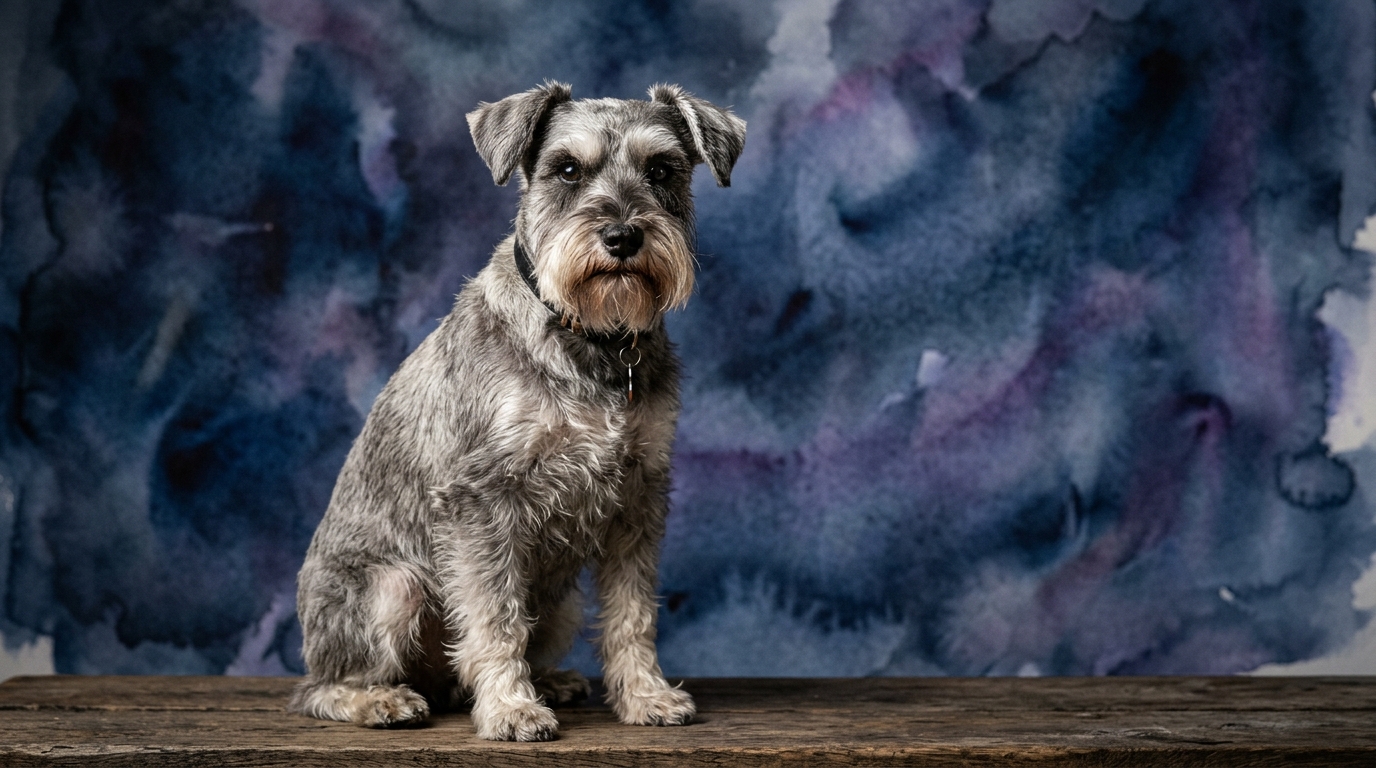
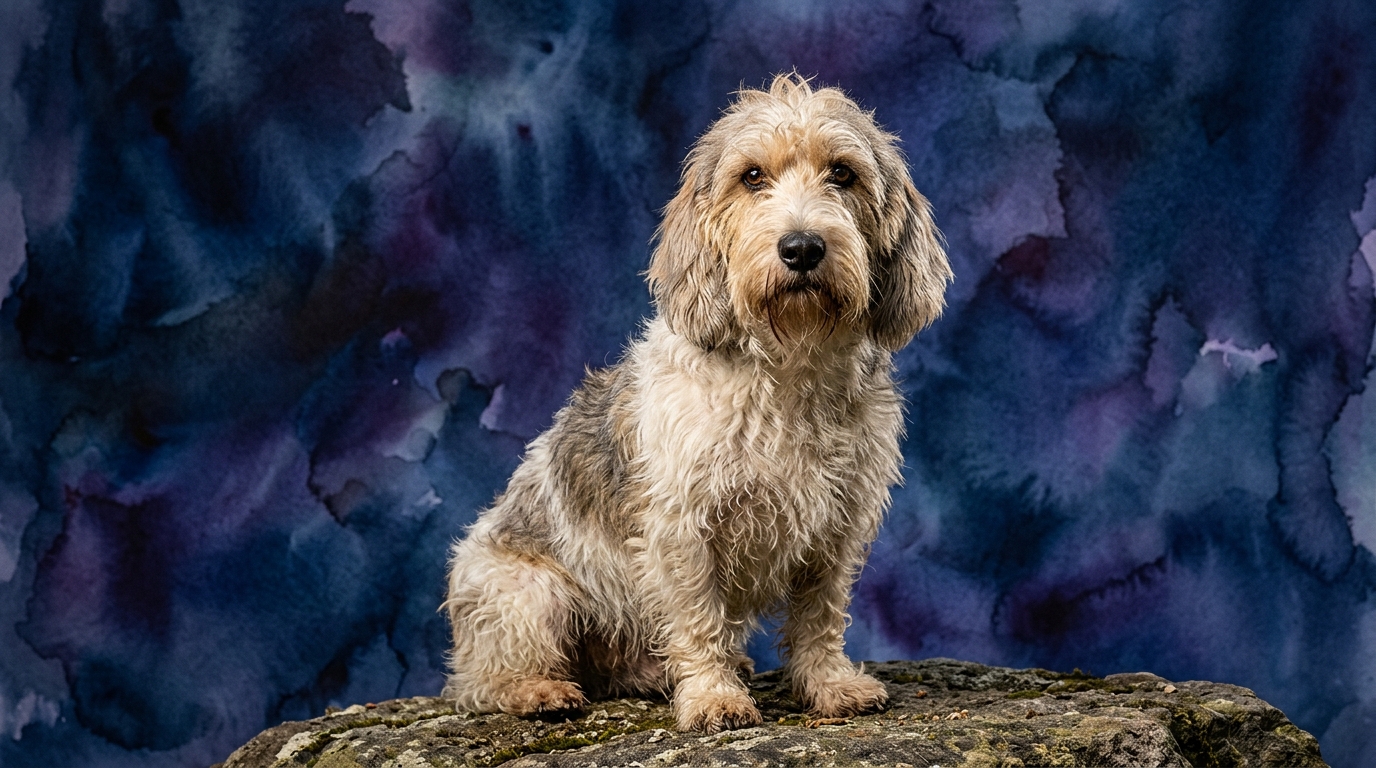
Side-by-Side IQ Profile: Miniature Schnauzer vs. PBGV
The Cosmic Pet Pet IQ Lab employs a comprehensive five-dimensional framework to assess canine intelligence, moving beyond simplistic notions of 'smart' to understand how breeds process the world. Here, we analyze the Miniature Schnauzer, a terrier with a Coren ranking of #12, against the Petit Basset Griffon Vendéen, a hound breed not formally ranked by Coren but with its own specialized cognitive blueprint.
For the Miniature Schnauzer, problem-solving is rated at 4/5, indicating a capacity to analyze new situations and devise solutions, often involving manipulating objects or navigating obstacles. Their training speed, at an impressive 5/5, highlights their rapid acquisition of new commands and routines, thriving on structured learning. Social intelligence stands at 4/5, suggesting a keen awareness of human cues, emotional states, and social hierarchies, making them responsive companions. An instinctive drive of 4/5 reflects their terrier heritage, manifesting as a purposeful pursuit of small prey or a strong desire to 'work,' which can be channeled into tasks. Finally, their memory score of 4/5 ensures they retain learned behaviors and experiences effectively, building a strong foundation for ongoing training.
In contrast, the Petit Basset Griffon Vendéen (PBGV) presents a different cognitive profile, with all five dimensions rated at 3/5. Their problem-solving, while present, typically manifests in navigating complex scent trails rather than abstract puzzles, reflecting their primary function as scent hounds. A training speed of 3/5 means they will learn, but often require more repetition and patience, as their independent nature can sometimes take precedence over immediate compliance. Social intelligence at 3/5 indicates they are generally amiable and enjoy companionship, but might be less attuned to subtle human directives compared to breeds with higher scores, often preferring to follow their noses. Their instinctive drive, also 3/5, is profoundly rooted in their powerful olfactory senses, compelling them to track scents with unwavering focus, which can override other stimuli. A memory score of 3/5 suggests they learn and remember, but consistent reinforcement is key to solidifying commands amidst their strong natural inclinations.
Where the Miniature Schnauzer Wins Cognitively
The Miniature Schnauzer excels in areas demanding cognitive flexibility and a strong desire to engage with human directives. Their 4/5 problem-solving score means they are adept at tasks requiring sequential thought, such as figuring out how to open a treat-dispensing toy or navigating an agility course with precision. This proactive approach to challenges makes them particularly receptive to learning complex tricks and participating in dog sports where novel situations are frequently encountered.
Furthermore, their superior training speed (5/5) and social intelligence (4/5) combine to create a dog that is highly attuned to its human handler and eager to please. This translates into a remarkable ability to pick up new commands quickly and generalize learned behaviors across different environments and distractions. A Miniature Schnauzer is likely to anticipate cues, respond to subtle body language, and work collaboratively, making them proficient in advanced obedience and service-oriented tasks where human-canine partnership is paramount. Their memory (4/5) ensures that once a concept is grasped, it is likely to stick, building on previous lessons with ease.
Where the Petit Basset Griffon Vendéen Wins Cognitively
While their scores may appear lower in a generalized intelligence comparison, the Petit Basset Griffon Vendéen possesses a specialized cognitive prowess that is deeply ingrained in their hound heritage. Their true cognitive strength lies in their extraordinary olfactory capabilities and their persistent, independent problem-solving when on a scent. A PBGV's 3/5 problem-solving isn't about opening a puzzle box; it's about meticulously dissecting a complex odor trail, determining its age, direction, and the identity of the quarry, often over challenging terrain.
Their instinctive drive, rated 3/5, is a testament to this unwavering focus on scent. Once a PBGV catches a compelling odor, their entire cognitive apparatus shifts to tracking. This single-mindedness, while sometimes perceived as stubbornness in conventional obedience, is a hallmark of their specialized intelligence. They can maintain focus on a scent for extended periods, ignoring environmental distractions that would derail many other breeds. This remarkable persistence and their ability to make independent decisions while working a trail are unique cognitive strengths, reflecting a breed optimized for a specific, demanding task.
Which is Easier to Train and Why
When considering ease of training in a conventional sense, the Miniature Schnauzer generally presents a more straightforward experience due to their higher scores across the board, particularly in training speed (5/5) and social intelligence (4/5). They are eager to learn, responsive to positive reinforcement, and actively seek to understand and comply with human expectations. Their problem-solving ability (4/5) helps them grasp complex sequences, while their memory (4/5) ensures that lessons are retained with minimal refresher. Schnauzers thrive on mental engagement and variety in their training, making them enjoyable partners for obedience, agility, and trick training.
The Petit Basset Griffon Vendéen, with its 3/5 scores in training speed and social intelligence, coupled with a strong instinctive drive for scent, typically requires a more patient and nuanced training approach. Their independence and profound focus on scent mean that they can be easily distracted by interesting smells, often prioritizing their nose over a command. Training a PBGV involves understanding their hound nature: making lessons fun, scent-oriented, and highly rewarding to capture their attention. While they are capable of learning, their progress may be slower, and consistency is paramount to overcome their natural inclination to follow their own agenda, which is often dictated by their powerful sense of smell. Owners must be prepared for a dog that may not always offer immediate compliance, but is ultimately trainable with the right motivation and persistence.
Which Suits Active Owners vs. Relaxed Owners
For active owners seeking a highly engaged and versatile canine companion, the Miniature Schnauzer is an excellent match. Their significant cognitive capacity across problem-solving, training speed, and social intelligence means they thrive on consistent mental stimulation and physical activity. Owners who enjoy teaching new tricks, participating in dog sports like agility, obedience, or rally, or even engaging in urban exploration will find the Miniature Schnauzer an enthusiastic and capable partner. Their desire to work and interact makes them well-suited for a lifestyle that involves regular, structured activities and opportunities for intellectual engagement.
The Petit Basset Griffon Vendéen, while possessing a robust and energetic nature, suits owners who appreciate a dog with an independent spirit and a passion for exploration. They require significant physical exercise, especially long walks or hikes where they can indulge their powerful sense of smell, but their mental stimulation often comes from the environment itself – the myriad scents they encounter. Relaxed owners might find their independent nature challenging if they expect constant, eager compliance, but owners who enjoy leisurely, scent-driven outdoor adventures and are patient with training will find a charming and affectionate companion. They are less about complex obedience routines and more about enjoying the simple, sensory pleasures of the world alongside their human.
The Verdict
Choose a Miniature Schnauzer if you desire a responsive, quick-learning companion eager for structured training, dog sports, and deep collaborative engagement. They are ideal for owners who thrive on teaching and interacting through complex activities.
Opt for a Petit Basset Griffon Vendéen if you appreciate an independent, scent-driven explorer who thrives on outdoor adventures and requires a patient, consistent training approach. They are best for owners who value a robust spirit and enjoy observing their dog's natural instincts in action.
🧠 Find Your Pet's IQ Score
Our Pet IQ Lab assessment covers 25+ tests across 5 cognitive dimensions — personalized to your breed.
Take the Full IQ Test →Frequently Asked Questions
Is a Miniature Schnauzer easy to live with for first-time dog owners?
Yes, their eagerness to learn and social intelligence make them generally well-suited for first-time owners who are committed to consistent training and socialization. Their responsiveness helps new owners build confidence in their training abilities quickly.
Do Petit Basset Griffon Vendéens require a lot of exercise?
PBGVs are energetic hounds that do require a good amount of daily exercise, preferably including opportunities for off-leash exploration in a secure area where they can follow scents. While they enjoy long walks, mental stimulation through scent work is just as crucial as physical exertion for their well-being.
Which breed is better for apartment living?
Both breeds can adapt to apartment living with sufficient exercise and mental stimulation, but the Miniature Schnauzer might adapt slightly more easily due to their lower need for expansive scent-tracking opportunities. PBGVs, with their vocal tendencies and strong desire to follow a scent, might be more challenging in a confined space without dedicated outdoor time.