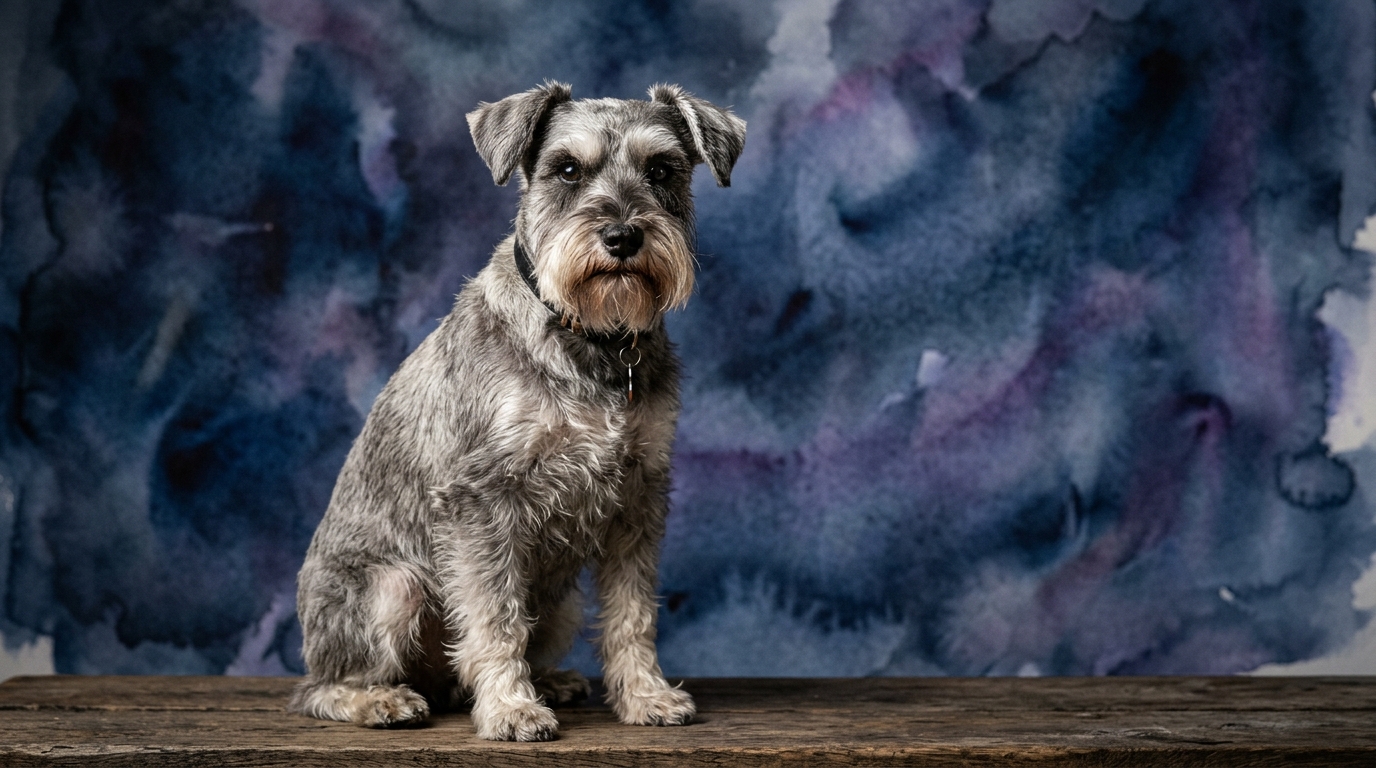
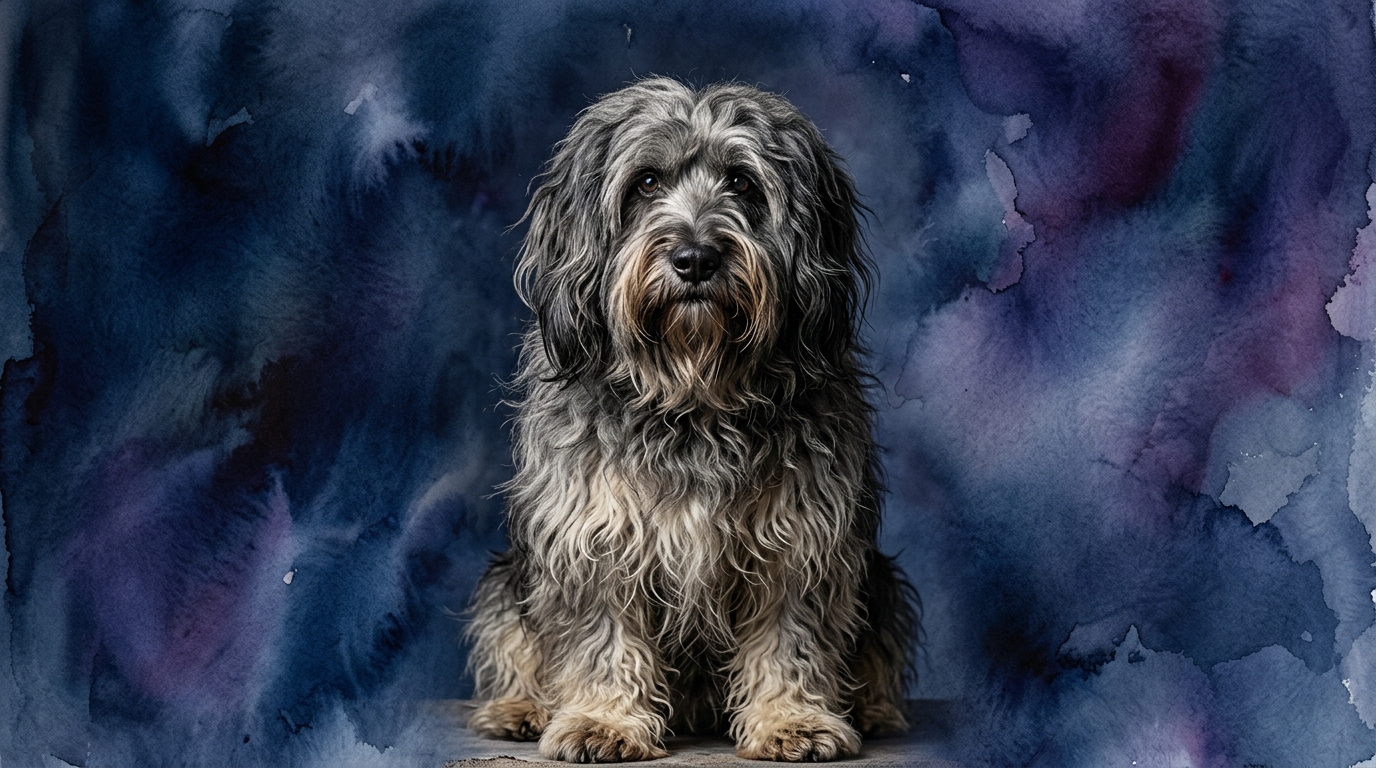
Side-by-Side IQ Profile: Miniature Schnauzer vs. Polish Lowland Sheepdog
The Cosmic Pet Pet IQ Lab employs a five-dimensional framework to assess canine cognition, offering a granular view beyond simple 'smart' labels. Let's explore how the Miniature Schnauzer and the Polish Lowland Sheepdog fare within this detailed spectrum.
**Problem Solving:** The Miniature Schnauzer, with a 4/5, typically demonstrates a persistent and inventive approach to novel challenges, often devising strategies to overcome obstacles. The Polish Lowland Sheepdog's 3/5 suggests a more deliberate, sometimes independent, thought process, where solutions are reached through careful observation rather than immediate, rapid action.
**Training Speed:** Here, the Miniature Schnauzer shines with a 5/5, indicating an exceptional ability to quickly grasp and consistently perform new commands, requiring minimal repetition. The Polish Lowland Sheepdog's 3/5 means they learn at a steady pace but may require more patient, consistent reinforcement due to their independent nature.
**Social Intelligence:** With a 4/5, Miniature Schnauzers are generally highly attuned to human cues and emotions, fostering a responsive and interactive companionship. The Polish Lowland Sheepdog's 3/5 reflects a more watchful and independent understanding of social dynamics, where their engagement is often thoughtful rather than overtly eager-to-please.
**Instinctive Drive:** The Schnauzer's 4/5 points to a robust terrier drive for pursuit and exploration, often involving a keen interest in small prey and territorial patrolling. The PLS's 3/5 signifies a focused herding drive, expressed as a deliberate inclination to gather and manage, translating to a protective instinct for their family without intense prey focus.
**Memory:** A 4/5 for the Miniature Schnauzer indicates a strong capacity to retain learned behaviors, routines, and associations over time, supporting complex training. The Polish Lowland Sheepdog's 3/5 suggests a functional memory for important commands and daily life, though perhaps more selectively applied due to their independent streak.
Where the Miniature Schnauzer Wins Cognitively
The Miniature Schnauzer's superior scores across the board, particularly its exceptional Training Speed (5/5), provide a clear advantage in structured learning and responsiveness. A Schnauzer typically excels at quickly associating commands with actions, making them prime candidates for advanced obedience, agility, or trick training where rapid uptake is key. Their Problem Solving (4/5) combined with Memory (4/5) means they not only figure out how to open the treat cabinet but also remember the method for future attempts, often demonstrating impressive strategic thinking for their size. This cognitive profile makes them particularly adept at navigating complex environments and responding promptly to new stimuli, a trait that makes them highly adaptable to varied lifestyles and learning challenges.
Where the Polish Lowland Sheepdog Wins Cognitively
While their scores are numerically lower, the Polish Lowland Sheepdog's cognitive strengths lie in areas reflecting their original purpose, fostering a distinct type of intelligence. Their Instinctive Drive (3/5) for herding, combined with their Problem Solving (3/5) and Social Intelligence (3/5), results in a nuanced, independent decision-making capacity. Unlike the Schnauzer's quick, direct problem-solving, the PLS often exhibits a more observational, thoughtful approach, evaluating situations before acting, crucial for managing livestock without constant human instruction. This independence means they are less reliant on constant human direction, a cognitive trait benefiting owners seeking a more self-sufficient canine companion. Their social intelligence, while not overtly eager, allows for a deep, subtle bond, where they understand their family's dynamics and protect them with quiet, watchful dedication.
Which is Easier to Train and Why
Based on the Cosmic Pet Pet IQ Lab scores, the Miniature Schnauzer is unequivocally the easier breed to train, largely due to its exceptional Training Speed (5/5). This breed's intrinsic eagerness to please, coupled with its ability to quickly form associations between commands and actions, means they often grasp new concepts in just a few repetitions. Their strong memory (4/5) further solidifies learned behaviors, leading to reliable recall and consistent performance. In contrast, the Polish Lowland Sheepdog, with a Training Speed of 3/5, requires more patience and consistent methods. Their independent herding nature means they process information and decide to comply on their own terms, often needing to understand the 'why' behind a command or perceiving a benefit before fully committing. While perfectly capable of learning, a PLS might exhibit a selective attention span or a streak of amiable stubbornness, making training a more extended and nuanced process that thrives on positive reinforcement and clear, consistent boundaries rather than quick obedience.
Which Suits Active Owners vs. Relaxed Owners
The Miniature Schnauzer, with its 4/5 Instinctive Drive and 4/5 Problem Solving, typically thrives with active owners who enjoy engaging their dog in various mentally and physically stimulating activities. They possess a robust zest for life, enjoying regular walks, interactive games, and opportunities to 'work' through puzzle toys or learn new tricks, making them excellent companions for those who appreciate an energetic, involved canine partner needing consistent mental engagement. Conversely, while the Polish Lowland Sheepdog is a working breed, their 3/5 Instinctive Drive and more deliberate cognitive processing suggest they can be more adaptable to a slightly less frenetic pace. They still require daily exercise and mental enrichment, but their independent nature often means they are content with a good walk and then observing their surroundings, less demanding of constant interactive play, valuing a watchful, self-possessed companion.
The Verdict
Choose the Miniature Schnauzer if you desire a quick-learning, highly responsive companion eager for structured training, agility, or a variety of interactive mental challenges, thriving on consistent engagement and a clear partnership.
Opt for the Polish Lowland Sheepdog if you appreciate an independent, thoughtful canine partner with a watchful demeanor, valuing a dog that learns at its own pace and offers a subtle, self-sufficient companionship after its daily exercise needs are met.
🧠 Find Your Pet's IQ Score
Our Pet IQ Lab assessment covers 25+ tests across 5 cognitive dimensions — personalized to your breed.
Take the Full IQ Test →Frequently Asked Questions
Does the Miniature Schnauzer's Coren rank of #12 mean it's 'smarter' than the Polish Lowland Sheepdog?
The Coren rank primarily measures a dog's ability to learn and obey commands quickly, reflecting its obedience intelligence. While the Miniature Schnauzer's high rank indicates its strong aptitude in this area, the Polish Lowland Sheepdog possesses different cognitive strengths, particularly in independent decision-making and observational intelligence, which aren't fully captured by Coren's metric. Both breeds exhibit functional intelligence, just expressed differently in their cognitive profiles.
How do the different 'instinctive drives' impact daily life for these breeds?
The Miniature Schnauzer's 4/5 instinctive drive often manifests as a keen prey drive and territoriality, requiring consistent training to manage chasing small animals and barking. The Polish Lowland Sheepdog's 3/5 herding drive translates to a natural inclination to gather and protect its family, sometimes leading to gentle 'herding' of children or a watchful guarding demeanor, which needs appropriate outlets and guidance.
Can a Polish Lowland Sheepdog excel in dog sports despite its 3/5 training speed?
Absolutely. While a Polish Lowland Sheepdog might take longer to master new skills compared to a Miniature Schnauzer, their dedication, problem-solving ability, and strong bond with their owner mean they can certainly excel in dog sports like agility, obedience, or herding trials with consistent, positive, and patient training. Their thoughtful approach can even be an advantage in complex problem-solving tasks within these sports, where careful consideration is valued.