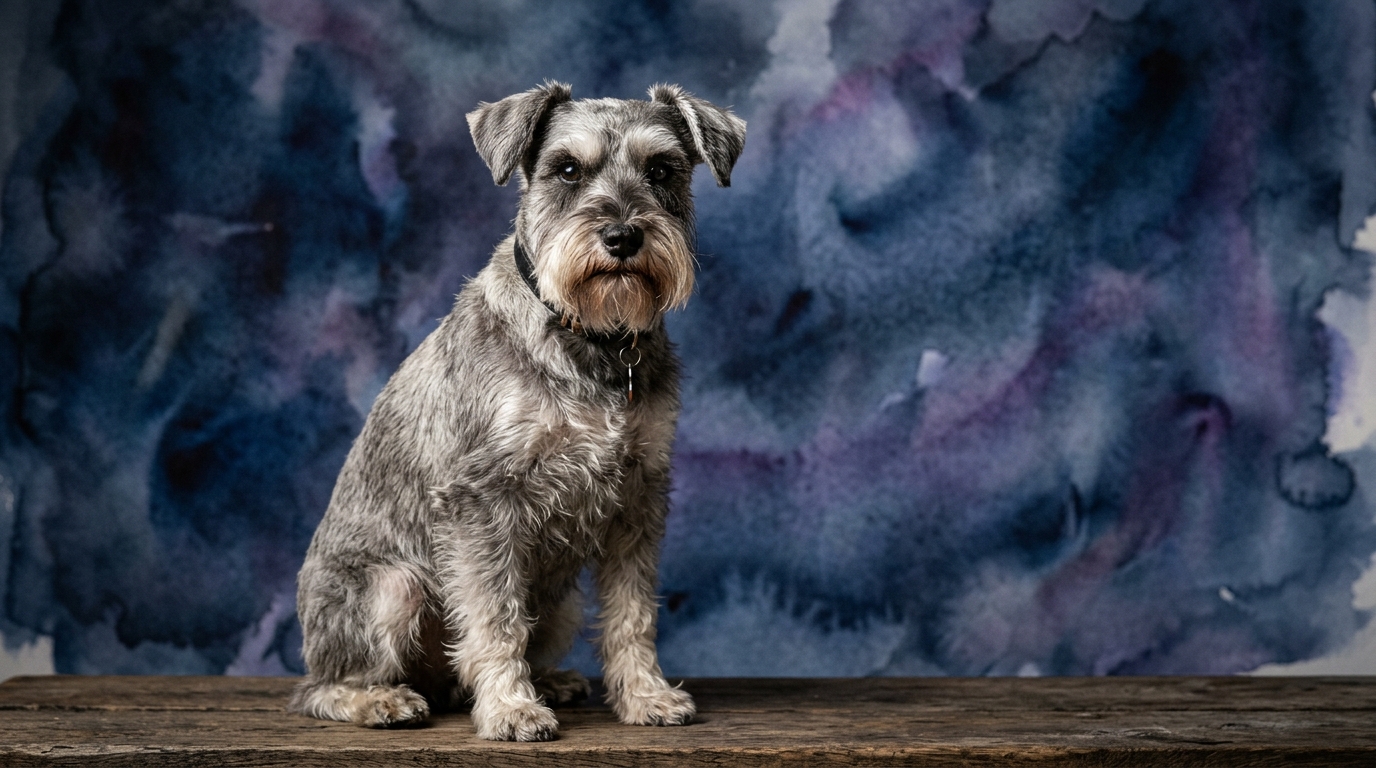
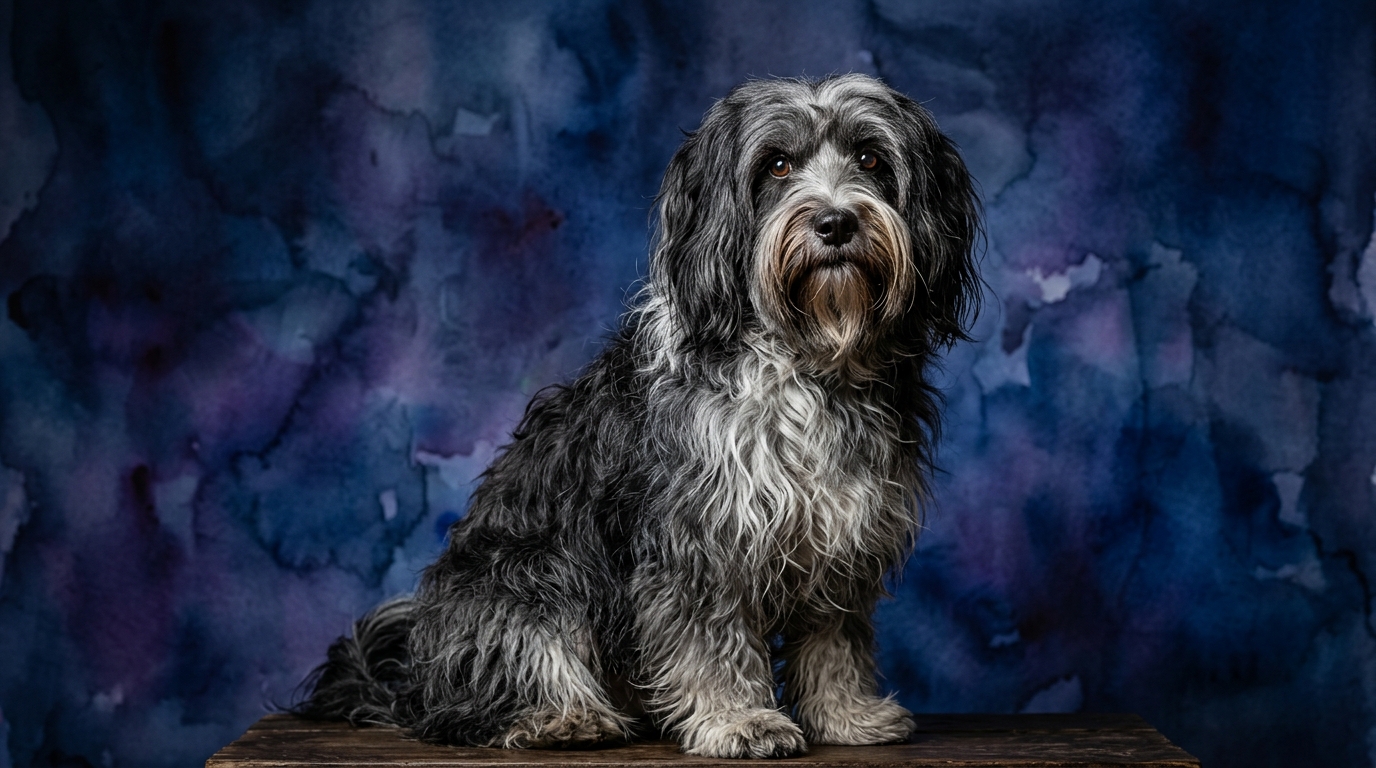
Side-by-Side IQ Profile: Miniature Schnauzer vs. Tibetan Terrier
The Cosmic Pet Pet IQ Lab provides a granular look at canine cognition, moving beyond general perceptions to specific strengths. For the Miniature Schnauzer, ranked impressively at #12 on Stanley Coren's scale, its cognitive profile paints a picture of a sharp, engaged companion. Its Problem Solving is rated 4/5, indicating a capacity for independent thought and overcoming obstacles. Training Speed stands out at a perfect 5/5, suggesting a rapid grasp of new commands and routines. Social Intelligence, at 4/5, highlights its responsiveness to human cues and desire for interaction, while Instinctive Drive, also 4/5, speaks to its inherent terrier tenacity and purposefulness. Memory, at 4/5, ensures learned behaviors and experiences are retained effectively.
In contrast, the Tibetan Terrier, with a Coren rank of #63, presents a more moderate, yet equally distinct, cognitive makeup. Across all five dimensions – Problem Solving, Training Speed, Social Intelligence, Instinctive Drive, and Memory – the Tibetan Terrier consistently scores 3/5. This balanced profile suggests a capable but perhaps less intensely driven learner. A 3/5 in Problem Solving indicates an ability to navigate challenges, though perhaps with less immediate ingenuity than the Schnauzer. Its 3/5 Training Speed means it can learn, but might require more repetition or varied approaches. A 3/5 Social Intelligence points to a more independent, discerning nature, while a 3/5 Instinctive Drive suggests a moderate impulse to act on inherent breed traits. Memory at 3/5 implies solid retention, though potentially not as sharp or expansive as its terrier counterpart.
Where the Miniature Schnauzer Excels Cognitively
The Miniature Schnauzer undeniably presents a more accelerated cognitive profile across the board, making it a standout in several areas. Its 4/5 Problem Solving score means it's adept at figuring things out, whether it's navigating a complex puzzle toy or devising a strategy to reach a coveted treat on a high shelf. This breed often demonstrates a creative approach to challenges, not merely relying on brute force but actively thinking through solutions. This stands in contrast to the Tibetan Terrier's 3/5, suggesting the Schnauzer possesses a more proactive and inventive mental agility.
Perhaps the most striking advantage lies in the Schnauzer's 5/5 Training Speed. This metric signifies an almost unparalleled ability to quickly associate commands with actions and internalize new behaviors. Owners often report that Schnauzers pick up new tricks or obedience cues with remarkable speed, often after just a few repetitions. This rapid learning curve stems from a combination of its attentiveness and a strong desire to engage with its human companions, reflected in its 4/5 Social Intelligence. The Tibetan Terrier's 3/5 in training speed, while respectable, indicates a learning pace that requires more patience and consistency.
Furthermore, the Schnauzer's 4/5 Social Intelligence and 4/5 Memory work in tandem to create a highly responsive and memorable companion. Its capacity to read human emotions and intentions, combined with its strong memory for past interactions and learned rules, fosters a deep, communicative bond. This often translates into a dog that not only understands what is expected but remembers it consistently, applying past lessons to new situations. Its 4/5 Instinctive Drive also means it approaches tasks with a focused determination, leveraging its inherent terrier traits like vigilance and purposefulness, which can be channeled into specific training or activities.
Unique Cognitive Strengths of the Tibetan Terrier
While the Tibetan Terrier's cognitive scores are consistently 3/5, this profile is not a deficit but rather indicative of a distinct mental approach that holds unique advantages for certain lifestyles. Its 3/5 in Problem Solving, for instance, suggests a practical rather than intensely inventive approach. This breed is capable of navigating its environment and learning routines, but it may not constantly seek out complex mental puzzles or require intricate problem-solving tasks to feel fulfilled. This can be a benefit for owners who appreciate a dog that is content without constant, high-stakes intellectual challenges.
The Tibetan Terrier's 3/5 Social Intelligence points to a more discerning and independent nature. Unlike breeds that might be intensely people-pleasing, the Tibetan Terrier often forms strong, deep bonds with its immediate family while being more reserved or aloof with strangers. This translates into a companion that is not overly dependent on constant human validation or attention, making them suitable for individuals who appreciate a dog with a self-possessed demeanor. Their loyalty is earned, and once given, it is profound, creating a unique social dynamic where affection is often expressed subtly and on their own terms.
Additionally, the Tibetan Terrier's 3/5 Instinctive Drive, while lower than the Schnauzer's, contributes to a more moderate and adaptable temperament. This means they are less likely to be driven by intense prey drives or territorial instincts that can sometimes be challenging to manage. Their balanced drive makes them versatile in various living situations, from apartment life to homes with other pets, without the constant need to manage intense, hardwired behaviors. This moderation across memory and training speed also suggests a dog that is adaptable and trainable, just at a pace that allows for deeper understanding and less frantic engagement.
Training Dynamics: Miniature Schnauzer vs. Tibetan Terrier
When it comes to ease of training, the data from The Cosmic Pet Pet IQ Lab unequivocally points to the Miniature Schnauzer as the more straightforward student. With a perfect 5/5 Training Speed, Schnauzers are renowned for their quick uptake of commands and eager participation in training sessions. Their 4/5 Social Intelligence means they are often motivated by human praise and interaction, making them keen to please and highly responsive to positive reinforcement. This combination of rapid learning and a desire to engage makes them excellent candidates for obedience, agility, and even more complex trick training, often excelling with minimal repetition.
Their strong memory (4/5) ensures that once a lesson is learned, it tends to stick, reducing the need for constant re-training. This cognitive profile means Schnauzers are often a joy to train, responding well to consistent, engaging methods. They thrive on mental stimulation and view training as a collaborative activity, using their problem-solving skills to figure out what's expected and their instinctive drive to execute tasks with precision.
The Tibetan Terrier, while certainly trainable, presents a different dynamic with its 3/5 Training Speed. This breed is intelligent but often more independent and less overtly motivated by the desire to please. Training a Tibetan Terrier requires patience, consistency, and a creative approach to keep them engaged, as they might find repetition boring. Their 3/5 Social Intelligence means they might be less inclined to perform simply for human approval, often needing to understand the 'why' behind a command or finding a personal incentive. While they possess a good memory (3/5), their independent streak means they may choose whether or not to apply what they've learned based on their current mood or perceived benefit. Owners should embrace their independent spirit, making training sessions fun and varied to maintain their interest and ensure lasting results.
Lifestyle Match: Active vs. Relaxed Owners
The cognitive profiles of these two breeds offer clear guidance for matching them with suitable owner lifestyles. The Miniature Schnauzer, with its high scores in Problem Solving (4/5), Training Speed (5/5), and Instinctive Drive (4/5), thrives with active owners who are prepared to provide consistent mental and physical engagement. These dogs need more than just walks; they benefit immensely from structured activities like obedience classes, agility, earthdog trials, or puzzle toys that challenge their sharp minds. Owners who enjoy teaching new tricks, participating in dog sports, or simply engaging in interactive play will find a highly rewarding companion in the Schnauzer.
Their significant instinctive drive means they appreciate having a 'job' to do, even if it's just patrolling the yard or signaling when someone approaches. A Schnauzer without sufficient mental stimulation can become bored, potentially leading to undesirable behaviors as they invent their own 'problems' to solve. Therefore, owners who are active, consistent in training, and enjoy a mentally stimulating partnership will find the Miniature Schnauzer to be an ideal match, flourishing under purposeful interaction and learning.
The Tibetan Terrier, with its balanced 3/5 scores across all cognitive dimensions, offers a more adaptable fit for owners who might describe themselves as moderately active or appreciate a dog with a less intense drive for constant 'work.' While they certainly enjoy and require regular exercise and mental engagement, their problem-solving and instinctive drives are less demanding than the Schnauzer's. They are content with daily walks, play sessions, and moderate training, without necessarily needing to excel in competitive dog sports. Their 3/5 social intelligence also means they are not constantly demanding attention, making them suitable for owners who appreciate a dog that is affectionate but also comfortable with periods of independent activity.
This is not to say the Tibetan Terrier is a 'lazy' dog; they are robust and enjoy outdoor adventures. However, their cognitive makeup suggests they are less prone to anxiety or destructive behavior if not constantly stimulated at the highest level. They suit owners who seek a loyal, engaging companion that enjoys shared activities but also respects a calmer, more independent presence around the home. They are a good fit for families or individuals who offer consistent, gentle guidance and appreciate a dog that can adapt to a varied pace of life.
The Verdict
Choose the Miniature Schnauzer if you desire a highly trainable, quick-witted partner eager for mental challenges and consistent engagement in training and activities. They are best for owners committed to active, purposeful interaction.
Opt for the Tibetan Terrier if you prefer a discerning, independent companion with a balanced cognitive profile, content with moderate activity and a less intense drive for constant 'work.' They suit owners who appreciate a loyal, adaptable presence.
🧠 Find Your Pet's IQ Score
Our Pet IQ Lab assessment covers 25+ tests across 5 cognitive dimensions — personalized to your breed.
Take the Full IQ Test →Frequently Asked Questions
Are Miniature Schnauzers good for first-time dog owners?
Yes, Miniature Schnauzers can be excellent for first-time owners due to their high training speed (5/5) and social intelligence (4/5). Their eagerness to learn and bond makes them responsive to consistent guidance, though their energetic nature requires commitment to mental and physical stimulation.
Do Tibetan Terriers need a lot of grooming?
Tibetan Terriers have a distinctive double coat that does require regular grooming to prevent matting, typically several times a week. While not directly related to IQ, their moderate instinctive drive (3/5) means they are generally patient during grooming sessions, especially if introduced early and positively.
Which breed is better with children?
Both breeds can be good with children, but their approaches differ. Miniature Schnauzers (Social Intelligence 4/5) are often more overtly playful and engaged. Tibetan Terriers (Social Intelligence 3/5) tend to be more reserved but form strong, loyal bonds with family, including respectful children, preferring calm interaction over boisterous play.