Side-by-Side Cognitive Profile
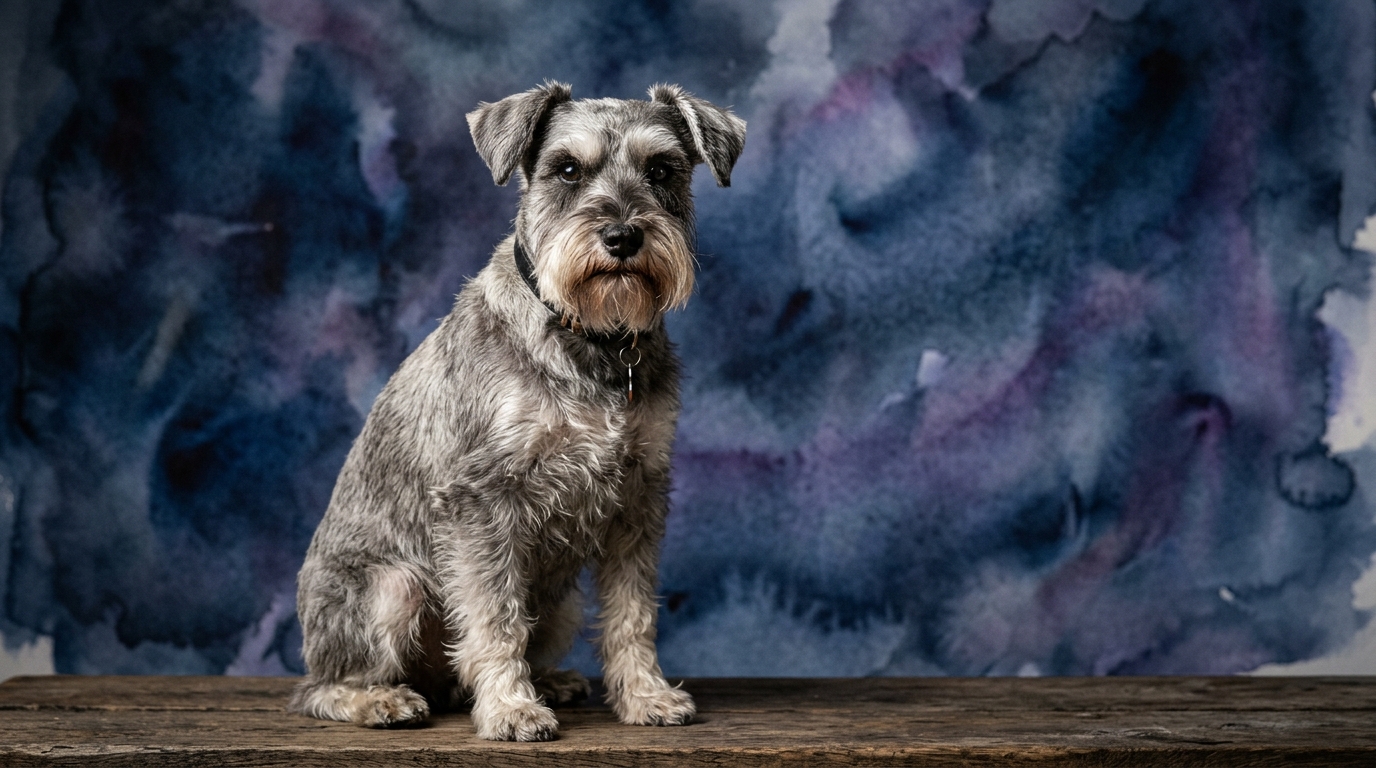
At The Cosmic Pet Pet IQ Lab, we evaluate canine intelligence across five key dimensions, providing a nuanced understanding of each breed's mental landscape. For the Miniature Schnauzer, their cognitive scores paint a picture of a quick-witted and capable learner:
Problem Solving (4/5): This breed demonstrates a keen ability to analyze situations and devise solutions, often figuring out how to open latches, retrieve hidden toys, or navigate complex environments. Their approach isn't just trial-and-error; it involves a degree of strategic thinking.
Training Speed (5/5): Miniature Schnauzers assimilate new commands and routines with remarkable rapidity, often requiring very few repetitions to grasp a concept. This makes them highly responsive to consistent training and capable of learning an extensive vocabulary of cues.
Social Intelligence (4/5): They are adept at reading human emotions and intentions, adjusting their behavior to suit social contexts. This allows them to integrate smoothly into family life, understanding dynamics and responding appropriately to various household members.
Instinctive Drive (4/5): Reflecting their heritage as vermin hunters, Miniature Schnauzers possess a strong prey drive and vigilance. This manifests as alert barking, a desire to chase small animals, and a natural inclination to guard their territory and family.
Memory (4/5): Their recall of learned behaviors, commands, and past experiences is robust. Once a rule or trick is established, a Miniature Schnauzer is likely to remember it over long periods, making consistency in training particularly effective.
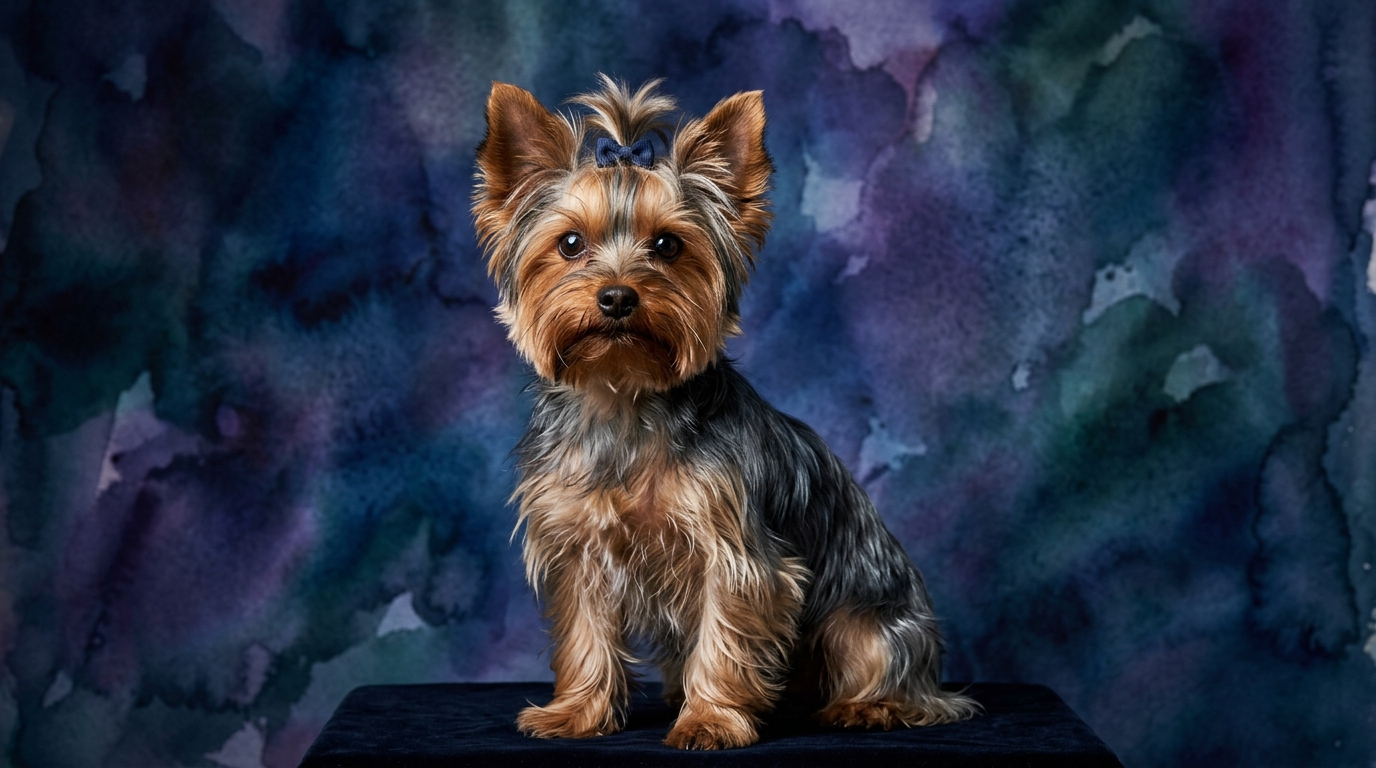
The Yorkshire Terrier, while sharing the terrier spirit, presents a slightly different cognitive emphasis:
Problem Solving (3/5): Yorkshire Terriers exhibit a cleverness that allows them to navigate daily challenges, often employing persistence and a degree of cunning. While capable of solving puzzles, their approach might be more reliant on repeated attempts and observation rather than abstract strategizing.
Training Speed (4/5): This breed learns new commands at a good pace, picking up cues efficiently with positive reinforcement. They are responsive, though they may require slightly more consistent practice than a breed with a 5/5 score, demonstrating good but not exceptional speed.
Social Intelligence (4/5): Yorkshire Terriers are highly attuned to their human companions, understanding social cues and forming strong bonds. They are sensitive to family moods and can adapt their interactions to fit the emotional climate of the home, often displaying a charming, assertive personality within their social circle.
Instinctive Drive (4/5): True to their terrier roots, Yorkies possess a potent instinctive drive, particularly a strong prey drive and a vigilant nature. This can translate into chasing small critters, alert barking at perceived intruders, and a confident, sometimes feisty, demeanor.
Memory (4/5): Yorkshire Terriers possess a good memory for routines, commands, and experiences. They recall what they've learned and the outcomes of past interactions, which means both good habits and unwanted behaviors can become deeply ingrained if not addressed consistently.
Where Miniature Schnauzer Wins Cognitively
The Miniature Schnauzer distinctly excels in cognitive areas demanding rapid assimilation of information and independent strategic thought. With a training speed score of 5/5, they demonstrate an exceptional capacity to learn new commands, tricks, and routines with remarkable efficiency, often mastering tasks in fewer repetitions than many other breeds. This superior learning curve positions them as prime candidates for advanced obedience, complex dog sports like agility, or even service work where a vast repertoire of learned behaviors is essential. Their problem-solving score of 4/5 further underscores this advantage; these dogs aren't just memorizing actions but often comprehending the underlying objectives, allowing them to adapt learned behaviors to novel situations. This cognitive agility, reflected in their impressive Coren rank of #12, suggests a breed that genuinely thrives on mental engagement and complex challenges. Historically, their role as farm dogs required them to think independently, strategizing to control vermin without constant human direction, a trait that clearly manifests in their contemporary cognitive profile. They often display a proactive approach to their environment, actively seeking solutions rather than passively waiting for guidance, making them exceptionally rewarding for owners who enjoy interactive training and mental games.
Where Yorkshire Terrier Wins Cognitively
While the Yorkshire Terrier's raw scores in problem-solving and training speed might be slightly lower than the Schnauzer's, their cognitive strengths shine in different, equally valuable dimensions, particularly their application of social intelligence and tenacious spirit. Their 4/5 social intelligence score highlights an acute awareness of human emotions and social dynamics, allowing them to form incredibly deep, responsive bonds with their families. This makes them exceptionally attuned companions, often anticipating their owner's moods and needs, and adept at navigating complex household interactions with charming assertiveness. Furthermore, their instinctive drive, also rated at 4/5, combined with their compact size, gives them a unique cognitive advantage in vigilance. They possess a keen perception of their immediate environment, often acting as surprisingly effective, albeit vocal, watchdogs, detecting subtle changes that larger breeds might overlook. Their problem-solving at 3/5, while not as high, is often coupled with an unwavering persistence; a Yorkie might not solve a puzzle box instantly, but their sheer determination to achieve their goal, often through clever trial and error, is a testament to their unique mental fortitude. This combination of social acumen and tenacious wit allows them to excel in scenarios requiring charm, adaptability, and unwavering spirit within a close-knit human environment, often outmaneuvering situations through sheer personality and clever manipulation of their social standing.
Which is Easier to Train and Why
When evaluating ease of training, the Miniature Schnauzer generally holds an edge due to its superior training speed and problem-solving capabilities. Their 5/5 training speed means they absorb commands rapidly, often requiring fewer repetitions to achieve proficiency in basic obedience, advanced tricks, or specialized tasks. They tend to enjoy the mental stimulation of training sessions, viewing them as engaging challenges. This breed’s problem-solving acumen (4/5) enables them to grasp the *concept* behind a command, allowing for quicker generalization of learned behaviors to different environments and situations. For instance, teaching a Schnauzer to 'stay' will likely progress quickly because they understand the desired outcome. In contrast, the Yorkshire Terrier, with a 4/5 training speed, is certainly trainable but often requires a slightly more patient and consistently rewarding approach. Their strong instinctive drive (4/5) can sometimes lead to distractions, and their independent terrier spirit means they need to be convinced that cooperation is more beneficial. While they respond very well to positive reinforcement, their problem-solving (3/5) might mean they rely more on rote memorization. For example, a Yorkie might take a few more sessions to reliably master a 'stay' in a distracting environment, requiring more focused, high-value rewards. Therefore, while both breeds are capable learners, the Miniature Schnauzer’s cognitive profile lends itself to a somewhat smoother and faster training process, particularly for complex commands, whereas the Yorkie thrives on consistent, positive reinforcement that appeals to their social and reward-driven nature.
Which Suits Active Owners vs. Relaxed Owners
The choice between a Miniature Schnauzer and a Yorkshire Terrier often hinges on an owner's lifestyle and their capacity for providing specific types of engagement. For active owners who thrive on mental stimulation, structured activities, and consistent training, the Miniature Schnauzer is an exceptional match. Their high problem-solving (4/5) and unmatched training speed (5/5) mean they excel in environments offering regular challenges like agility courses, advanced obedience, or scent work. These dogs possess a natural drive to work and learn, benefiting immensely from owners who can channel their keen intellect into productive outlets. They enjoy having a 'job' and will flourish with an owner who dedicates time to mental games and physical exercise, often becoming bored or mischievous if under-stimulated. Conversely, the Yorkshire Terrier is well-suited for owners who appreciate a clever, tenacious, and socially astute companion, even if their daily routine is slightly more relaxed in terms of structured mental tasks. While Yorkies certainly enjoy play and walks, their cognitive profile, particularly their strong social intelligence (4/5), means they thrive on close human companionship and interaction. They can adapt well to apartment living and less rigorous exercise routines, as long as their need for social engagement and consistent, positive guidance is met. Their instinctive drive (4/5) still requires outlets, but these can often be satisfied through interactive play within the home or regular neighborhood strolls. A relaxed owner who values a loyal, charming, and responsive lap companion who still possesses a spark of terrier wit will find the Yorkshire Terrier a delightful fit, provided they are prepared for the breed's confident personality and potential for vocal alerts.
The Verdict
Choose a Miniature Schnauzer if you seek a highly trainable companion for advanced obedience, dog sports, or a dog that genuinely enjoys solving complex puzzles and learning intricate tasks.
Opt for a Yorkshire Terrier if you desire a clever, tenacious, and socially astute companion who thrives on close interaction and can adapt well to various home environments with consistent, positive guidance.
🧠 Find Your Pet's IQ Score
Our Pet IQ Lab assessment covers 25+ tests across 5 cognitive dimensions — personalized to your breed.
Take the Full IQ Test →Frequently Asked Questions
Are Miniature Schnauzers good at agility?
Yes, their exceptional training speed and strong problem-solving capabilities make Miniature Schnauzers excel in agility and other dog sports where rapid learning and strategic navigation are key.
Do Yorkshire Terriers bark a lot?
Yorkshire Terriers, with their strong instinctive drive and vigilance (4/5), can be prone to alert barking to perceived threats or changes in their environment; consistent training can help manage this trait.
How do their memory scores impact daily life?
Both breeds, scoring 4/5 in memory, effectively retain learned behaviors, house rules, and past experiences, meaning consistency in training and routine is crucial for establishing good habits and avoiding unwanted ones.