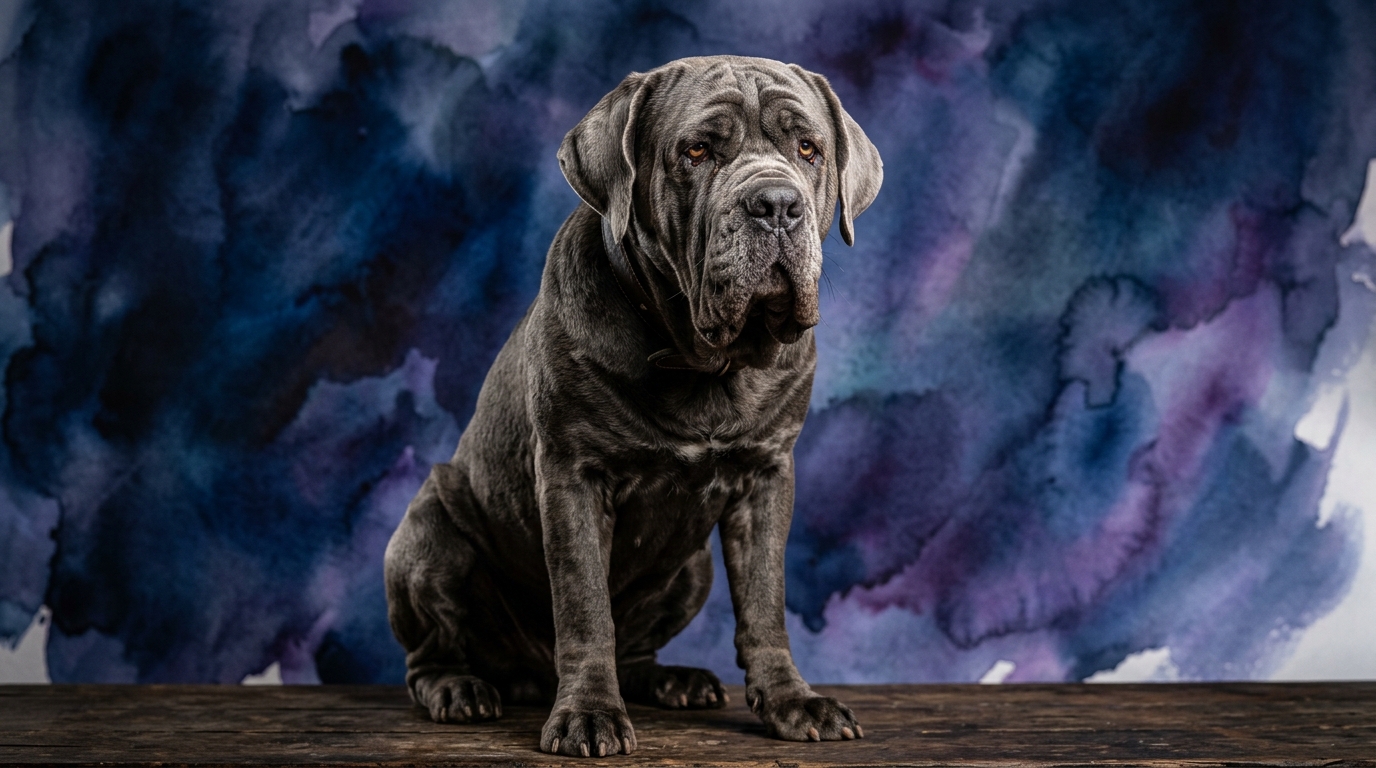
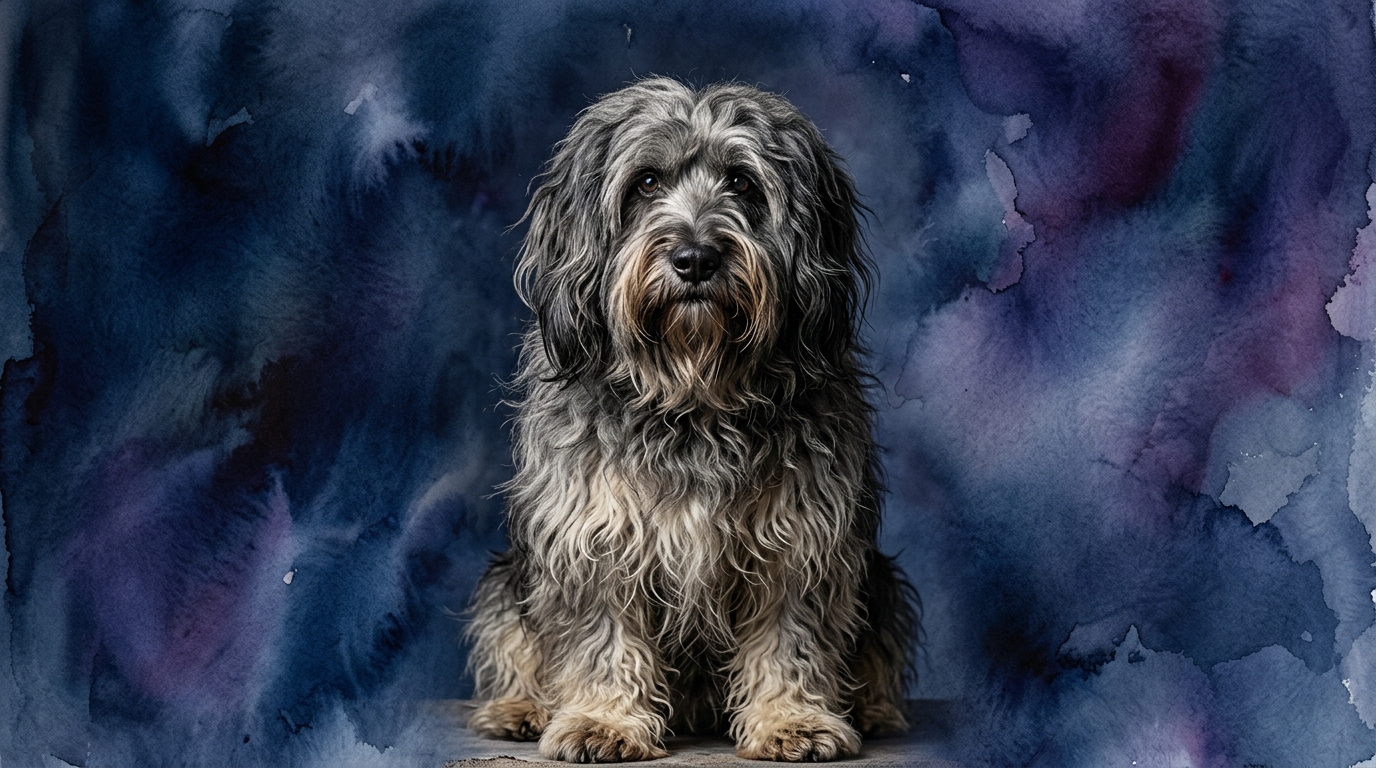
Side-by-Side IQ Profile: Neapolitan Mastiff vs. Polish Lowland Sheepdog
At first glance, The Cosmic Pet Pet IQ Lab data presents both the Neapolitan Mastiff and the Polish Lowland Sheepdog (PON) with an identical rating of 3/5 across all five cognitive dimensions: problem solving, training speed, social intelligence, instinctive drive, and memory. However, these identical scores belie a rich tapestry of distinct cognitive applications, shaped by centuries of selective breeding for vastly different purposes. Understanding these nuances requires looking beyond the number to the 'how' of their mental processes.
For the Neapolitan Mastiff, a breed steeped in history as a formidable guardian, their problem-solving (3/5) is less about intricate puzzles and more about practical threat assessment and deterrence. Their training speed (3/5) reflects a deliberate learning process, where consistency and clear motivation are key to solidifying behaviors. Social intelligence (3/5) manifests as profound loyalty and discerning wariness towards strangers, deeply understanding their family's dynamics. Their instinctive drive (3/5) is overwhelmingly geared towards protection and territorial defense, a quiet vigilance rather than a high-energy pursuit. Finally, their memory (3/5) is robust for people, routines, and past experiences, contributing to their steadfast nature.
The Polish Lowland Sheepdog, in contrast, a breed developed for independent herding, showcases its problem-solving (3/5) through resourcefulness in dynamic environments, often devising clever, sometimes mischievous, solutions. Their training speed (3/5) is marked by an eagerness to engage and learn, particularly when tasks are stimulating, though their independence can sometimes be mistaken for stubbornness. Social intelligence (3/5) for a PON involves a keen awareness of human emotions and social cues, coupled with a watchful but adaptable approach to new people. Their instinctive drive (3/5) is a powerful herding instinct, a desire to gather and manage, translating into a need for mental and physical engagement. Their memory (3/5) is excellent for commands and complex sequences, supporting their adaptability and quick learning.
Where the Neapolitan Mastiff Wins Cognitively
While both breeds score identically, the Neapolitan Mastiff's cognitive profile excels in areas demanding steadfastness, profound loyalty, and an imposing presence. Their social intelligence (3/5) is singularly focused on their family, making them unparalleled in discerning who belongs and who might pose a threat. This isn't a broad social agility, but a deep, protective understanding of their inner circle. Their problem-solving (3/5), though not quick or flashy, is exceptionally effective in their guardian role; they excel at assessing a situation and making a deliberate, often intimidating, response to protect their loved ones. This deliberate thought process, combined with their strong memory (3/5) for safe zones and trusted individuals, creates a formidable and reliable protector whose cognition is perfectly aligned with their historical purpose.
Where the Polish Lowland Sheepdog Wins Cognitively
The Polish Lowland Sheepdog's cognitive strengths shine in adaptability, independent thinking, and dynamic engagement. Their problem-solving (3/5) is highly practical and often involves creative, on-the-spot decisions, a remnant of their need to manage flocks without constant human direction. This manifests as a resourcefulness that allows them to navigate novel situations with a degree of cleverness. The PON's training speed (3/5), while numerically identical, often appears more enthusiastic, driven by a strong instinctive drive (3/5) to work and interact. They are quicker to engage in varied tasks and thrive on mental stimulation, making them highly responsive to engaging, reward-based training that taps into their innate desire for purpose and activity. Their excellent memory (3/5) supports this adaptability, allowing them to recall complex sequences and apply learned behaviors across different contexts.
Which is Easier to Train and Why
Despite both breeds having a training speed rating of 3/5, the practical experience of training them differs significantly. The Neapolitan Mastiff requires immense patience, consistency, and a calm, authoritative approach. Their learning style is deliberate; once they grasp a concept, it's typically well-retained due to their memory, but the initial acquisition can be slow. Motivation for a Neo often stems from loyalty to their handler and a desire for comfort and routine. They are not easily swayed by fleeting treats or overly energetic commands, preferring a steady, reassuring presence.
The Polish Lowland Sheepdog, while equally rated, presents a different kind of training challenge. They are eager to learn and respond well to varied, stimulating training sessions that prevent boredom. However, their independent herding instincts and quick wit mean they can easily become bored or decide to do things their own way if not engaged. Training a PON requires an owner who can make learning fun, challenging, and consistent, harnessing their natural drive without stifling their independence. Their apparent 'stubbornness' is often a manifestation of their problem-solving mind trying to find a more efficient or self-rewarding path, requiring an experienced hand to guide their focus effectively.
Which Suits Active Owners vs. Relaxed Owners
The Neapolitan Mastiff is generally better suited for owners who might be described as 'relaxed' in terms of physical activity requirements, but 'active' in their commitment to consistent early socialization and training. While they are not high-energy dogs, preferring lounging and watchful observation, their sheer size and protective instincts demand an owner who is prepared to invest heavily in foundational training and exposure during their formative years. They need a calm, steady environment and an owner who appreciates a deliberate pace and a deep, loyal bond without needing constant physical output.
Conversely, the Polish Lowland Sheepdog is unequivocally for active owners. Their herding background means they possess a significant need for both physical exercise and mental stimulation. They thrive on activities like agility, obedience, and dog sports, or even just long, engaging walks that allow them to explore and use their minds. A PON without sufficient outlets for its energy and drive can become bored, destructive, or develop undesirable herding behaviors towards family members. They need an owner who is enthusiastic about daily engagement and can provide a consistent outlet for their spirited nature.
The Verdict: When to Choose Each Breed
The Verdict
Choose the Neapolitan Mastiff if you seek a profoundly loyal, protective companion who thrives on a calm, consistent routine and you are prepared for patient, deliberate training and extensive early socialization for a formidable guardian.
Opt for the Polish Lowland Sheepdog if you are an active, experienced owner eager to provide ample mental and physical engagement for a spirited, independent, and adaptable companion with a strong working drive.
🧠 Find Your Pet's IQ Score
Our Pet IQ Lab assessment covers 25+ tests across 5 cognitive dimensions — personalized to your breed.
Take the Full IQ Test →Frequently Asked Questions
Are Neapolitan Mastiffs good with children and other pets?
Neapolitan Mastiffs can be wonderful family dogs, often gentle and protective with children they've been raised with, but their size necessitates supervision. With other pets, early and thorough socialization is crucial for harmonious living, as their protective instincts can sometimes extend to their family's territory.
What kind of exercise does a Polish Lowland Sheepdog need?
Polish Lowland Sheepdogs require significant daily exercise, including vigorous walks, runs, or engaging play sessions. They also benefit greatly from mental stimulation through training, puzzle toys, and dog sports like agility or herding trials to satisfy their intelligent and driven nature.
Are these breeds suitable for first-time dog owners?
Neither the Neapolitan Mastiff nor the Polish Lowland Sheepdog are typically recommended for first-time dog owners. Both breeds require experienced handlers who understand their unique needs, strong personalities, and the commitment necessary for proper training, socialization, and management of their specific drives.