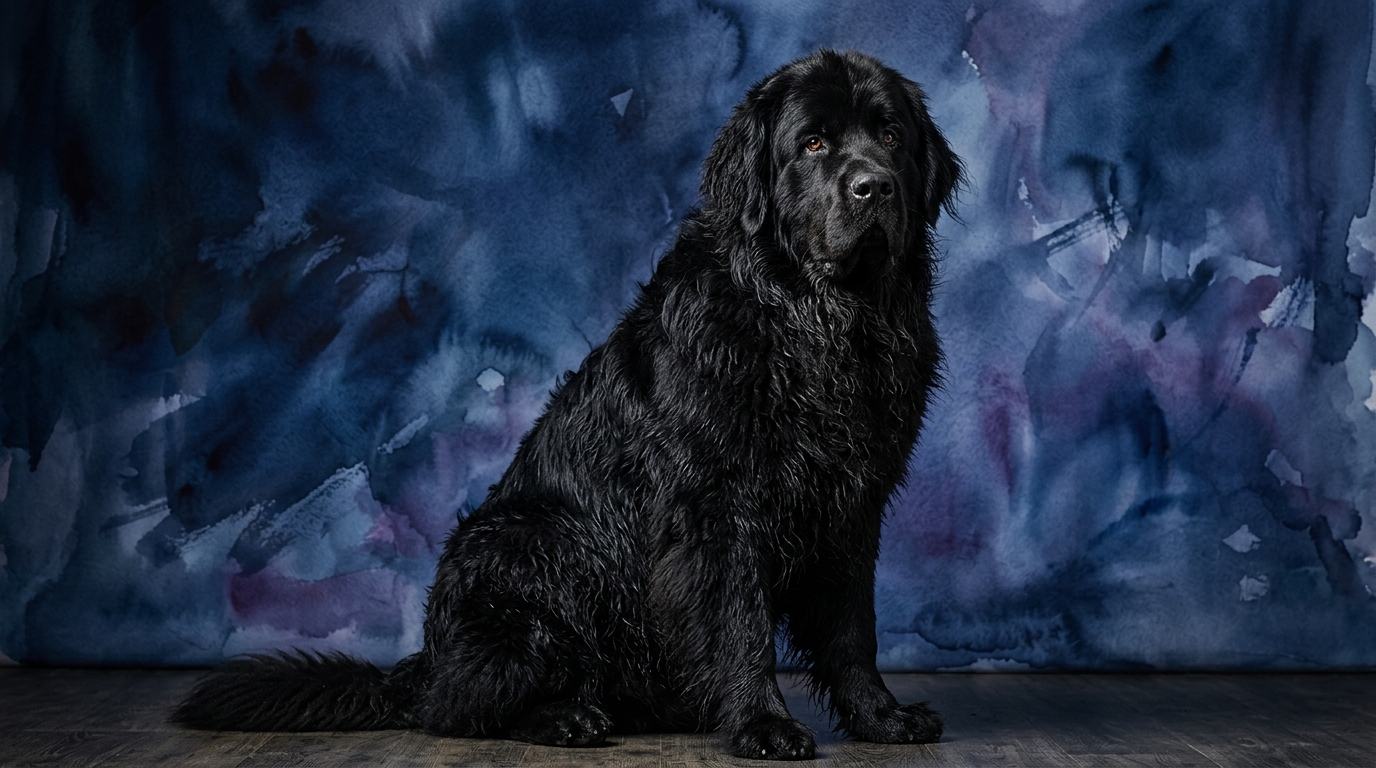

Side-by-Side IQ Profile: Newfoundland vs. Australian Terrier
At The Cosmic Pet Pet IQ Lab, we delve beyond surface observations to understand the intricate cognitive makeup of our canine companions. Comparing the Newfoundland and the Australian Terrier offers a glimpse into how breed history and function sculpt mental aptitudes. The Newfoundland, a majestic Working Group dog, holds a Coren rank of #34, a measure reflecting their obedience and working intelligence, while the Australian Terrier, a Terrier Group member, is not Coren-ranked, highlighting a difference in traditional working roles.
The Newfoundland exhibits a Problem Solving score of 3/5, indicating a methodical approach to tasks rather than spontaneous innovation, often excelling in scenarios where their strength and persistence are key. Their Training Speed is an impressive 4/5, as they are generally eager to please and absorb commands with relative ease. Social Intelligence is a standout at 5/5, reflecting their profound empathy and ability to connect deeply with humans. An Instinctive Drive of 5/5 underscores their powerful, inherent desire for tasks like water rescue and companionship, while their Memory at 4/5 ensures consistent retention of learned behaviors and routines.
The Australian Terrier, in contrast, shows a Problem Solving score of 3/5, often involving tenacious efforts to achieve goals, particularly those related to their prey drive or accessing desirable resources. Their Training Speed is 3/5; they are capable learners but often require more creative and persistent approaches due to their independent nature. Social Intelligence stands at 3/5, meaning they are adept at reading their immediate human companions but can be more discerning or selective in broader social settings. An Instinctive Drive of 3/5 highlights their focused prey drive and territorial alertness, characteristic of their terrier heritage. Finally, their Memory is 3/5, generally reliable but sometimes secondary to a more pressing instinct or independent whim.
Where the Newfoundland Wins Cognitively
The Newfoundland’s cognitive strengths truly shine in areas demanding profound emotional intelligence and a cooperative spirit. Their Social Intelligence, rated 5/5, is exceptional; they possess an almost uncanny ability to understand human emotions, offering comfort and anticipating needs with a gentle sensitivity. This isn't just responsiveness; it's a deep, empathetic connection that allows them to integrate seamlessly into family dynamics as intuitive companions and protectors. They often seem to 'know' when a family member is distressed, responding with a calming presence.
Furthermore, their Instinctive Drive, also 5/5, is a complex cognitive advantage. Unlike a simple prey drive, the Newfoundland’s inherent impulse often manifests as a powerful desire to help and guard, particularly in water rescue scenarios. This drive is rooted in a sophisticated understanding of distress signals and a profound sense of duty, compelling them to act altruistically. This intrinsic motivation, coupled with their Training Speed of 4/5, means they readily learn and apply commands, especially when those tasks align with their natural inclination to serve and protect, making them highly receptive students in cooperative endeavors.
Where the Australian Terrier Wins Cognitively
While their scores may appear lower, the Australian Terrier possesses distinct cognitive advantages tailored to their heritage. Their Problem Solving, rated 3/5, often manifests as clever strategies for navigating tight spaces, outwitting a small 'prey' (even if it's just a treat hidden in a puzzle toy), or finding innovative ways to access desired objects, showcasing a tenacious and direct approach to challenges. This isn't about brute force; it's about persistent, focused ingenuity to achieve a specific, often immediate, goal.
Beyond the listed IQ dimensions, the Australian Terrier excels in perceptual acuity and rapid situational assessment. Their keen senses and swift cognitive processing of environmental stimuli, such as subtle sounds or distant movements, make them exceptional watchdogs. This quick perceptual processing allows for almost instantaneous alerts to novel situations, a distinct cognitive advantage in their role as vigilant guardians of their territory. Their independent spirit, while sometimes challenging in training, also grants them a certain cognitive flexibility, allowing them to assess and react to situations without constant human direction, a trait valuable for their original vermin-hunting tasks.
Which is Easier to Train and Why?
When it comes to ease of training, the Newfoundland generally presents a more straightforward path for most owners. Their exceptional Social Intelligence and strong desire to please humans translate directly into a greater willingness to comply and learn. They thrive on positive reinforcement and gentle guidance, responding with a cooperative spirit rather than challenging authority. Their robust Memory (4/5) and consistent nature mean that once a behavior is learned and understood, it is typically retained reliably, making them predictable and steady learners. They are less prone to distraction and more focused on the task at hand, especially when it involves working alongside their human companions.
The Australian Terrier, conversely, can be more challenging to train, primarily due to their independent terrier spirit and strong instinctive drives (3/5). While intelligent, their tenacity and self-reliance mean they may require more creative, engaging, and persistent training methods. They can exhibit 'selective hearing' if not sufficiently motivated, or if their powerful instincts, such as the urge to chase a squirrel, override a command. Training an Australian Terrier demands consistency, patience, and a deep understanding of their inherent drive to investigate and, at times, to be stubborn. Early socialization and consistent, positive reinforcement are crucial to channel their energy and intelligence effectively, ensuring their spirited nature is a boon rather than a barrier to learning.
Suited for Active vs. Relaxed Owners
The activity level and cognitive engagement required by these two breeds differ significantly, making them suitable for distinct owner lifestyles. The Newfoundland, despite its immense size, is not a hyperactive dog. They require regular, moderate exercise, ideally including opportunities for swimming, which engages both their physical strength and their innate water rescue drive. However, they are generally calm and relaxed indoors, content to be a gentle presence near their family. They suit owners who appreciate a dignified, serene companion and are prepared for the commitment of grooming and managing a giant breed, but who don't necessarily seek an intense running or adventure partner. Their cognitive needs are met through social interaction, purposeful tasks, and a consistent, loving routine.
The Australian Terrier, on the other hand, is a lively and energetic companion packed into a small frame. Despite their size, they possess a robust energy level and a keen, active mind that demands consistent mental and physical stimulation. They are ideal for active owners who enjoy daily walks, engaging playtime, and perhaps participation in dog sports like agility, earthdog trials, or obedience. Their strong drive and problem-solving inclination mean they can become bored, vocal, or even destructive if their minds and bodies are not adequately engaged. They are not suited for owners seeking a sedentary lap dog; rather, they thrive with companions who can match their zest for life and provide outlets for their intelligent, tenacious spirit.
The Verdict: When to Choose Each
The Verdict
Choose a Newfoundland if you seek a deeply empathetic, gentle, and cooperative companion who excels in social bonding and possesses an innate desire to serve and protect with calm strength.
Opt for an Australian Terrier if you desire a spirited, tenacious, and alert companion who thrives on engaging challenges and offers unwavering loyalty with a lively, independent spark.
🧠 Find Your Pet's IQ Score
Our Pet IQ Lab assessment covers 25+ tests across 5 cognitive dimensions — personalized to your breed.
Take the Full IQ Test →Frequently Asked Questions
Do Newfoundlands make good apartment dogs despite their size?
While large, Newfoundlands are relatively calm indoors and can adapt to apartment living if they receive sufficient daily exercise, mental stimulation, and regular outdoor access, ideally with opportunities for swimming. Their gentle nature means they don't typically cause chaos in smaller spaces and prioritize being near their family.
Are Australian Terriers good with children?
Australian Terriers can be excellent family dogs, typically good with respectful children, especially if raised together and properly socialized. However, their terrier tenacity and prey drive mean they need supervision with very young children and proper introductions to ensure harmonious interactions and prevent nipping.
What's the biggest training challenge for an Australian Terrier?
The biggest training challenge for an Australian Terrier often lies in managing their strong prey drive and independent nature, which can lead to selective hearing or distraction when instincts take over. Consistent, engaging training focused on positive reinforcement and early impulse control is essential to channel their drive effectively.