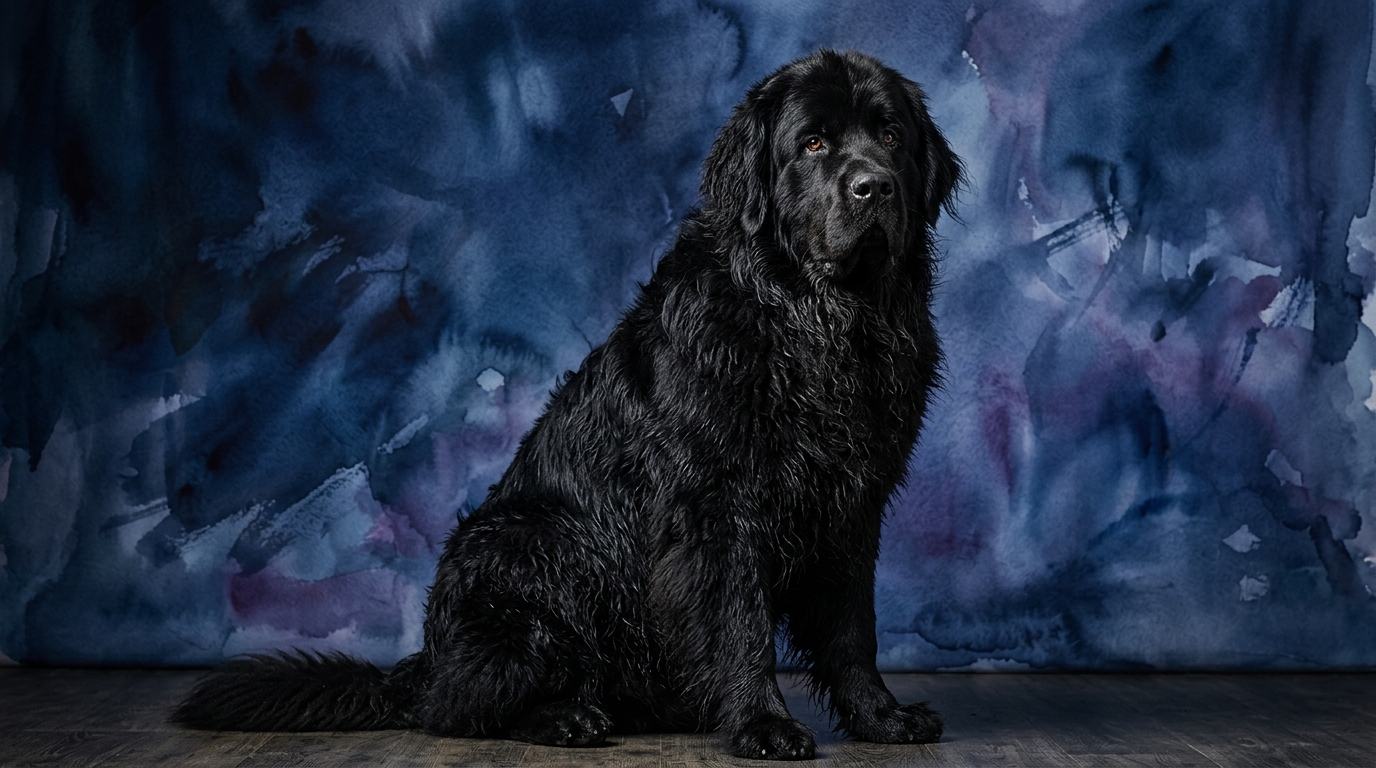
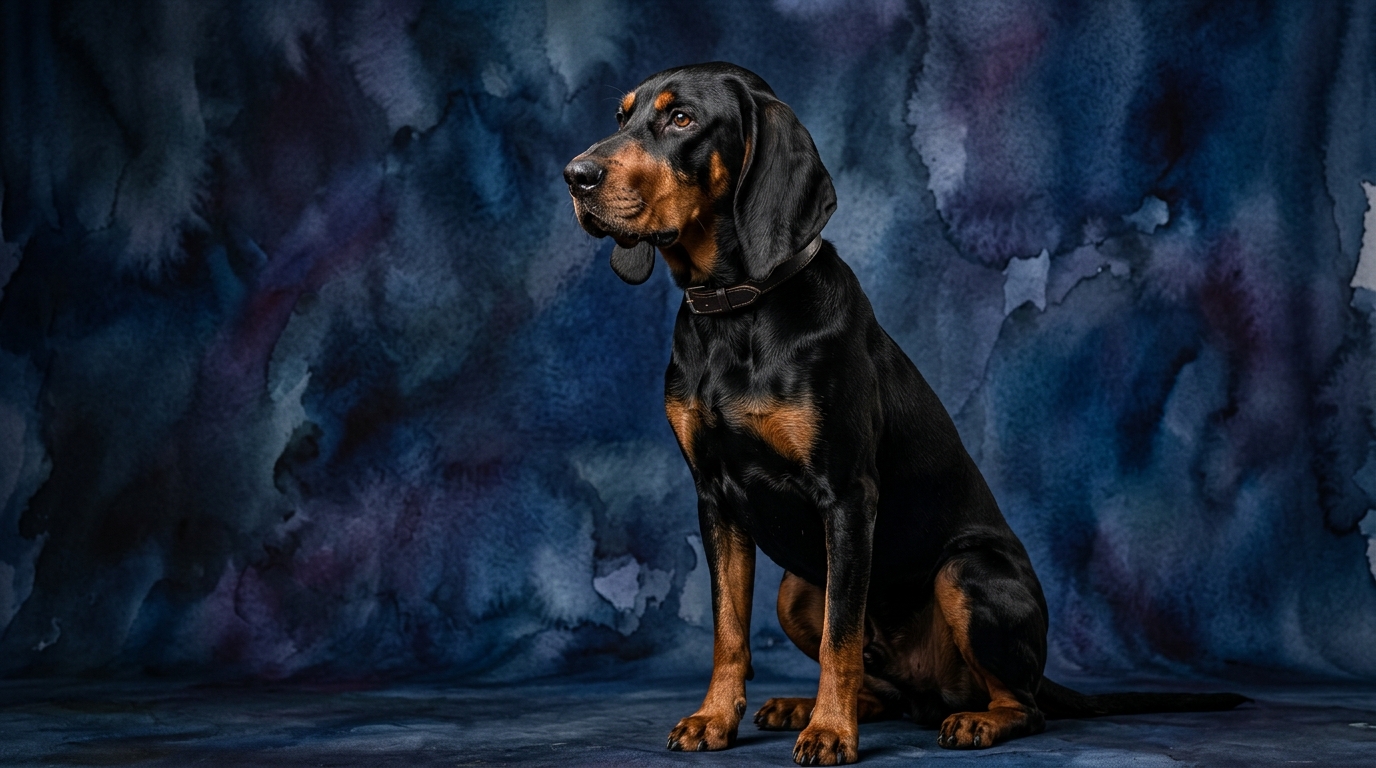
Side-by-Side IQ Profile: Newfoundland vs. Black and Tan Coonhound
The Newfoundland’s cognitive blueprint is characterized by a Problem Solving score of 3/5, indicating a capacity to navigate complex situations, often in the service of others, such as assessing a distressed swimmer or finding a path through obstacles. Its Training Speed is a commendable 4/5, suggesting a quick uptake of new commands and routines, facilitated by its inherent desire to cooperate. Where it truly stands out is its Social Intelligence, rated at an exceptional 5/5; this reflects a profound sensitivity to human emotional states, body language, and intentions, making it an empathetic and intuitive partner. An Instinctive Drive of 5/5 points to a powerful, inherent pull towards specific working tasks, particularly water rescue, drafting, or guarding, which it performs with natural aptitude. Finally, its Memory is strong at 4/5, allowing for the retention of intricate sequences, learned behaviors, and the recognition of familiar individuals and environments over time. This breed’s overall cognitive structure is geared towards cooperative, compassionate work.
In contrast, the Black and Tan Coonhound presents a distinct cognitive profile. Its Problem Solving ability also scores 3/5, but this is typically applied to the intricate world of scent. This involves independently deciphering complex olfactory information, filtering distractions, and strategizing the most efficient path to a target scent without direct human guidance. Its Training Speed is a moderate 3/5, meaning that while capable of learning, it often requires more repetition and consistent motivation, as its primary focus isn't always on human directives. The Coonhound's Social Intelligence is rated 3/5, indicating a more independent disposition; while affectionate with its family, it's less driven by constant human interaction or emotional mirroring compared to some breeds. Its Instinctive Drive, also 3/5, is profoundly channeled into its ancestral role of tracking and baying game, an unrelenting focus that defines much of its behavior. Lastly, its Memory is 3/5, sufficient for recalling scent trails and familiar routines but perhaps less geared towards a broad spectrum of complex, abstract commands. This breed's cognition is optimized for autonomous, persistent pursuit.
Where the Newfoundland Wins Cognitively
The Newfoundland clearly demonstrates superior cognitive strengths in domains demanding close human partnership and nuanced environmental interaction. Its exceptional Social Intelligence (5/5) is a hallmark, meaning it is profoundly attuned to human cues, emotions, and intentions. This translates into a dog that not only understands verbal commands but also the subtle non-verbal communication from its handler, anticipating needs and responding with remarkable empathy. This cognitive attribute is crucial for its historical roles in water rescue, where sensing distress and acting appropriately without explicit instruction is paramount. Furthermore, its higher Training Speed (4/5) allows for a more rapid acquisition of new skills and complex behaviors, making it highly receptive to structured learning. Coupled with its robust Memory (4/5), the Newfoundland excels at retaining intricate sequences of actions, critical for service work, therapy roles, or even elaborate trick training. These combined cognitive attributes position the Newfoundland as a remarkably adaptable and biddable partner in environments requiring consistent, reliable execution and a deep understanding of human companionship.
Where the Black and Tan Coonhound Wins Cognitively
While the Newfoundland excels in cooperative intelligence, the Black and Tan Coonhound's cognitive prowess is distinctly specialized, shining brightest in independent problem-solving driven by its extraordinary olfactory capabilities. Its specific cognitive strength lies in its ability to follow, interpret, and relentlessly pursue incredibly intricate scent trails, a task demanding sustained focus and intricate decision-making without constant human instruction. This involves sophisticated scent discrimination, filtering out environmental noise and irrelevant odors, recalling the path of a quarry, and dynamically adapting its strategy based on changing wind patterns or terrain – all advanced forms of problem-solving (rated 3/5) applied uniquely to its sensory world. The Coonhound's Instinctive Drive (3/5), though numerically lower than the Newfoundland's, is profoundly channeled into this singular pursuit, allowing it to maintain an unwavering focus on a task that would quickly overwhelm or bore other breeds. Its cognitive framework is optimized for autonomous navigation, persistence, and a deep, ingrained understanding of its scent-driven environment, making it an unparalleled specialist in its ancestral hunting role.
Which is Easier to Train and Why
When considering ease of training, the Newfoundland generally presents as the more straightforward student due to its higher Training Speed (4/5) and exceptional Social Intelligence (5/5). Newfoundlands are inherently people-oriented, typically eager to please, and highly responsive to positive reinforcement. Their strong desire to cooperate and form deep bonds with their handlers motivates them to learn and comply, making them receptive to understanding and executing commands. Their inherent biddability means they actively seek to understand and respond to human directives, often showing a natural inclination towards structured learning and obedience. In stark contrast, the Black and Tan Coonhound, with a Training Speed of 3/5 and Social Intelligence of 3/5, often requires significantly more patience, consistency, and creative motivation. Their powerful instinctive drive for scent work is a dominant force; once a compelling odor is detected, their focus can become singularly fixed on the trail, making it incredibly challenging to maintain their attention on human-initiated tasks, especially in an outdoor environment. Training a Coonhound frequently involves redirecting this potent drive, finding ways to make human commands more intrinsically rewarding than the allure of a fresh scent, and employing methods that acknowledge their independent, scent-driven nature rather than attempting to suppress it entirely.
Which Suits Active Owners vs. Relaxed Owners
The Newfoundland, despite its substantial size and working heritage, can surprisingly suit both active and more relaxed owners, provided its specific needs for mental and physical engagement are consistently met. For active owners, Newfoundlands thrive on structured activities like swimming, carting, or participation in therapy work, which engage their instinctive drives and social intelligence in fulfilling ways. However, once their daily requirements for mental stimulation and moderate physical exercise are satisfied, they are typically calm, gentle, and relaxed indoors, often content to lounge near their family. This makes them suitable for owners who appreciate a quiet, affectionate companion at home but are committed to providing regular, quality engagement outdoors. The Black and Tan Coonhound, conversely, is unequivocally a match for highly active owners. Its deep-seated instinctive drive demands significant physical output and, crucially, opportunities to engage its powerful nose. This means long, vigorous walks, hiking, or dedicated scent work sessions are not merely beneficial but essential. A Coonhound left without sufficient mental challenge and physical stimulation is highly likely to become restless, vocal, and potentially destructive, making them a less suitable choice for genuinely relaxed, sedentary, or time-constrained lifestyles.
The Verdict
Opt for a Newfoundland if you seek a deeply empathetic, biddable companion eager for cooperative tasks and capable of structured learning, ideal for family life and roles requiring sensitivity.
Select a Black and Tan Coonhound if you are an active individual or family prepared to channel its intense, independent drive for scent work and provide ample outdoor exploration.
🧠 Find Your Pet's IQ Score
Our Pet IQ Lab assessment covers 25+ tests across 5 cognitive dimensions — personalized to your breed.
Take the Full IQ Test →Frequently Asked Questions
Do Newfoundlands and Black and Tan Coonhounds have similar problem-solving abilities?
Both breeds rate 3/5 in Problem Solving, but they apply this skill differently; Newfoundlands often in cooperative, human-centric scenarios, while Coonhounds excel at independently navigating complex scent trails.
Is a Black and Tan Coonhound difficult to train?
Black and Tan Coonhounds can be more challenging to train than some breeds due to their independent nature and powerful scent drive, which can override their focus on human commands.
Which breed is more affectionate towards its family?
The Newfoundland, with its 5/5 Social Intelligence, is typically more openly affectionate and attuned to its family's emotional states, while the Black and Tan Coonhound (3/5 Social Intelligence) tends to be more independent but still forms strong bonds.