Side-by-Side Cognitive Profiles
At The Cosmic Pet Pet IQ Lab, we analyze canine intelligence across five key dimensions, providing a nuanced understanding of each breed's mental strengths. The Newfoundland, a revered water rescue dog, and the Black Russian Terrier, a dedicated protector, present contrasting yet equally compelling cognitive landscapes.
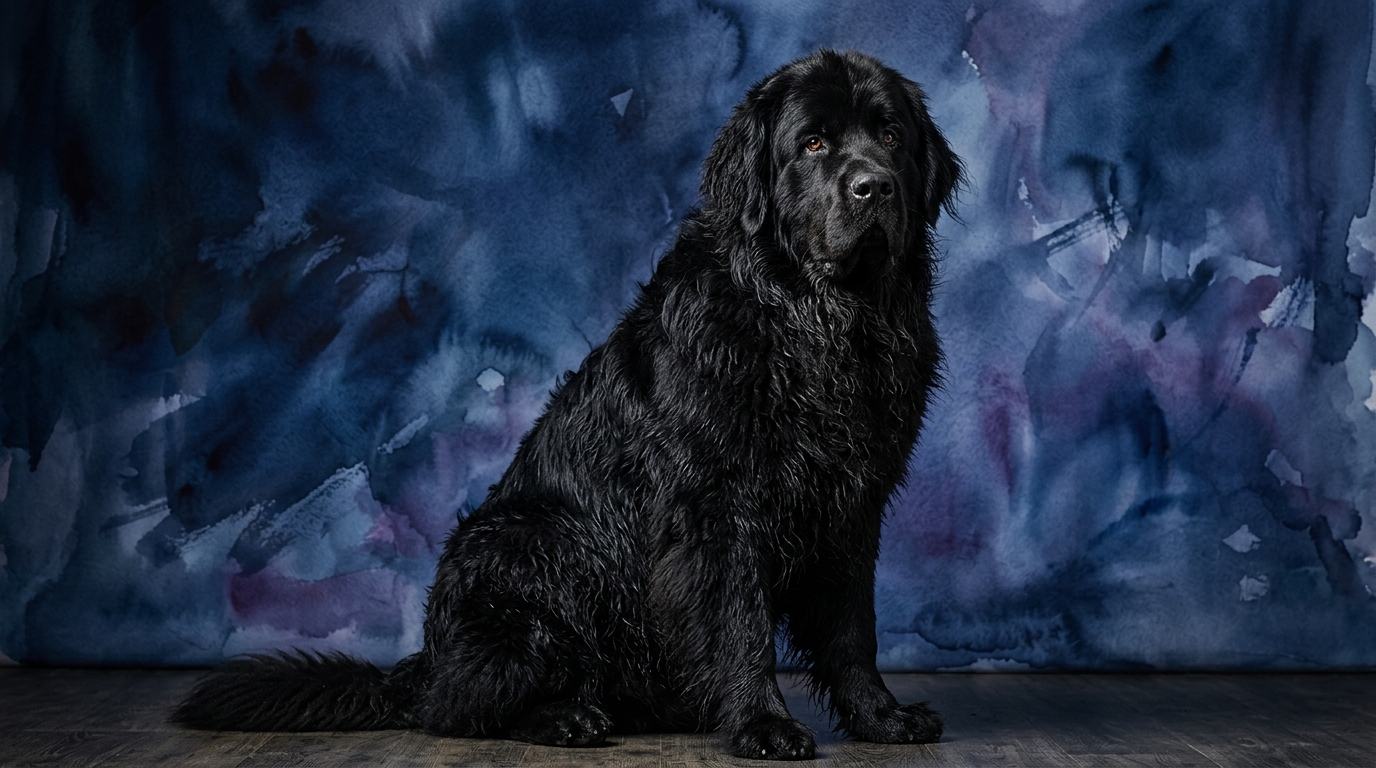
For the Newfoundland (Coren rank #34): Their Problem Solving (3/5) manifests in practical, often water-based, challenges, where persistence and physical strength are key to navigating obstacles or retrieving. Training Speed (4/5) reflects their cooperative nature and eagerness to please, enabling them to grasp new commands relatively quickly. Social Intelligence (5/5) is a hallmark, showcasing an exceptional ability to read human emotions, form deep bonds, and offer intuitive comfort. Their Instinctive Drive (5/5) is powerfully geared towards rescue, particularly in aquatic environments, demonstrating unwavering commitment. Memory (4/5) allows them to retain learned behaviors and social cues over extended periods, contributing to their consistent performance.
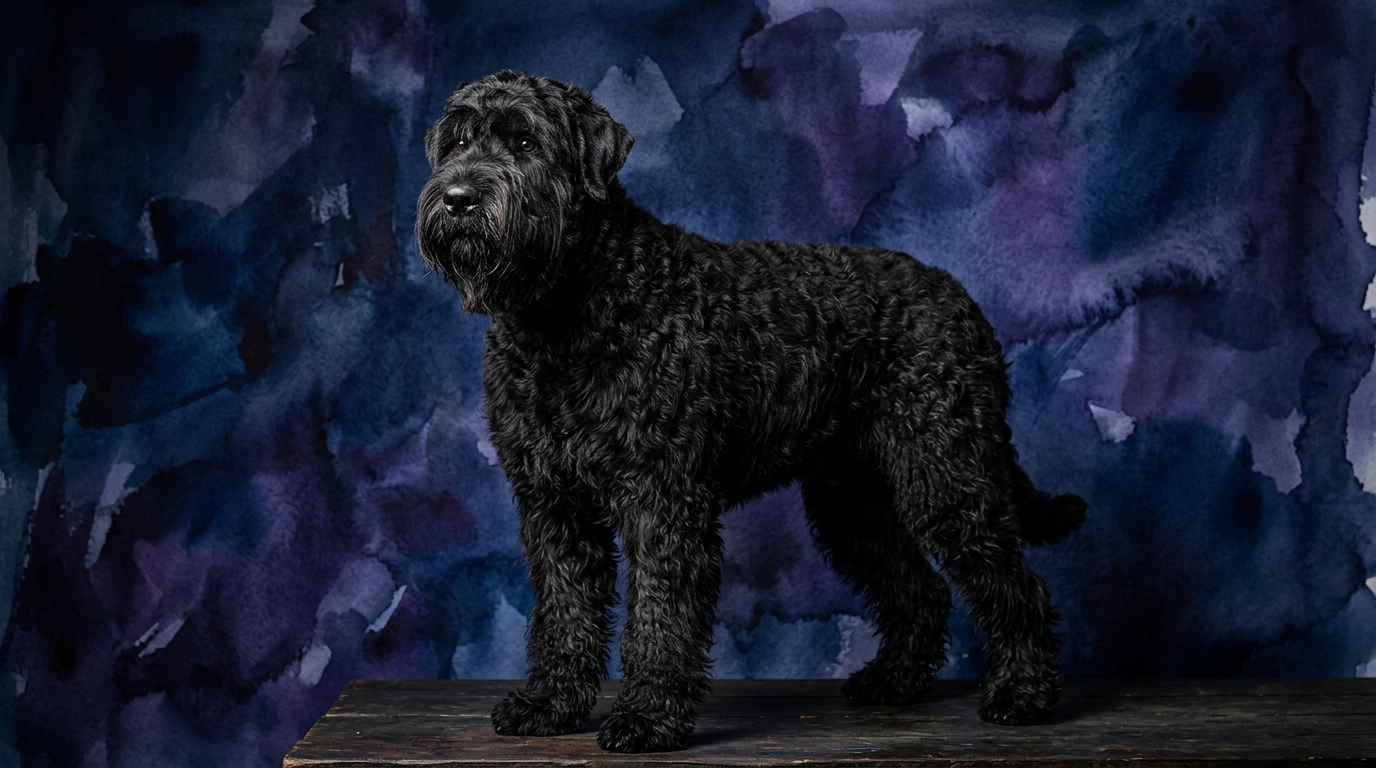
For the Black Russian Terrier (Not Coren-ranked): Their Problem Solving (3/5) is often rooted in assessing and responding to perceived threats, utilizing their physical presence and guarding instincts to resolve situations. Training Speed (3/5) indicates a more deliberate learning process, requiring consistent, firm, and patient instruction to internalize commands. Social Intelligence (3/5) is characterized by deep loyalty to their family but a reserved, discerning approach to strangers, relying on keen observation. Instinctive Drive (3/5) is primarily focused on protection and territorial vigilance, with an intense commitment to their perceived duty. Memory (3/5) allows them to retain training and recognize familiar individuals, though complex scenarios may require more reinforcement.
Where the Newfoundland Excels Cognitively
The Newfoundland's cognitive superiority is most pronounced in its extraordinary Social Intelligence (5/5 compared to the BRT's 3/5). This isn't merely about being friendly; it’s a profound capacity for emotional literacy, allowing them to intuitively gauge human moods and intentions. This deep understanding makes them unparalleled in roles requiring empathy and connection, such as therapy work, where they can anticipate needs and offer comfort with remarkable precision.
Their Instinctive Drive (5/5 versus 3/5) also presents a distinct advantage. The Newfoundland’s drive is specifically directed towards proactive, life-saving actions, particularly in water. This manifests as an immediate, unhesitating response to distress, involving complex sequences of behaviors driven by an innate desire to assist, a trait few other breeds possess to such a degree.
Furthermore, their Training Speed (4/5 compared to 3/5) is often bolstered by their high social intelligence and eagerness to please. Newfoundlands are more attuned to their trainer's feedback and desire for connection, meaning they frequently pick up new tasks and routines with fewer repetitions. This cooperative spirit makes the training process a more fluid and mutually rewarding experience.
Where the Black Russian Terrier Excels Cognitively
While both breeds score 3/5 in Problem Solving, the Black Russian Terrier’s application of this skill is distinct and highly effective for its intended purpose. Their approach is distinctly geared towards protection and self-reliance, excelling at assessing potential threats and formulating a robust, often physical, response. This isn't about intricate puzzles but about strategic defense, where their imposing presence and decisive action are paramount.
The BRT's cognitive profile also suggests a greater capacity for Independent Decision Making in security contexts, a functional advantage rather than a direct score win. Their lower social intelligence and training speed, coupled with strong guarding instincts, mean they are less prone to waiting for commands if they perceive an immediate threat. They rely on their own judgment to neutralize perceived dangers, a critical trait for a dedicated guardian.
Implicit in their less dependent social nature is their resilience in Solitary Tasks. Black Russian Terriers can maintain focus and perform tasks requiring extended periods of vigilance without constant human interaction. This ability is crucial for guarding roles where a dog may need to monitor an area for long durations, demonstrating unwavering attention without needing continuous reassurance or direction from a handler.
Which Is Easier to Train and Why
The Newfoundland is generally easier to train due to its higher scores in Training Speed (4/5) and Social Intelligence (5/5). Their innate desire to please, combined with their ability to quickly understand human cues and motivations, translates into a more responsive and cooperative student. They thrive on positive reinforcement and form strong working partnerships, making the training process a shared, rewarding experience. For instance, a Newfoundland is likely to quickly learn to retrieve a specific item not just because they understand the command, but because they are attuned to their owner's desire for the item and seek to fulfill that need.
The Black Russian Terrier, with a Training Speed of 3/5 and Social Intelligence of 3/5, presents a more significant training commitment. They possess a strong will and an independent streak, requiring a firm, consistent, and patient trainer who understands their guarding mindset. While capable of learning complex commands, they may take longer to internalize them and might test boundaries more frequently. Their training often focuses on channeling their protective instincts appropriately rather than solely on eagerness to please; for example, teaching a BRT to 'stay' might require more repetitions and a clearer demonstration of the command's utility, as they are less inherently driven by an immediate desire to please their handler.
Which Suits Active Owners vs. Relaxed Owners
The Newfoundland often suits moderately active or even relaxed owners who appreciate a calm, devoted companion. Despite their working group classification and large size, their energy levels are generally not as frantic as some other breeds. While they require regular exercise, including swimming if possible, their high social intelligence means they thrive on companionship and are content with family time, making them suitable for owners who enjoy leisurely walks and quiet evenings at home, as long as their need for mental stimulation and bonding is met.
The Black Russian Terrier is unequivocally suited for active, experienced owners who can provide consistent leadership, extensive socialization, and a structured routine. Their formidable presence, strong guarding instincts, and need for mental engagement demand an owner who is prepared for a significant commitment to training, exercise, and ongoing socialization. They are not a breed for novice or relaxed owners, as their potential for independent decision-making and protective nature requires a confident and assertive handler to ensure they are well-adjusted and safe in various social settings.
The Verdict
Opt for a Newfoundland if you seek a deeply empathetic, gentle giant eager to please, who thrives on close family bonds and offers unparalleled social intuition and a strong, inherent drive for compassionate action.
Select a Black Russian Terrier if you are an experienced, active owner seeking a formidable, highly protective companion with a serious demeanor, capable of independent decision-making in security roles, and are committed to consistent, firm training.
🧠 Find Your Pet's IQ Score
Our Pet IQ Lab assessment covers 25+ tests across 5 cognitive dimensions — personalized to your breed.
Take the Full IQ Test →Frequently Asked Questions
Do Newfoundlands make good guard dogs?
While Newfoundlands possess protective instincts and an imposing size, their primary drive is rescue and companionship, not aggressive guarding. They are more likely to deter intruders with their presence and deep bark than to engage in confrontational defense, preferring to be gentle giants.
How much exercise does a Black Russian Terrier need?
Black Russian Terriers require substantial daily exercise, typically 60-90 minutes, to satisfy their physical and mental needs. This should include vigorous walks, structured training sessions, and opportunities for mental stimulation to prevent boredom and channel their protective energy constructively.
Are Black Russian Terriers good with children?
Black Russian Terriers can be good with children from their own family when properly socialized and trained, but their size and protective instincts mean supervision is crucial. They are generally less tolerant of boisterous play from unfamiliar children and require careful introductions, always prioritizing safety and clear boundaries.